
Reviewed · HIKING & TREKKING
Mount Ijen Crater Trekking Tour from Bali
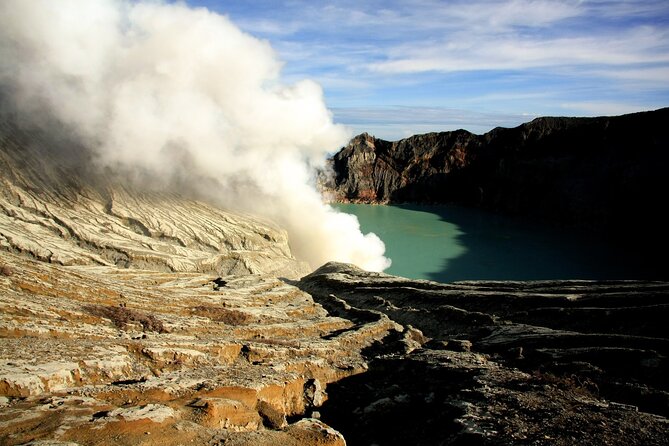
Mount Ijen at night is a different world. This overnight tour takes you from Bali to East Java on a ferry, then up to the crater before dawn to try to catch the famous blue flames in the dark. It’s also one of the few places where you’ll see sulfur mining up close, not from a postcard.
I like that you get real structure: hotel pickup in South Bali, ferry crossing, a local guide, and safety gear like a flashlight and gas mask for the hike. The trek route is short on paper (about 3 km one way), but the timing and conditions make it feel serious.
The main drawback is simple: this is tough. Expect a long day from Bali, a very early return, and a hike that can be hard on people with low stamina or breathing/heart issues. Add weather dependency for the blue flames, and you’ll want to go with a flexible mindset.
In This Review
- Key things to know before you go
- Blue Flames and Sulfur Work: What Makes Mt Ijen Special
- Price and Time: Is $153.85 Worth the Effort?
- From South Bali to Gilimanuk: The Ferry Start That Sets the Tone
- Safety Briefing, Flashlight, and Gas Mask: The Hike Begins
- Sulfur Miners and the Blue Fire Moment: The Part You’re Paying For
- Breakfast, Crater Viewpoints, and the Descent That Tests You
- The Return to Bali: Late Morning Ferry and a Proper Lunch
- What to Bring (and the Rules You Really Need to Follow)
- Who Should Book This Mt Ijen Overnight Trek
- Logistics and Provider: What to Expect with PT.WAHYU MANDIRI TOUR
- Should You Book This Overnight Mt Ijen Tour?
- FAQ
- What time does the Mt Ijen tour start from Bali?
- How long is the full experience?
- What’s included in the price?
- What should I bring for Mt Ijen’s crater trek?
- Is the blue fire guaranteed?
- How does cancellation work?
Key things to know before you go
- Blue flames depend on conditions: you’re hiking in darkness and the phenomenon varies with weather.
- 3 km trek is the headline, but time and terrain matter: it’s about 1–2 hours uphill to the summit.
- Gas mask and flashlight are provided as part of the safety briefing at the start.
- Meet sulfur miners up close as you pass the route and watch how they work.
- Small group cap (up to 10) helps you move as a unit and get more attention.
Blue Flames and Sulfur Work: What Makes Mt Ijen Special
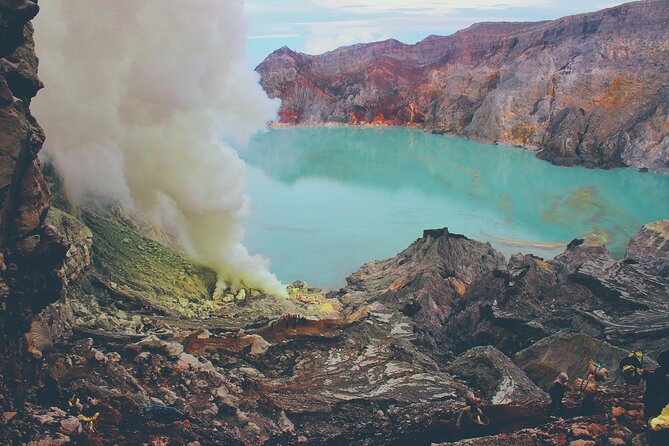
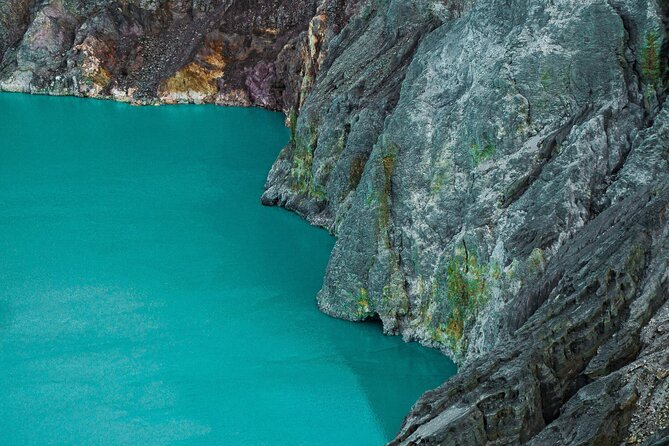
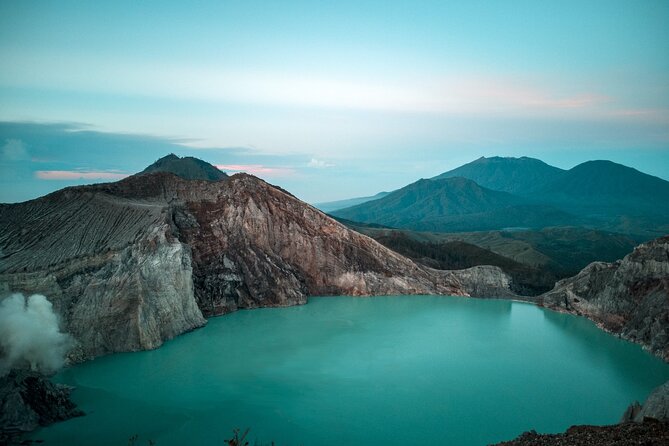
Mt Ijen is one of those places that looks almost fake—until you’re there and your brain has to adjust. The crater holds Java’s largest acid lake, and near it you can witness the natural phenomenon people call the blue fire. Since it happens early and outdoors, you’re not just sightseeing. You’re showing up at the right time, in the right darkness, with the right kind of patience.
What makes this tour feel more authentic is the mining side. You’ll meet local sulfur miners as you hike, and you’ll see how heavy their work is: they carry yellow sulfur blocks around 60–80 kg using bamboo pole baskets on their shoulders. And later, you’ll witness crater activity using iron rods—without safety gear. It’s intense, and it gives the whole experience more meaning than a standard volcano photo stop.
More Bali hikes and ridge treks
Price and Time: Is $153.85 Worth the Effort?
At $153.85 per person for an overnight Mt Ijen trek, you’re paying for transport from Bali, overnight scheduling, guides, and included meals. The real value isn’t the dollar amount—it’s that you’re getting the full chain worked out: pickup, ferry crossing, timed hiking, and return transport, all in one booking.
A tour like this also protects you from a common DIY headache. Getting to East Java late at night and coordinating the pre-dawn timing is not the hard part—finding reliable support that keeps you safe and on schedule is the hard part. Here, the tour includes a driver from Bali to Banyuwangi (East Java), plus a local guide during the crater hike. That matters when you’re dealing with early hours and safety rules.
Just be honest with yourself about the tradeoff. This is not a quick weekend trip. The schedule is roughly 23 hours, and you’re starting at 5:00 pm with pickup from South Bali. If you’re expecting a laid-back day trip, you’ll feel the sticker shock from the effort, not the price.
From South Bali to Gilimanuk: The Ferry Start That Sets the Tone
Your day begins late afternoon, with pickup in Kuta, Legian, Seminyak, Jimbaran, or Nusa Dua (selected hotels in South Bali). The start time is listed as 5:00 pm. From there, you’re transferred to Gilimanuk Harbor in West Bali.
Then comes the ferry crossing. You’ll head by boat to East Java and arrive around midnight, after which you’re driven toward the trek starting point. This is where the tour’s overnight plan starts to feel real. Midnight arrival means you’re not just “sleeping while you travel.” You’re moving into hiking mode fast.
One practical point: plan to be okay with a bit of waiting. One experience included an unexpected pause at a building/house before the group could depart together. That can happen when pickup times vary and teams assemble. Nothing ruins the day more than expecting zero downtime and then getting stuck waiting for your group to line up.
Safety Briefing, Flashlight, and Gas Mask: The Hike Begins
Once you reach the trek starting point, you get a safety briefing and equipment. You’ll receive a flashlight and a gas mask for the crater area. That’s not just nice-to-have. It’s the difference between feeling prepared and feeling lost in the dark.
The hike itself is roughly 1 mile / 3 km to the summit. The time estimate is about 1–2 hours, depending on pace and conditions. Even though 3 km doesn’t sound dramatic, you’re hiking uphill and doing it at predawn hours when your body feels the cold and fatigue more sharply. Your best strategy is to go steady, not sprint for summit views.
You’ll also be moving alongside the route where miners travel. That means you’ll see how the mountain shapes labor: miners carry sulfur blocks over uneven paths, with bamboo poles acting like a harness for heavy loads. Seeing 60–80 kg carried this way helps you understand why this climb and descent can be so demanding for everyone—locals and visitors.
Sulfur Miners and the Blue Fire Moment: The Part You’re Paying For
This is the headline. You’ll arrive at the summit before dawn and look for the blue fire phenomenon. The tour notes that it’s dependent on weather conditions, so you should treat it like a target, not a guarantee.
When you reach the crater area, you’ll also have the chance to get closer views afterward. The schedule includes a light breakfast on the mountaintop before you’re guided back down. Then you’ll get more photo opportunities and viewpoint time inside the crater area (following the rules).
The miner scenes are where the experience becomes more than just “a cool natural effect.” You’ll witness traditional mining methods and see work happening with minimal protection. You don’t have to pretend it’s normal. It’s okay to feel a little uncomfortable. Just remember the key: these are workers doing their job in a hazardous environment, and the tour’s job is to keep you within safe boundaries.
If the blue flames are your goal, your mindset matters. Even with the right guide and the right timing, weather can shift what you see. Go in expecting drama, not perfection.



Breakfast, Crater Viewpoints, and the Descent That Tests You
After the summit, there’s a light breakfast before you begin the descent. Having food included is a real help because you’re not just hiking—you’re burning energy in cold, low-light conditions. It’s not a full meal, but it gives you something before the harder part: getting back down safely.
The next phase focuses on views and photos. You’ll be guided to a viewpoint to see Ijen Crater and the interior area. Java’s largest acid lake is part of what you’ll be looking at, and the viewpoint time is where you can slow down and capture the scene without racing the clock.
Then the descent starts. The tour involves a return by foot after the crater viewing, and the conditions can be demanding. The climb is short by distance, but the descent can still be tough because you’re tired, the ground can feel unstable, and you may be moving in darker or colder conditions depending on timing.
A useful planning tip: don’t treat this as a casual hike. If you’re near the edge of your stamina, you’ll feel it on the way down more than you expect.
The Return to Bali: Late Morning Ferry and a Proper Lunch
Once the hiking and crater time wrap up, you’re transferred to Banyuwangi Harbor for the late morning ferry back to Bali. This timing is a blessing. It means you won’t be stuck waiting for the entire day to be over; you’re moving back toward comfort while your legs recover.
Lunch is included at a local restaurant. Dinner is not included, so you’ll want to be ready for that gap. After the ferry, you’ll be dropped back at your hotel in the afternoon.
This is where you’ll feel the overnight schedule most strongly. You may be running on adrenaline and practicality early on, but by the end, the fatigue catches up fast. If you can, plan a low-key day after. No big plans, no heroics. Your legs will file a complaint.
What to Bring (and the Rules You Really Need to Follow)
This tour gives gear for safety (flashlight and gas mask), but it still expects you to show up properly dressed. The recommendation list is clear: long pants, sports shoes, a sweater (or sweatshirt/jumper), gloves, and a hat. I’d also treat this like winter hiking. Even if you don’t feel cold early, you might later in the night and near dawn.
The crater rules matter. You should be ready for these constraints:
- Sport wear and hiking shoes
- Gas mask
- Jacket and gloves
- Stay maximum 500 meters from the crater only
- No throwing rubbish
- No throwing cigarettes or doing fireplace
- Bring your own medicine
There’s also a health certificate requirement stated for the tour: you’ll need a health certificate from a doctor, valid up to 3 days from the Ijen tour date. If you don’t have it, the tour may bring you to a nearest doctor. That’s unusual for most travel activities, so if paperwork is a burden, plan it in advance.
Finally, note that Mount Ijen is closed on the first Friday of the month for cleaning. If your travel dates fall around that, you’ll want to adjust plans so your blue fire moment doesn’t turn into a cancellation.
Who Should Book This Mt Ijen Overnight Trek
This tour is best for people with strong physical fitness and a willingness to hike in the dark. The route is short, but you need stamina for the overnight effort and for the descent. Minimum age is 16, and it’s not recommended for children aged 15 and under. It also isn’t recommended for older people.
Health warnings are direct: it’s not recommended for participants with heart complaints, asthma, or other serious medical conditions. That’s not small talk. If you’re unsure, treat that as a stop sign and talk to your doctor.
You’ll also get more enjoyment if you’re curious about real-world scenes. If you only want views and photos, you’ll still get those—but the miners and the practical rules can make the day feel more grounded, less postcard.
The small-group cap (max 10 travelers) is another plus. It tends to make the hike feel more manageable, and it helps guides keep track of everyone near the crater zone where rules matter.
Logistics and Provider: What to Expect with PT.WAHYU MANDIRI TOUR
This is operated by PT.WAHYU MANDIRI TOUR, and the itinerary leans heavily on transportation timing. You’ll have hotel pickup and drop-off from South Bali, plus a driver who acts as a cum guide from Bali to Banyuwangi.
One operational note you should plan for: group assembly can include some waiting. In at least one case, the group waited in a building/house until fellow travelers arrived so they could leave as a unit. That’s not a dealbreaker, but it does mean you shouldn’t treat “start time” as “door-to-trailhead in 10 minutes.”
On the guide side, experiences can vary. The safety briefing and concern for safety are clearly part of the tour style, and you’ll be given guidance on what to do. But the tour experience itself will still depend on the day’s conditions and the flow of your group.
Should You Book This Overnight Mt Ijen Tour?
If you want the blue fire moment, you’re going to have to accept the trade. This tour is intense, long, and weather-dependent. The payoff is the combination of crater views plus the chance to see sulfur miners working in a harsh environment, all with a guided structure and provided safety gear.
I think it’s a good fit if:
- you’re physically prepared for an overnight pre-dawn hike
- you don’t mind a long Bali-to-Java travel day
- you care as much about what’s happening on the mountain as about photos
I’d skip it if:
- you have heart/asthma or serious medical concerns
- you’re not comfortable hiking in the dark and cold
- you want a low-effort day trip
If you’re on the fence, be honest about fitness and flexibility. Mount Ijen is not a gentle outing, but it can be a memorable one.
FAQ
What time does the Mt Ijen tour start from Bali?
The tour start time is listed as 5:00 pm, with hotel pickup in South Bali areas like Kuta, Legian, Seminyak, Jimbaran, and Nusa Dua. Your exact pickup time is confirmed after reconfirmation.
How long is the full experience?
It’s listed as approximately 23 hours total, including the overnight ferry crossing, the pre-dawn trek, and the return by ferry and lunch before drop-off.
What’s included in the price?
Included meals are a light breakfast and lunch (Balinese food at a local restaurant). The tour also includes hotel pickup and drop-off, a driver/cum guide from Bali to Banyuwangi, a local guide for the Mt Ijen blue fire trekking, and all taxes, fees, and handling charges.
What should I bring for Mt Ijen’s crater trek?
Wear long pants and sports shoes, and bring a sweater, gloves, and a hat. You should also have your own medicine. The tour recommends sport wear and a jacket. A safety flashlight and gas mask are provided as part of the briefing.
Is the blue fire guaranteed?
No. The tour notes that seeing the blue fire depends on weather conditions, so it’s best to treat it as a possibility that improves with good conditions.
How does cancellation work?
Free cancellation is available if you cancel up to 24 hours in advance of the experience start time for a full refund. If you cancel less than 24 hours before, you won’t receive a refund. The tour can also be canceled due to poor weather, with an option for a different date or a full refund.
More Bali Hikes & Ridge Treks
More Bali Tour Picks
More Bali Reviews & Picks
Still deciding? More Bali days reviewed, from volcano sunrises to island crossings



Hiking & Trekking, compared.
 ★ 5.0Mount Batur Sunrise Hike and Natural Hot Spring OptionFrom $331,927 reviews
 ★ 5.0Mount Batur Sunrise Hike with BreakfastFrom $301,757 reviews
 ★ 5.0Mount Batur Sunrise Trekking Private All InclusiveFrom $21906 reviews
 ★ 5.0Mount Batur Sunrise Trekking Private Tour with Breakfast and Hotel TransferFrom $49885 reviews
 ★ 5.0Private Mount Batur Sunrise Trekking TourFrom $39634 reviews
 ★ 5.0Mount Batur Sunrise Trekking (Private Tour and Breakfast at Restaurant)From $39598 reviews
 ★ 5.0Private Tour Mount Batur Sunrise Trekking and Natural Hot SpringFrom $63431 reviews
 ★ 5.0Private Tour : Mount Batur Sunrise Trekking With Private GuideFrom $42422 reviews
Browse the lists this tour appears in