
Reviewed · HOLY SPRINGS & TEMPLE TRAILS
Skip The Line Tour: Uluwatu Temple and Kecak Fire Dance Tour – Half Day
Sunset plus sacred stone, all in five hours. This half-day Uluwatu Temple and Kecak Fire Dance tour pairs a guided temple walk with air-conditioned pickup so you land at the cliff amphitheatre with time to settle. You start at 4:00 pm, when the light starts to turn and the show timing actually makes sense.
I love getting the temple context first, right at Uluwatu’s dramatic 70-metre-high setting, and then having your own time to wander and take photos. I also love the Kecak Fire Dance format: the sound comes from a beat-boxing human chorus, with fire building the drama as the sky darkens.
One thing to go in knowing: Uluwatu is crowded, so even with pre-arranged entry, the experience can feel like crowd management around seating and movement. Plan for heat at an open-air venue and don’t expect a calm, empty temple evening.
In This Review
- Key things to know before you go
- Uluwatu Temple at 70 Metres: What the Guided Part Is Really For
- Dress Code at Uluwatu: One Rule That Can Save Your Evening
- From Temple to Amphitheatre: Why Timing Matters More Than “Skip the Line”
- Kecak Fire Dance: The Beat-Boxing Human Chorus Explained
- Guides and Drivers: The Difference Between a Tour and an Actual Plan
- Monkeys at Uluwatu: How to Keep Your Camera (and Your Temper)
- Price and Value: What $32 Buys You in the Real World
- The Main Trade-Offs: Crowds, Heat, and Food Plans
- Who Should Book This Tour (and Who Might Skip It)
- Should You Book This Half-Day Uluwatu + Kecak Tour?
- FAQ
- What time does the tour start?
- How long is the half-day tour?
- Is hotel pickup included?
- What’s included in the ticket price?
- Are meals included?
- Do I need to follow a dress code?
- Are there monkeys at the site?
- How many people are in the group?
- What if the weather is bad?
Key things to know before you go
- Small group cap (max 5): you’re not stuck in a huge bus herd.
- Temple first, then the amphitheatre: you get context at Uluwatu before the Kecak show starts.
- Human-voice Kecak + fire: the drama comes from the chorus and the timing at sunset.
- Strict dress code: shoulders/underarms/back/knees need coverage, or you’ll be turned away.
- Monkeys near the site: keep your camera gear and belongings secured at all times.
Uluwatu Temple at 70 Metres: What the Guided Part Is Really For
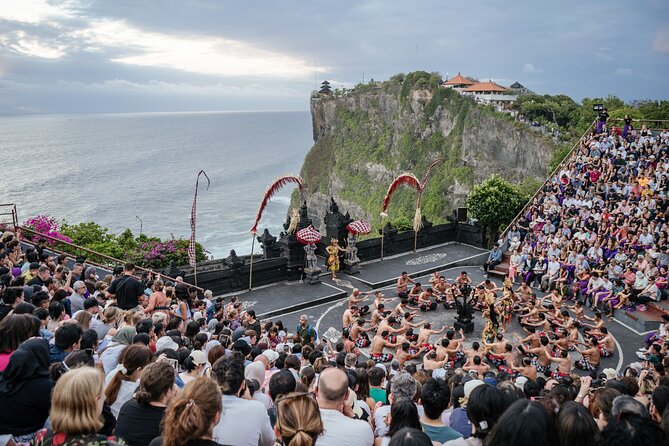
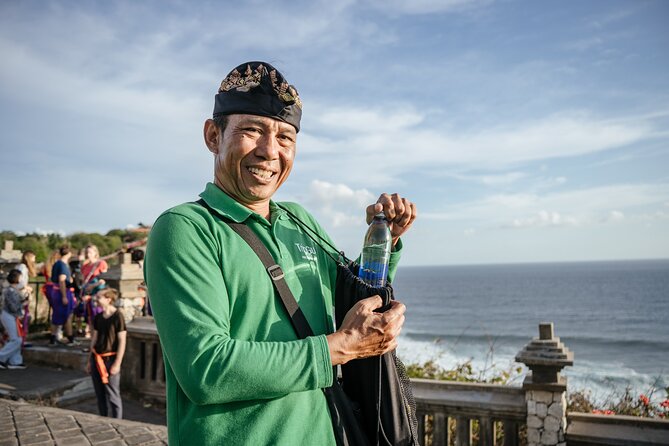
The tour runs in the afternoon, starting at 4:00 pm, which is smart because Uluwatu’s atmosphere is built on that late-day light. You’ll be taken to Uluwatu Temple, perched about 70 metres above sea level, where the setting does half the work for you. It’s one of Bali’s six key temples and a spiritual pillar on the island, so the visit isn’t just about pretty views.
The best value of this tour is that you don’t wander in blind. Your English-speaking guide explains the temple’s history and religious significance before you’re left to explore on your own. Then you get leisure time to walk the grounds and snap photos without feeling like you’re missing the point.
What you should look for while you’re exploring:
- Cliff-edge viewpoints where the ocean noise is part of the atmosphere.
- Temple details that make more sense after the guide’s context.
- Photo angles that include the landscape without getting stuck in the busiest spots.
Also, there’s a practical reality here: Uluwatu’s grounds attract monkeys. The tour info is clear about this, and it matches what people report in plain terms: keep a watchful eye on your possessions, especially items like cameras, bags, and any dangling straps.
More of Uluwatu, GWK and the Bukit clifftops


Dress Code at Uluwatu: One Rule That Can Save Your Evening
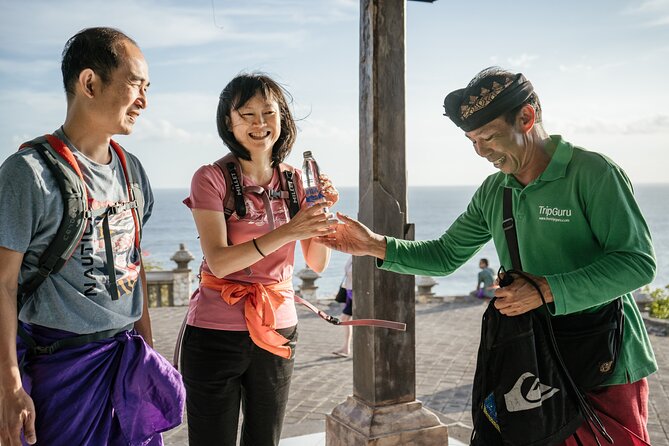
This is not the kind of place where you can wing it with whatever you wore on the beach. The dress code is strict, and it’s enforced for this tour: no revealing shoulders, underarms, back, or knees.
Here’s what helps in real life:
- Bring a sarong/scarf/sweater to cover up quickly.
- If you’re wearing shorts, make sure you can cover knees for the temple portion.
- Plan to be covered before you arrive, not after the staff start checking.
This sounds minor until it isn’t. A quick cover-up means you move smoothly through the visit, instead of losing time or being stuck waiting.
From Temple to Amphitheatre: Why Timing Matters More Than “Skip the Line”
After the temple walk, the schedule pushes you toward the open-air amphitheatre to catch the Kecak & Fire Dance. This pacing matters because the show’s magic is built around the light shift—sunset first, fire later, with the ocean as a constant soundtrack below.
About the skip-the-line promise: you’re pre-arranged for entry and you get an admission ticket included. In practice, though, Bali crowds don’t magically disappear. Some people describe it as no real ticket line but still lots of pushing and shuffling near entry points and around seating.
So I’d treat it like this:
- You’re likely reducing the ticket hassle.
- You still need patience for movement, heat, and people-watching.
Also note the tour format: it’s designed as a short, focused half day, not a slow sightseeing crawl. That’s a plus if you want the highlights without stretching the day into an all-day ordeal.
Kecak Fire Dance: The Beat-Boxing Human Chorus Explained
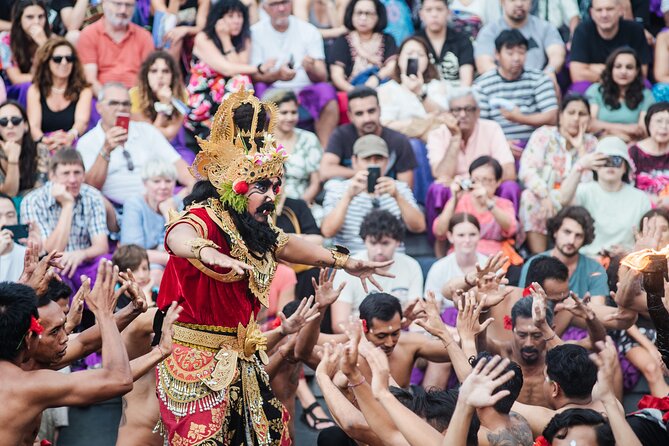
The Kecak performance at Uluwatu is famous for a reason. The core of it is a traditional Balinese cultural performance built on song, dance, and storytelling—driven by an orchestra of human voices. Instead of music from instruments, the chorus becomes the rhythm engine, including that striking beat-boxing feel people talk about.
What you’ll see and feel:
- A group of performers working together like one living rhythm machine.
- Story elements delivered through movement, facial expression, and the chorus response.
- Fire used to create a second wave of intensity once the light drops.
Many guides help you time your photos because the sunset backdrop is the whole point. You’ll get that “wow” moment when the performers contrast against the cliff-edge sky, and the ocean waves break below.
What to watch out for:
- Heat can be real. The amphitheatre is open-air, and sitting (or standing) through long parts can feel draining.
- If you hate crowds, you’ll want to mentally prepare. Even with small-group comfort on the way in, the venue is shared space.
If your priority is getting good seats, this tour can help because the guide typically helps you navigate to where you need to be. People specifically mention that their guides ensured they got good seating.
Guides and Drivers: The Difference Between a Tour and an Actual Plan
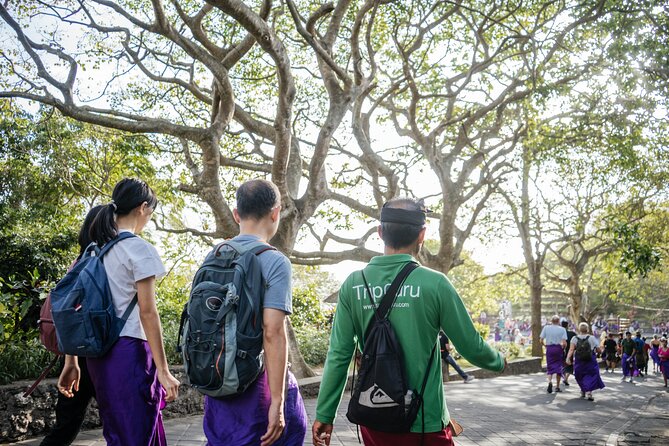
This tour keeps the group small, with a maximum of 5 travelers, which usually means less chaos and more attention. The biggest difference tends to come down to the guide’s style—timing, explanations, and how confidently they handle the tricky parts like monkeys and crowded movement.
Some guide names that show up in experiences tied to this tour:
- Kadek Oka for temple guidance and monkey rescue moments.
- Donald and Eddy for punctual, friendly guiding plus help with seating and navigation.
- Dewa, Gede Yogi, Suru, Topan, Komang, and Nusa for clear explanations and smooth coordination.
English quality can vary. Most descriptions say English-speaking guides are included, and many people report strong communication. Still, it’s worth going with the mindset that the guide’s big job is to keep you moving and explain the essentials clearly enough to connect the dots during the temple and show.
One practical plus: traffic. Bali traffic can be brutal at sunset time, and some guides use shortcuts to shave time off the trip. That means you’re less likely to arrive stressed and rushed.
More Bali temples and holy-spring blessings





Monkeys at Uluwatu: How to Keep Your Camera (and Your Temper)
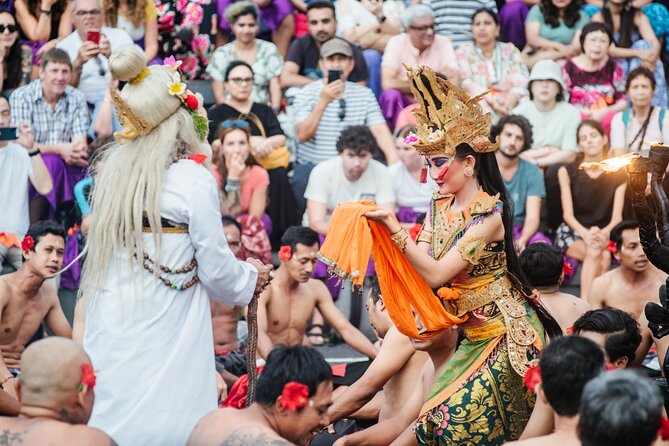
Uluwatu is one of those places where the monkeys are part of the landscape, but they’re not cute little props. The tour info warns that monkeys pick up and engage with customer items.
Here’s what you can do that actually works:
- Keep your camera strap short and your bag zipped.
- Hold onto small items like sunglasses instead of leaving them on your lap.
- Avoid waving food or any snack in open view.
- If a monkey approaches, stay still and protect your gear. The guides are there to help you navigate it, but prevention is faster than rescue.
In multiple experiences tied to this kind of Uluwatu itinerary, guides were praised for helping keep guests safe around monkeys and even stopping trouble with camera gear.
Price and Value: What $32 Buys You in the Real World
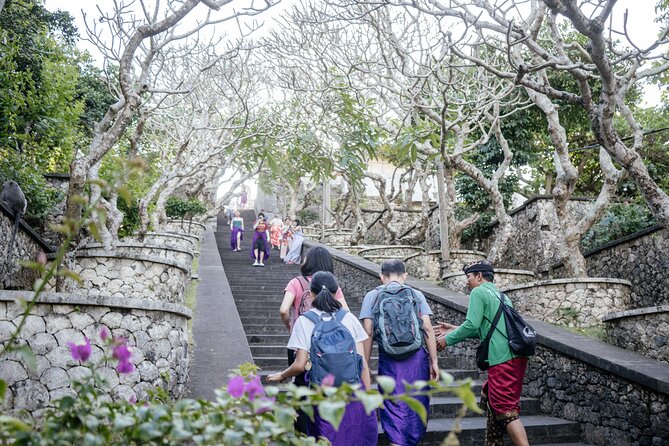
At $32 per person for a half-day, this tour can feel like a bargain when you look at what’s included.
You’re not just buying a seat to watch a show. The package includes:
- Hotel pickup and drop-off if you choose that option
- Air-conditioned transport
- English-speaking guide
- Bottled water
- Insurance
- Entrance fees: temple and dance performance
The entrance fees are listed in local currency (IDR 60K for Uluwatu Temple and IDR 150K for the dance). That means you’re folding in two ticket costs plus guided time and transportation. For many visitors, that adds up to less hassle than buying separately and trying to coordinate the timing between the temple and the sunset show.
One more “value” point: this tour is built around the important window. Starting at 4:00 pm is the difference between seeing the sunset as intended versus arriving too late and watching a darker show from wherever the venue lets you in.
The Main Trade-Offs: Crowds, Heat, and Food Plans
No tour is perfect, and this one comes with a few predictable friction points.
Crowd pressure is the big one. Even when the ticket part is handled, you still deal with dense foot traffic around the amphitheatre. Expect pushing and shuffling rather than a tidy, slow-moving queue.
Heat is the other trade-off. The Kecak performance happens in an open-air setting, so you’ll be sitting in the sun before sunset and then under warming temperatures afterward. Bring water if you run hot, wear breathable clothing (but keep the dress code in mind), and don’t plan on doing any heavy wardrobe changes at the last second.
Food is not included. Meals aren’t part of the package, and if you want to stop for something to eat, you’ll likely need to adjust your schedule. One past experience mentioned that food would require an earlier pickup. So if food is important, plan it before you get collected.
Who Should Book This Tour (and Who Might Skip It)

This half-day Uluwatu Temple and Kecak Fire Dance tour makes sense for you if:
- You want sunset timing without doing the temple and show logistics alone.
- You prefer a guide-led temple explanation before roaming for photos.
- You want small-group movement rather than a big bus crowd.
- Kecak and fire are on your Bali must-do list and you want the smoothest path into the experience.
You might reconsider if:
- You hate crowds and stand-in-heat situations. Even with entry handled, the amphitheatre is still a high-density venue.
- You’re expecting a completely friction-free skip-the-line experience. Some people report it doesn’t always feel like a simple line-free event once you’re inside.
If you’re flexible and show up prepared, this can be a strong value way to check off two of Bali’s most iconic experiences in one tight afternoon.
Should You Book This Half-Day Uluwatu + Kecak Tour?
If your goal is Uluwatu Temple at golden hour plus the Kecak Fire Dance with minimal stress, I think you’ll be happy with this booking. The biggest reasons are practical: guided temple context, included entrance fees, and transport that gets you there at the right time.
Book it if you’re ready for crowds, can follow the dress code, and will keep your gear secure around monkeys. Skip it if you want a quiet, uncrowded cultural visit or you’re not willing to plan for heat and movement.
If you do book, pack a sarong or scarf immediately, charge your camera but keep it protected, and arrive with the right mindset: Uluwatu is all about the sunset rhythm—and the tour is built to put you in the right place for it.
FAQ
What time does the tour start?
The tour starts at 4:00 pm.
How long is the half-day tour?
It runs for about 5 hours (approximately).
Is hotel pickup included?
Hotel pickup and drop-off are included if you select that pickup option. Otherwise, you meet at the temple area.
What’s included in the ticket price?
Entrance fees for Uluwatu Temple and the Kecak & Fire Dance are included, along with an English-speaking guide, air-conditioned vehicle, bottled water, and insurance.
Are meals included?
No, meals are not included.
Do I need to follow a dress code?
Yes. Clothes revealing the shoulders, underarms, back, and knees are not on this tour, and enforcement is strict. Bring a sarong/scarf/sweater to cover up.
Are there monkeys at the site?
Yes. You should keep watch over your possessions because monkeys are known to pick up and engage with customers’ items.
How many people are in the group?
This tour has a maximum of 5 travelers.
What if the weather is bad?
This experience requires good weather. If it’s canceled due to poor weather, you’ll be offered a different date or a full refund.
More Kecak, Barong & Dance Nights



More Temples & Holy Springs
More of Uluwatu & the Bukit Coast

Still deciding? More Bali days reviewed, from volcano sunrises to island crossings








Holy Springs & Temple Trails, compared.
 ★ 5.0Ubud: Monkey Forest, Jungle Swing, Rice Terrace, and Water TempleFrom $317,160 reviews
 ★ 5.0Full-Day Tour to Water Temples and UNESCO Rice Terraces in BaliFrom $392,539 reviews
 ★ 5.0Bali Instagram: Gate of Heaven Temple TourFrom $85737 reviews
 ★ 5.0Ubud Tour with Monkey Forest Waterfalls Temples and MoreFrom $30495 reviews
 ★ 5.0Uluwatu Temple Entry and Kecak Fire Dance TicketFrom $29479 reviews
 ★ 5.0Ubud Top Attractions: Waterfalls, Temples and Rice TerracesFrom $39460 reviews
 ★ 5.0Private Tour: Uluwatu Temple & Southern Bali HighlightsFrom $45387 reviews
 ★ 5.0Private Tour Bali Beaches and Uluwatu Temple with DinnerFrom $48363 reviews
Browse the lists this tour appears in