
Reviewed · UBUD, MONKEY FOREST & CAMPUHAN
Ubud Cultural Day Tour: A Day for Balinese Cultural Experience
Bali can feel like too much at once. This Ubud cultural day tour is a smart way to see the major sites without losing the meaning behind them. I especially love the professional guide who explains what you’re looking at, and the chance to watch the Barong Dance & Fire Dance as part of the religious story. One thing to think about: it’s a long day (about 9 to 12 hours), so you’ll want to come in rested.
What makes the day work is the mix of “watch and learn” stops with places where you can slow down and look—like the Sacred Monkey Forest Sanctuary and the Tegalalang Rice Terraces. You’ll also get time at traditional art areas and an Elephant Cave visit that feels more grounded when someone explains the carvings and purpose. My only real caution is that you’ll likely pass shops and craft displays, so if you’re not into buying, you should say so early and keep your decisions simple.
Plan for a full day and a midday meal that’s on you. Lunch isn’t included, though you’ll stop at a local eatery. The trade-off is that bottled water and hotel pickup/drop-off are included, which helps you stay focused on the sites instead of logistics.
In This Review
- Key things to know before you go
- A full-day route built around Ubud’s most meaningful stops
- Why the guide can make or break this day
- Barong Dance & Fire Dance: where the story comes alive
- Celuk Village and art stops: browsing without getting lost
- Puseh Batuan Temple: ancient walls that teach Ramayana and Mahabharata
- Sacred Monkey Forest Sanctuary and the Pura Dalem connection
- Ubud Palace: royal heritage and cultural preservation
- Tegalalang Rice Terraces: photo time with a time-and-effort story
- Goa Gajah (Elephant Cave): 9th-century carvings and a quiet sense of place
- Bali Pulina Coffee Plantation: civet coffee production, explained
- Lunch, timing, and how to avoid a late-day slump
- Who should book this Ubud Cultural Day Tour
- Should you book it
- FAQ
- How long is the Ubud Cultural Day Tour?
- What time does the tour start, and is pickup included?
- Is lunch included?
- What’s included in the price besides the tour itself?
- Does this tour include the Barong Dance performance?
- Can I cancel for free?
Key things to know before you go
- Barong Dance & Fire Dance: a classic good-vs-evil performance tied to Balinese tradition
- Sacred Monkey Forest Sanctuary: a conserved area with more than 500 long-tailed monkeys
- Batuan Temple and Goa Gajah: ancient sites where the story is carved into stone
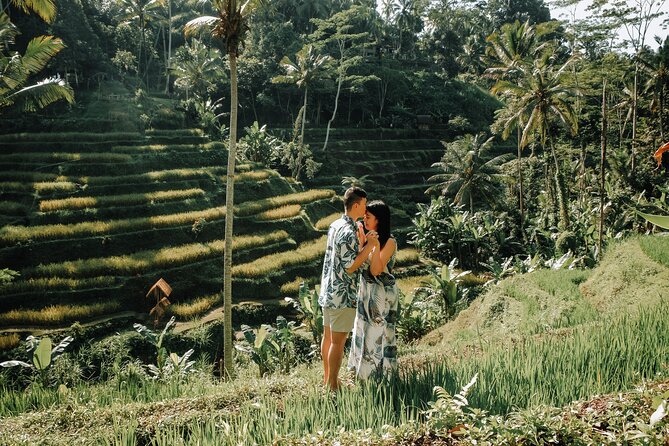
- Tegalalang Rice Terraces photos: built over hundreds of years, with photo-ready viewpoints
- Art villages and crafts: plenty of chances to browse high-quality Balinese handiwork
- Civet coffee at Bali Pulina: learn how the famed luwak coffee is produced
A full-day route built around Ubud’s most meaningful stops
This is an out-and-back day built to pull you from Seminyak into the Ubud area. You start at 8:00 am, and the day runs roughly 9 to 12 hours, depending on traffic and how long you linger at each stop. Hotel pickup and drop-off are included, which is a big deal here—Bali traffic can be unpredictable, and you don’t want to spend your only full day battling transportation.
You’re not stuck on a bus with strangers all day, either. The experience is set up as a private tour/activity where only your group participates. That matters because it makes the schedule feel less rigid and easier to adjust if you want more time at a temple or fewer minutes in a shop window.
More around Ubud, from the Monkey Forest to the Campuhan ridge


Why the guide can make or break this day
In Bali, the difference between seeing and understanding is often one person: your guide. This tour is designed around a driver/guide who gives context for Balinese culture and history as you move from site to site. That’s not just “nice commentary.” It changes what you notice.
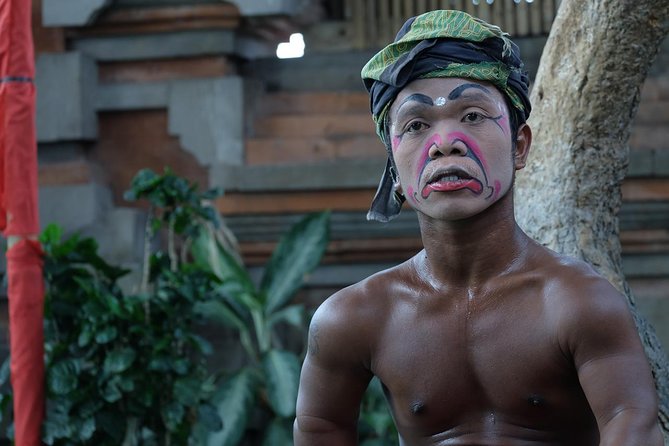
For example, the Barong Dance isn’t treated like a standalone show. You get the story first—Barong as good versus Rangda as evil—and that makes the performance feel purposeful. The same goes for the temples: instead of walking up to stone carvings and hoping you can decode them, you get a guided explanation of what you’re seeing and why it matters.
One guide name that stands out in the information you provided is Putu Mertayasa. The point isn’t that you’ll definitely get him; it’s that the format supports guides who are friendly, flexible, and able to answer questions about what’s going on around you.
Barong Dance & Fire Dance: where the story comes alive
Your first real cultural moment is Sahadewa Barong Dance & Fire Dance, with about 1 hour scheduled and admissions included. This is the classic Balinese battle story: good (Barong) faces evil (Rangda). Barong figures show up in multiple forms in Balinese tradition, and what you’ll see is rooted in that living tradition, not a vague folklore reenactment.
Practical tips for getting the most out of this stop:
- Give yourself a few minutes to settle before the action starts, so you’re not trying to find a place while things are already underway.
- Keep your camera ready, but try to watch for patterns in the performance. The visuals click faster once you understand the roles.
This is also the kind of stop where a good guide helps with what you’re seeing. Even if you don’t know the language, you can track the conflict arc. That makes the show feel like culture, not just entertainment.
Celuk Village and art stops: browsing without getting lost
Next comes a creative hub, Celuk Village, focused on Balinese arts and handicrafts. This is where you can slow down and look at how the work is made, not just what it looks like on a souvenir shelf. You’ll have about 1 hour here, with admissions included.
Celuk (and similar art areas in the broader Ubud orbit) is typically about craft quality—fine handiwork, traditional designs, and the kind of items that make good gifts because they feel connected to real people’s skills. The tour wording also points to the broader idea that villages like Celuk, Batuan, or Mas can be part of the day, depending on how the route is arranged.
Here’s my practical advice, based on what you shared: if shopping isn’t your goal, tell your guide up front. You can still enjoy the craft displays and just skip purchases. A flexible guide can steer you toward the most interesting parts and avoid wasting time in spots that feel more like tourist retail.
Puseh Batuan Temple: ancient walls that teach Ramayana and Mahabharata
After the art time, you head to Puseh Batuan Temple for about 30 minutes. This temple is described as an ancient site from the 10th century, and one of the best reasons to stop is the way the stories are shown on the temple walls—Ramayana and Mahabharata are represented through the decorative reliefs.
The short time window here is the trade-off. Thirty minutes isn’t long enough to take in every detail at a relaxed pace, especially if you want to photograph. But it’s long enough to appreciate the structure and understand what the carvings are telling you.
If you care about architecture, this is one of the stops where the guided context pays off. You get the “why” behind the visuals, so you’re not just looking at old stone and guessing.




Sacred Monkey Forest Sanctuary and the Pura Dalem connection
Then it’s on to the Sacred Monkey Forest Sanctuary (about 1 hour, with admissions included). The big draw is the conservation-focused setup. The forest is described as well maintained, with over 500 sacred long-tailed monkeys. The local belief is that the monkey colony acts as a guardian of the Pura Dalem Temple, which is located inside the forest.
This stop can feel like two experiences at once:
1) wildlife viewing in a controlled, maintained area
2) a cultural setting where the animals are part of a bigger spiritual system
The key is to treat it as a respectful visit, not a circus. A guide helps here by giving you the story behind the sanctuary, which is what keeps it from becoming just “monkeys for photos.”
Ubud Palace: royal heritage and cultural preservation
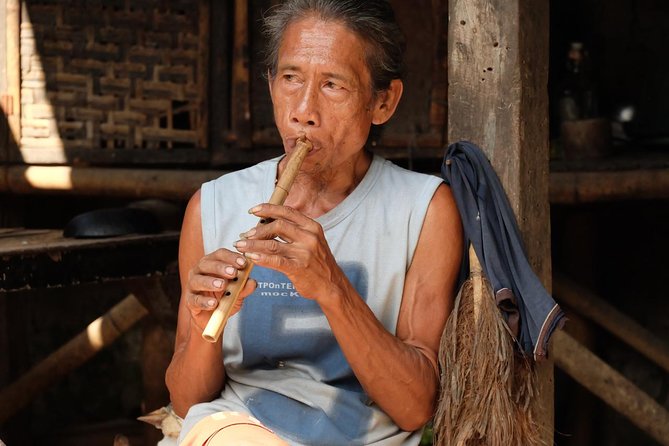
Next is Ubud Palace, with about 30 minutes scheduled and admissions included. Ubud Palace is described as the home of the royal family and now functions as a cultural space where visitors can learn more about Balinese culture conservation. The royal family’s role is tied to protecting and maintaining the future of Balinese culture.
This is a good stop when you want something that feels less like a viewpoint and more like a living institution. It won’t fill your day like a major hike would, but it gives you that important thread: Ubud isn’t just a tourist hub. It’s tied to governance, tradition, and preservation.
Tegalalang Rice Terraces: photo time with a time-and-effort story
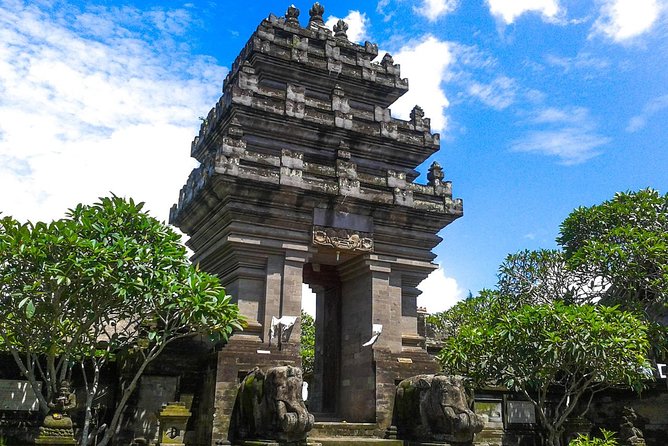
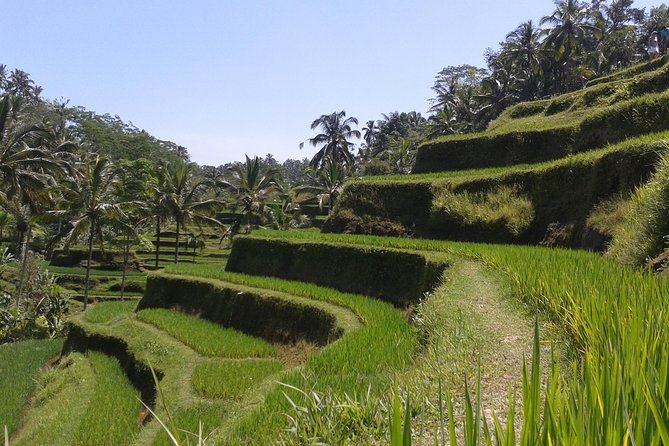
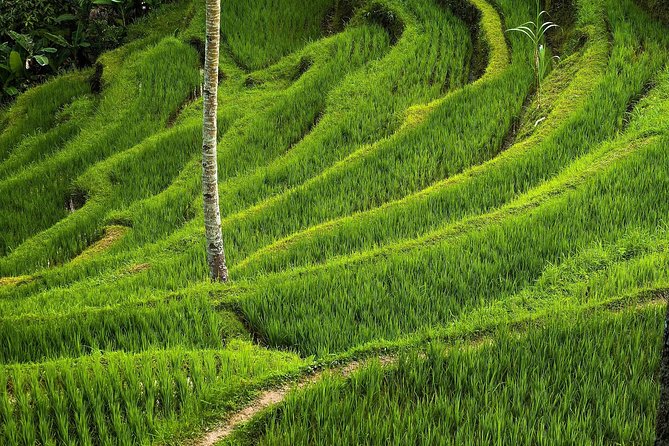
For views, you’ll want your camera out at Tegalalang Rice Terrace. You get about 30 minutes, with admissions included. These terraces are famous for a reason, but what makes this stop more than just a scenic pull-off is the explanation around how they’ve been built over hundreds of years.
You can expect:
- wide, layered views over the paddies
- a breezier feel compared with busier parts of Ubud
- a photo moment where you can walk to better angles quickly
My practical take: bring patience for crowds. This area draws people for good reason, so you’ll share it. The best move is to use your 30 minutes deliberately—take your main photos early, then slow down and look again with the story from the guide in your head.
Goa Gajah (Elephant Cave): 9th-century carvings and a quiet sense of place
One hour goes to Goa Gajah, also known as Elephant Cave. It’s described as dating to the 9th century and functioning as a sanctuary. At the entrance, the cave façade features relief carvings of menacing creatures and demons carved into the rock.
A quick reality check: the name Elephant Cave can make you expect elephants. You may not see elephants. The value here is in the carvings and the sanctuary setting, plus the guide’s explanation of the cave’s spiritual purpose.
This is also a good stop for people who like history, but don’t want a museum pace. You’re standing in a real place that still feels like it has atmosphere. With context from your guide, those stone details start to feel less random.
Bali Pulina Coffee Plantation: civet coffee production, explained
The tour also includes a stop at Bali Pulina Coffee Plantation, where you’ll learn how civet coffee is produced. That’s a fascinating topic because it mixes animal habits, processing, and local agriculture into one story. Even if you don’t plan to buy coffee, the learning angle makes the stop worth it for most people.
Timing-wise, you’ll likely experience this as part of the middle of the day, when you’re transitioning between temple and landscape views. It’s not listed as a separate numbered stop in the info you shared, but it is clearly part of the overall experience.
Keep your expectations realistic: a plantation stop can be educational, but it also tends to lead into tasting or shopping areas. If you prefer strict sightseeing, you can ask your guide how the time is structured and whether there’s flexibility for your schedule.
Lunch, timing, and how to avoid a late-day slump
Lunch isn’t included, but you will stop for a meal at a local eatery. That matters because food breaks can make or break a long day. If you’re picky about timing, tell your guide what you prefer—fast and simple, or sit-down and enjoy.
You might even get a lunch stop with views, including a location described as a dormant volcano site where the view of an active volcano could be blocked by clouds. Even if cloud cover changes what you see, the point is that your lunch break isn’t necessarily just a boring reset. It can come with a setting.
What I’d do if I were planning this day: bring a payment method ready for lunch and snacks, keep an extra buffer for photos, and use the bottled water you’re provided to stay ahead of the heat.
Who should book this Ubud Cultural Day Tour
This tour is a strong match if:
- you have limited time and want a full sweep of Ubud’s key culture spots
- you care about why places matter, not just where they are
- you want a guide who can answer questions as you go, not one who just drives
- you like a mix of temples, performance, art browsing, and rice terrace viewpoints
It’s less ideal if:
- you want a slow, flexible day with long breaks between stops
- you dislike shopping at all and don’t want to pass craft displays (you can opt out, but you can’t avoid them entirely)
- you’re sensitive to a tightly packed schedule (there’s a lot in the day)
Should you book it
Yes, I think it’s worth booking if you want one day in Ubud that connects performance, temples, art craft, and scenery into a single story. The price—$75—feels fair when you factor in hotel pickup/drop-off, bottled water, a guide, and admissions included across multiple major stops. You’re paying for organization and interpretation as much as for the sites themselves.
I’d book it especially if you’re the type who asks questions when something catches your eye. If you’re the type who needs more space between stops, consider another format. This one is designed to move.
FAQ
How long is the Ubud Cultural Day Tour?
It runs about 9 to 12 hours. The exact timing can shift based on travel time and how long you spend at each stop.
What time does the tour start, and is pickup included?
The start time is 8:00 am. Hotel pickup and drop-off are included, and you’ll be picked up from your accommodation (you’ll be asked for specific pickup timing).
Is lunch included?
No. Lunch isn’t included, though you’ll stop at a local eatery during the day.
What’s included in the price besides the tour itself?
Included are bottled water, a driver/guide, and hotel pickup and drop-off. Admission tickets are included for the listed stops.
Does this tour include the Barong Dance performance?
Yes. You’ll attend Sahadewa Barong Dance & Fire Dance with admission included, scheduled for about 1 hour.
Can I cancel for free?
Yes. You can cancel for a full refund if you cancel at least 24 hours before the experience’s start time.
More Bali Tour Picks


More Bali Reviews & Picks
More Around Ubud & the Monkey Forest



Still deciding? More Bali days reviewed, from volcano sunrises to island crossings









Ubud, Monkey Forest & Campuhan, compared.
 ★ 5.0All-Inclusive Ubud Private TourFrom $10014,344 reviews
 ★ 5.0Best of Ubud Full-Day Tour with Jungle SwingFrom $568,571 reviews
 ★ 5.0Ubud: Monkey Forest, Jungle Swing, Rice Terrace, and Water TempleFrom $317,160 reviews
 ★ 5.0Best of Ubud 1-Day Private TourFrom $544,451 reviews
 ★ 4.4Ubud Palace Legong Dance Show TicketFrom $63,979 reviews
 ★ 5.0Body Massage Experience in Ubud Traditional SpaFrom $213,506 reviews
 ★ 4.4Ubud Kecak and Fire Dance Show TicketsFrom $62,631 reviews
 ★ 5.0Ubud Cooking Class Bali with Balinese ChefFrom $351,609 reviews