
Reviewed · UBUD, MONKEY FOREST & CAMPUHAN
Ubud Cooking Class Bali with Balinese Chef
Ubud in 4 hours turns into dinner you can cook. This hands-on class with a Balinese Chef has you working at your own station, in English, making lunch or dinner rather than just watching.
I really like two things here: the short Traditional Art Market visit (included on the morning trip) and the fact that you learn core Balinese flavors like bumbu Bali and sauce kacang peanut sauce as part of the meal.
The main thing to watch is logistics: pickup/return transfer is only included for the Ubud center area on the morning class, and if you’re staying elsewhere it can cost extra.
In This Review
- Key things to know before you go
- Cooking in Ubud, but with your hands doing the work
- The Ubud Traditional Art Market stop: quick, useful, and included
- Ketuts Bali Cooking Class: how the day is structured
- Your full menu: vegetarian or non-vegetarian, built around peanut sauce
- Vegetarian dishes you’ll make
- Non-vegetarian dishes you’ll make
- Peanut sauce and bumbu Bali: the real skill you take home
- Lunch or dinner on your own plate: tasting with context
- Price and logistics: what $35.79 really covers
- Who this Bali cooking class suits best
- Weather and timing: plan for small bumps
- Should you book the Ubud Cooking Class Bali with a Balinese Chef?
- FAQ
- FAQ
- How long is the cooking class?
- Is pickup included?
- Does the afternoon class include hotel pickup?
- What languages is the class taught in?
- Do I cook the food myself or just watch?
- Is there a vegetarian option?
- What dishes are included in the non-vegetarian menu?
- What is included with the price?
- Is a market visit included for both morning and afternoon classes?
- How many people are in the group?
- What if the weather is bad?
Key things to know before you go
- You cook at your own station with utensils and ingredients provided, so you’re not stuck standing back
- English instruction with Balinese chefs, with step-by-step guidance
- Market tour is morning-only, with admission included
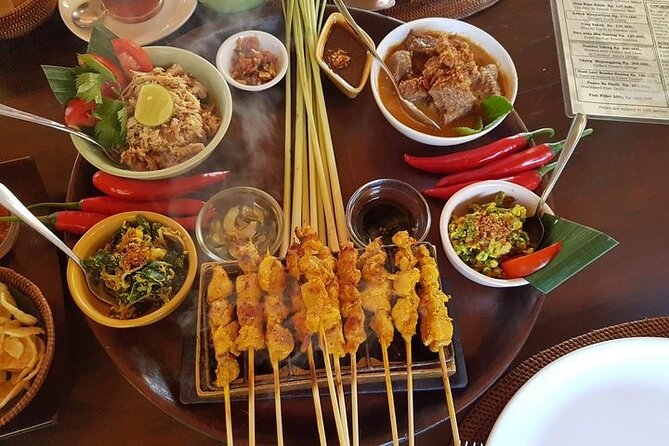
- Both vegetarian and non-vegetarian menus are built around the same peanut sauce base and Balinese spice paste
- Small group feel with a maximum of 24 travelers
Cooking in Ubud, but with your hands doing the work
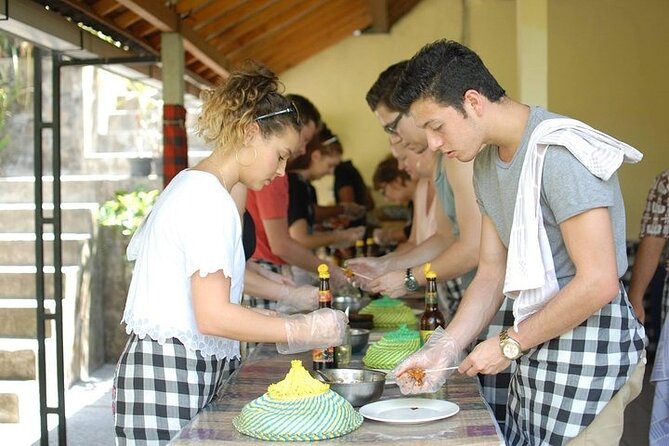
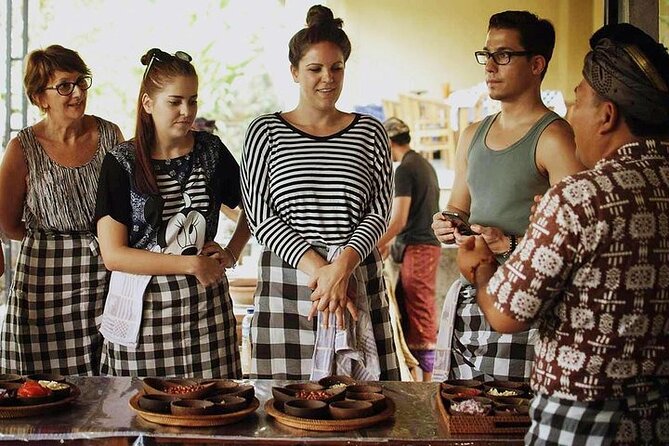
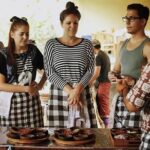
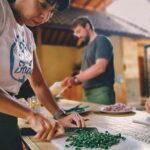
This is the kind of class that works best when you want more than a food show. You arrive, get set up, and then you cook. You’re handed your station, your utensils, and the ingredients, and you’re responsible for making the dishes you’ll eat.
That hands-on style matters. In Ubud, there are plenty of cooking experiences where you chop a little and then watch. Here, the meal is built around you doing the full process. You also get to taste what you cooked, so you can tell what worked, what you want to repeat, and what you might adjust at home.
Instruction is in English with a Balinese chef, which is a big plus if you don’t speak the local language. You’ll still feel the local rhythm: market sights, Balinese spice aromas, banana-leaf wrapping, and the big smell of fried noodles from your own pan.
If you like practical learning—recipes you can actually repeat—this one clicks.
More around Ubud, from the Monkey Forest to the Campuhan ridge



The Ubud Traditional Art Market stop: quick, useful, and included
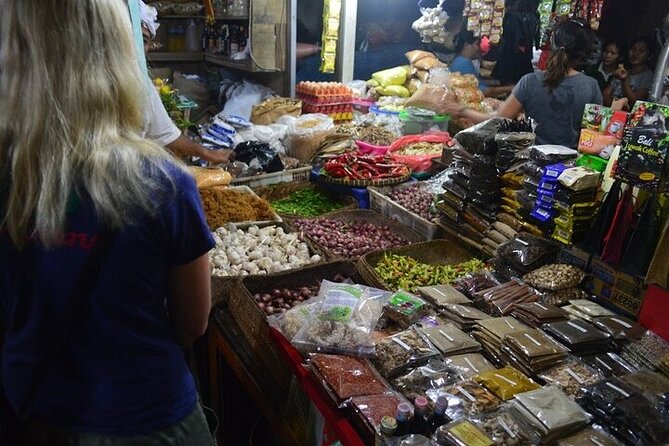
For the morning option, the day starts with a visit to the Ubud Traditional Art Market. It’s about 30 minutes, and the admission ticket is included.
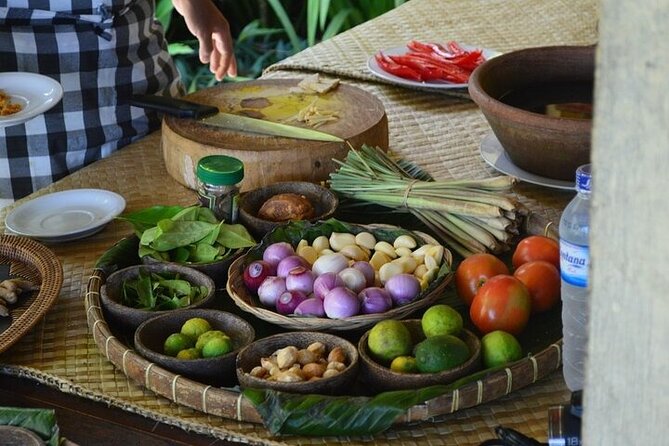
Even though it’s short, the timing is smart. You’re not trying to shop for hours. You’re getting a guided snapshot of how ingredient shopping fits into daily Balinese cooking. You’ll see stalls and lots of produce and local pantry items that connect directly to the menu you’ll cook later.
What to do here is simple:
- Watch for spice-paste ingredients and produce you recognize from the dishes
- Take in the pace—this market energy helps you understand why Balinese cooking leans so hard on fresh flavor
- Spend just enough time to connect the sights to what’s coming next
If you’re doing the afternoon class, you don’t get this market stop. That’s not a problem, just plan your expectations: the kitchen part becomes the main event.
Ketuts Bali Cooking Class: how the day is structured
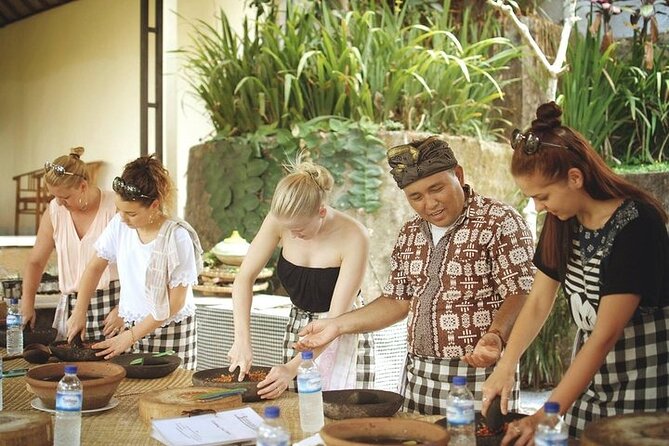
The cooking portion runs for about 3.5 hours, giving you roughly a 4-hour total experience with the market step (morning) or the meeting point step (afternoon). The group size stays capped at 24 travelers, which usually helps with getting attention when you need it.
At Ketuts Bali Cooking Class, the format is straightforward:
1) You’re taught as you go
2) You handle the cooking yourself at your station
3) You finish and eat what you made, as your lunch or dinner
You’ll also get a welcome drink and mineral water. That small touch matters in a hot place—especially when you’re standing and stirring your own pots.
In a few of the class descriptions, you’ll see the cooking team called out as friendly and supportive, with clear step-by-step help. One name that shows up is Made. If you meet him or someone from the team, expect a relaxed teaching style where you’re meant to actually produce results, not just follow along.
Your full menu: vegetarian or non-vegetarian, built around peanut sauce
This class is flexible. You choose either the vegetarian or non-vegetarian menu option, and both versions share key Balinese building blocks.
Vegetarian dishes you’ll make
- Sauce Kacang (peanut sauce)
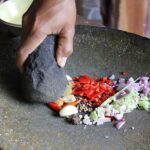
- Bumbu Bali (Balinese spice paste)
- Kare Sayur (vegetable curry)
- Tempe, tofu and vegetable Sate with peanut sauce
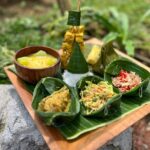
- Pepes Mushroom (grilled mushroom in banana leaf)
- Mie Goreng (fried noodle)
- Kolak Pisang (braised banana saba in palm sugar gravy)
More farm and village cooking classes

Non-vegetarian dishes you’ll make
- Sauce Kacang (peanut sauce)
- Bumbu Bali (Balinese spice paste)
- Ayam Bumbu Bali (Balinese fried chicken)
- Sate Ayam with peanut sauce
- Pepes Ikan (grilled fish in banana leaf)
- Mie Goreng (fried noodle)
- Kolak Pisang (braised banana saba in palm sugar gravy)
The reason this menu structure is such good value is the repeatability. You’re learning a small set of core flavors that show up across multiple dishes. Peanut sauce isn’t a one-off here; it ties the meal together. Bumbu Bali is another anchor. When you understand those two, you can think in terms of sauces and flavor bases, not just single recipes.
Also, banana leaf shows up in both menus via pepes. That’s a distinctive Balinese technique, and you’ll taste the result you worked for.
Peanut sauce and bumbu Bali: the real skill you take home
If you care about cooking beyond this one meal, focus on the sauces and spice paste. That’s where your knowledge pays off later.
Here’s why they matter:
- Sauce Kacang is versatile. Once you understand the balance, you can adapt it to other Indonesian dishes.
- Bumbu Bali is the flavor engine. It helps explain why chicken, fish, and vegetables can all taste so cohesive while still being different.
Even if you only remember the general method, that’s useful. Then at home, you can tweak heat and thickness to match your preferences and ingredients.
The class is designed so you’re not just tasting at the end. You’re actively making those bases as part of the full meal. That turns a flavor lesson into an actual skill set.
Lunch or dinner on your own plate: tasting with context
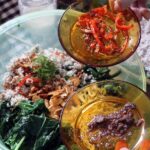
One of the most satisfying parts is eating what you cooked. The meal isn’t just included. It’s tied to the work you did, so your first bite comes with context: you know what you added, you know where something thickened, and you know what stage you were at when the aroma changed.
Your lunch or dinner comes after you finish the dishes. You’ll also have time in the dining area to enjoy the full spread, including the dessert—Kolak Pisang, braised banana with palm sugar gravy.
I like this approach because it helps you learn faster. You can’t fully understand a dish while it’s in pieces on a cutting board. You understand it when you eat it as a complete plate.
Portions are enough to be a real meal, not a sample tasting. And since the menu includes multiple dishes (7 cooking items), you get variety without needing to order a bunch of food afterward in town.
Price and logistics: what $35.79 really covers
At $35.79 per person, this class is priced like a mid-range activity, but it includes a lot of value that adds up fast in Bali.
You get:
- English instruction
- Cooking ingredients
- Cooking ware and utensils
- A welcome drink and mineral water
- 7 dish cooking (vegetarian or non-vegetarian)
- Lunch or dinner (the meal you prepare)
- Morning traditional market tour with admission
Where people get tripped up is transport. Return hotel transfer is included for the morning class only for hotels in Ubud center, and it’s described as sharing car. If you’re outside that area, pickup/return costs extra, up to IDR 600K/car.
For the afternoon class, you meet at 2:30 pm at the front of Lapangan Desa Ubud as the pick-up point for returning (per the plan). That means you’ll want to know how you’ll get there on time.
So the real value call is this: if you’re staying in central Ubud and can do the morning option, the “included” piece is stronger. If you’re elsewhere, plan for the possible extra transport cost and keep your schedule tight.
Who this Bali cooking class suits best
You’ll probably love this if:
- You want to learn how to make Balinese dishes you can repeat
- You enjoy structured cooking rather than random food tasting
- You’re traveling with another person or as part of a group of up to 24
- You need an English-friendly class with real kitchen time
It’s also a good fit for vegetarian eaters, since the vegetarian menu is not treated as an afterthought. It has a full set of dishes, including curry, satay, pepes mushroom, fried noodles, and dessert.
If you’re the type who prefers quiet, scenic tours with lots of downtime, this might feel more active than you expected. This class is about working—chopping, stirring, frying, seasoning, and tasting.
Weather and timing: plan for small bumps
The experience requires good weather. If poor weather cancels it, you’ll be offered a different date or a full refund. Also, the experience can be canceled if the minimum traveler count isn’t met, with an option for a different date/experience or a full refund.
That doesn’t mean the class is unreliable—it just means you should schedule it with some buffer in your Ubud plan.
For timing, remember the difference:
- Morning class includes the market tour
- Afternoon class meets at 2:30 pm at Lapangan Desa Ubud
Should you book the Ubud Cooking Class Bali with a Balinese Chef?
I think you should book if you want an actual skill-building meal. The combination of English instruction, your own cooking station, and the focused menu around peanut sauce and bumbu Bali makes this more than a one-time dinner event. You leave with flavors you understand and dishes you can try again.
Skip it or rethink if transport costs would be a hassle for your exact hotel location, especially if you’re outside central Ubud and you’re hoping for everything to be included. Also, if you hate active tasks in hot conditions, the “hands-on” part might be less fun.
If you’re in Ubud and you’re hungry to learn, this is a straightforward choice.
FAQ
FAQ
How long is the cooking class?
It runs for about 4 hours total (with the cooking time listed at around 3 hours 30 minutes).
Is pickup included?
For the morning class, return hotel transfer is included only for hotels in Ubud center (sharing car). Other areas cost extra, up to IDR 600K/car.
Does the afternoon class include hotel pickup?
The afternoon class meets at 2:30 pm at the front of Lapangan Desa Ubud as the pick-up point (with return planned from there).
What languages is the class taught in?
The cooking class is conducted in English.
Do I cook the food myself or just watch?
You cook all of the dishes yourself with your own cooking station and utensils.
Is there a vegetarian option?
Yes. The vegetarian menu includes Sauce Kacang, Bumbu Bali, Kare Sayur, Tempe/tofu/vegetable sate, Pepes Mushroom, Mie Goreng, and Kolak Pisang.
What dishes are included in the non-vegetarian menu?
The non-vegetarian menu includes Sauce Kacang, Bumbu Bali, Ayam Bumbu Bali, Sate Ayam with peanut sauce, Pepes Ikan, Mie Goreng, and Kolak Pisang.
What is included with the price?
It includes the English-speaking chef, welcome drink/mineral water, traditional market tour (morning only), cooking ingredients and ware, cooking for 7 dishes, and the lunch/dinner you taste.
Is a market visit included for both morning and afternoon classes?
No. The traditional market tour is included only for the morning trip.
How many people are in the group?
The maximum group size is 24 travelers.
What if the weather is bad?
If it’s canceled due to poor weather, you’ll be offered a different date or a full refund.
More Bali Reviews & Picks


More Farm & Village Cooking
More Around Ubud & the Monkey Forest
Still deciding? More Bali days reviewed, from volcano sunrises to island crossings











Ubud, Monkey Forest & Campuhan, compared.
 ★ 5.0All-Inclusive Ubud Private TourFrom $10014,344 reviews
 ★ 5.0Best of Ubud Full-Day Tour with Jungle SwingFrom $568,571 reviews
 ★ 5.0Ubud: Monkey Forest, Jungle Swing, Rice Terrace, and Water TempleFrom $317,160 reviews
 ★ 5.0Best of Ubud 1-Day Private TourFrom $544,451 reviews
 ★ 4.4Ubud Palace Legong Dance Show TicketFrom $63,979 reviews
 ★ 5.0Body Massage Experience in Ubud Traditional SpaFrom $213,506 reviews
 ★ 4.4Ubud Kecak and Fire Dance Show TicketsFrom $62,631 reviews
 ★ 5.0Electric Cycling Tour of Ubud with Free Hotel Transfer and LunchFrom $411,397 reviews
Browse the lists this tour appears in