
Reviewed · FARM & VILLAGE COOKING CLASSES
Balinese Cooking class with traditional morning market visit
If you like your travel plans hands-on, this one fits. You’ll start with a traditional morning market visit in Ubud to pick ingredients, then continue to the Cobek Bali cooking area with chefs like Wayan and Dewa guiding you step by step.
I especially loved how personal it felt with a small group setup (maximum 8). And the teaching style stands out: from choosing spices at the market to learning how to make canang offerings before you cook.
One thing to consider: this is a full morning block, about 6 hours, so plan for an early start and keep your day afterward light.
In This Review
- Key things to know before you go
- Why this Ubud market-to-cooking class works so well
- Getting there: hotel pickup and the air-conditioned ride
- The traditional morning market: choosing ingredients like you mean it
- Laplapan and the canang offerings: the culture lesson you actually practice
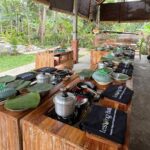
- Inside the cooking workshop: how the class runs in a small group
- What you eat: a sit-down meal built from your own cooking
- Price and value: is $35 really worth it?
- Practical tips to get the most out of your morning
- Who should book this class in Ubud?
- Should you book this market-to-cooking class in Ubud?
- FAQ
- Where is this cooking class experience located?
- How long does the experience last?
- Is hotel pickup included?
- What is the maximum group size?
- What happens during the traditional morning market visit?
- Do you learn to make Balinese offerings?
- What is included in the price?
- What is the cancellation policy?
Key things to know before you go
- Market-to-stove format: you choose what goes into your dishes, then cook with it.
- Canang offerings included: you practice making canang and related offering equipment before the cooking starts.
- Small groups (max 8): you get more direct help while you chop, stir, and taste.
- Hotel pickup plus air-conditioned transport: you’re not stuck figuring out rides between stops.
- You eat what you cook: sit down to the meal made from your own dishes.
- A repeatable takeaway: you receive a recipe book so you can recreate the flavors at home.
Why this Ubud market-to-cooking class works so well
Ubud is full of cooking classes, but this one uses a smarter flow than the usual show-and-taste. You don’t just watch or copy a recipe sheet. You see ingredients in the wild at a traditional food market, then choose your own vegetables, herbs, meat, and spices. That matters because Balinese cooking is ingredient-driven: small differences in spice blends and fresh produce change the final dish.
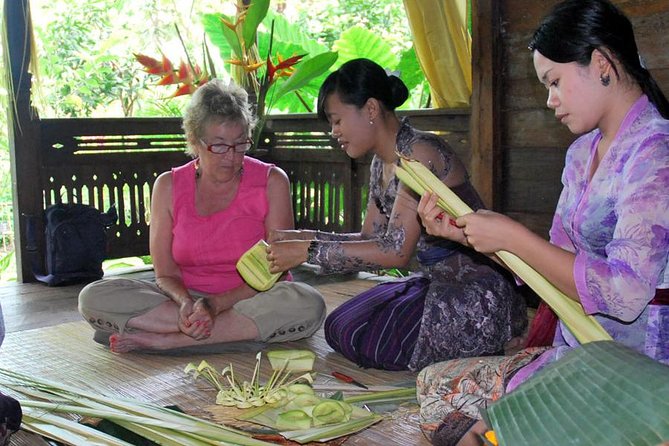
After the market, the day keeps moving with a stop in the village area of Laplapan for a warm welcome. That cultural pause isn’t filler. It sets context for the next part: making Balinese offerings. In this class, you practice how to make canang and other offering equipment before you start cooking.
Finally, you cook in a workshop setting with a chef who explains techniques while you work. You don’t feel rushed, and you get enough guidance to actually learn what to do next time. Many people end up leaving with both confidence in the process and recipes they can follow later.
More farm and village cooking classes
Getting there: hotel pickup and the air-conditioned ride
This experience starts with pickup offered from your hotel in the Ubud area. The transport between the market and the cooking workshop is included, and it’s done by an air-conditioned vehicle. For a morning class, that’s a small comfort that makes a big difference. You’ll arrive ready to shop, not already sweaty and cranky.
On the ride, the driver may share info about the passing sights. Some groups have had friendly guides behind the wheel, like Awan, who helpfully pointed out things along the way. Even if your driver isn’t Awan, the setup is the same: you’re guided between stops, with fewer logistics on your end.
If you’re planning other activities that day, treat this like a true half-day commitment. About 6 hours goes faster than you think once you’re tasting at the market and hands-on at the stove.
The traditional morning market: choosing ingredients like you mean it
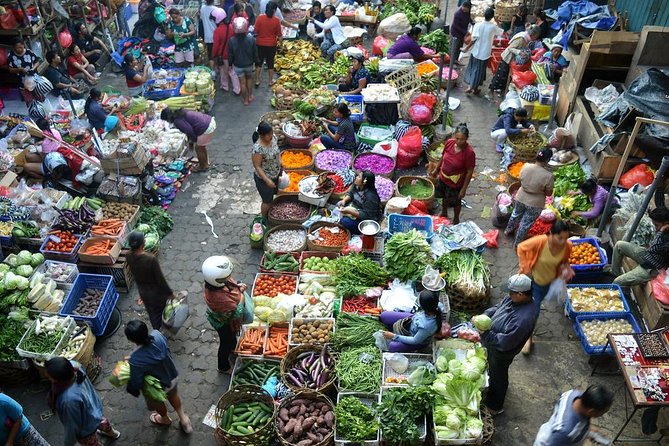
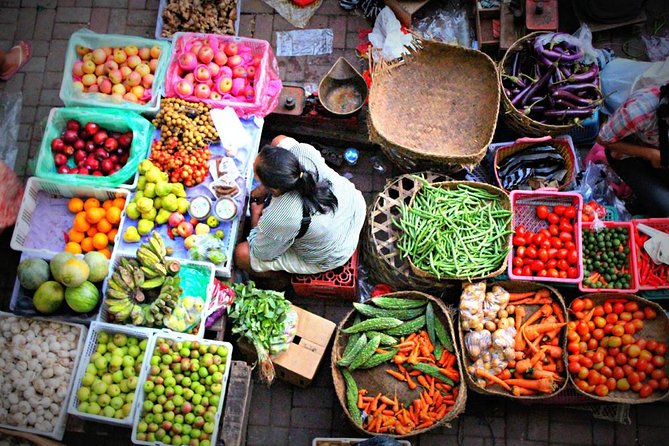
The market visit is one of the best parts because it trains your eye. Instead of vague “use spices” instructions, you’ll see herbs, vegetables, and aromatics up close. You can also taste some items if you want, which makes it easier to understand what each ingredient contributes.
Here’s what you’re really doing at the market:
- selecting vegetables, herbs, meat, and spices for your cooking class
- getting a feel for what’s fresh and commonly used in Balinese kitchens
- learning how market ingredients connect to what you’ll cook later
You’ll also get explanations for unfamiliar items. People often come away surprised by how many ingredients are tied to everyday Balinese flavors. It’s also an easy way to experience local life without needing to navigate a market alone.
Practical note: wear comfortable shoes. Market time includes lots of walking and stopping. And since it’s a morning market, you’ll want to be ready to move at a relaxed pace.
Laplapan and the canang offerings: the culture lesson you actually practice
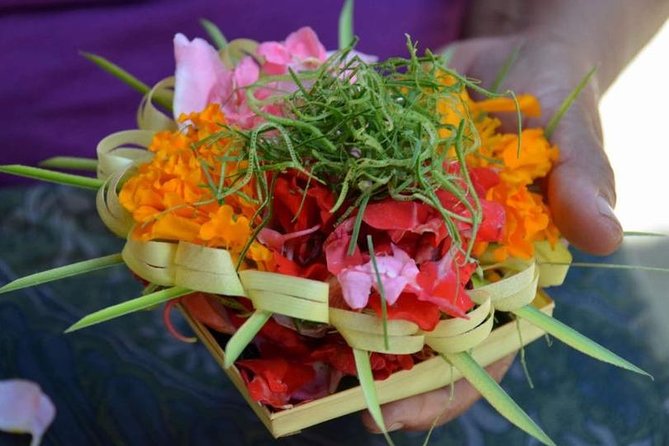
Right before you cook, you’ll head to Laplapan and receive a warm welcome. Then comes a tradition that a lot of cooking classes skip: making Balinese offerings, specifically canang and other offering equipment.
This part changes how you think about the food. In Balinese life, offerings aren’t just decoration. They’re part of daily practice and respect. Learning how to make canang gives you a deeper reason for why certain foods and aromas show up so often.
In the class, you don’t just watch someone assemble an offering and call it done. You’re taught the process, and you get hands-on. Many people say this segment is one of the most memorable cultural moments of the day because it feels like a real skill, not a quick photo-op.
If you like meaningful experiences, not just meals, this is the bridge between culture and cooking.
Inside the cooking workshop: how the class runs in a small group
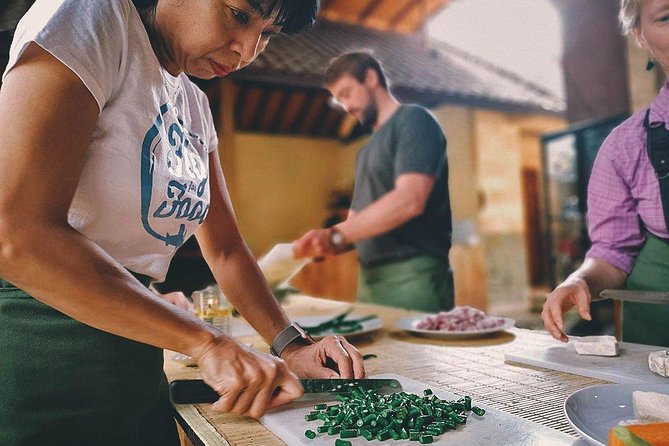
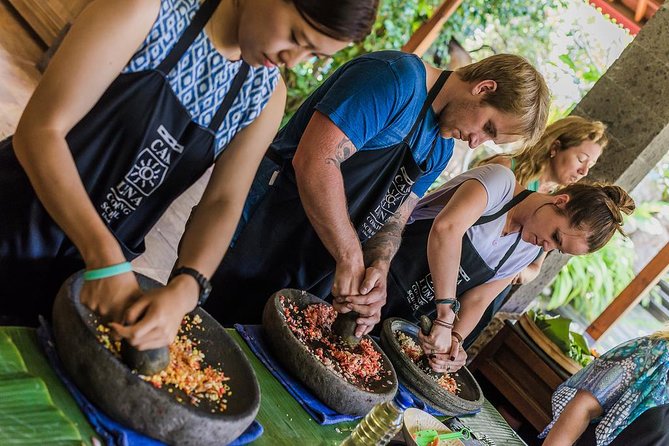
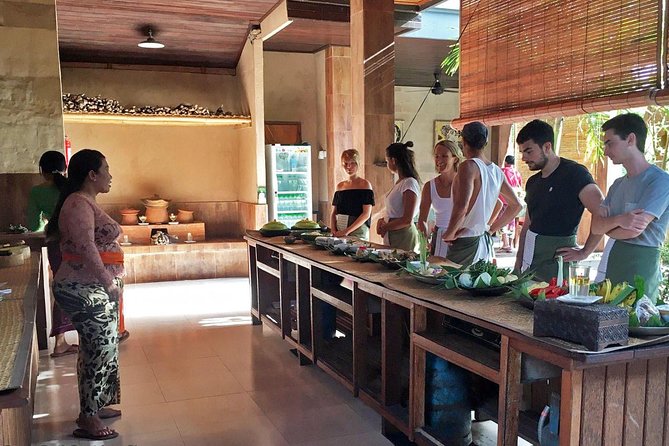
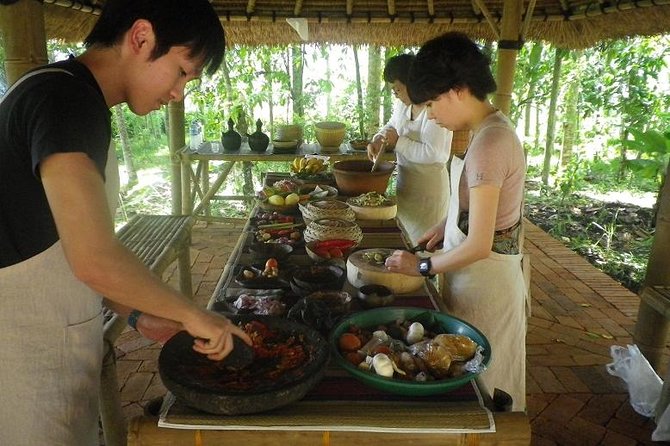
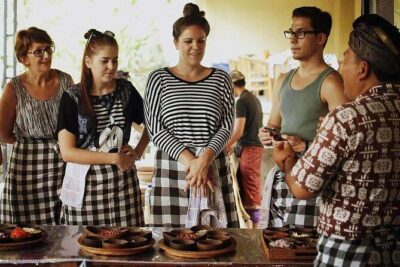
Once the offering lesson is done, it’s time to cook. The workshop setup is designed for interaction. You’ll work with expert chefs who guide you and assist as you prepare starters, main courses, and dessert.
Small groups make this easier. With up to 8 travelers, you’re not waiting in the background while someone else gets the chef attention. If you have questions about technique—chopping, mixing, timing, or spice balance—you can ask and get answers in the moment.
Based on what people have experienced, you can expect a session that covers a lot of dishes without feeling chaotic. Some groups describe making around nine dishes. Others mention a structured multi-course spread, like five courses, all cooked together. The key is that you’re not just assembling one dish; you’re practicing multiple parts of a Balinese meal.
Also, the hosts often keep the energy friendly and humorous, which helps when you’re learning new methods. If Wayan or Dewa is leading your class, expect clear instructions and lots of patient guiding. People also mention that classes can be flexible with dietary needs, including vegetarian options. If you have restrictions, tell the team ahead of time or on the day so they can plan substitutions.
A few more Bali tours and experiences worth a look



What you eat: a sit-down meal built from your own cooking
The “you cook, then you eat it” part isn’t a gimmick here. You sit down to enjoy the dishes you made, and it’s typically a satisfying, real meal rather than tiny tasting portions.
Common themes people mention:
- the food is plentiful
- dishes look as impressive as they taste
- everything is connected to the ingredients you selected at the market
This is where the market visit pays off again. Because you picked the produce and spices, you understand what’s in front of you. You can also remember which ingredient you chose, which makes it easier to recreate the dishes later.
Some groups received recipe books to take home, which is huge if you want to keep the flavors alive after you land back home.
Price and value: is $35 really worth it?
At $35 per person, this class is priced like a value-focused experience, not a luxury add-on. What you’re getting for that cost adds up:
- Hotel pickup (and air-conditioned transport between stops)
- market time to choose ingredients
- a hands-on cooking class with chef guidance
- cooking equipment
- class fees and taxes
- the meal you cook
A big reason it feels like good value: your time is packed with real learning. You’re not only learning recipes; you’re learning where ingredients come from and how offerings fit into the culture of food. And because it’s a small group, your attention from the chef is higher than you’d get in a large workshop.
If you’re a foodie who wants a practical takeaway—techniques you can repeat—this is the kind of deal that makes sense even if you only do one cooking class during your Bali trip.
Practical tips to get the most out of your morning
Here are the things that make this experience smoother and more fun:
- Go hungry, then pace yourself: the market tasting and the cooking work can fill you up. You’ll still want room for the sit-down meal.
- Ask questions while you cook: chefs will help you with technique and spice use. If you want to recreate dishes later, get the explanations while the process is fresh.
- Share dietary needs early: vegetarian options and dietary adjustments have been reported as available. Don’t assume it will happen automatically—ask.
- Take it at the speed of the class: many parts are hands-on (offerings and cooking). Rushing makes it harder to learn.
- Take photos, but stay present: market items and offering crafts are photogenic. Still, try to remember the steps, not just the images.
If your goal is learning, not just eating, the small-group setup is your friend.
Who should book this class in Ubud?
This is a strong match if you:
- want a real cultural food experience instead of a generic cooking demo
- love markets and want to see ingredients up close
- like hands-on classes where you do the work, not just watch
- want a take-home recipe book and the confidence to cook again later
It may be less ideal if you want a super casual activity with zero effort. This day is active. You’ll chop, mix, assemble, and cook. The tradeoff is real learning and a meal made by your own hands.
Should you book this market-to-cooking class in Ubud?
Yes—if your ideal Bali experience includes both learning and eating. For the $35 price, you’re not only buying recipes. You’re getting the full arc: market ingredient shopping, making canang offerings, then cooking multiple dishes with chef help, finishing with the sit-down meal.
The strongest reason to book is the combination of small group attention and the cultural offering segment. If you want your cooking class to feel like you actually stepped into Balinese daily life for a few hours, this is one of the more satisfying formats in Ubud.
FAQ
Where is this cooking class experience located?
It takes place in Ubud, Indonesia. The day includes a traditional morning market visit and a stop in the village of Laplapan, followed by cooking in a workshop setting.
How long does the experience last?
The duration is about 6 hours (approx.).
Is hotel pickup included?
Yes. Pickup is offered, and air-conditioned transport from your hotel to the market and workshop is included.
What is the maximum group size?
The class has a maximum of 8 travelers.
What happens during the traditional morning market visit?
You visit a local fresh food market to choose ingredients such as vegetables, herbs, meat, and spices for your cooking class. You can also experience local life in and around the market.
Do you learn to make Balinese offerings?
Yes. Before the cooking class begins, you learn the process of making canang and other offering equipment.
What is included in the price?
Included: cooking equipment, air-conditioned vehicle, cooking class fees, and taxes.
What is the cancellation policy?
Free cancellation is available. You can cancel up to 24 hours in advance for a full refund, with the cutoff based on the experience’s local start time.
More Shopping Tours worth booking around Bali
More Bali Reviews & Picks






More Farm & Village Cooking

Still deciding? More Bali days reviewed, from volcano sunrises to island crossings











Farm & Village Cooking Classes, compared.
 ★ 5.0Ubud Cooking Class Bali with Balinese ChefFrom $351,609 reviews
 ★ 5.0PRIVATE Authentic Balinese Cooking Class in Ubud at Putu’s HomeFrom $75644 reviews
 ★ 5.0Balinese Ubud cooking school (9 Dish Cooking and Market Tour)From $58540 reviews
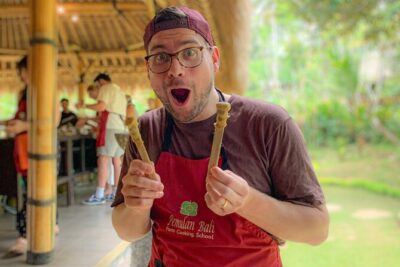 ★ 5.0Balinese Farm Cooking Class by Pemulan BaliFrom $39410 reviews
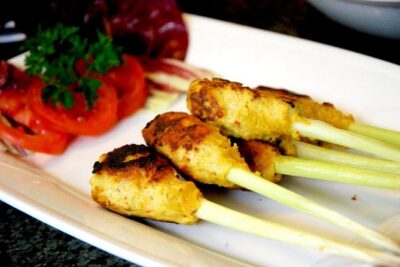 ★ 5.0Balinese Cooking Class in SeminyakFrom $66281 reviews
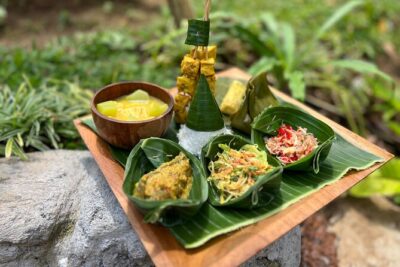 ★ 5.0Balinese Authentic Cooking Class in UbudFrom $39239 reviews
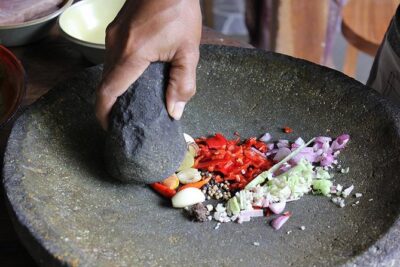 ★ 5.0PRIVATE Balinese Cooking Class in Ubud with Dewa with TransfersFrom $69213 reviews
 ★ 5.0Jambangan Bali Cooking ClassFrom $34142 reviews
Browse the lists this tour appears in