
Reviewed · FARM & VILLAGE COOKING CLASSES
Jambangan Bali Cooking Class
Cooking in a Balinese home beats restaurant food. I love the market-to-kitchen flow, where you choose herbs and spices yourself, and I also love the family-life details like rice paddy glimpses and the open-kitchen cooking setup. A possible drawback: if you book an evening class, the market may be closed already, so the day can shift toward tea and coffee instead.
This class is built for real hands-on learning. You’ll cook your own Balinese dishes (taught in English by Balinese chefs), then sit down to the meal you made in a garden setting. With a maximum group size of 15 and an approx. 5-hour schedule, it’s relaxed, structured, and easy to fit into a Ubud trip.
In This Review
- Key things I’d mark on your Ubud map
- Ubud market start: herbs, spices, and rice paddy views
- Inside the Balinese home: open kitchen, family life, and English coaching
- Making dinner and lunch yourself: more than just tasting
- Offerings, coconut oil, and rindik music: the cultural layer that’s hands-on
- Lunch vs dinner class: timing affects the market and coffee stops
- Price and logistics: $34 for a full five hours in a real home
- Should you book Jambangan Bali Cooking Class?
- FAQ
- Where does the cooking class start?
- How long does the experience last?
- Is lunch included?
- Are classes taught in English?
- Can I choose between a lunch class and a dinner class?
- How many people are in the group?
- What happens at the start of the day?
- Do you get the recipes to take home?
- What are the cancellation rules and weather conditions?
Key things I’d mark on your Ubud map

- Start at a traditional market early for ingredient picking, including fresh herbs, spices, and produce
- A Balinese family home, not a restaurant kitchen with an open-air cooking setup
- You cook the recipes yourself, not just watch and snack
- Beyond food: coconut oil processing, making an offering, and music time with bamboo rindik
- Small group size (max 15), which helps you ask questions and move at a comfortable pace
- Lunch is included (alcohol is not), and you’ll eat what you cook
Ubud market start: herbs, spices, and rice paddy views
Your day kicks off early at a traditional market in the Ubud area. The point isn’t to be a tourist with a camera. It’s to help you learn what Balinese cooking starts with: fresh herbs, aromatic spices, and the vegetables and meats chosen for your dishes.
You’ll be guided through the ingredients so you know what you’re buying and why it matters. This is the kind of prep most restaurant meals skip. Later, when you’re chopping, grinding, or mixing, you’ll understand the ingredient logic instead of just following steps.
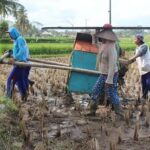
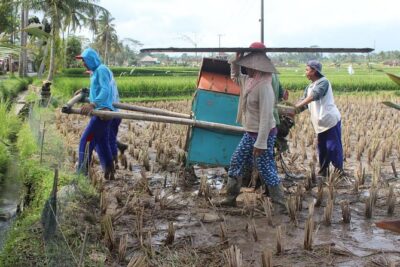
If you’re booking a morning class, you’ll likely get more of the “from the land” feeling: you can see rice farmer activities along the way. It’s not a long lecture, and it’s not a staged photo op. It’s more like a quick window into how food and daily routine connect in Bali.
My practical take: If you care about market time, choose the morning option. If you only want the cooking and don’t care about market context, you can still have a great day with the dinner class—but be ready for timing changes.
More farm and village cooking classes
Inside the Balinese home: open kitchen, family life, and English coaching
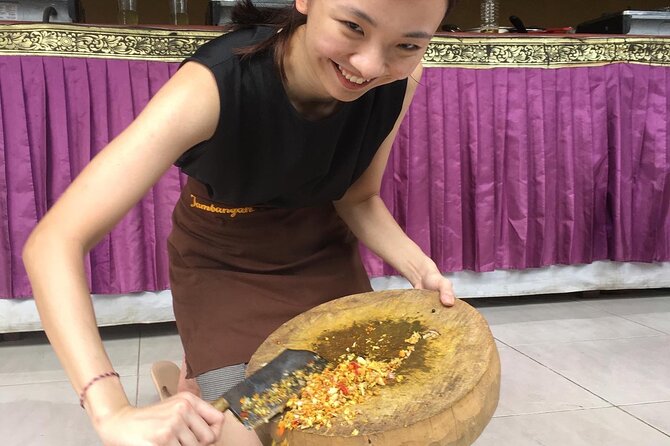
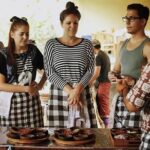
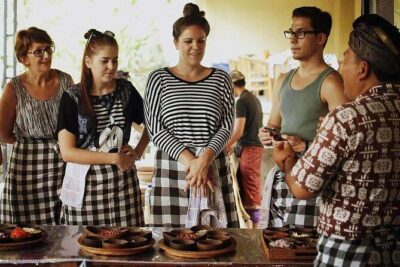
After the market, you’ll head to the Balinese house where the class happens. The setting is described as beautiful, and the layout matters because it’s an open kitchen. That means you can see what’s happening as you cook, without feeling boxed into a formal classroom.
One of the best parts here is that you’re not only learning recipes. You’re meeting the rhythms of a family home: how they live, what they do day-to-day, and how food fits into that picture. The chefs are Balinese and teach in English, with a friendly, conversational style that keeps things moving.
You might work with different hosts depending on your day. Names that come up include Putu, Wayan, and Made. Even with different personalities, the teaching style stays consistent: clear guidance, culture context, and lots of practical cooking help as you make each dish.
Small group (max 15) helps too. You’re not lost in a crowd. You get chances to ask questions about substitutions, ingredients, or what to do when something feels unfamiliar.
Making dinner and lunch yourself: more than just tasting
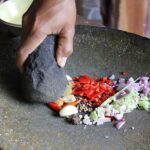
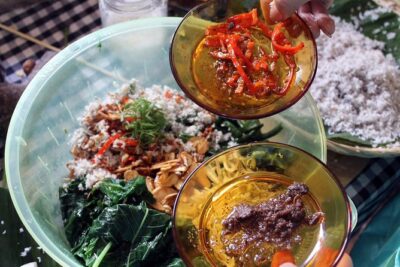
This isn’t a hands-off cooking demo. You make the recipes yourself, then eat them afterward. The schedule is designed so you cook, taste, and adjust while you’re still in the process, which is how you actually learn.
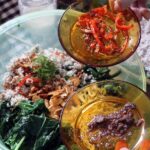
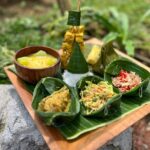
In many classes, you’ll work through multiple dishes, and the food quality is a big part of why people love this experience. The meal isn’t served as a separate “performance course.” It’s the payoff for what you’ve cooked. Many days end with lunch served in a garden setting, which feels pleasantly calm after the earlier activity.
Because alcohol isn’t included, plan on sticking with non-alcoholic drinks during the class. That also keeps the focus where it belongs: the flavors and the cooking method.
What you should expect to take home: you can leave with a copy of the recipes. That’s a big value add for anyone who doesn’t just want a fun afternoon, but wants to recreate the dishes later.
Dietary note: there’s at least one example of the hosts working around a chicken allergy so someone could still cook and eat comfortably. If you have allergies or dietary preferences, tell the team ahead of time so they can guide you toward dishes you can make safely.
Offerings, coconut oil, and rindik music: the cultural layer that’s hands-on
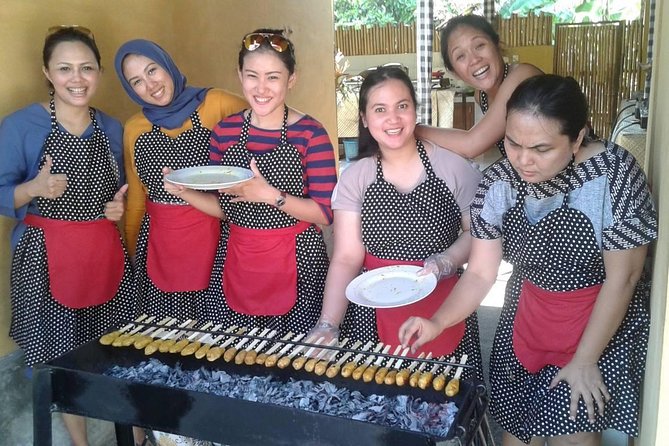
Balinese cuisine isn’t only about spices. It’s also about daily spiritual practice, household food prep, and tradition. This class builds that into the experience in a practical way.
You’ll learn about—and get to experience—basic elements of daily Hindu offerings. You can make a simple offering and also witness the household daily offering itself. For me, that turns the class from “food as a hobby” into “food as part of a living culture.” You see why certain ingredients and actions matter, because you’re watching how they’re connected to everyday life.
Another standout is authentic coconut oil processing. You learn about how coconut is handled and transformed into a usable kitchen ingredient. It’s the kind of skill that makes you appreciate the ingredient chain, not just the final dish.
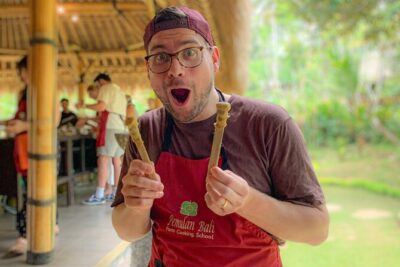
Then there’s the music component. You can play rindik, which is Balinese music made from bamboo. It’s not about performing for applause. It’s more like a playful moment that helps you feel connected to the home and its traditions, with a clear activity tied to Balinese culture.
Why this matters for you: these parts don’t feel like add-ons. They explain the “why” behind the food, and they make the day more memorable than a typical cooking class where the only result is a plate in front of you.
Lunch vs dinner class: timing affects the market and coffee stops
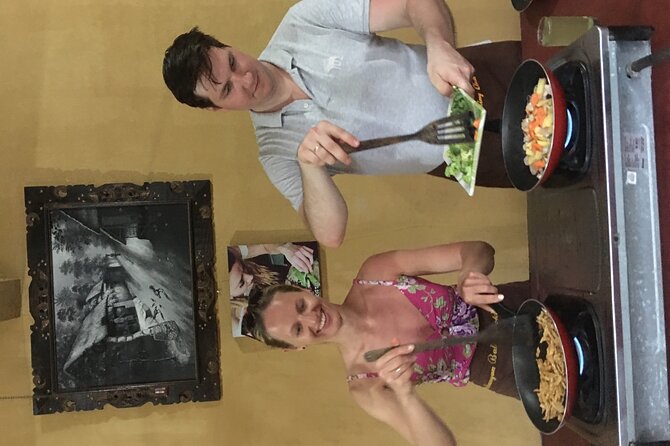
You can choose either a lunch or a dinner class. That choice affects what you experience beyond the cooking itself.
For morning classes, the day can flow more completely through market time and the surrounding countryside atmosphere. For evenings, the market might already be closed. In that case, the schedule can shift so you still get something meaningful from the region, such as a small plantation stop.
One reported variation includes a visit to a coffee plantation where you can sample coffees and teas, including luwak. The class doesn’t necessarily function as a guaranteed coffee stop every time, so treat that as a possibility—especially for dinner slots.
My advice for choosing:
- Pick lunch/morning if market selection and rice paddy context matter to you.
- Pick dinner if you want a more relaxed start and you’re okay with the day’s non-market parts changing based on timing.
Also, this experience requires good weather. Since parts of the day can involve outdoor garden eating and open-air setups, weather can affect comfort and flow.
A few more Bali tours and experiences worth a look

Price and logistics: $34 for a full five hours in a real home
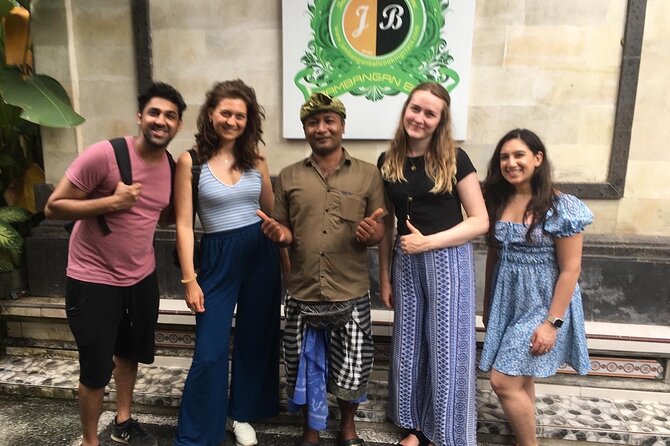
At about $34 for roughly five hours, this is strong value for a couple reasons.
First, you’re not just paying for recipes. You’re paying for market access, instruction in English, hands-on cooking, and extra cultural activities (offerings, coconut oil processing, and rindik music). Those elements take time and effort, and they’re hard to replicate in a typical tourist meal.
Second, the group size cap of 15 makes it feel more personal. In cooking classes, that can be the difference between standing by and actually learning techniques.
Third, you’re given lunch (alcohol not included). For many food experiences, your “real cost” ends up being what you add later. Here, the main meal part is included, and you can decide what to spend on drinks.
Logistics are straightforward: the tour starts at Warung JB Jambangan Bali on Jln kelabang moding no 713 in Tegallalang, Ubud. It ends back at the meeting point. A mobile ticket is used, which usually makes last-minute logistics easier than paper-only setups.
What you might want to plan for: comfortable walking shoes. You’ll be moving through a market and around a home space, and you’ll likely be standing during cooking. Bring sunscreen and a light layer for sun and shade, since the day often includes outdoor segments.
Should you book Jambangan Bali Cooking Class?
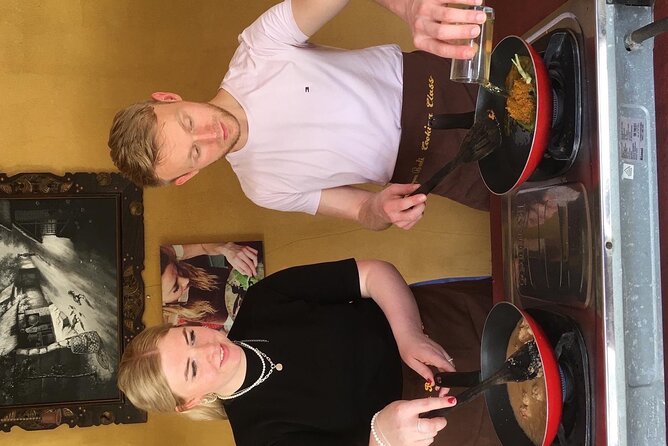
If you want a Ubud food experience that feels like learning with people—not consuming as a spectator—this is a great pick. I’d book it if you:
- like choosing ingredients yourself, not just being served food
- enjoy cultural details that connect to daily life (offerings, coconut oil, and music)
- want a structured, English-taught cooking class with a small group size
- care about getting recipes to cook again later
I’d think twice if you mainly want a predictable, checklist-style itinerary where every time slot always includes the market. With evening classes, the market can be closed, and the day may shift toward something like a plantation and tea/coffee tasting.
Overall, for the price, the mix of hands-on cooking plus real home and culture moments is what makes this one worth your time in Ubud.
FAQ
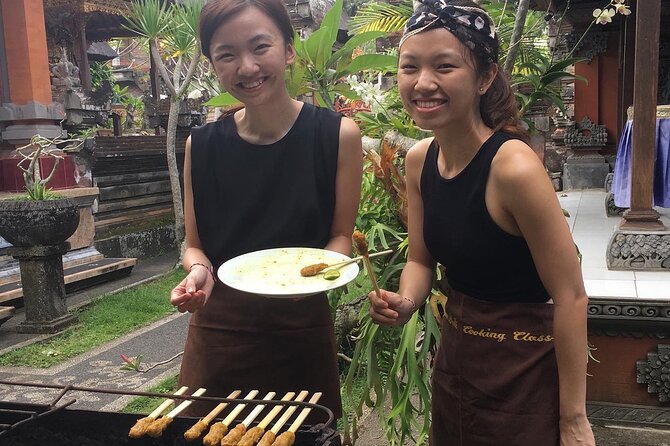
Where does the cooking class start?
The experience starts at Warung JB Jambangan Bali, Jln kelabang moding no 713, Tegallalang, Ubud, Bali 80571, Indonesia.
How long does the experience last?
It runs for about 5 hours (approximately).
Is lunch included?
Yes. Lunch is included in the experience.
Are classes taught in English?
Yes. The cooking classes are conducted in English by Balinese chefs.
Can I choose between a lunch class and a dinner class?
Yes. You can choose between a lunch or dinner class.
How many people are in the group?
The experience has a maximum of 15 travelers.
What happens at the start of the day?
You begin early at traditional markets to pick fresh herbs, spices, and ingredients, then you continue onward from there.
Do you get the recipes to take home?
Yes. At the end of the class, you receive a copy of the recipes so you can try cooking them at home.
What are the cancellation rules and weather conditions?
You can cancel up to 24 hours in advance for a full refund. If the experience is canceled due to poor weather, you’ll be offered a different date or a full refund.
More Bali Workshops & Classes
More Bali Reviews & Picks






More Farm & Village Cooking
Still deciding? More Bali days reviewed, from volcano sunrises to island crossings











Farm & Village Cooking Classes, compared.
 ★ 5.0Ubud Cooking Class Bali with Balinese ChefFrom $351,609 reviews
 ★ 5.0PRIVATE Authentic Balinese Cooking Class in Ubud at Putu’s HomeFrom $75644 reviews
 ★ 5.0Balinese Ubud cooking school (9 Dish Cooking and Market Tour)From $58540 reviews
 ★ 5.0Balinese Farm Cooking Class by Pemulan BaliFrom $39410 reviews
 ★ 5.0Balinese Cooking Class in SeminyakFrom $66281 reviews
 ★ 5.0Balinese Authentic Cooking Class in UbudFrom $39239 reviews
 ★ 5.0PRIVATE Balinese Cooking Class in Ubud with Dewa with TransfersFrom $69213 reviews
 ★ 5.0Balinese Cooking class with traditional morning market visitFrom $35161 reviews
Browse the lists this tour appears in