
Reviewed · HISTORICAL TOURS
Crafting Heritage Batik Painting Workshops
Hot wax makes magic.
I love how this class turns a cultural craft into a calm, hands-on afternoon in a mellow studio outside Ubud. You get to learn the key batik trick—hot wax as a resist—and make a one-of-a-kind fabric piece you’ll actually want to hang up.
Two things I especially like: the choice to work more independently or closely with the tutor, and the way the workshop sits inside a real Balinese family compound so you’re not just watching a performance. It feels grounded, not rushed, and you’ll go home with something personal.
One consideration: batik is more precise than it looks. The wax lines and dye steps take patience, so if you want fast and perfect, you may feel a little challenged—though the instructors are there to steer you back on track.
In This Review
- Key things to know before you paint batik
- Five Arts Studio in Tegallalang: a mellow batik class away from the Ubud buzz
- What you make: wax lines, dye control, and a fabric artwork you’ll actually keep
- The workshop flow at Five Arts Studio: from design to dye to your take-home piece
- Working style: solo creativity or close tutor guidance
- Why the family-compound setting feels authentic (and not staged)
- Snacks, tea, and the small comfort wins
- Getting there and timing: the 3-hour sweet spot
- Price and value: why $29 can feel like a bargain
- Who should book this batik workshop—and who might pause first
- Should you book Five Arts Studio for batik in Ubud?
- FAQ
- How long is the batik painting workshop?
- What is the price per person?
- Where does the workshop start?
- What’s included in the class price?
- Is lunch included?
- Is alcohol included?
- How many people are in a group?
- What is the cancellation policy?
- Is a mobile ticket used?
Key things to know before you paint batik
- Wax-resist technique in plain steps: sketch, apply hot wax, dye selective areas, then remove wax to reveal your design.
- Tutor support is flexible: you can go solo or ask for help through the process.
- Studio experience feels local: the teaching happens in a family compound, not a big tourist workshop.
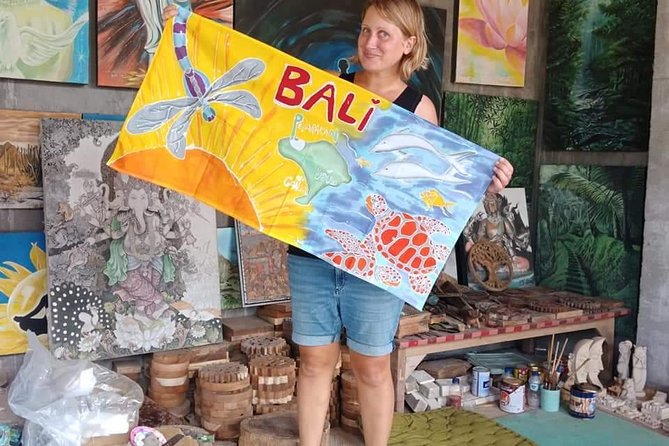
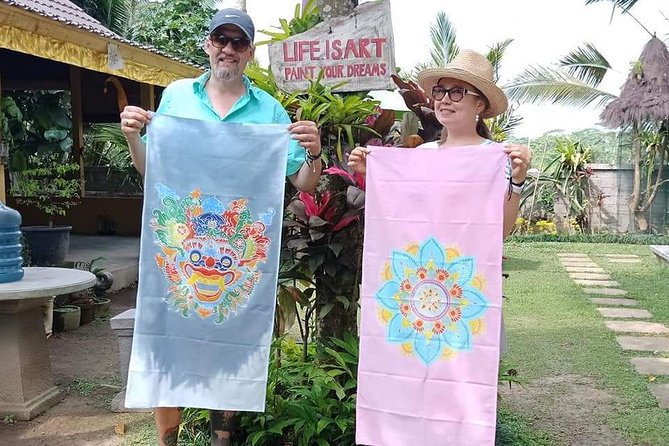
- You bring home the results: your finished fabric art is the souvenir, not a store-bought sample.
- Small class vibe (up to 30): enough people for energy, still manageable for guidance.
Five Arts Studio in Tegallalang: a mellow batik class away from the Ubud buzz
This is a batik workshop that keeps things simple and human. The setting is a casual, comfortable studio in a family home compound just outside Ubud—near Keliki in Tegallalang. That matters, because batik is lived culture here, not an activity shipped in and out like a factory product.
When you arrive at the start point on Jl. Raya Keliki, Kec. Tegallalang, you’re not just “joining a class.” You’re stepping into a workspace where you can see how an artist lives and works day to day. The atmosphere tends to be calm, with people concentrating on technique and color rather than performing for a camera.
It also helps that the timing is a 3-hour block. You get a complete creative arc without needing a full day. That’s perfect if you’re doing temple visits in the morning and want something softer in the afternoon—or if you’re staying in Ubud but want a quieter change of pace.
More of Bali heritage and history



What you make: wax lines, dye control, and a fabric artwork you’ll actually keep
Batik means hand-painted fabric, and the core idea is the same across most styles: you use hot wax to protect certain areas while dye goes elsewhere. Then, when the wax is washed off, those protected lines keep their original color. That’s what makes batik look crisp and layered, even when the process is hands-on.
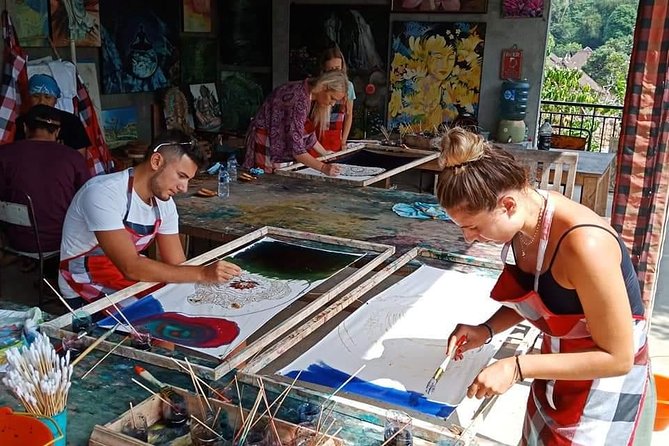
In this workshop, you’ll follow the main stages:
- sketch out a design
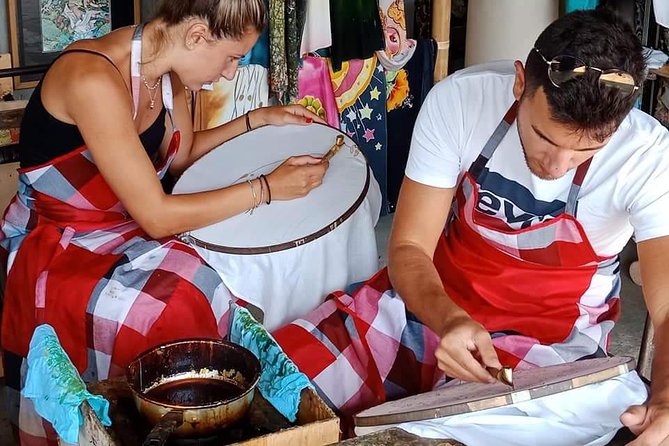
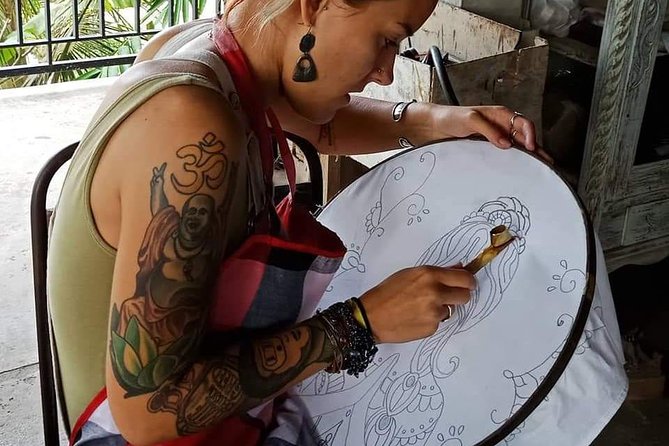
- draw it onto the fabric with hot wax
- apply dye only to selected areas
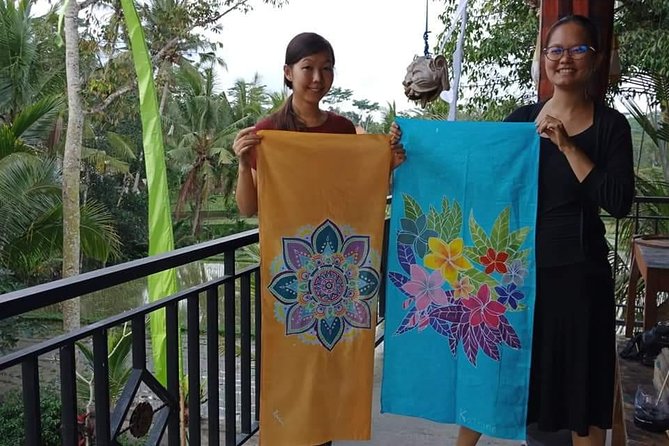
- wash off the wax to reveal the resist outlines
The neat part for first-timers is that you’re not expected to be an artist before you arrive. You’re learning a method. The steps are guided so you understand why wax goes where it goes, and why dye needs a certain kind of patience.
You’ll also find that the class encourages creativity, not just copying. In past sessions, people have been able to use their own ideas or motifs, or choose from suggested stencil options. If you’re worried your design will be too basic, don’t. The workshop focus is technique and color decisions, so even a simple motif can turn out striking once the wax-resist pattern does its job.
The workshop flow at Five Arts Studio: from design to dye to your take-home piece
Since the class happens in one main place—Five Arts Studio—the “itinerary” is really a paced creative sequence. Expect a comfortable rhythm: get oriented, plan your design, then move through the wax and dye stages without feeling like you’re sprinting.
A typical flow looks like this:
- Set up your workspace and pick your design direction
You’ll sketch your motif first. If you want structure, there are suggested patterns and stencil choices. If you want freedom, you can bring your own motif ideas and make choices as you go.
- Trace and apply hot wax
This is the signature batik moment. You’ll learn how to use the wax correctly so the lines hold and the resist effect works. Wax control is the skill that takes the most practice, so give yourself permission to go slowly.
- Paint with dyes to selected areas
Dye is where your artwork starts to look alive. You choose which areas get color, and the wax determines what stays protected. The class uses colorful dyes, and many people find the color mixing and blending approach helps them get a result they like.
- Wash off wax and reveal the pattern
When the wax comes off, you’ll see the outlines and contrast that make batik special. This is the payoff step—when the resist lines suddenly make your design feel intentional.
Instructors are part of that pacing. Teachers are patient and step in with guidance when you’re unsure. In the teaching style, there’s a recurring theme: gentle help that keeps you progressing, even if the first attempt isn’t perfect.
Working style: solo creativity or close tutor guidance

One of the best parts of this workshop is that it doesn’t force a single way of learning. You can work more independently if you want to focus, make your own motif choices, and take time. Or you can work more closely with the tutor if you’d rather have someone nudge you at each step.
That flexibility matters because wax-resist isn’t just “paint.” It’s a sequence. If you get out of order—or if wax placement is off—your final look changes. Having the option for extra help makes the class feel fair to beginners.
The teaching also appears to be very supportive and English-friendly. People have mentioned excellent instruction and clear direction, and names like Dika and Agong show up as instructors who help make the process feel manageable. You may not get the same teacher as someone else, but the teaching style you can expect is consistent: step-by-step guidance, encouragement, and help when mistakes happen.
And yes, mistakes do happen. That’s normal. Wax can drip, dye can spread, and your first attempt might not match the idea in your head. The workshop approach keeps that from becoming stressful.
Why the family-compound setting feels authentic (and not staged)
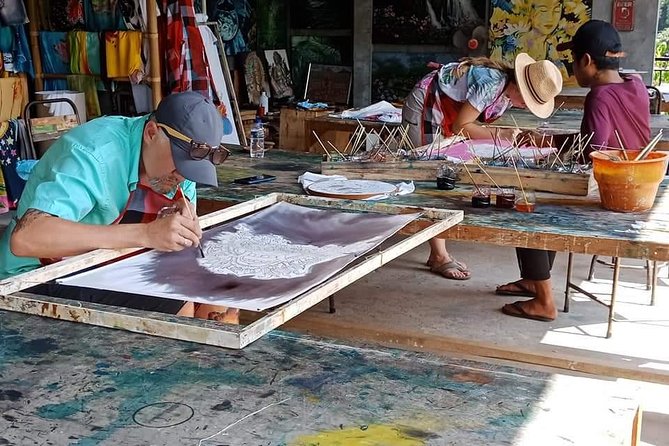
This class is held in a casual studio in a family home compound, run by a master artist. That means you’re seeing batik as something practiced in daily life, not just a one-time show.
It’s also why the pace feels calmer. In a more commercial setting, the focus is often on producing items quickly. Here, you’re surrounded by people who treat technique as craft. You’ll likely notice a more dynamic working environment, including local artists and kids doing related creativity nearby.
For me, that’s the difference between a souvenir you bought and a souvenir you made. When your piece comes from a process you understand, it carries the story. And because batik is a vital Indonesian culture, learning the method connects you to more than the final product.
A few more Bali tours and experiences worth a look



Snacks, tea, and the small comfort wins
This workshop takes care of the basics. You’re provided with snacks, coffee and/or tea, and mineral water. That’s not glamorous, but it’s genuinely useful. Three hours can make you hungry if you’re pairing it with temple stops or a tour day.
Lunch isn’t included, but you can order local food if you want to stay fueled. Alcohol isn’t included; it’s available to purchase if that’s part of your plan.
The studio itself is described as casual but comfortable, which helps because batik requires you to sit and concentrate. You’ll be using wax and dye materials, so expect a working atmosphere, not a museum hush.
Getting there and timing: the 3-hour sweet spot
The workshop starts at Five Arts Studio, located on Jl. Raya Keliki, Keliki, Kec. Tegallalang, Kabupaten Gianyar, Bali 80561, Indonesia. The activity ends back at the meeting point.
Why this matters: it’s easier to fit into a day when you know you won’t need complicated transfers. You can plan your other Ubud-area stops without worrying about a long return route at the end.
The class duration is about 3 hours. That’s enough time to get design ideas down, complete the wax and dye steps, and take home a finished piece. It’s also short enough that you can bring friends at different skill levels without one person dragging the pace.
The class is set up for a maximum of 30 travelers. That size usually keeps the room from feeling chaotic while still allowing a lively shared experience.
One practical note: the information provided says a strong physical fitness level is needed. The data doesn’t explain why, so take it seriously—plan to handle typical uneven ground and walking in a local compound area.
Price and value: why $29 can feel like a bargain
At $29 per person, this class is priced in a way that makes sense for what you get. You’re not paying for watching. You’re paying for:
- guided instruction through a technique-based process
- all materials needed to make your own original batik
- snacks, coffee and/or tea, and water
In a lot of craft experiences, “materials included” can mean you get a tiny kit and a quick demo. Here, the process is hands-on, and you’re expected to do the work of sketching, applying wax, dyeing, and revealing your resist pattern.
You should also think about what isn’t included. Lunch is optional (available to order), and alcohol is available to purchase, not part of the price. If you keep your day simple—snack + class + whatever you eat after—this stays good value.
Who should book this batik workshop—and who might pause first
This workshop is a strong fit if:
- you want a traditional Bali craft done with real method, not just a quick painting session
- you’re a beginner who learns best through step-by-step support
- you want a take-home souvenir with meaning because you made it
It’s also good for people who want a break from busy sightseeing. The mood is described as relaxed and calming, and that matches the nature of batik: slow, focused, and methodical.
Who might think twice:
- if you hate precision tasks or need everything to be fast and effortless, wax resistance can feel frustrating at first
- if you’re sensitive to mess or staining from dye and wax, this is still a working studio, so plan to be comfortable with that reality
- if the physical fitness note applies to how you’ll access the studio area, make sure you can handle it
Should you book Five Arts Studio for batik in Ubud?
I think you should book this workshop if you want a real craft experience near Ubud and you value learning a technique you can explain later. For $29, the combination of materials included, instruction that supports beginners, and a finished piece to take home makes it one of the easiest “yes” choices in the area.
Go for it when you’re open to slow steps and patient practice. If you can handle a bit of trial and error, you’ll leave with something genuinely personal.
If your ideal day is only high-speed, polished activities with no waiting, you might prefer a different kind of tour. But if you want calm creativity and a souvenir with a story, this is a very solid call.
FAQ
How long is the batik painting workshop?
It lasts about 3 hours.
What is the price per person?
The price is $29.00 per person.
Where does the workshop start?
The workshop starts at Five Arts Studio, Jl. Raya Keliki, Keliki, Kec. Tegallalang, Kabupaten Gianyar, Bali 80561, Indonesia.
What’s included in the class price?
Snacks, coffee and/or tea, mineral water, and all the materials you need to make your own original batik.
Is lunch included?
No. Lunch is available to order local food if you want it.
Is alcohol included?
No. Alcohol is available to purchase, but it is not included.
How many people are in a group?
The activity has a maximum of 30 travelers.
What is the cancellation policy?
You can cancel for a full refund up to 24 hours in advance. If you cancel within 24 hours of the experience start time, the amount paid is not refunded.
Is a mobile ticket used?
Yes, the experience includes a mobile ticket.
More Bali Workshops & Classes


More Bali Heritage & History



More Bali Reviews & Picks






Still deciding? More Bali days reviewed, from volcano sunrises to island crossings











Historical Tours, compared.
 ★ 5.0Bali Unesco World Heritage Sites Tour (Private & All-Inclusive)From $11791 reviews
 ★ 5.0Private Tour: Bali UNESCO World Heritage SitesFrom $6562 reviews
 ★ 5.0BALI ATV Kuber Through Historic Tunnel and Scenic WaterfallsFrom $3334 reviews
 ★ 4.5Royal Karangasem Heritage TourFrom $6929 reviews
 ★ 4.5Taste & Explore Bali: Denpasar Street Food & Historic SitesFrom $4527 reviews
 ★ 4.5Tanah Lot & UNESCO Heritage Small Group TourFrom $2021 reviews
 ★ 5.0Private Jatiluwih Rice Terraces Heritage Site and Culture TourFrom $3621 reviews
 ★ 5.0Full-day Private Cultural Tour of Ubud in BaliFrom $5816 reviews
Browse the lists this tour appears in