
Reviewed · UBUD, MONKEY FOREST & CAMPUHAN
Ubud Village Sightseeing, Famous Paddy Field And Ubud Waterfall
Ubud in one day, without the stress. This tour strings together Ubud village culture and Bali’s most famous green scenery: markets, terraces, a coffee-making demo, a holy spring temple, and a proper waterfall finish. I love that it’s paced like a real day out, not a sprint.
What I like most is how easy it feels to move between places. You get a private car with an English-speaking driver, and the experience benefits from guides who know the rhythm of sightseeing and shopping—people like Gede have been described as punctual and helpful with where to go. I also like that entry tickets are included, so you spend less time figuring out what costs extra and more time walking through the places.
The only real drawback is time pressure. You’re out for about 8–9 hours, and lunch isn’t included—so if you get snack-hungry, plan ahead.
In This Review
- Key things to notice before you go
- One day loop from Seminyak: the timing that makes it work
- Ubud Traditional Art Market and Palace: two parts, one neighborhood
- Tegalalang rice terrace: the view, plus the craft-road shopping
- Pulina Agro Tourism coffee demo: short stop, strong character
- Tirta Empul Holy Spring Temple: understanding melukat purification
- Tegenungan waterfall: splash zone energy at the end of the day
- Price and included extras: what $45 buys you
- Who should book this private Ubud village day trip
- Should you book this Ubud village day trip?
- FAQ
- What is the duration of the Ubud Village sightseeing tour?
- What time does the tour start?
- Is pickup included?
- What stops are included during the day?
- Are admission tickets included in the price?
- Is lunch included?
- Can I cancel for a full refund?
Key things to notice before you go
- Private car, English-speaking driver: calmer than juggling rides between Ubud, Tampaksiring, and the waterfall area.
- Tickets and parking handled: entry fees are included, which keeps the day smooth.
- Craft and coffee woven in: Tegalalang and Pulina are built around shopping and demos, not just scenery.
- Tirta Empul isn’t a quick photo stop: it centers on the holy spring bathing pools and the melukat purification idea.
- Tegenungan has options: you can enjoy the setting, and jumping/swimming is possible if you want that kind of fun.
One day loop from Seminyak: the timing that makes it work
You’re starting around 8:00am and heading into the Ubud area for a full day. With an 8–9 hour schedule, the tour is long enough to hit the big names, yet short enough that you’re not living out of your suitcase. That matters on Bali, where traffic can turn a “quick trip” into a long one.
The route also feels well balanced because it alternates between town culture and nature. You begin with Ubud’s market and palace zone, then move outward to Tegalalang rice terrace, then pause for Pulina’s coffee plantation demo. After that comes Tirta Empul, which is a very different mood—spiritual and ritual-focused—before you finish at Tegenungan waterfall where the day ends with a chance to splash around.
Two small practical thoughts for your day: first, you’ll likely want comfortable shoes. Between market walking and terrace paths, you’re on your feet for much of the day. Second, because lunch isn’t included, you’ll want to think about whether you’ll buy snacks during stops or bring a light plan for food breaks.
More around Ubud, from the Monkey Forest to the Campuhan ridge
Ubud Traditional Art Market and Palace: two parts, one neighborhood
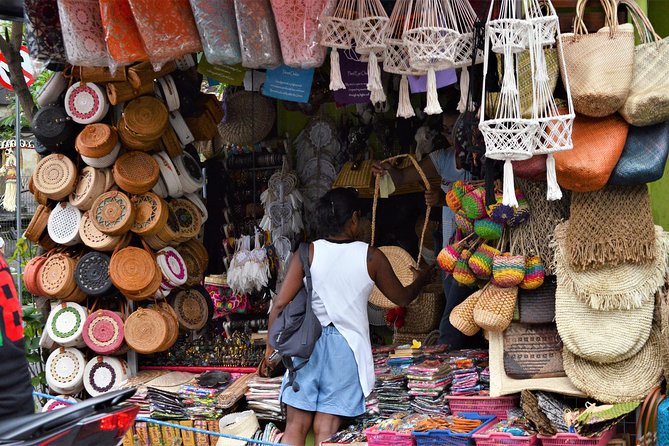
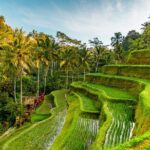
This stop is really two experiences in one block. The Traditional Art Market area splits into a traditional market and an arts market side. The traditional market (to the west of the arts market) leans toward daily life—food items and early opening hours. The arts market side is where you’ll see more handicrafts, art, and textiles.
Then you’re right next to the Ubud Palace, where the royal family lives. The palace courtyard area is also tied to local performances in the evening—Legong, Barong, Ramayana ballet, and Mahabharata ballet are all associated with the palace yard. Even if your timing doesn’t line up for a show, the palace itself gives context for what you’re seeing in the market: this is not just tourism shopping, it’s tied to community life and status.
Shopping tip, without getting bossy: the market area is a good place to get your bearings fast before you move toward terrace-area crafts. If you spot something you like early, you might compare it later against what’s sold on the road in Tegallalang. If you’re souvenir-minded, a quick budget check helps.
Possible drawback: market time is usually best for people who enjoy browsing. If you prefer quieter sightseeing, this stop can feel busier than the temples and terraces that follow.
Tegalalang rice terrace: the view, plus the craft-road shopping
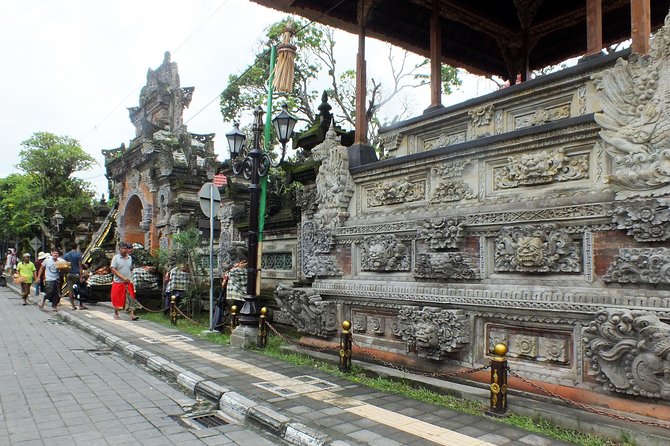
Tegallalang (Tegalalang) rice terrace is the classic Ubud-area stop for a reason: it’s famous for a reason. You get that layered, green rice scenery with coconut trees and a small river valley running through the view. It’s easy to see why this area is so photographed—your eyes keep finding new angles as you walk.
What I especially like here is how the terrace stop connects to the local economy. Tegallalang Village is known as a handicrafts center, and you’ll notice shops along the long road approaching and leaving the terrace. Many of the painted woodcarving items are made from very light wood, priced reasonably, and sold for both wholesale/export and retail. That gives you two different shopping vibes: bargaining culture for some items, and straightforward shopping for others.
At the terrace itself, plan to spend your time intentionally. It’s tempting to burn the full hour doing photos only. Instead, use part of that hour to walk a bit, pause for the big view, and then browse for crafts afterward. That way you get the scenery and you still leave time for shopping that doesn’t feel like an afterthought.
If you’re heat-sensitive, the midday sun can be strong. You won’t control the weather, but the morning start helps. Bring water, and try not to treat the rice terrace like a quick curb stop. It’s one of those places where slow steps pay off.
Pulina Agro Tourism coffee demo: short stop, strong character
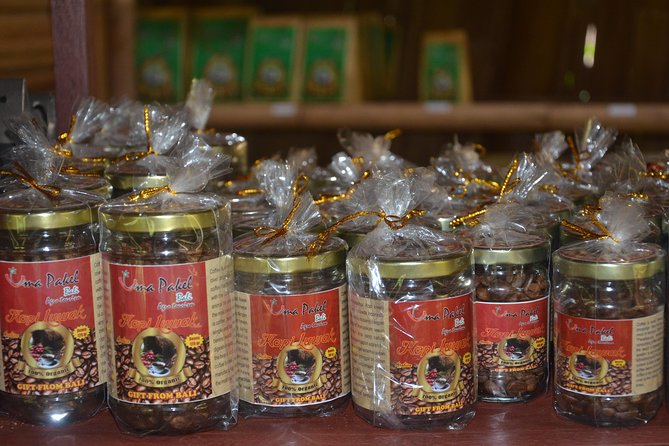
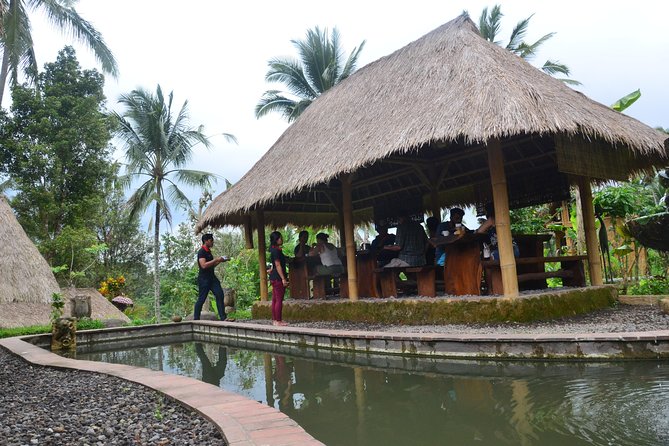
After Tegallalang, the pace changes with Pulina Bali Agrotourism. This stop is only about 30 minutes, so think of it as a focused pause rather than a full add-on attraction. The setting is known for views toward rice terraces, with the plantation area giving you a “coffee place” perspective on the landscape.
The main activity listed is a traditional coffee powder making demo. Even without going deep into product details, the practical value is that you’re seeing how coffee relates to daily life and farming culture here. It also breaks up the day nicely between the terrace scenery and the spiritual stop at Tirta Empul.
Because this is a demo-style visit, it tends to be better for people who like to watch and ask questions rather than people who want to wander freely for long periods. If you’re the wander-and-photograph type, keep expectations for time in mind. You’ll have less room to roam than at the other stops.
One more tip: because you’ll still be going to a temple and then a waterfall afterward, try not to make this stop your biggest snack and sugar moment. If you get energized too early, you’ll feel it later when you’re walking in heat.
Tirta Empul Holy Spring Temple: understanding melukat purification
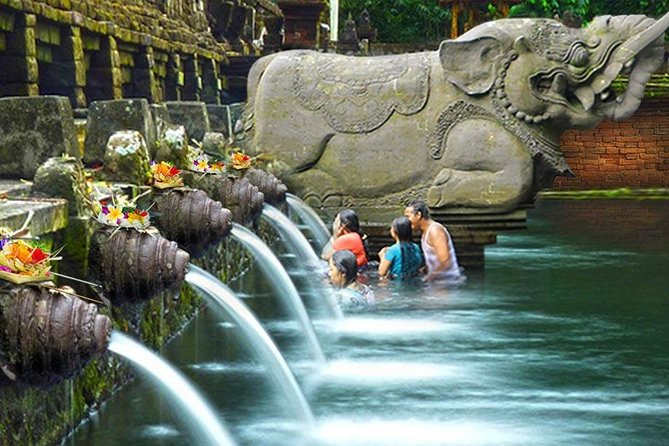
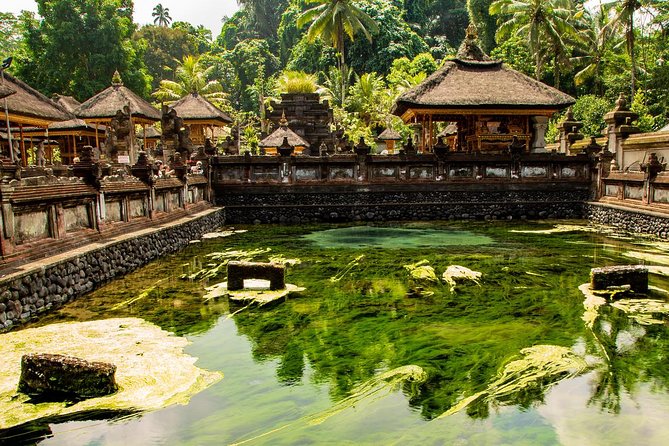
Tirta Empul (also called the Holy Spring Water Temple) is the tour’s most meaningful stop. It sits in the Tampaksiring region near Gunung Kawi Temple and is built around springs and bathing pools. The focus here isn’t just the building—it’s the water system inside the complex.
The holy spring water rises and bubbles into an enclosed rectangular pool. The water flows through a sedimentary layer of black sand, which is part of what makes the pools visually distinctive. There’s also a Balinese legend tied to the spring: it was created by Indra after he fought the Mayadenawa king.
What you’ll notice in practice is that the temple can be very crowded when people come for bathing rituals. The idea is called melukat, a purification ceremony where people cleanse the body, described here as cleansing from debt. That’s a big emotional shift from terraces and markets. You’re walking into a place where locals treat the ritual as serious and personal.
Practical advice: go in with respectful curiosity. Take a quiet moment to watch the flow of the pool area and let the space sink in before you chase photos. You’ll get more out of the stop if you treat it as a cultural experience rather than a quick landmark photo.
Time-wise, it’s about 1 hour, which is enough to understand the water setup and see the rhythm without turning the visit into a rush.
More Bali waterfalls, from Tegenungan to the hidden jungle drops


Tegenungan waterfall: splash zone energy at the end of the day
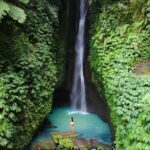
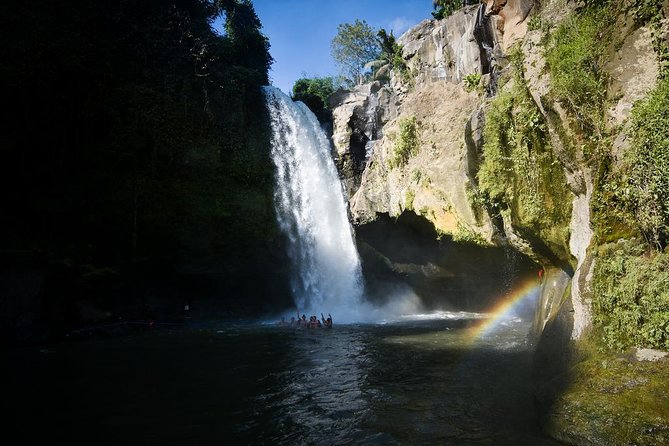
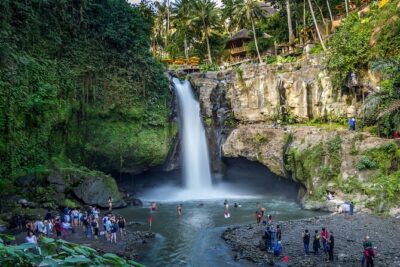
The final stop is Tegenungan Waterfall, and it’s a great way to close a day like this because it’s pure nature payoff. The area is described with green trees and scenic surroundings. Near the waterfall, there are shower baths fed by natural springs.
This part is important: it’s not only a tourist viewpoint. Local residents often bathe and fetch water there, especially in the morning and afternoon. So while you’re there for the scenery, you’re also in a real daily-use space.
You can also choose how active you want to be. The tour notes that you can spoil your body with jumping and swimming if you want to. That means the waterfall is flexible: some people want to get in the water right away, others just want to hang out and enjoy the view.
If you’re thinking of swimming, save your energy. It’s one of those end-of-day moments when people get tired and then rush into the water anyway. Better to take a few minutes to check how you feel, whether the footing is comfortable, and whether you actually want to do the swim part today. If you don’t, you’re still getting a strong final scenery hit.
Time-wise, it’s again about 1 hour, which is usually enough to enjoy the waterfall area without turning the day into a late finish.
Price and included extras: what $45 buys you
For $45 per person, you’re getting a private-car experience with pickup offered, an English-speaking driver, all entry tickets, and parking fees. That’s the heart of the value: the day is loaded with ticketed stops, and the route involves multiple places that would be annoying to coordinate on your own.
Lunch and drinks are not included, and that’s the one cost you still need to budget. But compared to piecing together transport plus separate admission fees, this package keeps the spending predictable. You can also decide how to handle food—either you grab lunch on your own during the day or you keep it simple with snacks.
One more value point: the tour is described as private, meaning it’s only your group. That tends to help if you want a bit more pacing control, quicker shopping stops, or a calmer experience at temples and terraces.
If you’re the kind of traveler who likes to avoid logistics headaches and wants a day that hits the key names in Ubud, this price structure is fair. If you already have a driver lined up for the day, or you’re comfortable navigating the same route yourself, you might spend less. But you’d be trading convenience for savings.
Who should book this private Ubud village day trip
This tour is a great fit if you want a cultural-plus-scenery day without having to plan five separate outings. The stops cover market life, a craft-focused rice terrace area, a plantation coffee demo, a holy spring temple with melukat purification context, and then a waterfall finale.
It’s especially good for:
- Families who want a clear checklist of places in one day, ending with the playful option at Tegenungan
- Travelers who like shopping but also want meaningful stops beyond just buying things
- People who prefer a private day with an English-speaking driver rather than joining a larger group
On the other hand, if your ideal Ubud day is slow and quiet with long, unhurried time at one location, the 8–9 hour pace and timed stops may feel a bit quick.
Should you book this Ubud village day trip?
If you want a well-rounded Ubud day with major stops, clear value, and minimal decision-making, I’d say yes—book it. The combination of Tegalalang rice terrace, Pulina’s coffee demo, Tirta Empul, and Tegenungan waterfall hits the main flavors of the area in a way that feels organized.
I’d hesitate only if you hate busy timing, don’t like markets, or you’re very strict about lunch budgeting. Otherwise, this is the kind of day trip that makes Bali sightseeing feel efficient while still giving you real moments, not just a rushed checklist.
FAQ
What is the duration of the Ubud Village sightseeing tour?
The tour runs about 8 to 9 hours.
What time does the tour start?
The start time is 8:00 am.
Is pickup included?
Pickup is offered, and the tour uses a private car.
What stops are included during the day?
You’ll visit the Ubud Traditional Art Market and Ubud Palace, Tegalalang Rice Terrace, Pulina Bali Coffee Plantation, Tirta Empul Temple, and Tegenungan Waterfall.
Are admission tickets included in the price?
Yes. All entry tickets and parking fees are included.
Is lunch included?
No. Lunch and alcoholic drinks are not included.
Can I cancel for a full refund?
Yes. You can cancel up to 24 hours in advance for a full refund.
More Full-Day Island Highlights


More Bali Waterfall Trails
More Around Ubud & the Monkey Forest

Still deciding? More Bali days reviewed, from volcano sunrises to island crossings





Ubud, Monkey Forest & Campuhan, compared.
 ★ 5.0All-Inclusive Ubud Private TourFrom $10014,344 reviews
 ★ 5.0Best of Ubud Full-Day Tour with Jungle SwingFrom $568,571 reviews
 ★ 5.0Ubud: Monkey Forest, Jungle Swing, Rice Terrace, and Water TempleFrom $317,160 reviews
 ★ 5.0Best of Ubud 1-Day Private TourFrom $544,451 reviews
 ★ 4.4Ubud Palace Legong Dance Show TicketFrom $63,979 reviews
 ★ 5.0Body Massage Experience in Ubud Traditional SpaFrom $213,506 reviews
 ★ 4.4Ubud Kecak and Fire Dance Show TicketsFrom $62,631 reviews
 ★ 5.0Ubud Cooking Class Bali with Balinese ChefFrom $351,609 reviews
Browse the lists this tour appears in