Reviewed · BALI
ARMA Museum Visit
A good museum ticket should save you time. ARMA Museum of Art in Ubud is one of the most respected stops for Balinese and Indonesian art, and prebooking helps you spend your time looking at paintings instead of hovering in lines. I also like the fact that you get a free hot drink with your entry, which makes the visit feel more like a full experience than a quick pass.
For your style of travel, this works well because you can explore at your own pace. One thing to keep in mind: it’s admission-focused. If you’re hoping for a long, meal-included day with a set guided program, you’ll want to plan food separately since lunch and most drinks aren’t included.
In This Review
- Key Things I’d Focus On Before You Go
- ARMA Museum of Art in Ubud: what your ticket really buys
- ARMA as more than a museum: art, performance, and learning
- Exploring at your own pace: how to use the 30 minutes to 2 hours
- What you’ll see: Balinese batik paintings to contemporary art
- Your included coffee or tea break (and why it helps)
- On-site extras: bookshop, library, workshops, and the restaurant factor
- Price, timing, and value: is this worth $9.38?
- Who this ARMA admission ticket is best for
- Quick practical tips to make ARMA more enjoyable
- Should you book ARMA Museum admission in advance?
- FAQ
- What is included with the ARMA museum admission ticket?
- How long does the ARMA museum visit take?
- Can I explore the museum without joining a group?
- Where is ARMA located?
- Is food or alcohol included?
- What is the cancellation policy?
Key Things I’d Focus On Before You Go
- Prebooked entry at ARMA means less waiting and more time for art
- Self-paced exploring so you can move fast or slow without group pressure
- Free coffee or tea is included when you redeem your ticket
- A museum that’s also a cultural center, with art plus arts programming
- Strong visitor satisfaction: 4.5/5 rating and 93% recommending it
ARMA Museum of Art in Ubud: what your ticket really buys
For $9.38 per person, this is a smart-value ticket if your goal is to see serious art without turning the day into an admin task. The big win is that you’re securing admission in advance, which is how you cut down on line time and avoid the uncertainty that can happen with walk-up tickets.
You’re also paying for convenience and flexibility. The experience is designed so you’re not locked into a group schedule for your entire visit. Instead, you can come in, find your rhythm, and enjoy the collection when it suits you. That matters in Ubud, where you’re often juggling temples, galleries, and traffic, and you don’t want the museum to become the bottleneck.
The ticket includes a hot drink (coffee and/or tea). That sounds small, but it’s a practical touch. It gives you a built-in pause point during your visit, and it makes the museum feel warmer and more “live” rather than purely transactional.
More of Bali worth booking, from the Ubud rice terraces to the reefs off the Bukit.



ARMA as more than a museum: art, performance, and learning
ARMA isn’t just a building full of paintings. It’s a center for visual and performing arts, which means your visit can feel broader than a standard gallery hop. You’re going for the permanent collection and special temporary exhibitions, yes—but the space is also tied to theatre performances, dance, and music.
Even if you don’t catch every type of program on your exact day, the museum’s identity helps you understand what you’re looking at. When a place treats art as something made for discussion, teaching, and performance, the artworks tend to feel more connected to living culture rather than museum-only objects.
ARMA also includes amenities and learning spaces like a bookshop and a library/reading room. If you like to read about what you’re seeing (or you want something quiet to do when you’re tired from walking), this is a nice added layer. And since ARMA is active in cultural workshops, conferences, seminars, and training programs, there’s a good chance you’ll notice the space has an ongoing creative rhythm.
Exploring at your own pace: how to use the 30 minutes to 2 hours
The visit window is listed as about 30 minutes to 2 hours. That range is your clue that this is truly flexible. If you’re short on time, you can focus on the highlights and move through efficiently. If you want the full slower look, you can take breaks and revisit rooms without feeling like you’re falling behind a group.
One practical point: the experience has a maximum group size of 100. That number sounds large, but because the tour style is self-paced and designed around pre-entry, it usually translates more to steady foot traffic than to rigid group controlling. In other words, you likely won’t be stuck waiting for other people to catch up.
If you want a simple strategy:
- Short visit (around 30–45 minutes): focus on the main permanent areas plus one temporary exhibition if it’s available.
- Full visit (1.5–2 hours): give yourself time to stop longer with paintings you keep returning to, and include a coffee/tea break so you don’t rush your eyes.
What you’ll see: Balinese batik paintings to contemporary art
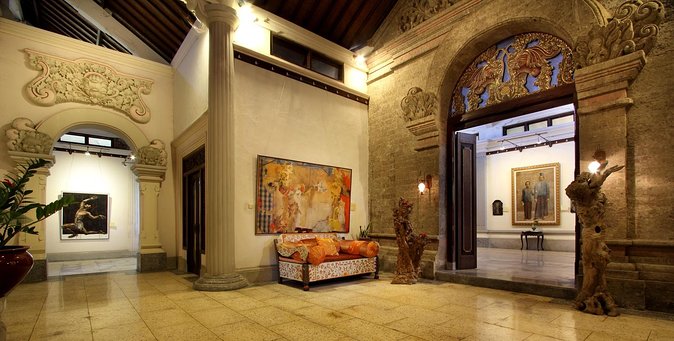
The collection spans from traditional batik-style paintings to contemporary masterpieces. That range is valuable because it helps you avoid the common problem of seeing only one “era” of art. Instead, you get a sense of how Indonesian and Balinese visual culture can both preserve older techniques and also move into newer ideas.
ARMA’s collection is also described as among Indonesia’s more prestigious art holdings. Translation: this is the kind of museum where you’ll likely feel like you’re seeing something you can’t replicate at every casual gallery. Even if you’re not an art expert, you’ll benefit from the context of a serious institution.
The best part of exploring on your own is that you don’t have to understand everything immediately. You can linger at pieces that catch your attention—color, patterns, subject matter—then move on when your brain is ready for a change.
Your included coffee or tea break (and why it helps)
This ticket includes coffee and/or tea, given with your redemption. I like experiences that include a small comfort like this because it changes the pacing. You’re not just walking from room to room. You get a reset moment.
Use it strategically:
- Take your drink midway through your time, not at the very beginning.
- If you’re planning to spend close to 2 hours, the break keeps you from leaving early just because your feet and attention are tired.
It’s also handy if you’re heat-sensitive. Ubud can wear you down, so a warm drink can feel like a relief even when you’re spending the day sightseeing.





On-site extras: bookshop, library, workshops, and the restaurant factor
ARMA offers more than gallery walls. There’s a bookshop and a library/reading room, which can be a real win if you like to learn at your own speed. Sometimes the most satisfying part of an art day is picking up a small reference afterward, or reading a bit while you’re still in that art mood.
The museum is also linked to cultural workshops, conferences, seminars, and training programs. You won’t automatically get a guaranteed program during your visit, because arts events can vary day to day—but the center’s identity means the place often feels active rather than purely static.
One extra detail I appreciate from feedback is that people also talk positively about the museum and the restaurant. That’s useful for planning. Since lunch isn’t included in the ticket, knowing there’s a restaurant on-site (and that it gets favorable comments) can make your day easier. You can pair art viewing with a meal without having to rush out in search of food.
Price, timing, and value: is this worth $9.38?
At $9.38 per person, the value is strong if you care about one thing most: seeing art without wasting time. This isn’t priced like a premium guided tour, and that’s a good thing. You’re mostly buying admission plus a drink, and you’re getting flexibility in return.
The “booked about 24 days in advance on average” detail matters because it suggests ARMA tickets can be in demand during certain periods. Prebooking is what turns the experience from uncertain to smooth. If you’re traveling in a busier window or you just hate line stress, booking ahead is the smart move.
It also helps that the satisfaction stats are high: 4.5 out of 5 with 93% recommending it. That doesn’t mean every minute will be perfect for everyone, but it does indicate that most people come away feeling they got what they expected.
The main consideration for value is your personal style. If you’re the kind of traveler who wants a guided explanation for every room, this may not feel like enough on its own. The info says it may be operated by a multi-lingual guide, but the experience is framed around flexible museum time rather than a full scripted tour.
Who this ARMA admission ticket is best for
I’d steer you toward this if you:
- Love art and want a serious Ubud stop focused on Balinese and Indonesian work
- Prefer self-paced visits over rigid group timing
- Want to cut down on waiting and keep your day flexible
- Like the idea of combining museum time with a meal afterward (since lunch isn’t included)
It also fits solo travelers and couples well, because self-paced exploring is usually easier when you’re not coordinating with others.
If you’re traveling with very young kids or someone who needs a highly structured timeline, you’ll still be able to enter and go at your own pace, but you might want to plan extra breaks and snacks. Food and drinks (and lunch) aren’t included, and only alcoholic drinks are noted as available to purchase.
Quick practical tips to make ARMA more enjoyable
- Plan your duration before you arrive: pick either the shorter highlight approach or the full 2-hour style, so you don’t end up rushing.
- Redeem your ticket and get the drink early enough that you can actually use it as a mid-visit break.
- Treat this as a browsing museum: stop more than you think you need to. That’s how you actually connect with batik-style work and contemporary pieces.
- If there’s an arts activity happening, you might catch part of it because ARMA is described as a center for theatre, dance, music, and classes. Ask staff what’s on during your time window.
- Bring your own energy plan for food: lunch isn’t included, and the ticket only covers coffee/tea. If you know you’ll get hungry, plan where you’ll eat before you finish exploring.
Should you book ARMA Museum admission in advance?
I’d book it in advance if you want an easy, low-stress art afternoon. The combination of admission guarantee, self-paced exploring, and the included coffee/tea makes it feel like good value, not just another ticket.
You may want to skip or adjust your expectations if you’re hoping for a fully guided, meal-included, all-day program. This is mainly about getting you into ARMA and letting you enjoy the art on your timeline.
If you like art more than strict schedules, this is a strong choice. And since free cancellation is offered up to 24 hours before start time, you also have a safety net if your Ubud plans shift.
FAQ
What is included with the ARMA museum admission ticket?
Your ticket includes coffee and/or tea, provided with the admission redemption. Lunch and most other food and drinks are not included.
How long does the ARMA museum visit take?
The visit is listed at about 30 minutes to 2 hours, depending on how much you want to see.
Can I explore the museum without joining a group?
Yes. The experience is designed for you to explore at your own pace without waiting for a group.
Where is ARMA located?
This experience is in Ubud, Indonesia.
Is food or alcohol included?
Lunch and food/drinks aren’t included. Alcoholic drinks are available to purchase.
What is the cancellation policy?
You can cancel for a full refund up to 24 hours before the experience’s start time (local time). If you cancel less than 24 hours before, the amount paid is not refunded.