Reviewed · BALI
Bali Traditional Village Experience
A village morning, guided like family. This private Taro Traditional Village Experience pairs a family-compound tour with Canang Sari offering practice and a holy water blessing ritual.
I especially like the home-style access: you’re not just watching, you’re learning the rhythm of a Balinese household. And I like the way the day flows from morning tea in the compound straight into the blessing ceremony using what you made.
One consideration: there’s a sacred-site donation/entrance fee in cash, and if you choose the cleansing ritual you’ll need to plan for getting wet.
In This Review
- Key things I’d watch for before you go
- Taro Village North of Ubud: what makes it feel genuinely local
- Inside the family compound: morning tea, family living, and the temple story
- Making Canang Sari offerings: a small ritual with big meaning
- Holy water blessing: what happens after you change and dress for the site
- Transfers and timing: how to fit this 2-hour experience into an Ubud day
- Price and value: is $35 per person a good deal
- What’s included vs. what you’ll pay separately
- How to be a respectful visitor (and avoid awkward moments)
- Who should book this Taro Traditional Village Experience
- Can you combine it with other Bali classes or activities?
- Should you book the Taro Village Experience?
- FAQ
- How long is the Bali Traditional Village Experience in Taro?
- Where does the tour start and end?
- Is this experience private?
- What does the tour include?
- Do I need to pay anything at the holy water temple?
- Do I have to participate in the cleansing ritual?
- What’s the required clothing for the sacred water site?
- What if plans change and I need to cancel?
Key things I’d watch for before you go
- Private, half-day pacing: about 2 hours, so it fits even when you’ve got a packed Ubud schedule.
- Hands-on Canang Sari offering making with guidance inside a family compound.
- Your offerings get used in the holy water blessing ceremony later in the morning.
- Sarong and sash are mandatory for entering the holy water site (you’ll be dressed for it).
- Morning tea plus included snacks: coffee/tea and Bali cookies are part of the experience.
- Two-way private transfers from your Ubud area address help you skip the hassle of figuring out rides.
Taro Village North of Ubud: what makes it feel genuinely local
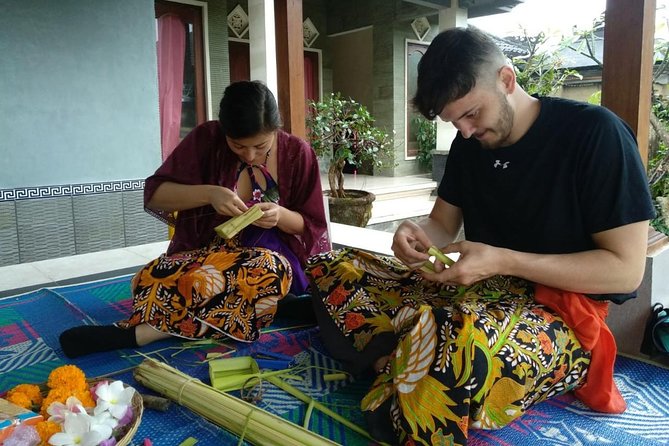
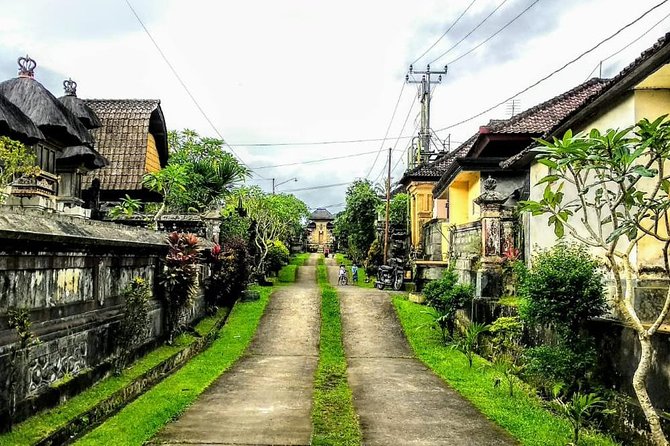
Ubud gets most of the attention, but Taro (about 12 miles / 18 kilometers north) is where you see daily life without the constant tourist shuffle. This experience is built around a private, family-centered day in Taro rather than a quick stop at a viewpoint or a generic cultural show.
The big value for you is time and context. In a short visit, it can be easy to collect facts but miss the meaning. Here, you start in the home space itself, where religion, family, and routine all overlap.
You’ll also appreciate the scale. This is designed for a small group that stays with your guide and family setting, not a group milling through rooms on a tight script.
More of Bali worth booking, from the Ubud rice terraces to the reefs off the Bukit.



Inside the family compound: morning tea, family living, and the temple story
Your day begins with a driver pick-up, then you’re taken to the village area so you can meet your hosts. From there, you’ll tour the family compound and learn how the household is organized and how each part connects back to the family temple.
This is where the experience feels real. Instead of learning Balinese Hinduism as a distant topic, you get it as something practiced at home—where family members live, gather, and maintain their place of worship. Your guide will explain where different family members live and share details about the family temple.
Then you’ll have traditional morning tea with the family in the compound. That tea break matters more than it sounds. It gives you a pause in the middle of learning, and it’s a social moment rather than another photo stop.
Making Canang Sari offerings: a small ritual with big meaning
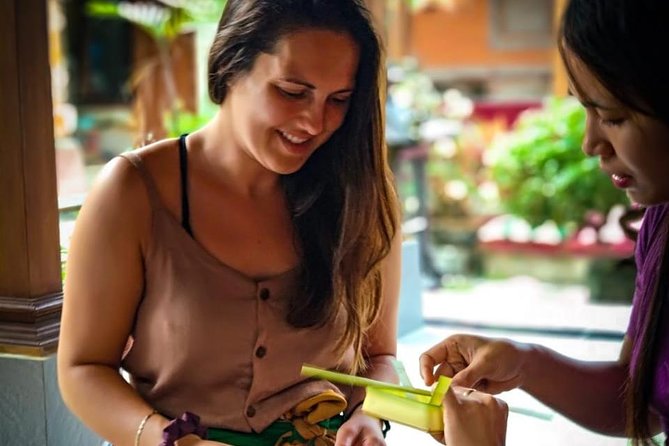
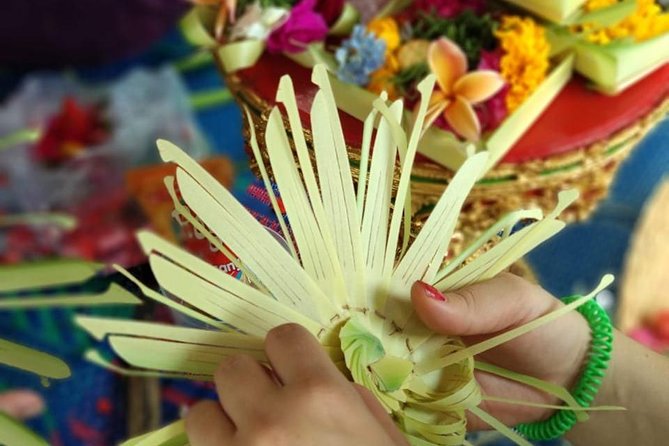
The heart of the morning is learning how to make Canang Sari offerings. These are the small, everyday offerings connected to Balinese Hindu life. Your guide teaches you how to make them as part of a real household activity, not as a staged craft project.
What I like about this part is the hand-on pacing. You’re taught during the flow of the morning, then the experience moves forward while the meaning is still fresh—rather than turning offering-making into a stand-alone activity.
Also, you’re not just making something and leaving. The offerings you make earlier in the day get used in the blessing ceremony at the holy water site. That “made by you, used by you” connection is exactly what helps the ritual stick.
Holy water blessing: what happens after you change and dress for the site
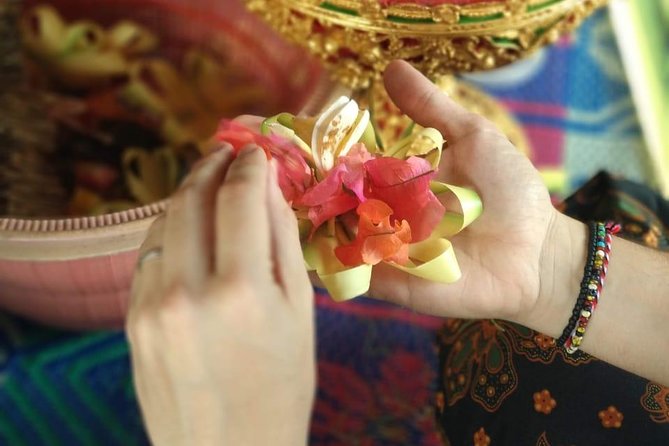
After the offering session, you’ll go to a sacred holy water location. This is where the day becomes more than learning—it becomes participation in a traditional Hindu blessing ceremony.
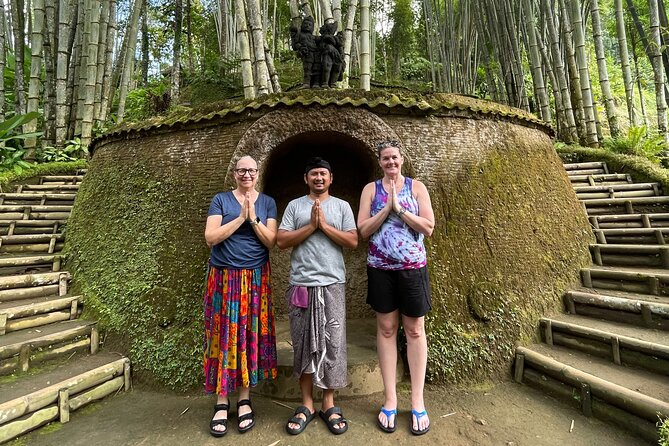
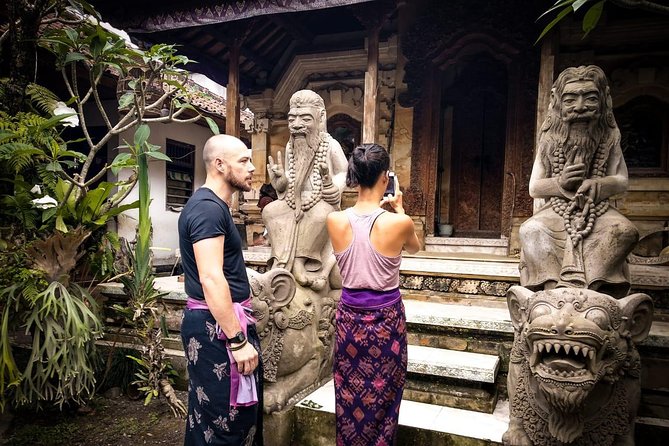
Before entering, you’ll be dressed in a sarong and sash, which is mandatory for entry. The tour also gives you time to change into swimwear or clothes that may get wet if you want to take part in the cleansing ritual.
Here’s the practical point for you: think of this as a choice. The tour setup leaves room for you to do the cleansing ritual if you want, but you’re not forced into it. If you do plan to join, bring (or wear) something suitable for getting wet so you can take part comfortably.
Once you’re in the ceremony, the offerings you made earlier will be used as part of your blessing with holy water. It’s a focused moment, and it’s one reason this experience feels distinct from a general village walk.
Transfers and timing: how to fit this 2-hour experience into an Ubud day
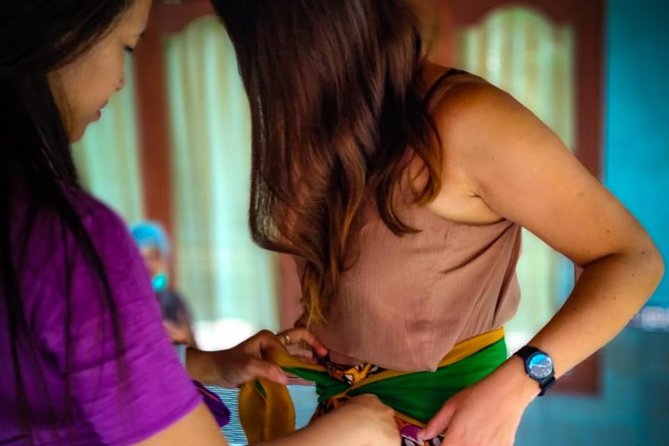
This is about 2 hours total, so it’s a good option when you want culture without burning your whole morning. You’ll start and return to the meeting point area, and the experience includes two-way private transfers from your Ubud area address.
That transfer detail is one of the most practical pieces of value. Bali traffic and getting around Ubud can eat time and energy. Private transport helps you keep the experience from turning into a logistics project.
Also, you’ll likely feel less rushed. A 2-hour format can work well when it’s structured around a few meaningful stops—here, those are the family compound, the offering making, and the holy water site.
If you’re planning other activities, this half-day format works best as either a morning cultural anchor or a mid-day reset before something more active later.





Price and value: is $35 per person a good deal
At $35 per person, this isn’t priced like a fancy “show.” It’s priced like an experience with real human time: the guide’s instruction, the family hosting for tea, the practice of making offerings, and then the ceremony flow at a sacred site.
What’s included helps justify the cost. You get coffee and/or tea, Bali cookies snacks, and a Balinese sarong for the experience. You also get the private nature of the day plus the help of two-way private transfers.
The main thing that’s not included is the entrance ticket/donation at the holy water temple, payable in cash. That’s a normal part of many sacred-site visits, but it does mean you’ll want to carry some cash just for that portion.
One more pricing insight: it’s commonly booked around 50 days in advance. That doesn’t mean you must book immediately, but it does suggest this is popular and has a limited schedule rhythm. If you already know your dates, locking it in early is smart.
What’s included vs. what you’ll pay separately
Included:
- Snacks: Bali cookies
- Balinese sarong
- Coffee and/or tea
Not included:
- Entrance ticket/donation at the holy water temple (cash)
- Lunch
A few practical implications for you:
If you’re doing this in the morning, plan for lunch afterward. The tour provides tea and snacks, but it doesn’t replace a meal. If you’re budgeting, add a little cash for the holy water site donation/entrance fee.
How to be a respectful visitor (and avoid awkward moments)
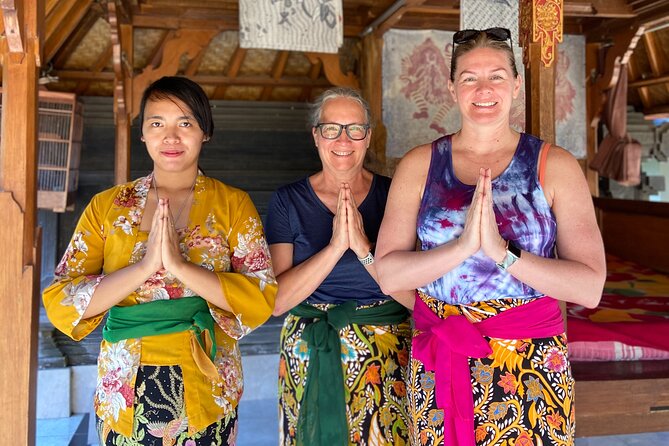
You don’t need to memorize rules, but you do want to show common respect. The biggest on-the-ground details are the ones already built into the experience: follow the dress requirement at the sacred site and handle the ritual portion with calm focus.
Because you’ll be dressed in a sarong and sash for entry, your best move is to wear clothing that’s comfortable for travel and easy to adjust around. And if you choose the cleansing ritual, plan for getting wet since there’s a change option at the holy water site.
Also, remember this is centered on a family compound and a sacred ceremony. Keep questions friendly and simple, and follow your guide’s pacing. The tone here is cultural learning, not a museum tour.
Who should book this Taro Traditional Village Experience
This is a strong fit if you want:
- A short cultural experience with real participation
- To learn about Balinese Hinduism through offerings and ritual context
- A private, family-centered day rather than a big-group tour
It’s also a good match for travelers who don’t want a full day. With about 2 hours, you can still keep time for temples, rice terraces, or art stops around Ubud.
If you’re looking for something purely scenic with lots of viewpoints, you may prefer a different kind of tour. This experience is about household life and religious practice, so it leans cultural and spiritual rather than photo-busy.
Can you combine it with other Bali classes or activities?
Yes. The experience can be combined with a cooking class, coconut oil class, silver class, or even evening fireflies. That’s useful because it gives you flexibility: you can keep the morning focused on daily village spirituality, then switch to a skill-based or nature-based activity later.
If you like variety, this combo strategy keeps your day from feeling repetitive. If you prefer one theme all day, you can also treat this as your main cultural anchor and then keep the rest lighter.
Should you book the Taro Village Experience?
If your goal is authentic, respectful cultural contact in a short time, I’d say this is worth booking. The best reasons are simple: you learn the Canang Sari offering process, you experience how it connects to a holy water blessing ceremony, and you’re hosted for tea inside a family compound—not just shown things from the outside.
Book it if you’re comfortable with a small donation/entrance fee at the sacred site and you’re open to dressing appropriately when required. Skip it if you only want scenery, or if you’re aiming for a long meal-heavy day (there’s no lunch included).
FAQ
How long is the Bali Traditional Village Experience in Taro?
It’s approximately 2 hours.
Where does the tour start and end?
The start meeting point is Delodsema Traditional Village, Tegallalang (Taro, Tegallalang, Gianyar Regency, Bali). The activity ends back at the meeting point.
Is this experience private?
Yes. It’s a private tour/activity, and only your group participates.
What does the tour include?
It includes Bali cookies snacks, coffee and/or tea, and a Balinese sarong.
Do I need to pay anything at the holy water temple?
Yes. The entrance ticket/donation at the holy water temple is not included and is payable in cash.
Do I have to participate in the cleansing ritual?
No. You can change into swimwear or clothes that may get wet if you choose to do the cleansing ritual.
What’s the required clothing for the sacred water site?
You’ll be dressed in a sarong and sash, and this is mandatory for entering the site.
What if plans change and I need to cancel?
You can cancel up to 24 hours in advance for a full refund.