
Reviewed · BALI WATERFALL TRAILS
Beji Griya Waterfall Bali Spritual Holy Bath Experience
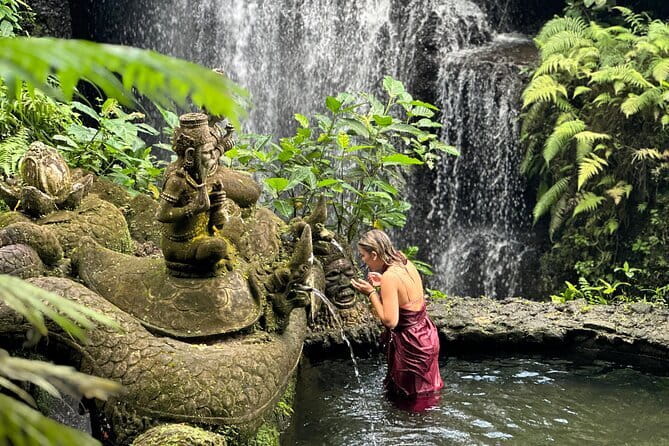
A waterfall ritual that feels genuinely personal. This private Beji Griya Waterfall visit in Ubud centers on a priest-led melukat purification you can take part in right at the temple grounds. I love how the package handles the key details (sarong, offerings, priest guidance) so you can focus on the ritual, and I also like that it’s set up with round-trip pickup from Ubud and Sanur. One big consideration: women who are on their period can’t join the ceremony.
You’re also getting the useful side of Bali tourism: clear structure, a defined stop, and time to keep your day moving. The waterfall itself is beautiful, but the real point here is the spiritual atmosphere and the steps you follow with a priest, not just “good water for photos.” If you’re hoping for a purely quiet, sacred experience with zero chance of feeling like a popular site, it can be worth going in with the right expectations and a respectful mindset.
In This Review
- Key highlights at Beji Griya (what I’d plan around)
- Beji Griya Waterfall and the melukat bath: what you’re really signing up for
- Price and value: $45 for a priest, a ritual kit, and transport
- Transfers from Ubud and Sanur: how to keep your Bali schedule sane
- The ritual at the waterfall temple: priest steps, offerings, and coconut blessing
- Sarongs, photos, and etiquette: how to look respectful and still get great pictures
- What can affect your experience: menstruation, weather, and expectations
- Women on their period aren’t allowed to join
- Weather matters
- Your expectation changes the meaning
- How long it takes and how to plan the rest of your day
- Who this is best for in Bali (and who should skip)
- Should you book Beji Griya for your Bali itinerary?
- FAQ
- How long is the Beji Griya Waterfall spiritual bath experience?
- Where does pickup happen?
- Is this a private tour?
- Is the sarong and purification kit included?
- Do I get a priest and offerings included?
- Is admission included?
- Is coconut for the water blessing included?
- What about food?
- Can women on their period join the ceremony?
- What happens if the weather is poor?
Key highlights at Beji Griya (what I’d plan around)
- Private group timing so the ritual doesn’t feel rushed or mixed with strangers
- Priest-led melukat with offerings provided, so you don’t have to guess what to do
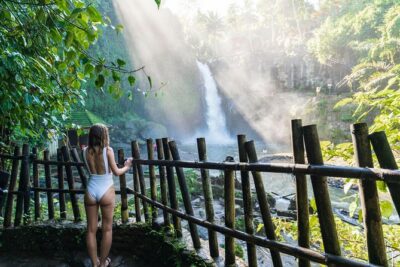
- Sarong + photo moments near the falls, without treating the temple like a theme park
- Coconut for water blessing plus coconut-water ritual elements included
- Round-trip pickup from Ubud/Sanur to keep your day easy and predictable
- Coffee or tea after the ceremony so you’re not left hungry or chilled
Beji Griya Waterfall and the melukat bath: what you’re really signing up for
Beji Griya Waterfall is tied to Balinese purification traditions. The ceremony you take part in is commonly referred to locally as melukat—a spiritual cleansing meant to help clear the mind and soul. Practically, that means you’re there to follow ritual steps, accept blessings, and move through the experience with intention.
The package description frames it as a way to release stress and tension, and that matches the vibe you’ll want to lean into once you’re at the site. This is not just sightseeing. It’s more like a spiritual appointment with the waterfall as the focus.
Why that matters for your day: a ritual like this works best when you’re mentally present. If you treat it like a checklist, it may feel less meaningful. But if you go with curiosity and patience, the structure (priest, offerings, sarong, towel/locker) helps you participate without second-guessing.
More Bali waterfalls, from Tegenungan to the hidden jungle drops


Price and value: $45 for a priest, a ritual kit, and transport
At $45 per person, this isn’t a “cheap random add-on.” It’s priced like a guided cultural experience: entrance ticket, English-speaking driver, round-trip transport, and the core ceremony items are included.
Here’s what you’re getting for that money:
- Entrance ticket for the site
- Offering & priest who guide the purification
- Coconut for the water blessing
- Sarong, towel, and locker use
- Coffee or tea
- Pickup and drop-off from addresses in Ubud and Sanur areas
What’s not included is also important. Lunch isn’t part of the deal, and personal expenses are on you. If you want a full day out, plan to eat before or after. Also, make space in your schedule: the overall experience is about 3 hours total (approx.), so don’t stack it back-to-back with something that needs a long buffer.
A practical value tip: the included sarong/locker/towel items are the kind of small costs that add up if you do this independently. You’re paying for fewer friction points—less searching, less guessing, and a guide to handle the ritual flow.
Transfers from Ubud and Sanur: how to keep your Bali schedule sane
One of the most underrated parts of any Bali day is transportation. This experience includes private transportation with an English-speaking driver, plus pickup and drop-off from the Ubud and Sanur area.
Why you’ll care: Ubud traffic and route timing can be unpredictable. With pickup arranged, you’re less likely to end up late for a ritual that has a set rhythm. And since this is a private tour for your group, it tends to feel calmer—no waiting around for a different itinerary to catch up.
If you’re building a bigger day (maybe temples, coffee plantations, or a relaxed lunch afterward), this is the kind of stop that helps you stay organized. One reviewer-highlighted that their guide, Gusti, went out of his way to help them experience coffee plantation time on top of the main ritual. You can’t assume that will happen for every booking, but it’s a good sign of flexibility you might find with the right driver/guide.
The ritual at the waterfall temple: priest steps, offerings, and coconut blessing

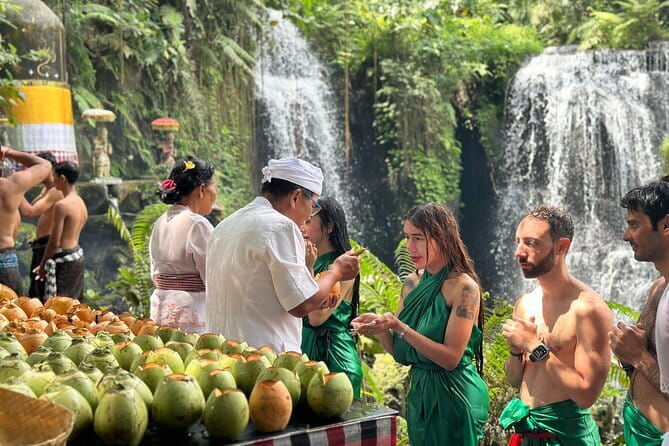
The center of the experience is the Beji Griya Waterfall purification ceremony, where you join local pilgrims and follow a priest’s instructions. The overall time at the site is listed as about 2 hours, with the rest of the 3-hour window used for the ride and transitions.
What’s included (and why it matters):
- Offering & priest: You’re not just watching a ceremony. You’re guided through the process.
- Coconut for water blessing: This gives the ritual a tangible, ceremonial element beyond the physical act of bathing.
- Use of towel, locker, and sarong: This is practical comfort. You’re going to need to change, dry off, and store things safely.
The ceremony is described as part of a melukat purification process. In plain terms, you’re doing spiritual cleansing with natural holy water. It’s intended to remove afflictions and help clear what might block you from a goal—spiritual “reset” language that locals take seriously.
A good way to approach it mentally: treat it like both sacred and practical. You’ll likely be moving step-by-step, listening to instructions, and paying attention to what the priest asks you to do.
Sarongs, photos, and etiquette: how to look respectful and still get great pictures
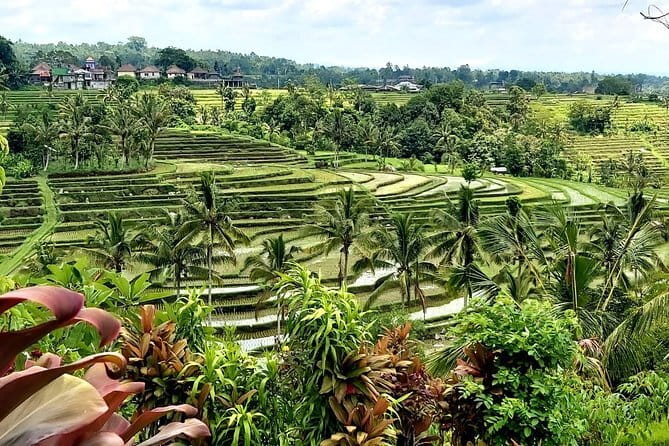
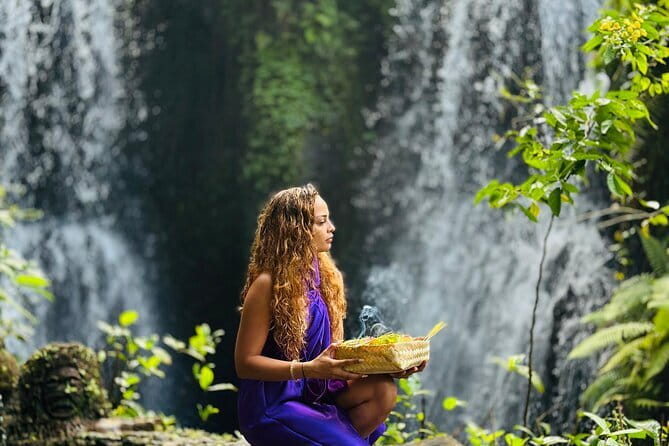
The package mentions photo opportunities while you’re wearing sarongs near the falls. That’s nice, but the trick is to avoid turning the ritual into a photo shoot.
Here’s how I’d handle it:
- Wear the sarong properly when instructed and don’t adjust it constantly for photos.
- When the priest is leading, keep your attention on the ceremony.
- If someone asks you to step back or change position, treat it as normal temple flow, not an interruption.
One positive theme from the experience notes is that the process felt respectful and that a good guide makes it comfortable. Multiple reviews highlight the value of having someone walk you through each step so you don’t feel awkward. If you’re uneasy about participating in a ritual you don’t fully understand, that step-by-step guidance is the difference between feeling lost and feeling calm.
Also, expect the site to have an atmosphere shaped by locals. One review described it as an honor to be part of a site sacred to locals, and that’s a mindset worth bringing with you. It can also help counter a less-positive concern from a review that suggested the place may feel more commercial than spiritual. If you arrive focused on your own participation, not the “crowd factor,” the ritual is more likely to land the way it’s meant to.


What can affect your experience: menstruation, weather, and expectations
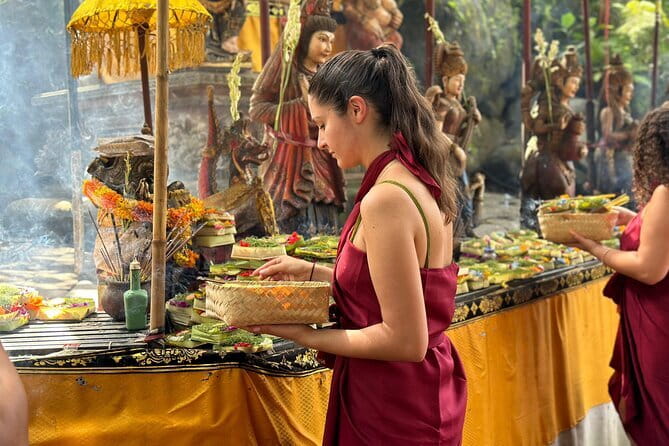
There are three “real life” factors you should take seriously.
Women on their period aren’t allowed to join
The activity info states that women who are on their period can’t participate. If that applies to you (or someone in your group), plan a different Bali activity for that day.
Weather matters
The experience requires good weather. That’s not just about safety—it also affects the flow of the site visit and the ability to complete the ritual as planned. If conditions are poor, the tour may be canceled and you’ll be offered a different date or a full refund.
Your expectation changes the meaning
Some experiences feel deeply spiritual even in busy places; others feel staged if you want silence and solitude. You can’t control how many people are there, but you can control your behavior: be respectful, follow instructions, and let the priest set the pace.
How long it takes and how to plan the rest of your day
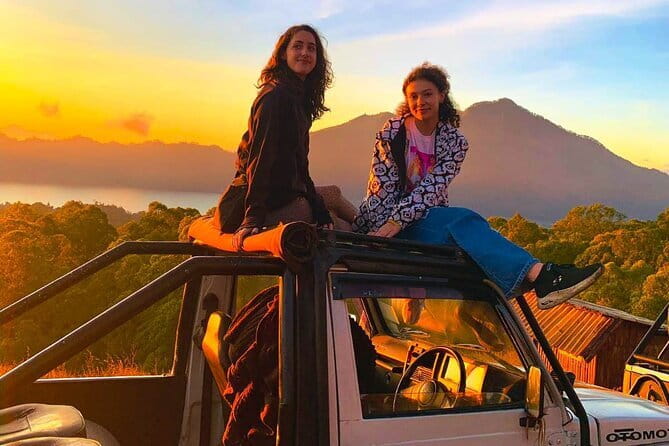
The total time is about 3 hours (approx.). The core ceremony time is listed as 2 hours, so you’ll likely spend the remaining time on pickup, arrival, and getting ready.
Since lunch isn’t included, plan a meal around this stop. If your day is temple-heavy, this can be a grounding pivot. If your day is coffee-heavy, this can still work well, especially if your guide is flexible with timing.
A simple scheduling strategy:
- Keep at least one buffer block afterward for drying off, changing, and calming down.
- Don’t schedule a long, high-energy activity immediately after unless you know you’ll be comfortable.
Who this is best for in Bali (and who should skip)
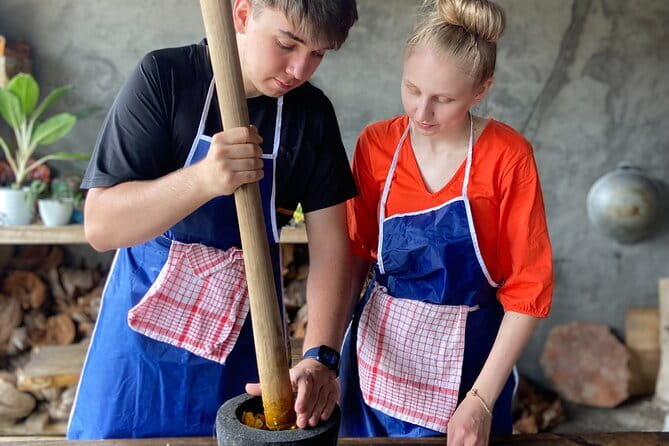
This experience is a strong fit if you want:
- A spiritual Bali activity that includes guidance, not just observation
- A cultural ritual that comes with a sarong, offerings, and a priest to lead you
- A private-group format from Ubud or Sanur, so your day feels controlled
- A meaningful stop that can also deliver good photos without being purely scenic
You might think twice if:
- You’re sensitive to the rules around participation (especially the menstruation restriction)
- You’re expecting a silent retreat experience where no one else is present
- You only want casual sightseeing and don’t want to follow ritual steps
It’s also ideal for people who feel more comfortable when someone explains what’s happening. Several accounts point to the guide making the process easy and comfortable by walking through each step.
Should you book Beji Griya for your Bali itinerary?
My take: if you’re open to the spiritual side of Bali and you want a guided ritual, this is a solid booking. The price is fair for what’s included—priest-led purification, offerings, coconut blessing, sarong/towel/locker, and round-trip transport from the areas where most people stay.
Book it if you:
- Want a structured, respectful way to experience melukat
- Prefer private transport and a defined schedule
- Like the idea of being guided so you don’t feel lost during the ritual
Skip or choose an alternative if you:
- Can’t participate due to the period restriction
- Are only looking for a quick photo stop
- Need guaranteed quiet, solitary spirituality
If you do book it, go in with one goal: participate as instructed, be patient with the rhythm of the ceremony, and treat the site as sacred first. That approach is what turns a beautiful waterfall into a memorable spiritual day.
FAQ
How long is the Beji Griya Waterfall spiritual bath experience?
The experience is about 3 hours total (approx.), with around 2 hours at Beji Griya Waterfall.
Where does pickup happen?
Pickup is offered from addresses in the Ubud and Sanur areas.
Is this a private tour?
Yes. It’s a private tour/activity, and only your group participates.
Is the sarong and purification kit included?
Yes. The package includes a sarong, plus use of a towel and locker.
Do I get a priest and offerings included?
Yes. The offering and priest who guide the purification are included.
Is admission included?
Yes. An entrance ticket is included.
Is coconut for the water blessing included?
Yes. Coconut for the water blessing is included.
What about food?
Coffee or tea is included, but lunch is not included.
Can women on their period join the ceremony?
No. Women who are on their period are not allowed to join the activity.
What happens if the weather is poor?
This experience requires good weather. If it’s canceled due to poor weather, you’ll be offered a different date or a full refund.
More Bali Reviews & Picks



More Bali Waterfall Trails


Still deciding? More Bali days reviewed, from volcano sunrises to island crossings








Bali Waterfall Trails, compared.
 ★ 5.0Best of Bali Waterfalls: Tibumana, Tukad Cepung and TegenunganFrom $533,047 reviews
 ★ 5.0ATV Quad Bike Through Tunnel and Waterfall in BaliFrom $332,098 reviews
 ★ 5.0ATV Quad Bike Bali with Waterfall Gorilla Cave and LunchFrom $321,925 reviews
 ★ 5.0Ubud Hot Springs and Waterfall Private Guided TourFrom $18719 reviews
 ★ 5.0Bali Secret Waterfall Tour – Private and All-InclusiveFrom $109688 reviews
 ★ 5.0Bali ATV Quad Bike Through Tunnel, Waterfall, White Water RaftingFrom $26610 reviews
 ★ 5.0Blue Lagoon Snorkeling – Lunch – Kantolampo – Tibumana WaterfallFrom $39542 reviews
 ★ 5.0Ubud Tour with Monkey Forest Waterfalls Temples and MoreFrom $30495 reviews
Browse the lists this tour appears in