
Reviewed · UBUD, MONKEY FOREST & CAMPUHAN
Best Of Ubud Tours
Ubud can feel like a photo feed come alive, fast. This private full-day tour is built to hit the big-name sights and the local culture in one smooth sweep, from temples and rice terraces to the Monkey Forest and Ubud Palace. I like that you get a private guide who can explain what you are actually looking at, not just point and go, and I also like that a lot of the entrances are already included. One thing to consider: you will be on the move for 8 to 10 hours, so plan for a long-but-fun day rather than a slow stroll.
Another reason I think this works so well is the hotel pickup and round-trip transfers from select areas, which helps you lose less time to traffic and searching. You also get flexibility in the timing, so if your day starts late or the weather changes, you have room to adjust. The one potential snag is that this kind of sightseeing day depends on conditions, and the tour notes it needs good weather.
If you want an efficient Ubud highlight reel, done with context, this one is a strong pick. You will likely leave with great pictures, but more importantly, you should understand why these places matter to the people who live around them.
In This Review
- Key things to know before you go
- Why this Ubud day tour clicks: temples, terraces, and a palace stop
- Price and Logistics: what you are really paying for
- Pickup and timing that helps you beat stress
- Your full-day route in Ubud: stop-by-stop guide to what matters
- Pura Puseh Desa Batuan: start with local temple details
- Tegenungan Waterfall: the Instagram look, with real logistics
- Tegalalang Rice Terraces: subak irrigation meets big views
- D’Alas Natural Terrace Swing: the fun stop that costs effort and time
- Sacred Monkey Forest Sanctuary: where the meaning goes beyond cuteness
- Ubud Traditional Art Market: souvenirs with a living feel
- Ubud Palace (Puri Saren): royalty, governance, and carvings
- The guide makes the difference: the Putu and Rika factor
- How to plan your day for comfort and better photos
- Who this tour suits best (and who should think twice)
- Should you book Best Of Ubud Tours?
- FAQ
- How long is the tour?
- Is this tour private?
- Do I get hotel pickup and drop-off?
- What is the price per person?
- Does the price include entrance tickets?
- Is food included?
- Is bottled water provided?
- What language is the guide?
- Do I need good weather?
- What if I cancel last minute?
Key things to know before you go
- Private, just-your-group guiding for a more personal pace through Ubud
- Included admissions at several major stops, so your money stays predictable
- Round-trip hotel pickup from select areas plus bottled water to keep things simple
- Bali Swing at D’Alas as an optional thrill stop with forest and rice views
- Culture stops like a Batuan temple, Ubud market, and Puri Saren Palace, not only viewpoints
- A long day format (8–10 hours) that stacks major sights efficiently
Why this Ubud day tour clicks: temples, terraces, and a palace stop
This is the kind of day that makes Ubud easy to understand in a single trip. You start with a local Hindu temple setting, then move into the big visual hits: waterfall, Tegalalang rice terraces, and the Monkey Forest. Then you slow down a bit with a traditional art market and finish at Ubud Palace, which gives you a sense of how power and tradition shaped the town.
The balance is the point. A lot of tours in Bali either go full nature-only or full temple-only. Here, you get both, plus a market and a palace. That blend helps you connect the dots between farming, religion, daily life, and tourism.
More around Ubud, from the Monkey Forest to the Campuhan ridge


Price and Logistics: what you are really paying for
At $50.67 per person, the value comes from what is bundled. Your day includes an air-conditioned vehicle, private transportation, bottled water, and an English-speaking driver who also guides. On top of that, several admissions are covered: the Batuan temple, Tegenungan Waterfall, Tegalalang rice terraces, Bali Swing at D’Alas, and the Sacred Monkey Forest Sanctuary.
What is not included is food and personal expenses. That matters because a full day with several stops can add up once you start buying drinks, snacks, and lunch. My practical advice: bring a light plan for meals (even if lunch is off tour), so the day does not turn into a scramble between sights.
Also note the pricing setup suggests it is typically booked in advance (on average, around 45 days). That is a hint this tour is popular for people who want a clean, reliable day without building their own route.
Pickup and timing that helps you beat stress
The big logistics win here is round-trip transfers from select area hotels. Even in Bali, that saves mental energy. Instead of tracking down your own ride between scattered neighborhoods, you get picked up and dropped off as part of the day.
Timing is described as flexible, which is useful in real life. If traffic is running rough or you want a slower break at one stop, you can often adjust without derailing the whole day. For Ubud, flexibility is also helpful because weather and crowds can change how long you want to linger at the waterfall or rice terraces.
One more practical point: this is a private tour, so it is only your group. That keeps the day from turning into a watch-the-faster-people-go-ahead scenario.
Your full-day route in Ubud: stop-by-stop guide to what matters
You are looking at an 8–10 hour sightseeing flow with seven main stops. Here is what each one is good for, what to watch out for, and how to get more out of it.
Pura Puseh Desa Batuan: start with local temple details
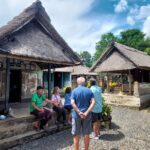
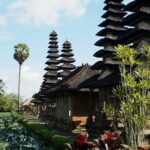
You begin at Pura Puseh Desa Batuan, a Bali Batuan Temple in the Batuan countryside. This is a local Balinese Hindu temple tended by residents, not a theme-park temple staged only for visitors. Expect Balinese ornaments and temple roof architecture that shows up in all the classic designs, with carved and decorated elements that reward slow attention.
Why I like this opening stop: it sets context. Before you hit the more tourist-famous sights, you get a grounding in how religion and daily community life tie together.
What to consider: temple visits usually mean you should dress respectfully and be ready to follow guidance from your guide on what feels appropriate while you are there. Even if the rules are simple, it helps to listen and move calmly.
Tegenungan Waterfall: the Instagram look, with real logistics
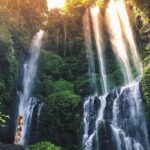
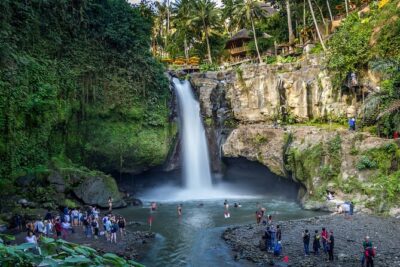
Next is Tegenungan Waterfall. It is described as a beauty/hideaway waterfall located in the Tegenungan Kemenuh area. You get about an hour here, with admission included, which is convenient because it removes one small cost and planning step.
How to make the most of it: plan your time so you are not rushing your photos. Waterfalls can have changing light and lots of standing time, so use the first minutes to scout angles. Your guide can help position you so you get good views without wasting time walking back and forth.
Possible drawback: water-based stops can get slippery and busy. If you are traveling in the middle of the day, expect stronger heat and sun. It is not a deal-breaker, but it is a real factor for comfort.
Tegalalang Rice Terraces: subak irrigation meets big views
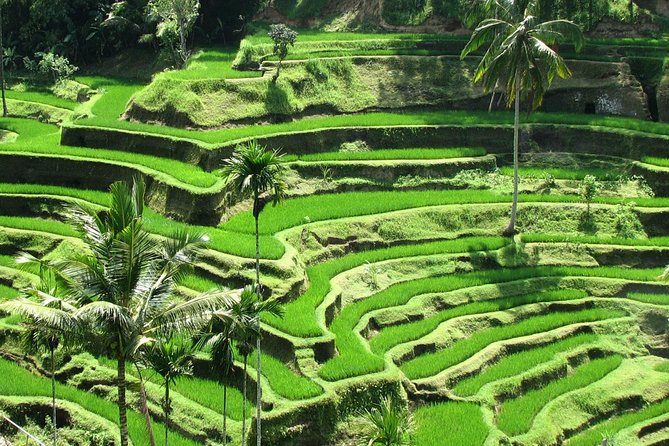
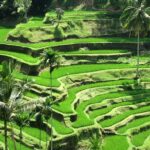
Then you head to Tegalalang Rice Terrace. This is famous for the scenes of rice paddies connected to subak, the traditional Balinese cooperative irrigation system. The idea here is bigger than a pretty hillside: it shows how farming, community organization, and water management work together.
You get around 40 minutes. That is enough time to walk a bit, take photos, and understand the layout without feeling trapped in a long queue.
What to watch for: rice terraces can mean uneven paths. Wear something you can trust on foot. Also, this is a place where shade is limited in parts, so bring sun protection if you tend to burn quickly.
D’Alas Natural Terrace Swing: the fun stop that costs effort and time
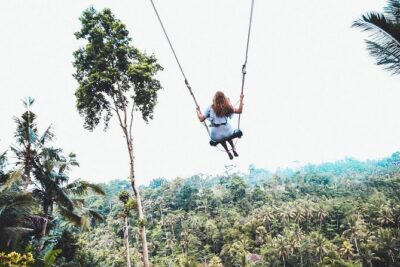
After the terraces, you go to D’Alas for the natural terrace swing (often called Bali Swing). This stop is about playing with the views—forest and rice visuals while you swing.
It is about an hour with admission included. That time usually covers the full activity flow: checking in, waiting for your turn, and experiencing the ride.
The real trade-off: it is fun, but it is also a time sink compared with a simple viewpoint. If you are not into height-based attractions or you do not want to wait around, you might prefer to spend that time taking in the terraces at a slower pace. On the flip side, if you want one iconic thrill moment for the day, this delivers.
Sacred Monkey Forest Sanctuary: where the meaning goes beyond cuteness
Next is the Sacred Monkey Forest Sanctuary. It is located within Padangtegal village, and the locals view it as an important spiritual, economic, educational, and conservation center for the village and area.
You get about 40 minutes. That is long enough to move through thoughtfully and not feel like you are speed-walking for photos only.
How to enjoy it: treat it like a living sanctuary, not a theme park. Your guide can help explain what the locals value and how the forest functions beyond tourism.
Possible consideration: monkeys are part of the environment, so you will want to keep bags secured and avoid sudden moves around them. If you are traveling with kids who want to chase or grab, this is where your guide’s direction matters.
Ubud Traditional Art Market: souvenirs with a living feel
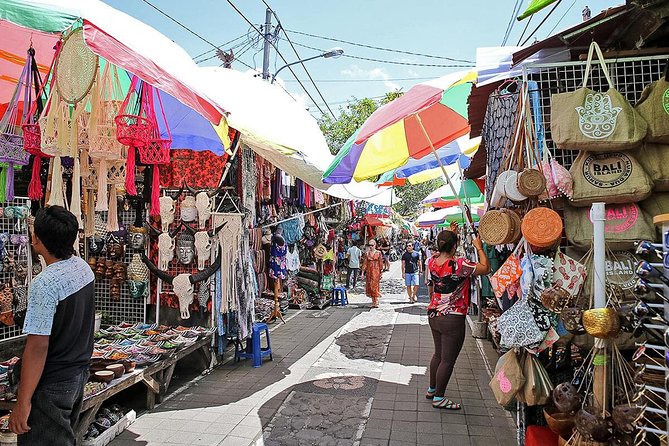
You then visit the Ubud Traditional Art Market (Pasar Seni Ubud). It is located in the heart of Ubud, opposite Puri Saren Royal Ubud. Expect lots of local-made souvenirs and traditional craft items.
You get about an hour, and this is a good time to slow down and browse. Markets are where you see how people actually sell their work, and you can get a better sense of what artisans in the area produce.
What to consider: markets can be a little intense if you hate negotiation or fast vendor attention. Bring patience, and let your guide know what you want—small gifts, textiles, or art—so you can get targeted shopping rather than random wandering.
Ubud Palace (Puri Saren): royalty, governance, and carvings
Finally, you visit Ubud Palace, specifically Puri Saren. This was used as a governance center during the empire era, and you can see Balinese traditional style architecture with a lot of wood carving detail.
You get about 30 minutes, which is enough for a quick history look without turning into a long museum session.
I like ending here because it ties the day back to power and cultural identity. You started with religion, then farming, then nature and conservation, then local crafts—then you end with the formal cultural center.
The guide makes the difference: the Putu and Rika factor
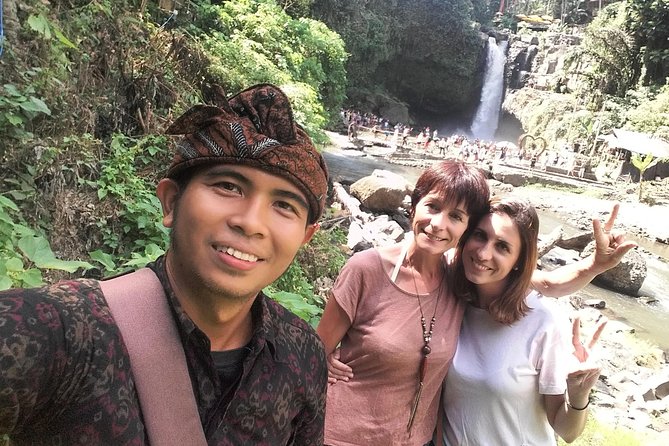
This tour stands or falls on the guide. The description says you get an English-speaking driver as your guide, and the standout theme in the feedback is how much time guides like Putu and Putu Rika (also noted as Rika) spend making the day feel understandable and photo-ready.
I like that this is not only driving from stop to stop. A good guide here can:
- explain what you are seeing in plain language
- help you time photos at the right angles
- keep the day organized so you are not waiting too long
If you care about photos, you are in luck. Some guides are specifically praised for taking pictures for guests, which removes the usual struggle of trying to pose while you are juggling your camera and traffic noise.
How to plan your day for comfort and better photos
This is a full-day route, so your success depends on small choices.
Wear footwear you can walk in. You will likely move between uneven paths at terraces, temple areas, and the Monkey Forest. Plan sun protection too, especially for the waterfall and rice terraces.
Bring a light layer if you run hot and cold easily. Bali can shift quickly from sun to shade, and air-conditioned vehicles can feel chilly after outdoor time.
For photos, think in sequences. In places like Tegenungan Waterfall and Tegalalang, your best shots often come from a couple of different angles. Let your guide know what you want—wide view, people-in-frame, or a simple wide landscape view—and you will waste less time.
Finally, plan food. Since food is not included, decide where you want lunch or bring a snack plan. When hunger hits, it hits hard—and it can steal your energy for stops like the market and palace.
Who this tour suits best (and who should think twice)
This tour is a good match if you want:
- a private day with an English-speaking guide
- included admissions for multiple major Ubud stops
- a mix of culture and scenery, not only one type of attraction
- a workable structure when you only have one full day
It may be less ideal if you prefer slower travel, or if you dislike timed activities and long movement between stops. The swing stop is also a specific kind of attraction. If heights or waiting time are a no-go for you, talk to your guide early so you can adjust how you approach that section.
Should you book Best Of Ubud Tours?
Yes, if you want a polished one-day overview of Ubud that does not feel like a rushed checklist. The value is strongest for you if you like having admissions handled, want hotel pickup, and appreciate a guide who can explain what you are seeing. With included stops ranging from Batuan Temple and Monkey Forest to rice terraces, a market, and Puri Saren, you are getting a full cultural picture rather than only scenic photos.
If you are the type who hates busy environments, or you want a purely relaxed Ubud day with minimal structure, you might feel a bit packed in. But for most first-timers and for anyone craving an efficient day with local context, this is a very sensible way to spend it.
FAQ
How long is the tour?
The duration is listed as approximately 8 to 10 hours.
Is this tour private?
Yes. It is a private tour/activity, and only your group participates.
Do I get hotel pickup and drop-off?
Yes. Round-trip transfers are included from select area hotels, and pickup is offered.
What is the price per person?
The price is $50.67 per person.
Does the price include entrance tickets?
Many admissions are included: Pura Puseh Desa Batuan temple, Tegenungan Waterfall, Tegalalang Rice Terrace, the Natural Terrace Swing (D’Alas), and the Sacred Monkey Forest Sanctuary. Admission for Ubud Art Market and Ubud Palace is listed as free.
Is food included?
No. Food is not included.
Is bottled water provided?
Yes. Bottled water is included.
What language is the guide?
An English-speaking driver is provided as your guide.
Do I need good weather?
Yes, the experience requires good weather. If it is canceled due to poor weather, you will be offered a different date or a full refund.
What if I cancel last minute?
Cancellation is free up to 24 hours in advance of the start time for a full refund. If you cancel less than 24 hours before, the amount paid is not refunded.
More Bali Tour Picks



More Bali Reviews & Picks
More Around Ubud & the Monkey Forest
Still deciding? More Bali days reviewed, from volcano sunrises to island crossings






Ubud, Monkey Forest & Campuhan, compared.
 ★ 5.0All-Inclusive Ubud Private TourFrom $10014,344 reviews
 ★ 5.0Best of Ubud Full-Day Tour with Jungle SwingFrom $568,571 reviews
 ★ 5.0Ubud: Monkey Forest, Jungle Swing, Rice Terrace, and Water TempleFrom $317,160 reviews
 ★ 5.0Best of Ubud 1-Day Private TourFrom $544,451 reviews
 ★ 4.4Ubud Palace Legong Dance Show TicketFrom $63,979 reviews
 ★ 5.0Body Massage Experience in Ubud Traditional SpaFrom $213,506 reviews
 ★ 4.4Ubud Kecak and Fire Dance Show TicketsFrom $62,631 reviews
 ★ 5.0Ubud Cooking Class Bali with Balinese ChefFrom $351,609 reviews