
Reviewed · SURF LESSONS & COAST BREAKS
Canggu: Surfing lesson with ISA certified instructor
Two hours can change how you read the ocean. In Canggu, I like this lesson for the patient one-on-one coaching and the clear wave-reading basics that keep beginners from panicking, even when the water feels powerful. One thing to keep in mind: the session can run tight, and if conditions are strong, you may not get frequent breaks on demand.
What makes it work is the instructor team: you’ll be guided by Yahya or Ari (you’re told upfront who you’ll get). I noticed a consistent theme in their teaching style—encouraging, step-by-step, and big on safety—plus the instructors are attentive enough that you’re not just thrown into the surf and told good luck.
For the logistics, the flow is simple. You meet at Batu Bolong Beach (Pantai Batu Bolong) in Canggu, and there’s pickup offered from Canggu by scooter (or you can meet at the beach). The lesson ends back at the meeting point, so you’re not stuck figuring out a ride afterward.
In This Review
- Key highlights before you go
- Where the Lesson Starts at Batu Bolong Beach (Canggu)
- The 2-Hour Plan: From Warm-Up to Paddling and Standing
- Dry Drills on Land: Why They Make Your First Waves Easier
- Safety and Wave Selection: The Stuff You Feel Immediately
- Meet Your Instructor: Yahya or Ari, and What Their Coaching Style Means
- Gear, Comfort Extras, and Those Photos You’ll Actually Want
- Best Timing in Canggu: When a Surf Session Becomes Part of Your Day
- Beginner Reality Check: Who This Lesson Suits (and Who Might Struggle)
- Price and Value: How $25 for 2 Hours Actually Adds Up
- Should You Book This Canggu Surf Lesson with Yahya or Ari?
- FAQ
- Where do I meet for the surf lesson?
- Do you offer pickup?
- How long is the lesson?
- Is equipment provided?
- Who will my instructor be?
- Is this a private activity?
- What if the weather is bad?
Key highlights before you go
- ISA-certified instruction led by Yahya or Ari, with coaching tailored to your level
- Equipment included, so you can focus on technique, not logistics
- Dry drills on land first, then guided paddling and pop-ups in the right waves
- Private lesson for your group, which usually means more time standing and trying
- Photo/video add-ons available after the session for a real souvenir (not just blurry snaps)
- Weather-dependent timing, with adjustments if conditions are poor
Where the Lesson Starts at Batu Bolong Beach (Canggu)
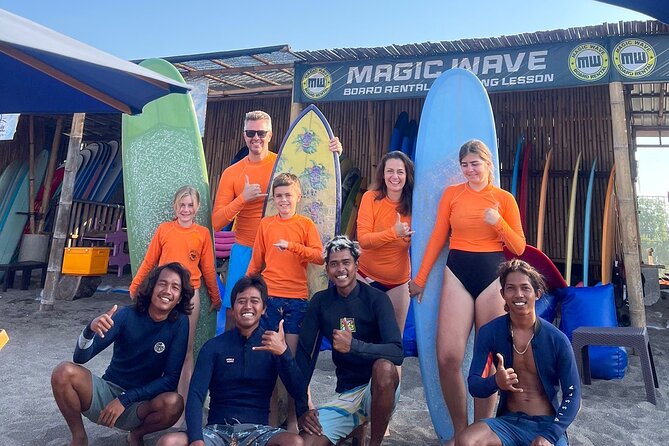
This surf lesson is built around a practical meeting point: Batu Bolong Beach in Canggu. That matters because in Bali, surf spots can be close but traffic and timing can get annoying. With a clear start point, you spend your energy where it belongs—on the sand and in the water—rather than hunting down the right gate or landmark.
If you’re staying in Canggu, pickup by scooter is offered, which is handy when you’re juggling sunscreen, swimwear, and the general “I didn’t plan for today” feeling that hits right before you try something new. If you prefer to keep it simple, you can just meet at the beach.
The whole lesson is designed to feel like a smooth arc: short land instruction, a warm-up that builds confidence, then water time where your instructor can correct your stance and timing in real life. Since the activity runs about 2 hours, it’s long enough to learn and catch a few attempts, but not so long that you’re fried before you make progress.
More surf lessons and coast breaks
The 2-Hour Plan: From Warm-Up to Paddling and Standing
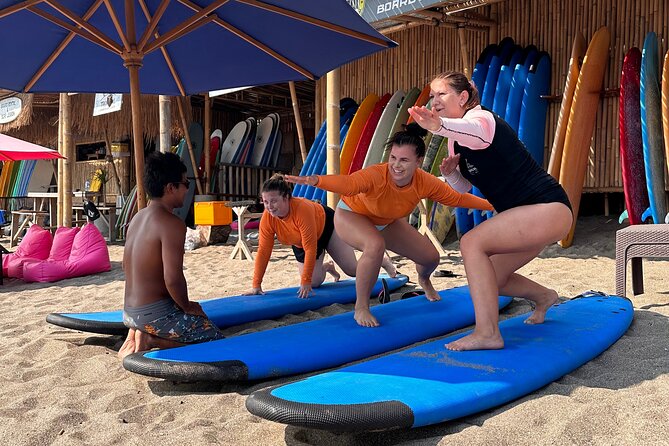
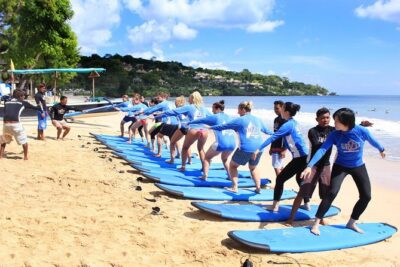
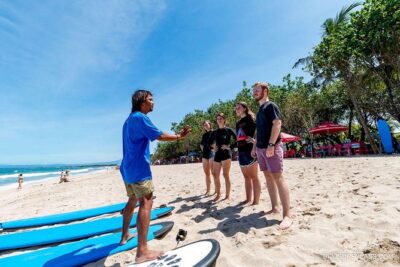
For beginners, the format is predictable in a good way. You’ll start with basic surf guidance on land, then move into health and safety points. After that, you do warm-up exercises on shore—think of it as teaching your body the motion patterns before saltwater makes everything harder.
Then comes the part you’re really here for: practicing paddling and standing on the surfboard. The key is that you’re not learning in random ocean conditions. The instructor places you into waves that match your skill level, and they stay close while you try—so you’re getting feedback while you’re still in the moment, not after you’ve already built bad habits.
A smart detail is that the lesson moves in stages. First you build comfort on the board, then you work on paddling, and only once those steps feel controlled do you push toward the classic stand-up attempt. That’s why people often say they improve fast in a first session.
If you’re intermediate or advanced, there’s the possibility of visiting other surf spots around the island, with the instructor giving style feedback. That upgrade matters because it turns a “basic skills only” lesson into something you can actually measure.
Dry Drills on Land: Why They Make Your First Waves Easier
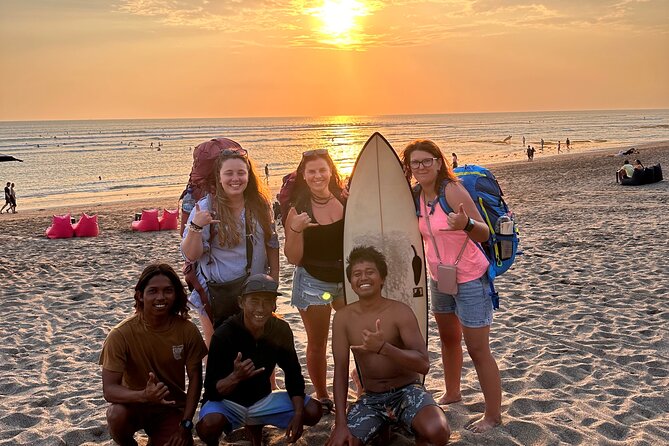
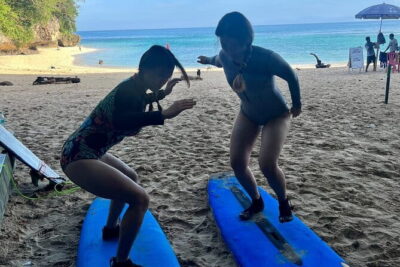
I’m a fan of lessons that start on land, and this one does. Before you’re in the ocean, you get coached on what to do with your body and how to handle the board. That means when you hit the water, you’re not guessing how your stance works or which part comes next.
In practice, those dry drills help in two ways:
- They teach wave expectations before you’re counting on timing.
- They reduce the fear factor. Once your brain knows what you’re aiming for, you paddle with more control.
You’ll likely also get guidance that’s simple and direct—how to read the water, how to approach a wave, and how to keep your balance. When I’m learning anything in the surf, confidence is half the technique. A good land start builds that confidence without rushing you into the deep end.
Safety and Wave Selection: The Stuff You Feel Immediately
Surfing is fun, but it’s not gentle. That’s why this lesson puts safety upfront: there’s a walkthrough of health and safety points before you go into the water. I like that the coaching emphasizes responsible choices, especially for first-timers.
Wave selection is part of the safety picture. Beginners are coached in waves suitable for their level, which helps you get more “success attempts” and less “wipeout frustration.” If the ocean is behaving strongly, instructors typically adjust the session to keep things manageable—sometimes that includes shifting timing when conditions are sketchy.
One consideration: the lesson can be structured, and if you’re a beginner in stronger-than-ideal conditions, you may find breaks aren’t as flexible as you’d like. The best move is to communicate early if you need a pause, and to be honest about swim comfort. If the water feels rough, the coaching style may stay focused on keeping the group moving safely.
Also, you should be prepared for the workout. Even when your first goal is standing up, paddling and repeated attempts use real energy. Arms do the work. So does your core.
Meet Your Instructor: Yahya or Ari, and What Their Coaching Style Means
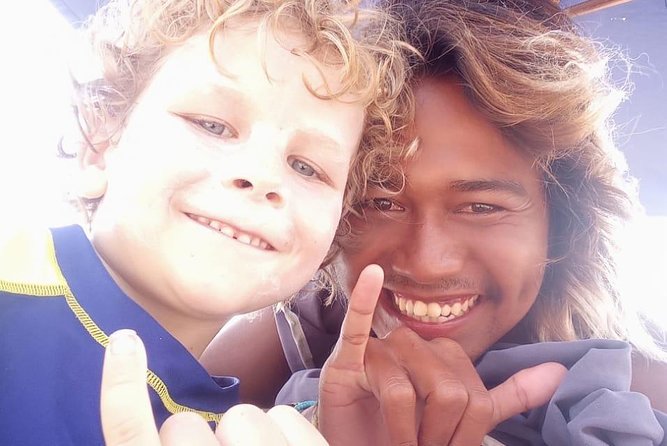
You won’t be wondering who you’ll get. You’re told upfront whether it’s Yahya or Ari. Both are described as friendly, encouraging, and patient—exactly what you want when you’re trying to learn balance while the ocean is doing its own thing.
Ari, in particular, comes across as upbeat and experienced, including experience from Java. That shows up in a teaching approach that feels calm: lots of smiles, clear guidance, and the feeling that the instructor wants you to succeed.
Yahya gets high praise too, often for being supportive and pushing you to keep trying as you improve. The big theme with both instructors is coaching that’s easy to understand and delivered in the moment—so you don’t lose the connection between the tip and the attempt.
Here’s why a private style lesson is valuable for you: it reduces waiting. Instead of watching from the sidelines, you can get repeated, corrected attempts. That’s how most people stand sooner.
A few more Bali tours and experiences worth a look




Gear, Comfort Extras, and Those Photos You’ll Actually Want
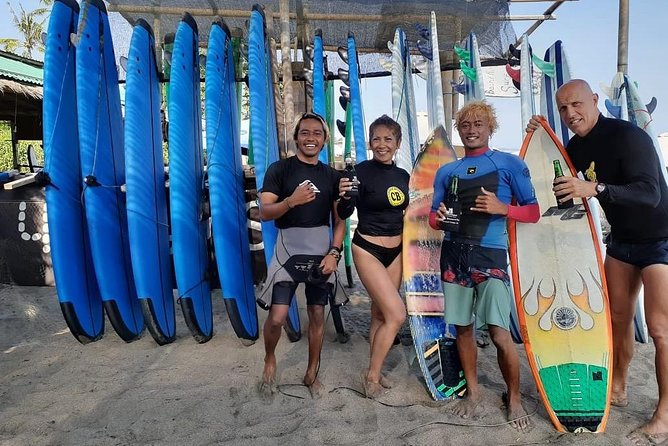
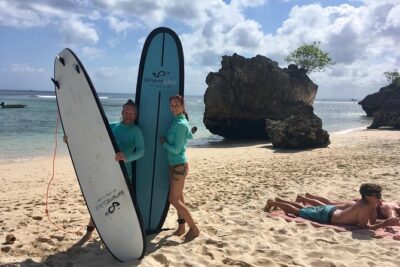
You won’t need to bring surfing equipment. The lesson includes surf gear and instruction, which is a big deal when you’re traveling and trying to pack light.
Depending on what’s available that day, you may also get practical comfort items like rash protection and sun help, plus basic amenities around the session area. People also mention having things like water and storage, and even a shower setup in some cases—small details, but they matter when you’re done dripping sand and salt.
One of the most fun add-ons is the photo/video option. If you’re worried your first session will look like chaotic swimming (totally normal), these help you see what worked—your stance, your timing, and that moment you finally got to stand. It’s the kind of souvenir that feels more real than a random beach snapshot.
If you’re the type who wants proof you actually did it, this is worth considering.
Best Timing in Canggu: When a Surf Session Becomes Part of Your Day
This activity offers several time slots, so you can fit it around your schedule. One practical strategy I like in Canggu is choosing a time that connects to your next plan—dinner, sunset walks, or an easy day of beach time.
A 4pm–6pm slot has a clear advantage: you may catch the sunset atmosphere after the surf. That gives your session more emotional payoff than just “morning exercise, then back to the scooter.” You also tend to end with enough daylight energy to keep the day enjoyable.
That said, weather is king. The lesson requires good weather, and if conditions are poor, you’ll be offered a different date or a full refund. In real terms, this means you shouldn’t lock your entire day to one fixed plan without a little flexibility.
Beginner Reality Check: Who This Lesson Suits (and Who Might Struggle)
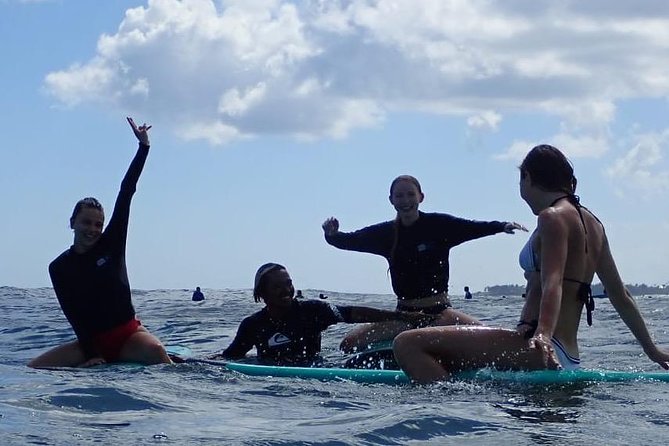
This is designed for beginners, and “most travelers can participate.” The land-to-water teaching flow is exactly what a first lesson needs: instruction, warm-up, paddling, then standing attempts with close guidance.
It’s also a good fit if you:
- can swim (this is important in rougher water)
- want a structured lesson that’s not vague
- like the idea of getting corrected in real time
But here’s the reality check. If you hate uncomfortable moments in moving water, or you’re not comfortable when waves feel strong, you may find the ocean part more intimidating than you expected. The instructors do coach you for safety, and they try to match the waves to your level, but the ocean isn’t a pool.
So if you’re unsure, talk to the instructor at the start about your comfort level. A good coach will calibrate the approach as much as possible.
Price and Value: How $25 for 2 Hours Actually Adds Up
At $25 per person, this lesson is priced like a great “try it for real” activity. The value isn’t just the cost—it’s what you get with it:
- a private session for your group
- equipment included
- instruction built around basics that translate fast
Two hours matters. A short session can teach you theory but not much technique. A longer session can become exhausting without adding much improvement. Here, two hours is long enough to get you from standing-on-the-board practice toward actual wave attempts with coaching feedback.
On top of that, you’re not paying extra for the core teaching and gear. If you choose the photo/video option, that’s additional, but it’s optional—so you can keep costs controlled.
Compared to hiring a board and trying to learn on your own, this format gives you feedback you can’t get wandering the beach. It also reduces the time you’d waste figuring out takeoff timing and paddle setup.
Should You Book This Canggu Surf Lesson with Yahya or Ari?
Book it if you want a beginner-friendly surf class in a top Bali surf zone, with structured coaching and an instructor who keeps you moving toward standing. It’s especially good if you’re traveling with a partner or small group, because the private format means your time in the water isn’t shared with endless waiting.
Skip it or reconsider if you’re expecting a super flexible, slow “rest whenever I ask” style. If you’re prone to getting overwhelmed by stronger ocean conditions, be upfront about your comfort level and aim for a calmer time slot if possible.
If you like learning in small steps, want equipment taken care of, and are okay doing a workout with a smile, this is one of the easier ways to get real surf progress in Bali—without turning your vacation into a gear hunt.
FAQ
Where do I meet for the surf lesson?
You’ll meet at Batu Bolong Beach (Pantai Batu Bolong) in Canggu. The activity ends back at the same meeting point.
Do you offer pickup?
Yes. Pickup is offered from Canggu by scooter, or you can meet directly at the beach.
How long is the lesson?
It’s approximately 2 hours.
Is equipment provided?
Yes. All surf equipment and instruction are provided.
Who will my instructor be?
Your instructor will be either Yahya or Ari, and you’re told upfront who you’ll get.
Is this a private activity?
Yes. It’s a private tour/activity, so only your group will participate.
What if the weather is bad?
This experience requires good weather. If it’s canceled due to poor weather, you’ll be offered a different date or a full refund.
More Bali Workshops & Classes

More Bali Reviews & Picks





More Surf Lessons & Coast Breaks

Still deciding? More Bali days reviewed, from volcano sunrises to island crossings









Surf Lessons & Coast Breaks, compared.
 ★ 5.0HOT PROMO. Beginner Surf Lessons in BaliFrom $13193 reviews
 ★ 4.5Surf Lesson with a Personal Instructor at Kuta BeachFrom $50192 reviews
 ★ 5.0The best surf lessons in KutaFrom $25144 reviews
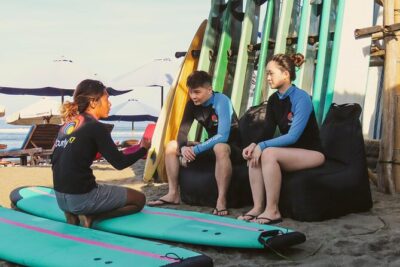 ★ 5.0The funniest private 2 hour surf lesson, CangguFrom $3370 reviews
 ★ 5.0Surfnesia Surf Lesson and GuidingFrom $3346 reviews
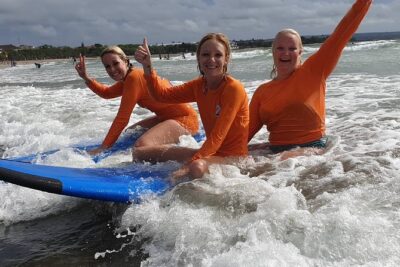 ★ 5.0Private Beginner 1 on 1 Surf Lesson at Kuta BeachFrom $4639 reviews
 ★ 4.0Private Surf Lessons in Padang Padang – Uluwatu – BaliFrom $14930 reviews
 ★ 5.0HOT PROMO. Private Surf Lessons (1 Coach/1 Guest)From $1927 reviews
Browse the lists this tour appears in