Reviewed · BALI
Make Traditional Bali Coconut Oil with a Balinese Family
Coconut oil, made by hand and heart. This private class in Delodsema (Taro, north of Ubud) is truly hands-on—you make the oil the traditional way, not the quick machine version—and you relax with a coconut scrub massage while it’s processing. You’ll also get a window into daily village life, served with herbal tea or coffee and snacks.
I like that it feels intimate and personal, like learning a family recipe, explained step-by-step. A small consideration: the session is listed around 1 hour 30 minutes, but the traditional oil process takes more than 1 to 1.5 hours, and round-trip transfers from central Ubud cost extra (IDR 350,000).
When it’s done, you leave with your own bottle of coconut oil as a souvenir. It’s a simple idea with a very satisfying payoff: you made it, so you’ll actually use it after the trip.
In This Review
- Key highlights at a glance
- Why Delodsema (Taro, north of Ubud) feels different
- What “make coconut oil” actually means here
- The coconut scrub massage: the included “breather”
- Meeting Puta and Kadek: the human side of the class
- Included perks that make the class feel complete
- Timing and logistics: plan for transfers and a longer oil process
- Optional silversmithing: add a second craft if you want more time
- Who this coconut oil class is best for
- Price and value: is $27 really enough here?
- Should you book this family coconut oil experience?
- FAQ
- How long is the coconut oil class?
- Is this experience private?
- Where does the tour take place?
- What’s included in the price?
- Do I need to pay for transportation from Ubud?
- Can I add a silversmithing class?
- What is the cancellation policy?
Key highlights at a glance

- Traditional process in a real village home: you follow the Balinese method from start to take-home.
- Coconut scrub massage included: you get pampered while the oil is being made.
- Family welcome: you’re greeted by Puta, the wife of Kadek (who helps with your tour arrival/transport).
- Good value “package”: tea or coffee, Balinese cookies, tools, a sarong, and Wi‑Fi are part of the deal.
- Optional silversmithing class: add another craft if you want more hands-on time.
- Private experience: only your group participates, so questions feel easy to ask.
Why Delodsema (Taro, north of Ubud) feels different
If you’re tired of Bali’s busy rhythm, this is the opposite. You head to Delodsema Village in Taro, just north of Ubud, in an area described as a small rural village community of about 50 families. That matters, because it changes the vibe from a “show” to a normal day in a home setting.
The location is also part of the point. Taro sits in a quieter pocket of the island where you’re more likely to notice village rhythm—traditional houses, everyday routines, and the kind of patience it takes to make something by hand. Instead of being herded around a big attraction, you’re welcomed into someone’s space and work alongside them.
And it’s not just cultural sightseeing. You’re doing something practical: learning the real steps to make coconut oil. You’ll also get time to walk around and see what people do day-to-day, plus look at the traditional homes in the village. It’s rural, it’s local, and it’s more personal than most “class” experiences.
More of Bali worth booking, from the Ubud rice terraces to the reefs off the Bukit.



What “make coconut oil” actually means here
This isn’t a quick tasting or a one-step demo. The traditional coconut oil process is the main event, and it takes real time. Even though the tour is listed at about 1 hour 30 minutes, the instructions note that the traditional method takes more than 1 to 1.5 hours to complete. Translation for your schedule: treat it as a hands-on craft that needs time to finish properly.
Here’s what you can expect, step by step:
1) Arrival and a warm start
You’re picked up and brought to the home base in the village setting (or you meet there, depending on how your transport is arranged). You’ll be welcomed with balinese coffee or herbal tea, plus Balinese cookies.
2) Hands-on coconut oil work
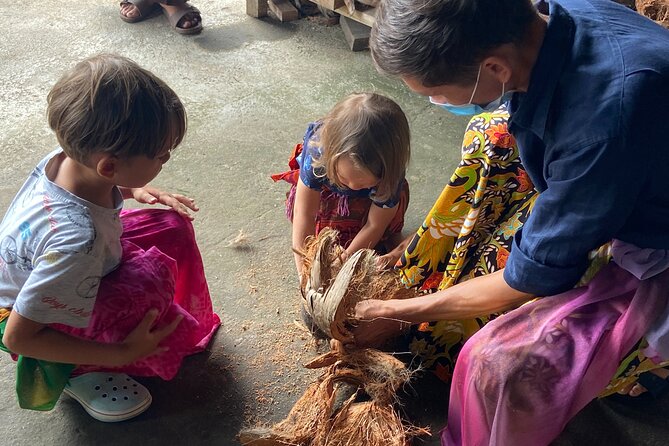
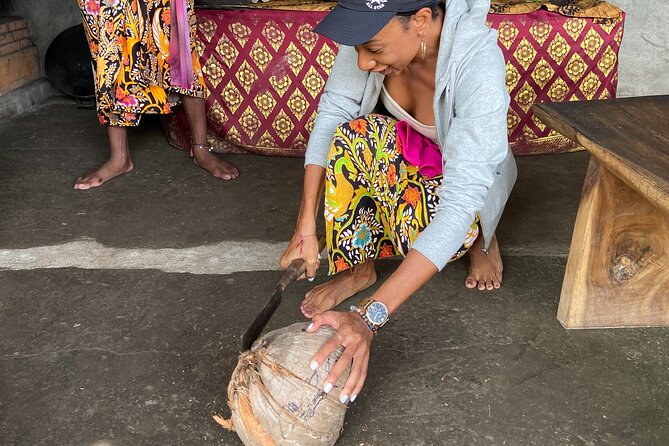
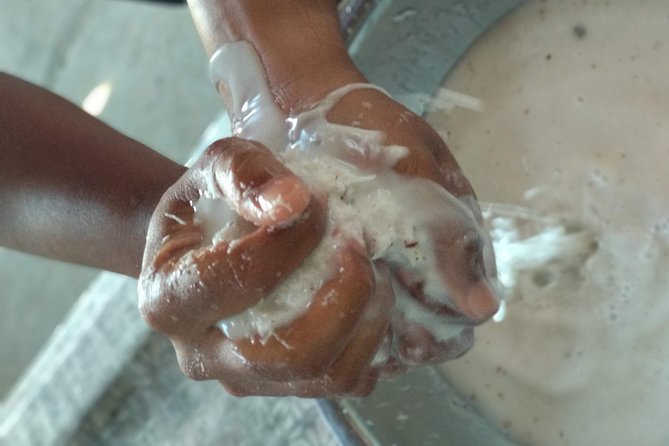
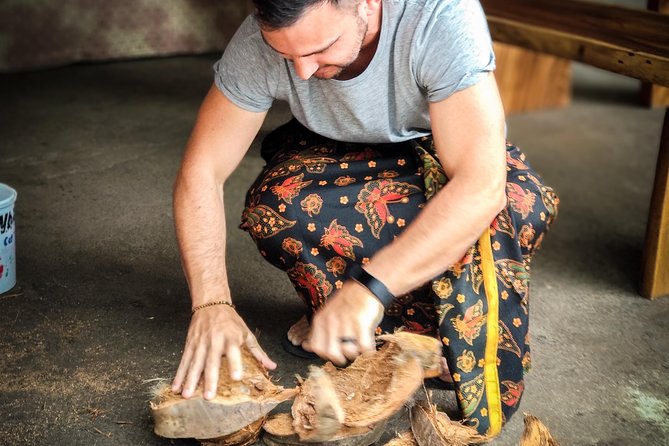
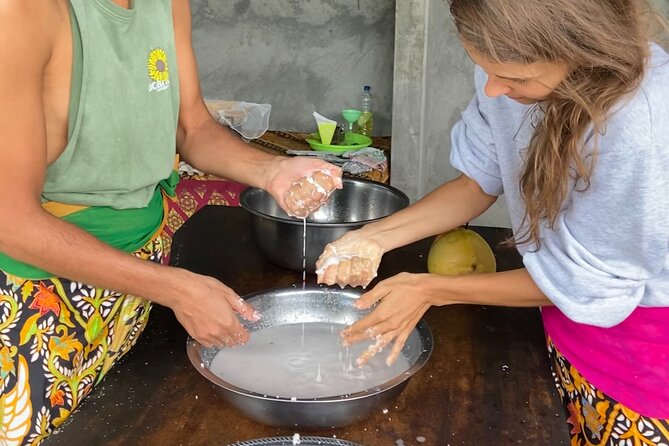
Then the class starts in earnest. You’ll use the tools and equipment provided to create the coconut oil using the Balinese traditional process. The best part is that it’s explained thoroughly at each stage, so you’re not just doing motions—you understand what each step is for.
3) While you wait: coconut scrub massage
Oil making isn’t instant. So instead of sitting around, you get the coconut scrub massage included with the experience. It’s a nice pairing: coconut again, but this time as a beauty/comfort step, not the product step.
4) Village life time
As the oil finishes, you’ll get to explore the local life and see traditional village houses. In plain terms: you get a break from the workshop rhythm, and you get context for what you’re learning.
5) Take your bottle home
When the coconut oil is ready, you bring your homemade coconut oil home as your souvenir. This is one of the reasons the class feels worth it—you’re leaving with something real you made, not just a photo.
The coconut scrub massage: the included “breather”
The coconut scrub massage is one of the most appealing parts of the day because it’s both simple and functional. You’re working with coconut anyway, so it feels like the same theme—just used for comfort.
Practically, this means you’ll likely get some sensory cues: coconut scent, texture, and a bit of mess in the general sense (scrubs are scrubs). If you’re the type who packs carefully, wear clothing that can handle a little coconut contact and plan your hair/skin expectations like it’s a spa service, not a dry cooking class.
Also, it changes the pacing. If oil-making were the only activity, you’d sit and wait. Here, your time is filled. It makes the experience flow like a real visit to a family home: welcome, work, relax, and talk.
And the emotional payoff is real. Coconut oil classes can be “interesting,” but the massage turns it into something you’ll remember for comfort as well as craft.
Meeting Puta and Kadek: the human side of the class
This experience is built around a family setting. In the notes, you’ll see the names Puta and Kadek associated with the welcome and arrival experience, and that matters because it signals a more personal interaction than a standard tour desk.
You may be greeted by Puta, while Kadek is mentioned in connection with the transport and your tour arrival. In one welcome-style description, it’s also mentioned that multiple generations live together in the same community home environment. That gives the experience a grounded feel: you’re not in a sterile studio, and you’re not just watching someone else’s skill—you’re interacting with people who live the culture every day.
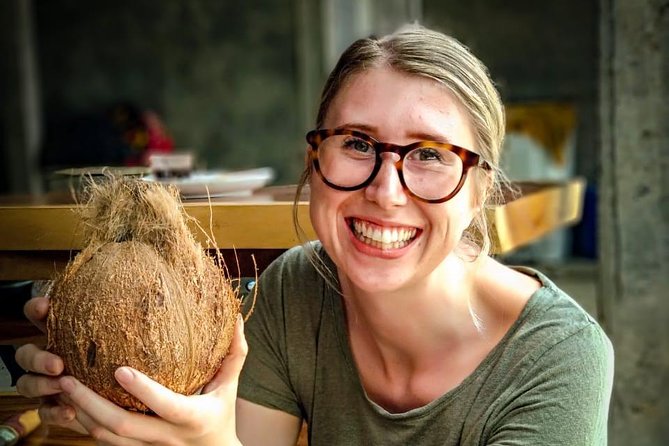
This is what you should look for when you book. The best learning happens when you treat it like a conversation. Ask how the process works. Ask what coconut oil is used for at home. And don’t be shy about silly attempts—one theme in the experience is that you’ll try the physical steps, even if you’re not perfect at peeling or handling coconuts. That’s part of the fun.
Included perks that make the class feel complete
For $27 per person, the experience includes more than just a lesson. You also get:
- Coffee and/or tea (Balinese coffee and herbal tea are mentioned)
- Balinese snacks/cookies
- Tools and equipment for making coconut oil
- Balinese sarong
- Free Wi‑Fi
- Your coconut oil to take home
That list is why the value feels stronger than you might expect. If you were to replicate this on your own, you’d need supplies, time, and someone who can guide the process. Here, it’s packaged. The take-home coconut oil is the big physical proof of value.
The sarong inclusion is also more than a cute detail. In a home setting, it helps you fit the atmosphere and feel respectful while you participate.
The Wi‑Fi might not sound exciting, but it’s a practical comfort if you’re coordinating the rest of your day in Ubud. Just don’t get so attached to your phone that you miss the village part.





Timing and logistics: plan for transfers and a longer oil process
Two logistics points will affect your day more than you’d think.
First, the timing. The experience is listed at about 1 hour 30 minutes, but the oil process itself takes more than 1 to 1.5 hours using the traditional method. So even if the “clock” says 90 minutes, build a buffer so you’re not rushing off to dinner or another tight activity.
Second, transport. If you’re staying in central Ubud and want pickup and drop-off, the upgrade includes round-trip transfers for IDR 350,000. The experience also notes that transport from Ubud central is charged at that price. If you prefer to save money, you might choose to arrange your own way to the meeting point, but be prepared for the extra planning.
Either way, check your day’s schedule. This isn’t an activity you slot between two unpredictable tours. It works best as a main experience in the morning or early afternoon, when you can give the process the time it needs.
Optional silversmithing: add a second craft if you want more time
You can upgrade to include a silversmithing class for an extra souvenir-style experience. If you like hands-on crafts, this is a smart add because it keeps the day active and skill-based rather than purely observational.
It also gives you two different angles on Balinese craft culture: one practical and organic (coconut oil), and one artistic and metal-based (silversmithing). If you’re traveling with someone who gets bored easily by slow processes, adding silversmithing can balance the pacing.
If you’d rather keep the day focused, you can skip the add-on and just do the oil class thoroughly. Either way, the option is there, and it fits the overall “learn in a family setting” style.
Who this coconut oil class is best for
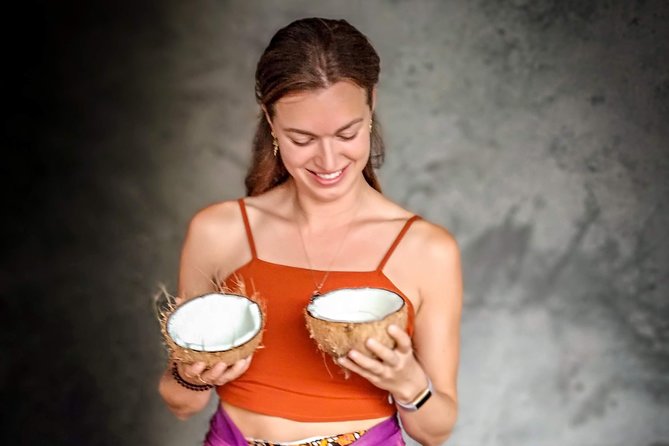
This experience is a good match if you want culture you can touch and take home. It’s also specifically described as fun and educational for children, families, couples, and solo travelers.
Here’s a more practical match list:
- Families: It’s hands-on and social, and there’s something for kids to watch and try.
- Couples: You get an intimate, non-touristy story to tell later, plus a bottle of oil that feels personal.
- Solo travelers: A private setting with guided instruction can reduce the awkwardness of “what do I do here?” situations.
- Anyone into natural products: You learn a coconut oil process firsthand rather than relying on labels.
If you hate any kind of waiting, you might find the oil-making time a little long. But the coconut scrub and village explore time help fill that gap.
Price and value: is $27 really enough here?
At $27 per person, this class can feel like a bargain once you look at what’s included. You’re paying for:
- guidance through a real traditional process
- coffee/tea and snacks
- coconut scrub massage
- tools, equipment, and a sarong
- Wi‑Fi
- and the key thing: coconut oil you make and take home
The only recurring cost called out is transportation from central Ubud: IDR 350,000 round trip if you upgrade for transfers. So your true total depends on where you’re staying.
Still, even with the transfer cost, this can remain good value because you’re getting more than a one-time activity. You’re leaving with product, instruction, and a relaxed pace that doesn’t feel rushed.
Should you book this family coconut oil experience?
I’d book it if you want:
- a hands-on cultural activity that ends with something you can use
- a break from “temple-hopping” and into everyday village life
- an experience that includes coconut scrub massage, not just a craft lesson
- a private format where your questions actually get answered
I’d think twice if:
- your schedule is extremely tight and you can’t buffer for the traditional oil process
- you’re only interested in fast sightseeing and don’t want a workshop-style day
If you’re the type who likes learning by doing and carrying a real souvenir back, this is a strong pick.
FAQ
How long is the coconut oil class?
The experience is listed as about 1 hour 30 minutes. The traditional coconut oil process takes more than 1 to 1.5 hours, so plan a little extra time.
Is this experience private?
Yes. It’s a private tour or activity, and only your group participates.
Where does the tour take place?
The meeting point is Delodsema Village, Jl. Taman Gajah, Taro, Kec. Tegallalang, Kabupaten Gianyar, Bali 80561, Indonesia.
What’s included in the price?
Coffee and/or tea, Balinese cookies, tools and equipment for making coconut oil, free Wi‑Fi, a Balinese sarong, and your coconut oil to take home.
Do I need to pay for transportation from Ubud?
Transportation from central Ubud is charged separately at IDR 350,000 round trip. You can upgrade to include round-trip transfers.
Can I add a silversmithing class?
Yes. There’s an option to upgrade to include an additional silversmithing class too.
What is the cancellation policy?
Free cancellation is available. You can cancel up to 24 hours in advance for a full refund.