
Reviewed · SNORKELING WITH MANTA RAYS
Reef Rehabilitation Course and Snorkeling
Hands-on coral work beats a postcard. This 6-hour Nusa Penida day turns reef science into real steps, from snorkeling the coral nursery to planting 70 corals (4 m²) by hand. I especially like the practical focus on coral restoration, including the hands-on rope work taught underwater, with team members such as Nyoman and Festi helping you understand what you’re doing. The main drawback is simple: you need moderate physical fitness and you should be comfortable swimming.
You’ll keep moving at a small-group pace too, with a maximum of 10 travelers, plus lunch at Coral Cafe and reef-focused instruction throughout. And if you go on a Saturday, you’ll also connect with the local community through school support and conservation activities like beach cleanups.
Nusa Penida Reef Rehab: Real Restoration, Not a Tourist Prop
- Plant 70 corals per person (4 m² of reef) as a measurable outcome
- Three guided snorkeling experiences tied to the nursery and restoration steps
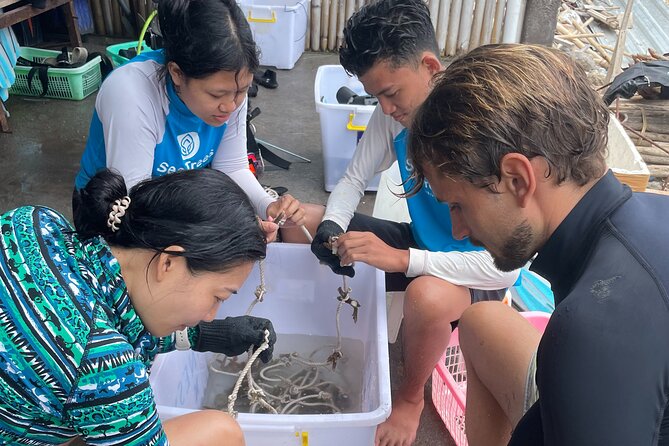
- Underwater knot-tying and rope prep using harvested coral fragments
- Lunch at Coral Cafe plus conservation time built into the day
- Saturday option: local school visit, English teaching, and beach cleanups
In This Review
- Nusa Penida Reef Rehab: Real Restoration, Not a Tourist Prop
- What You Do in 6 Hours: Coral Nursery to 4 m² of New Reef
- Coral Restoration Lesson: Biology, Ocean Conditions, and How Reefs Recover
- Snorkeling the Reef Nursery and Harvesting Coral Fragments
- Lunch at Coral Cafe and the Small-Group Pace
- Underwater Knot-Tying and Planting 70 Corals the Right Way
- Saturdays With the Local School: English Teaching and Beach Cleanups
- Gear, Swims, and Physical Demands: What You Need to Be Ready For
- Price and Value at $62.61: Where Your Money Actually Lands
- Who This Tour Fits Best—and Who Might Skip It
- Should You Book This Reef Rehabilitation Course in Nusa Penida?
- FAQ
- How long is the Reef Rehabilitation Course and Snorkeling?
- Where does the tour start and end?
- What’s included in the price?
- What will I do during the coral restoration part?
- How many snorkeling experiences are included?
- Do I need to know how to swim?
- Is there a place for a cancellation refund?
Nusa Penida Reef Rehab: Real Restoration, Not a Tourist Prop
If you’ve ever felt stuck with reef tours that look great but leave little change behind, this is a better use of your time. The day is built around coral restoration you can actually participate in, not just watch from the surface.
What I like most is how the experience connects three things that usually get separated: reef biology (why corals matter), what’s happening at the nursery (how restoration works in practice), and the final planting task (how the fragments get secured). Your role is clear, and the scale is clear too: 70 corals and about 4 m² per person.
One more plus: you’re not paying for a vague “adoption” idea. The focus here is the on-the-ground work—materials for restoration are part of your ticket, along with a lunch stop and a gift to local kids and the school.
What You Do in 6 Hours: Coral Nursery to 4 m² of New Reef
This runs about 6 hours and ends back where you start. That matters because your day stays coherent: instruction, water time, and planting all happen as one flow instead of random wandering.
Here’s the day in the order you can expect, with what each step is really doing for you:
1) Coral conservation presentation (on the surface)
You’ll get reef knowledge first: coral biology, ocean conditions, and how damaged ecosystems come back. Think of this as the “why” behind the hands-on work so your planting effort feels meaningful, not like a one-time stunt.
2) See the coral nurseries and how corals are cultivated
This isn’t just a viewing moment. You’ll understand the nursery role: growing coral fragments so they’re ready for reattachment and survival support.
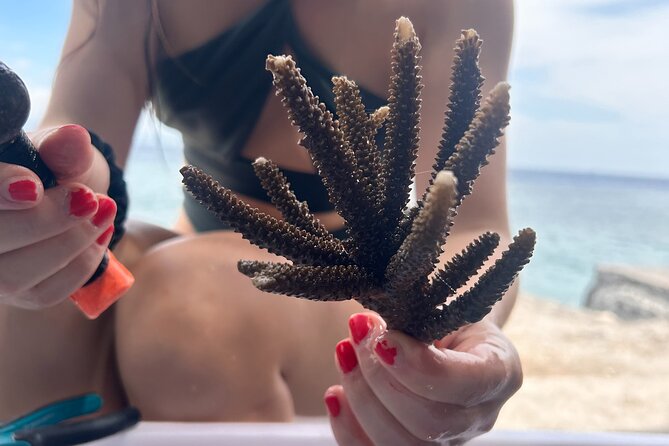
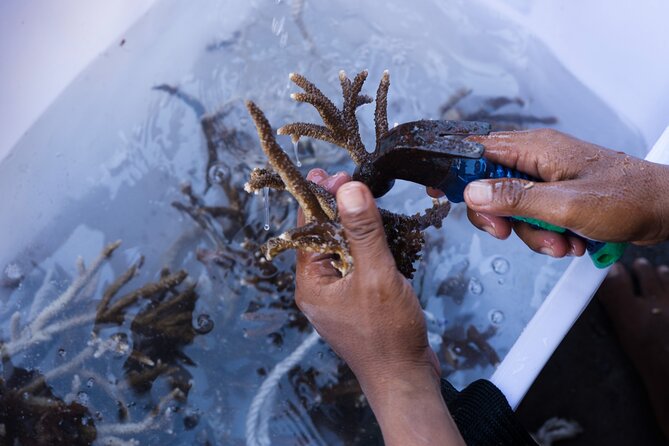
3) Harvest coral fragments for planting
You’ll learn how fragments are collected for the restoration process. This is where the day shifts from learning to doing.
4) Lunch break at Coral Cafe
A real break helps—especially if you’ve already been in and out of the water earlier in the morning. It also gives you time to reset before the underwater knot and planting work.
5) Underwater knot-tying lesson
This is one of the most “I can’t believe we’re doing this” parts, because you practice tight knots underwater and learn how to use rope properly for the coral fragments.
6) Prepare the ropes with your collected fragments
Your instruction continues into the practical setup—tying, positioning, and preparing for the final planting stage.
7) Plant 70 corals (4 m²) per person
This is the payoff. You’re not just helping in a general way; you’re doing a specific restoration task tied to a specific count.
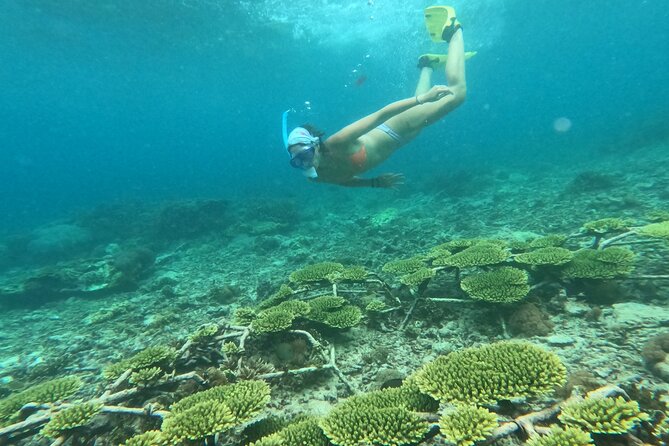
Also, you get 3 guided snorkeling experiences during the day, which keeps the water time structured. Rather than one long snorkel, you’ll likely do smaller, purposeful sessions that match the restoration steps.
More snorkelling with mantas and the reefs off the coast
- ️Nusa Penida by Private Boat – Snorkeling 4 spots, Swim with Mantas + Land Tour
★ 5.0 · 6,424 reviews
Coral Restoration Lesson: Biology, Ocean Conditions, and How Reefs Recover
The coral presentation is more than background filler. It gives you the basic framework for what you’re supporting and why specific actions matter.
You’ll learn:
- coral biology and what makes coral live and grow
- ocean conditions that influence reef health
- how damaged ecosystems can recover when restoration is done correctly
That’s valuable because coral planting isn’t only “put it there and hope.” Corals need the right conditions, and reef recovery depends on more than one moment. When you understand the logic of the process, the day feels calmer and more focused—like you’re following a plan.
And based on what’s been emphasized by the team, the instruction stays practical. People come away talking about learning how to work the coral and secure it properly—exactly the skills you want if your goal is impact, not just a photo.
Snorkeling the Reef Nursery and Harvesting Coral Fragments
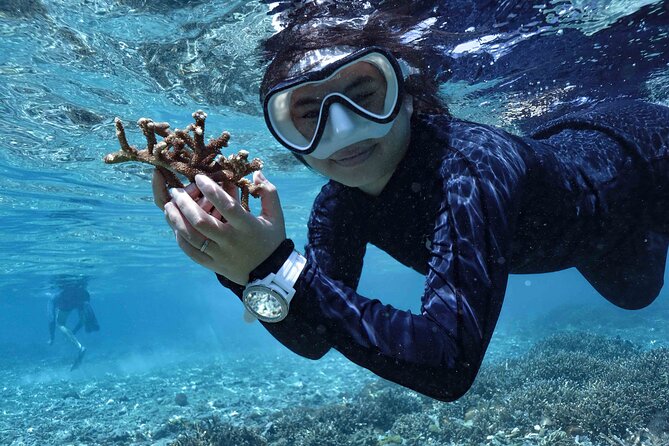
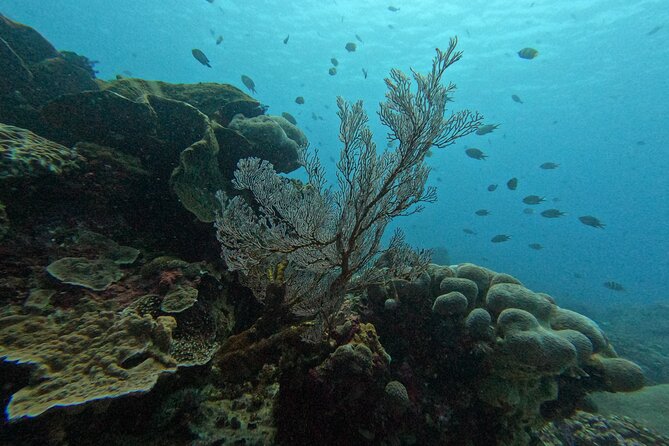
Your water time is a core part of the experience, but it’s not random sightseeing. The nursery setting matters because it shows you restoration as a living system, not a one-day event.
In the nursery context, snorkeling helps you see:
- where coral fragments are cultivated
- how the team approaches collection for planting
- how the water environment connects to what you’ll do with rope and placement
Then comes the fragment harvest step. This is where you’ll get direct instruction on how fragments are gathered for restoration. It’s also the point where your reef education becomes physical: you’re handling the components of the project you’ll later attach and anchor.
One thing I’d keep in mind: since you’re working with equipment and doing underwater knot work later, you’ll want to stay relaxed in the water. If you tend to panic when you lose track of what to do, this may feel mentally demanding—so listen closely early and practice steady breathing.
Lunch at Coral Cafe and the Small-Group Pace
You get lunch at Coral Cafe, and it’s scheduled right between the earlier nursery/learning segments and the later underwater work. That timing is smart. You’re not trying to sprint from education straight into labor.
The group size also helps. With a maximum of 10 travelers, the day doesn’t feel like you’re getting lost in a crowd while trying to learn detailed tasks like knot-tying and rope prep. Smaller groups typically mean more guidance when you need it.
If you’re the kind of person who likes structure—clear steps, clear goals—this is a good fit. The day has a rhythm: learn, see, collect, eat, practice underwater, plant.
Underwater Knot-Tying and Planting 70 Corals the Right Way
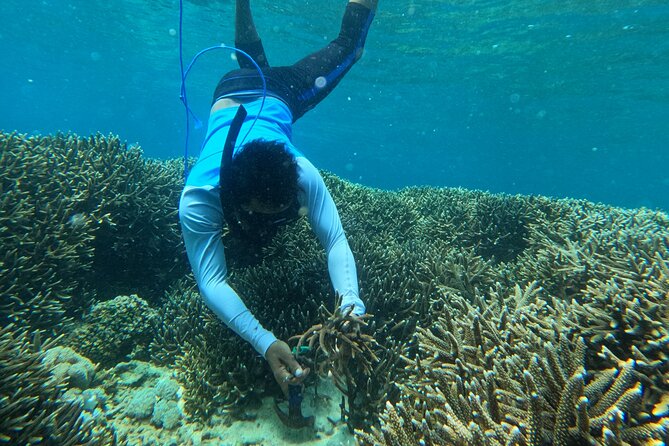
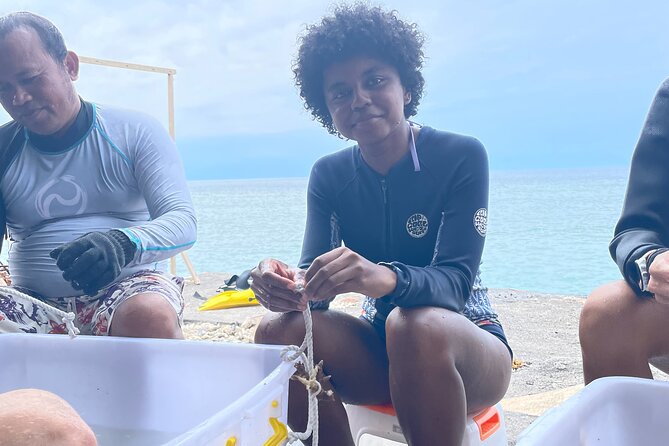
This is the moment most people remember, and for good reason. You’ll learn how to tie tight knots underwater and then prepare the ropes using the coral fragments you collected.
Based on the feedback from the experience team’s work, people leave specifically mentioning the rope and securing part: working with the coral, tying it to ropes, and then attaching it on the seabed. That’s exactly what you want your effort to do—create a stable attachment for the fragment.
Here’s why this part matters for you as a participant:
- It turns restoration into a skill, not just a donation
- It forces you to slow down and follow instructions carefully
- It gives your impact a concrete output (70 corals planted per person)
It’s also a bit of a mindset shift. The ocean isn’t a workshop, so your job is to stay patient and follow the guide’s directions step-by-step. If you’re comfortable swimming but you’re not very confident with underwater tasks, you’ll probably benefit from the calm, guided pace the team offers.
Saturdays With the Local School: English Teaching and Beach Cleanups
If your schedule allows, go on a Saturday. The experience includes a visit to the local school, where you’ll help with English teaching and conservation activities such as beach cleanups with the children.
This part adds real community context. You’re not just supporting coral on a reef; you’re seeing how locals connect conservation education with daily life on the island.
Even if you’re not a confident English teacher, the setup is described as teaching English with the children. That can mean lots of practical, friendly interaction. And the beach cleanup piece is usually the kind of activity where immediate effort matters, even if you’re not speaking the language fluently.
Gear, Swims, and Physical Demands: What You Need to Be Ready For
Snorkeling equipment is included, so you don’t have to source gear ahead of time. The bigger question is whether you can move comfortably in the water.
The experience notes:
- moderate physical fitness level
- you should be able to swim comfortably
- you need to participate in snorkeling and underwater knot work
So think of this as an active conservation day, not a laid-back float. You’ll be in and out of snorkeling situations across the day, and you’ll need enough comfort to focus on tying knots and placing coral.
Also, service animals are allowed. That’s useful to know if you travel with one.
Price and Value at $62.61: Where Your Money Actually Lands
At $62.61 per person, it’s priced low for a day that includes real conservation labor. The experience claims that typical NGOs would charge hundreds for similar impact work, and while I can’t verify outside numbers, I can say the inclusions here support that claim.
What your ticket covers:
- lunch
- snorkeling equipment
- materials for coral restoration
- a gift to local kids and the school
You’re also paying for instruction: coral biology and reef knowledge, plus the practical training you need to do the planting task. And because it’s max 10 travelers, your guidance time is less diluted than in big tour groups.
The value equation is strongest if you care about hands-on impact and want your money attached to measurable output: 70 corals and about 4 m² per person.
If you only want passive snorkeling and photos, you might find the practical work more effort than you planned for. But if you want to leave with competence and a clear contribution, the pricing starts to make sense fast.
Who This Tour Fits Best—and Who Might Skip It
This tour is ideal for you if:
- you like practical learning and want clear steps
- you’re comfortable snorkeling and want a task-focused water experience
- you care about coral restoration and want to do something measurable
- you enjoy small-group travel (10 max)
It’s less ideal if:
- you’re uncomfortable swimming or you don’t want underwater tasks
- you prefer purely observational activities
- you want a long, casual beach day instead of structured restoration work
Also, if you’re traveling with kids or anyone who can’t handle active snorkeling, it may not be the best fit based on the stated swimming comfort and physical fitness requirements. The tour is designed for participants who can follow instruction and work underwater.
Should You Book This Reef Rehabilitation Course in Nusa Penida?
I’d book it if you want a conservation experience that feels like work you can measure. The combination of coral education, nursery context, underwater knot practice, and actual planting of 70 corals per person makes it feel grounded and purposeful.
You should also book it if you like local connection. The Saturday option—teaching English and joining conservation activities with children—adds a community layer that many reef tours skip.
The only big reason not to book is comfort. If swimming and underwater tasks sound like a headache, choose another option. But if you can swim comfortably and you’re ready to follow instructions closely, this is one of those days where your effort turns into something real under the waves.
FAQ
How long is the Reef Rehabilitation Course and Snorkeling?
The experience is about 6 hours.
Where does the tour start and end?
It starts at Ecotourism Nusa Penida Buyuk, Jalan, Ped, Nusa Penida, Klungkung Regency, Bali 80771, Indonesia, and ends back at the meeting point.
What’s included in the price?
Included are lunch, snorkeling equipment, materials for coral restoration, and a gift to local kids and the school.
What will I do during the coral restoration part?
You’ll do coral restoration training, see and work with the coral nursery, prepare ropes with harvested coral fragments, learn underwater knot-tying, and plant 70 corals (about 4 square meters) per person.
How many snorkeling experiences are included?
The experience includes 3 guided snorkeling experiences.
Do I need to know how to swim?
Yes. The tour says you should be able to swim comfortably.
Is there a place for a cancellation refund?
Yes. Cancellation is free up to 24 hours in advance of the experience start time for a full refund.
More Bali Reviews & Picks
- ️Nusa Penida by Private Boat – Snorkeling 4 spots, Swim with Mantas + Land Tour
★ 5.0 · 6,424 reviews
More Snorkelling & Manta Trips
- ️Nusa Penida by Private Boat – Snorkeling 4 spots, Swim with Mantas + Land Tour
★ 5.0 · 6,424 reviews
Still deciding? More Bali days reviewed, from volcano sunrises to island crossings

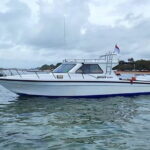
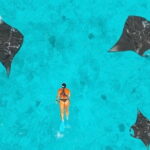
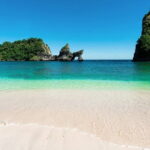
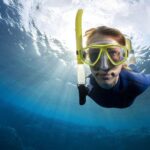
Snorkeling with Manta Rays, compared.
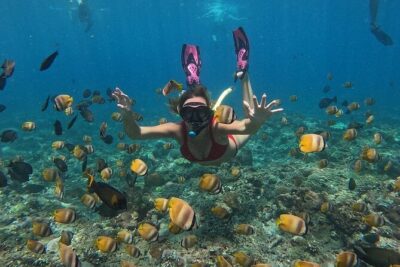 ★ 5.0️Nusa Penida by Private Boat – Snorkeling 4 spots, Swim with Mantas + Land TourFrom $1006,424 reviews
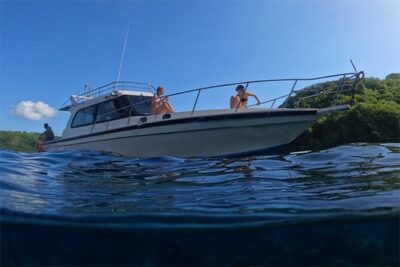 ★ 5.0Nusa Penida day trip: boat, 4 snorkeling, Manta rays & Land tourFrom $782,033 reviews
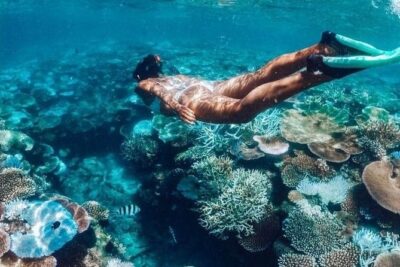 ★ 5.0All Inclusive : Bali Blue Lagoon Snorkeling, Lunch, and TransportFrom $441,097 reviews
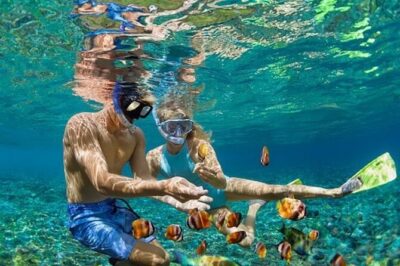 ★ 5.0Bali Blue Lagoon Snorkeling – Lunch and Transport All InclusiveFrom $39588 reviews
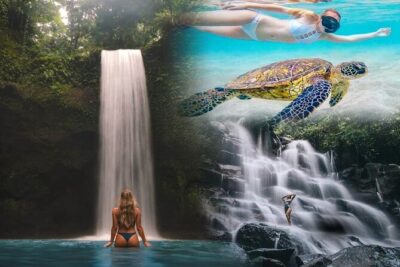 ★ 5.0Blue Lagoon Snorkeling – Lunch – Kantolampo – Tibumana WaterfallFrom $39542 reviews
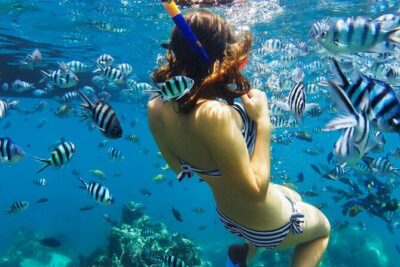 ★ 5.0Bali Blue Lagoon Snorkeling with Private Transfer & LunchFrom $39539 reviews
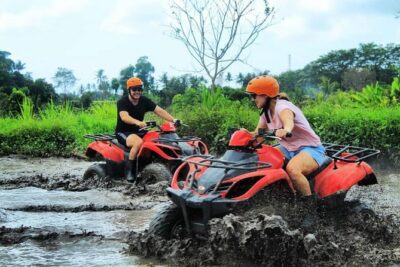 ★ 5.0Quad Bike Ride and Snorkeling at Blue Lagoon Beach All-inclusiveFrom $75448 reviews
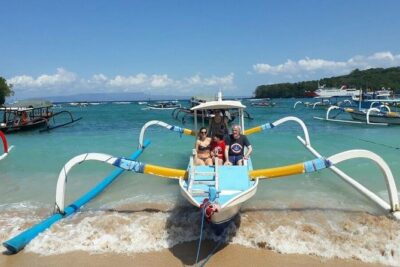 ★ 5.0Blue Lagoon Bali Snorkeling ExperienceFrom $45412 reviews
Browse the lists this tour appears in