Reviewed · BALI
The Gate Of The Heaven Bali with Top Places To Visit In The East of Bali
Waking at 3:30 a.m. can be worth it. This private East Bali day ties the famous Gate of Heaven sunrise at Pura Luhur Lempuyang to a whole chain of culturally important sites, with Mount Agung often showing up in the background. I love the early timing because it gives you a better shot at that iconic view before the day turns into a full-on photo rush.
I also like how the route stacks East Bali highlights back-to-back: Tirta Gangga, Taman Ujung, Tenganan Ancient Village, and Goa Lawah bat cave temple—plus the itinerary squeezes in classic scenery like Tegalalang rice terraces and Candidasa along the way. The value feels strong because entrance tickets and parking are included, and you’re not scrambling for logistics.
The main drawback is simple: Lempuyang is busy, and waiting for the best photo spot can stretch your time. If you’re expecting a calm, slow temple stroll, you may feel the pressure of crowds and long lines more than the spiritual quiet.
In This Review
- Key Things I’d Pay Attention To
- Sunrise Gate of Heaven at Pura Luhur Lempuyang
- Crowds and Queue Reality: how to handle Lempuyang calmly
- The East Bali Road Trip Rhythm (11–12 hours works, but it’s full)
- Tegalalang Rice Terraces and the scenery stop you’ll remember
- Tirta Gangga: water garden calm after the sunrise rush
- Taman Ujung Water Palace (Taman Sukasada Ujung): palatial views
- Tenganan Ancient Village: Bali Aga culture in a short window
- Goa Lawah Bat Cave Temple: the temple that feels less staged
- Price and value for a long private East Bali day
- Getting the most out of your driver-guide day
- Who should book this (and who should skip it)
- Should you book the Gate of Heaven with East Bali highlights?
- FAQ
- What time does the tour start?
- Where does the tour start?
- How long is the tour?
- What is included in the price?
- Is lunch included?
- Is the tour private?
- Which places are included in the route?
- Do I need to worry about entrance fees?
- Will I get confirmation after booking?
- Can I cancel for a full refund?
Key Things I’d Pay Attention To
- 3:30 a.m. start: you need to be ready early, because the schedule is built around sunrise timing
- Gate of Heaven photo pressure: expect lines and photo turns at the most famous spot
- All entrance tickets included: that matters when you’re stacking multiple temples and gardens
- East Bali variety: temples, water palaces, an ancient village, and the bat cave in one day
- Guides can make it easier: people mention drivers like Ketut Permana and Gede being professional and caring
Sunrise Gate of Heaven at Pura Luhur Lempuyang
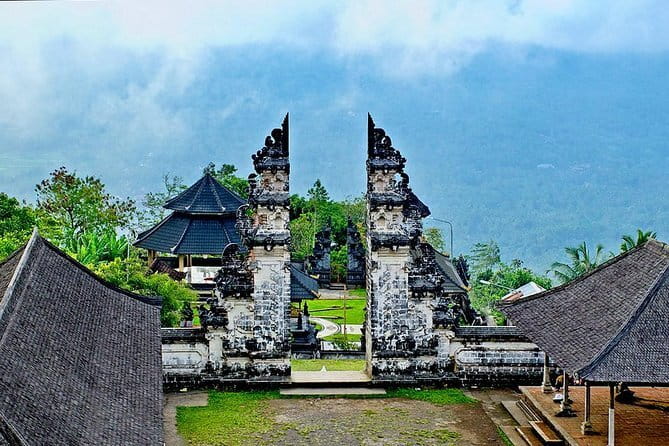
Pura Luhur Lempuyang is one of Bali’s nine directional temples, and it’s taken seriously in Balinese religious life. The temple sits up on the mountain ridge, roughly halfway between Amlapura and Amed as the crow flies, and it connects to the broader idea that Bali’s sacred map radiates outward from the Mother Temple at Besakih.
Here’s what makes the spot so special. On a normal day you’ll see locals traveling in ceremonial attire, often carrying offerings in baskets balanced on their heads, with the goal of having those items blessed by the priest at the top. That gives the area a real sense of purpose beyond sightseeing.
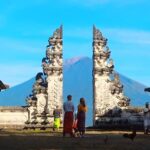
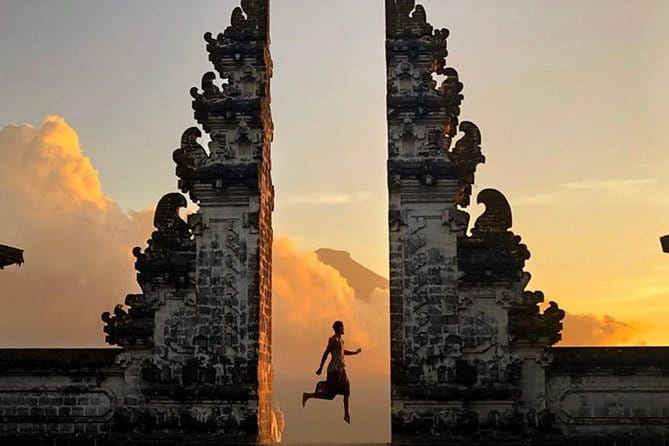
And then there’s the famous gate. The Gate of Heaven frame at Lempuyang is what you came for—especially with Mount Agung towering in the backdrop when the conditions cooperate. Even when the sky isn’t perfect, the setting still has that “you’re really on sacred ground” feeling because you’re watching a living religious place operate early in the morning.
More of Bali worth booking, from the Ubud rice terraces to the reefs off the Bukit.



Crowds and Queue Reality: how to handle Lempuyang calmly
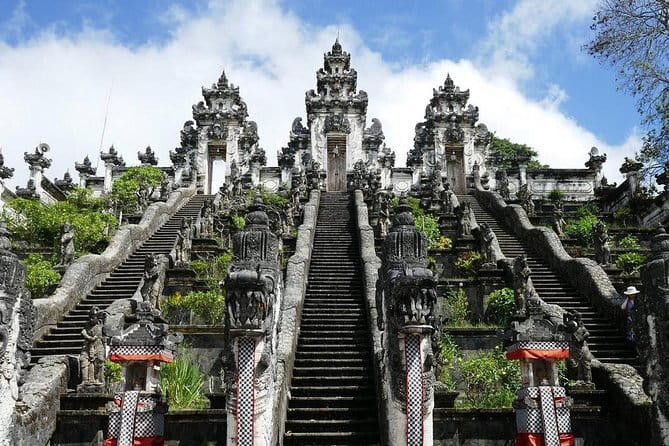
Let’s be honest: Lempuyang is popular. The sunrise gate is a photo magnet, and that means you should plan for delays—sometimes long ones—just to get the shot. The good news is that crowds can still be managed with a smart mindset: you don’t need to fight for the first spot, and you don’t need to rush your respect.
I’d treat this part of the day like a photography window, not a casual walk. Have your clothes and footwear ready, bring something light for early morning, and be prepared to wait for your turn. If you’re traveling with someone who hates waiting, build that expectation into the day up front.
Also, a small reality check: some people feel the place gets pulled toward cameras more than quiet devotion. You can’t control how busy it gets, but you can control your behavior—keep your voice down, move with care around worshippers, and don’t block people who are there for religious reasons.
The East Bali Road Trip Rhythm (11–12 hours works, but it’s full)
This tour is designed as a long day, roughly 11 to 12 hours from start to finish. It also starts early—pickup is listed at 3:30 a.m. from areas like Seminyak and Kuta (Badung Regency). That early departure is not a gimmick; it’s what makes sunrise at Lempuyang possible.
What you’ll feel most is time compression. You’re stacking multiple stops, so each one gets a practical time block. That’s great if you like getting a lot done. If you prefer slow travel and lots of downtime, you’ll want to mentally switch from wandering mode to itinerary mode.
The upside of this rhythm is variety. You won’t just do temples. You’ll move from spiritual sites to water palaces to an ancient village atmosphere, then end up at Goa Lawah’s bat cave temple—so the day doesn’t become repetitive.
Tegalalang Rice Terraces and the scenery stop you’ll remember
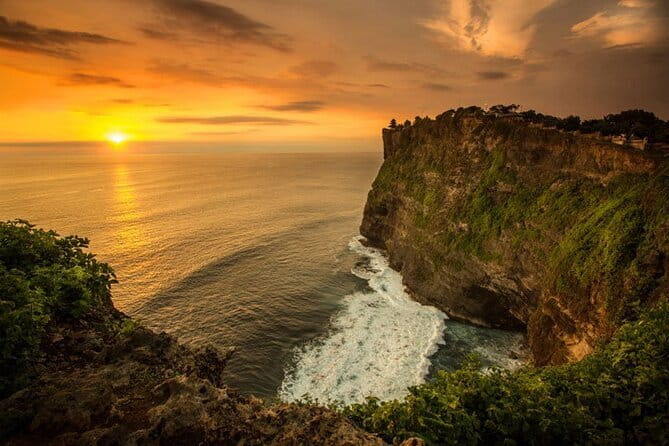
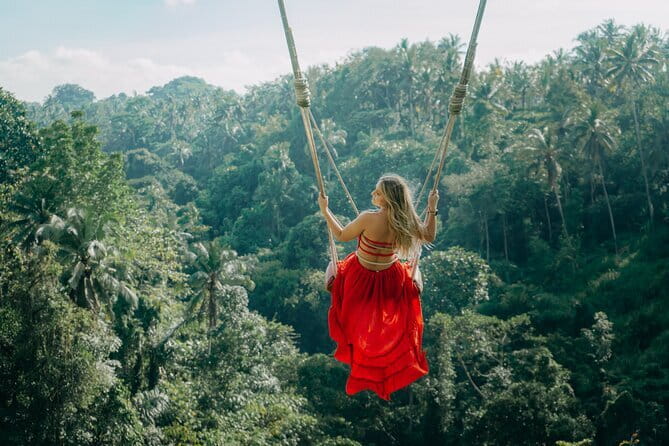
The itinerary route includes Tegalalang rice terraces and also mentions Candidasa beach scenery as part of the day flow. These stops give you a change of pace after the pre-dawn start and the big Lempuyang crowds.
Tegalalang is one of Bali’s best-known rice terrace scenes. Even when you’ve seen terrace photos before, the real experience is the sheer geometry—steps of green that seem to keep going as far as you can see. It’s also a good reset moment: before you head into more temples, you get a visual break that feels more open and photogenic.
Candidasa (as referenced in the itinerary) is more about coastal atmosphere than a single must-see monument. Think of it as a chance to breathe a little, look out over the water, and let the day keep rolling without exhausting your brain.
Tirta Gangga: water garden calm after the sunrise rush
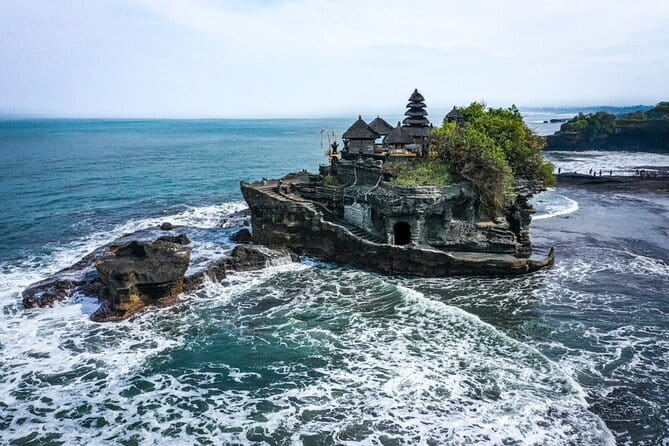
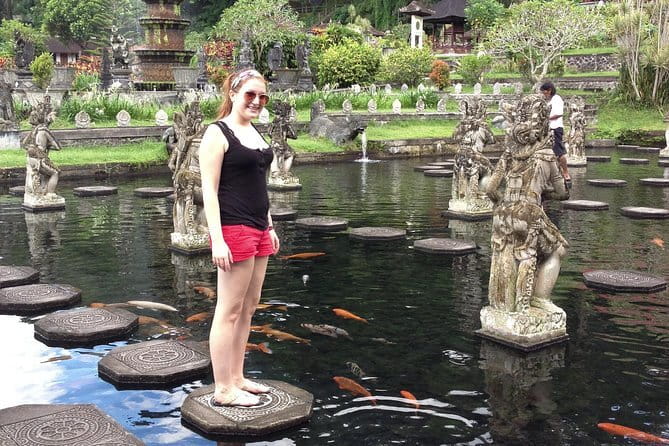
After Lempuyang, the day shifts into water-and-garden mode with Tirta Gangga, a water garden built in 1948 by the King of Karangasem, Anak Agung Anglurah Ketut Karangasem.
What I like about Tirta Gangga is how it changes the mood. Instead of climbing and queueing, you’re walking through an arranged space designed for beauty and reflection. The architecture is described as unique, blending Balinese and Chinese influences—so it’s not just “pretty water,” it’s also a cultural design statement.
The stop time is listed at about 30 minutes with admission included. That’s enough to look around slowly, take a few photos, and feel like you actually experienced the place instead of just passing through.
Practical tip: because this is a water garden, consider footwear that works well if you hit slick patches. Keep your phone accessible but don’t forget that you’re also trying to enjoy the scene without rushing.


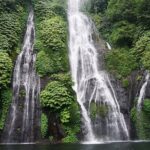


Taman Ujung Water Palace (Taman Sukasada Ujung): palatial views
Next up is Ujung Water Palace, officially listed as Taman Sukasada Ujung, located in Seraya in Karangasem regency. The idea here is “water palace,” but the feeling is closer to a grand viewing complex—something meant to impress.
This stop is listed around 40 minutes, and admission tickets are included. That extra time compared to Tirta Gangga matters. Ujung can take a little longer because there’s more to scan: the structure layout, the way water features sit in the space, and the overall sense of scale.
If you like Bali’s mix of spiritual and royal architecture, Ujung hits the sweet spot. You get the “Bali isn’t one type of beauty” lesson in a single morning-to-afternoon transition.
Tenganan Ancient Village: Bali Aga culture in a short window
Then comes Tenganan Ancient Village, home to the Bali Aga people—described here as original Balinese who arrived in Bali before the Majapahit era.
The stop is brief (about 20 minutes listed), but that brevity can be a good thing if you’re trying to fit many stops into a day. You’ll get a quick read on a different cultural rhythm than the more familiar Balinese tourist zones.
In the info provided, the village is also connected to the Pandan war (Ngusaba Sambah Festival) around May or June. Even if you’re not there during festival season, it’s useful context: the village isn’t only photogenic; it has traditions with real seasonal intensity.
Because the time is short, focus on respect and observation:
- look first
- ask questions if you’re allowed
- don’t treat the space like a theme park set
Goa Lawah Bat Cave Temple: the temple that feels less staged
The last temple stop listed is Pura Goa Lawah, also called the Bat Cave Temple. The temple is located in Pesinggahan Village in Klungkung regency, and it’s described as dating back to the 11th century, connected to priest Mpu Kuturan (also referred to as Mpu Raja kerta).
The “bat cave” part isn’t just a quirky name. Even without getting overly dramatic about it, it’s a temple that carries a different energy than the open-air gate shots. It’s more enclosed, more cave-driven, and that alone can make it feel more intense and focused.
The stop time is listed at about 20 minutes. That’s enough for a careful look and photos if allowed, but not so long that you lose the thread of the day.
Price and value for a long private East Bali day
The price is $76.29 per person for a day that typically runs 11–12 hours. That can sound like a lot until you look at what’s included.
You get:
- pickup (from Seminyak / Kuta areas are listed)
- a private tour for your group only
- an English-speaking driver
- all entrance tickets included
- parking fees included
- a mobile ticket
- group discounts noted
What that means in real terms: you’re paying for time, access, and the hassle you’d otherwise spend coordinating multiple stops. If you tried to DIY this route, the time cost alone from the 3:30 a.m. start would be rough—plus you’d still be dealing with entrance fees across several sites.
The big thing not included is lunch, plus personal expenses and tips. Plan on budget for a meal and a few small costs so the day doesn’t feel like you’re constantly making decisions on the road.
Getting the most out of your driver-guide day
Because this is private, the driver matters more than on a group bus day. Several comments you can use as signals point to drivers being professional and caring. Names that have come up include Ketut Permana, Gede, Budi, and also Md Eras for sunrise guidance in at least one case.
Even with a great driver, your job is simple:
- be ready for the early pickup
- move calmly during crowded temple windows
- let the driver handle the timing between sites
One small lesson from the way these tours are run: sunrise days are timing-sensitive. If you’re late, the whole flow can get compressed, and you’ll feel that immediately.
Who should book this (and who should skip it)
This tour is a strong fit if you want:
- the iconic Gate of Heaven sunrise experience at Lempuyang
- a high-coverage East Bali day with multiple well-known stops
- a private day with an English-speaking driver and entrance tickets handled
- a mix of temples plus water gardens plus a cultural village stop
It may be a tough fit if:
- you hate early mornings and want a relaxed start
- you strongly dislike crowds and long photo queues
- you want lots of free time at each location (this is time-blocked)
If you’re the type who likes “see a lot, then be done,” this format makes sense. If you’re the type who wants long, quiet temple time, you may enjoy a slower itinerary better.
Should you book the Gate of Heaven with East Bali highlights?
I’d book it if your top priority is Lempuyang at sunrise and you’re happy trading a bit of comfort for the payoff of that iconic gate view with Mt. Agung in the frame. The added stops—Tirta Gangga, Taman Ujung, Tenganan, and Goa Lawah—make the price feel more justified, since you’re not paying for one single highlight and hoping the rest is just filler.
I wouldn’t book it if you’re coming to Bali for a slow, low-stress temple day. The Lempuyang bottleneck is real, and this tour’s whole structure runs on early timing and fixed stops.
If you do book, go in with the right expectations: treat the gate as a timed cultural moment, respect the worshippers, and let your driver keep the day running. That’s how you turn a crowded sunrise into a genuinely memorable one.
FAQ
What time does the tour start?
Pickup is listed at 3:30 a.m., with the start time adjusted for local conditions in Bali.
Where does the tour start?
The meeting point is listed in Seminyak, Kuta, Badung Regency, Bali, Indonesia.
How long is the tour?
The duration is approximately 11 to 12 hours.
What is included in the price?
All entrance tickets and parking fees are included, along with a private English-speaking driver, and you receive a mobile ticket.
Is lunch included?
No. Lunch is not included.
Is the tour private?
Yes. It’s a private tour/activity with only your group participating.
Which places are included in the route?
The listed stops include Lempuyang Temple (Gate of Heaven), Tirta Gangga, Ujung Water Palace, Tenganan Ancient Village, and Pura Goa Lawah (Bat Cave Temple).
Do I need to worry about entrance fees?
You don’t need to pay separate entrance tickets for the included sites, since entrance tickets are stated as included.
Will I get confirmation after booking?
Confirmation is received at the time of booking.
Can I cancel for a full refund?
Free cancellation is available up to 24 hours in advance for a full refund, based on the experience’s local start time.