
Reviewed · MULTI-DAY BALI ITINERARIES
3-Day Freediving Level 1 Course
You can go from nervous to confident fast, with small-group coaching on Nusa Penida. What I like most is the max 4 students per instructor setup (you get real attention) and that the course includes equipment plus certification without making you buy extras. One thing to consider: it runs long days, roughly 8:30 to 16:30, and lunch isn’t included.
This is a practical, safety-first entry point to breath-hold underwater work, with clear steps that scale from theory to pool practice to open ocean sessions. If you can swim and you’re willing to take things slowly, you’ll get the kind of progress that usually needs more than one weekend.
In This Review
- Quick Takeaways
- A Nusa Penida Breath-Hold Course That Feels Structured, Not Scary
- Small Groups, Real Coaching (and Why It Changes Everything)
- What the 3-Day Schedule Actually Looks Like
- Day-by-Day: How Nusa Penida Teaches You to Feel Comfortable Underwater
- Stop 1: Training on Nusa Penida (Theory → Confined Water → Open Ocean)
- The Skill Goals You’ll Actually Care About
- Gear and Essentials: Included, So You Don’t Waste Time Shopping
- Price and Value: Is $450 a Good Deal?
- Who This Course Fits Best (and Who Should Rethink It)
- Practical Tips to Get More Out of Your Three Days
- Should You Book This Level 1 Breath-Hold Course on Nusa Penida?
- FAQ
- FAQ
- Do I need previous freediving experience to join Level 1?
- Do I need to be able to swim?
- How long is the Level 1 course?
- What time of day does the course run?
- Is lunch included in the course price?
- How many students are there per instructor?
- Does the course include both pool and open ocean training?
- What is included in the price?
- What should I bring besides myself?
- What depth and breath-hold results can I expect by the end?
- How does cancellation work?
Quick Takeaways
- Max 4 students per instructor means you don’t disappear in the crowd.
- Theory + pool + open ocean gives you a full skill path over three days.
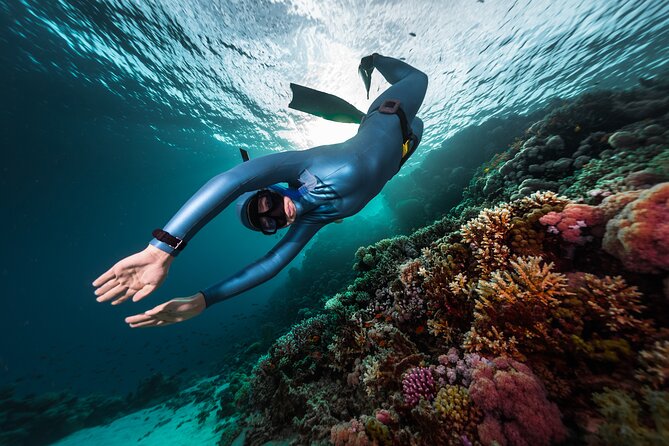
- Underwater photos included so you can actually remember your own progress.
- All free-diving essentials included (you shouldn’t need to shop for gear).
- Most students reach 15–20 meters and 2+ minutes by the end, depending on comfort and practice.
A Nusa Penida Breath-Hold Course That Feels Structured, Not Scary
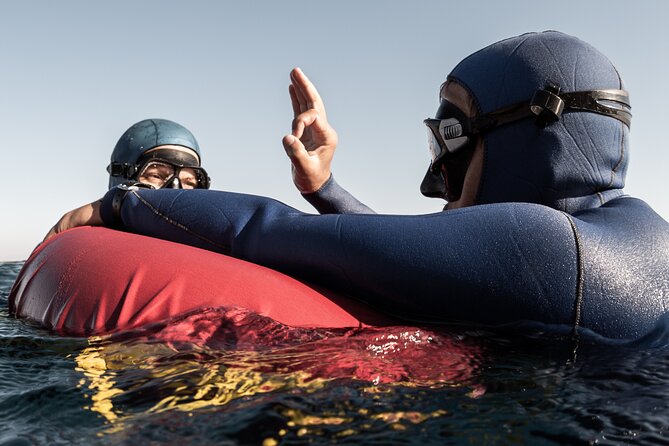
Nusa Penida has that “real ocean” feeling, and that matters for Level 1. In a lot of water sports, beginners spend most of their time figuring out logistics—where to stand, what to do with gear, how to calm down. Here, the course is built around doing those first steps on schedule, then moving you into deeper water as your comfort grows.
The whole vibe is measured. You start with land theory, then you practice the mechanics in confined water, then you step into the open ocean. That order is smart because breath-hold skills aren’t just about willpower. They’re about technique, timing, relaxation, and safety checks that happen before you ever go underwater.
More of Bali worth booking, from the Ubud rice terraces to the reefs off the Bukit.
- ️Nusa Penida by Private Boat – Snorkeling 4 spots, Swim with Mantas + Land Tour
★ 5.0 · 6,424 reviews
Small Groups, Real Coaching (and Why It Changes Everything)
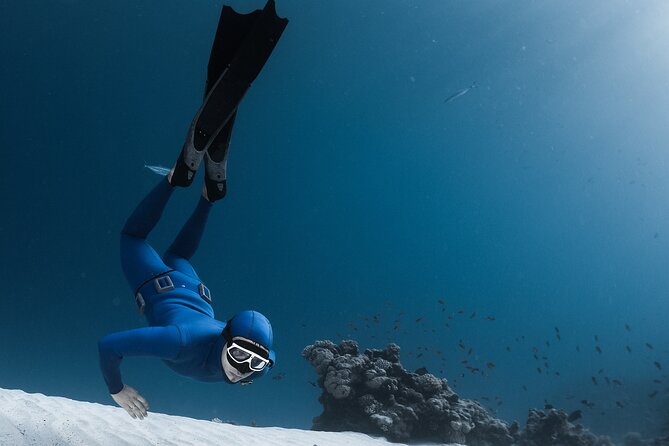
The max of four students per instructor is the detail I’d circle in a heartbeat. When an instructor can actually watch your body position, breathing pattern, equalization timing, and recovery, you improve faster. You also learn safer habits earlier—because mistakes get corrected in the moment, not after the fact.
Instructors in the school’s program show up again and again in the feedback as patient, supportive, and clear. People specifically call out teaching that was super easy to follow, plus instructors who were considerate but still pushed students toward the right next goal.
You’ll hear names like Sabli, Artem, Roberto, Seva, Hamza, Gaston, and Chiara in feedback tied to organization and reassurance. That’s not a guarantee of your exact instructor, but it’s a strong sign the program emphasizes coaching style, not just equipment rental.
What the 3-Day Schedule Actually Looks Like
This course runs for three days, with sessions starting around 8:30 AM and finishing about 16:30 PM, including a lunch break. Think of it as a full-day training block, not a half-day “try it and leave” activity.
You’ll spend time on:
- land theory (how the body handles breath-hold, safety basics, and what you’ll do in water)
- two confined water sessions (pool-style training so you can learn the process without added ocean variables)
- three open ocean sessions (where you apply skills in real conditions)
Lunch isn’t included, so plan to bring money for a meal during the break. Also note that the course is described as suitable for people with moderate physical fitness level, and you only need to be able to swim.
Day-by-Day: How Nusa Penida Teaches You to Feel Comfortable Underwater
Stop 1: Training on Nusa Penida (Theory → Confined Water → Open Ocean)
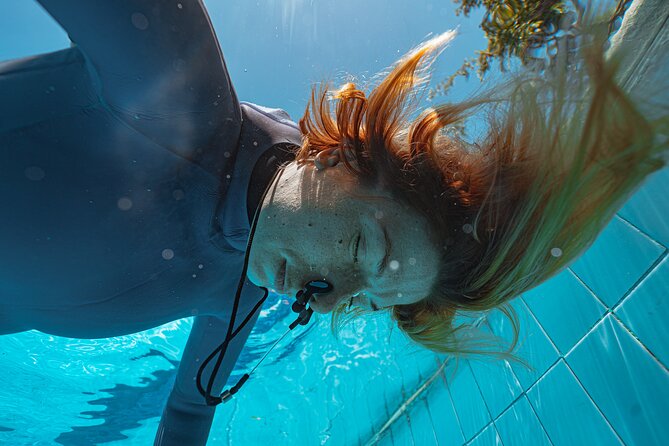
Nusa Penida is your base for the whole Level 1 flow. The “why” is simple: you get an ocean setting that’s dramatic enough to feel rewarding, but the course design keeps you on a learning ladder.
Land theory (morning):
You start with instruction on safety and technique. For Level 1, this part is key because it sets expectations: how you’ll manage breath timing, what sensations are normal, and how you’ll respond if something doesn’t feel right. It’s the difference between “I’m holding my breath and hoping” and a more controlled, repeatable approach.
Confined water sessions (early steps in practice):
These are your confidence builders. In a controlled environment, you can practice the sequence without the added uncertainty of open water. The course is designed so you don’t just “go under”—you practice skills in a way that makes your next step feel logical.
Open ocean sessions (where it becomes real):
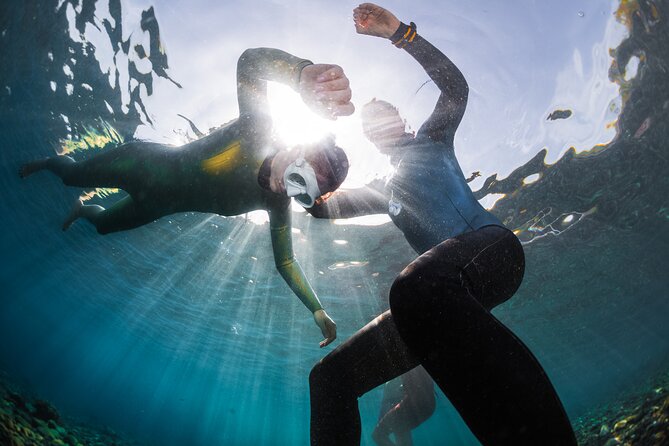
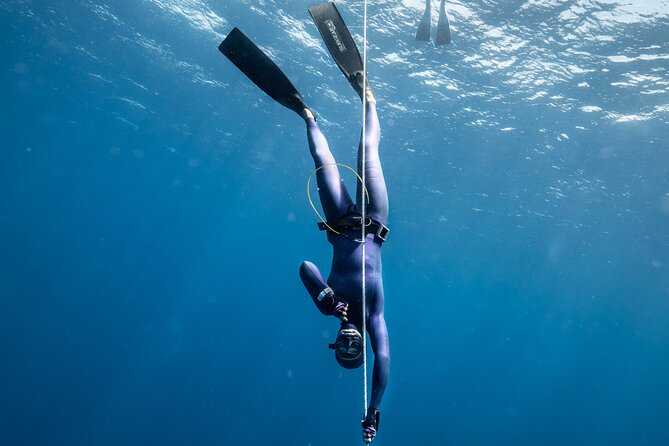
This is where the course pays off. You’ll free-breath-hold in the open sea and apply what you practiced. The goal isn’t just to go as deep as possible. It’s to learn how to stay calm and consistent while you descend, then come up smoothly.
By the end, most students can descend about 15–20 meters (roughly 50–65 feet) and hold their breath for more than 2 minutes. That varies person to person, but it’s a realistic target for a well-taught beginner course.
The Skill Goals You’ll Actually Care About
Level 1 sounds vague until you see what success looks like. Here, you get measurable outcomes that match common beginner progress benchmarks.
- Breath-hold control: by the end, many people can hold breath for 2+ minutes.
- Depth comfort: many students reach 15–20 meters on a single breath.
- Repeatable descent mechanics: you learn a process you can practice again later, instead of relying on one lucky attempt.
Also, the course includes underwater photos of yourself during the sessions. That’s a surprisingly motivating add-on for beginners. You can literally look back and see your body position and timing after the fact.
Gear and Essentials: Included, So You Don’t Waste Time Shopping
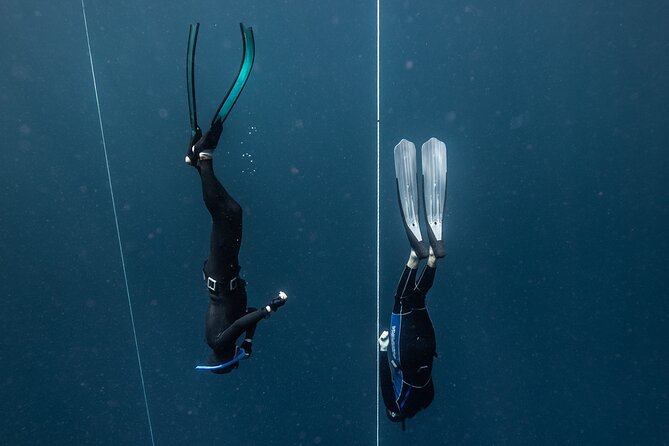
One practical win: the course says it includes use of freediving equipment and that you don’t need to buy anything special. For a first course, this is a huge value point. Gear can be expensive, and most beginners buy the wrong thing or end up renting anyway.
What you should do is show up ready to train. The feedback also praises gear quality, with people mentioning good-quality equipment and a well-organized setup that supports fast learning.
Price and Value: Is $450 a Good Deal?
At $450 per person for a three-day Level 1 program, the price lands in the “serious beginner training” category. Here’s why it can still feel like good value:
You’re getting:
- the training itself over multiple days
- equipment included
- certification
- digital learning materials
- and underwater photos (so your experience isn’t only in your memory)
The price doesn’t include:
- private transportation
- accommodation
- lunch
If you’re already in Nusa Penida or Bali with a way to get there, the “extra costs” are smaller. If you need transport and lodging, your total trip cost will rise. Still, compared with paying separately for gear, instruction, and certification, bundling everything into one structured program usually makes the math easier.
Who This Course Fits Best (and Who Should Rethink It)
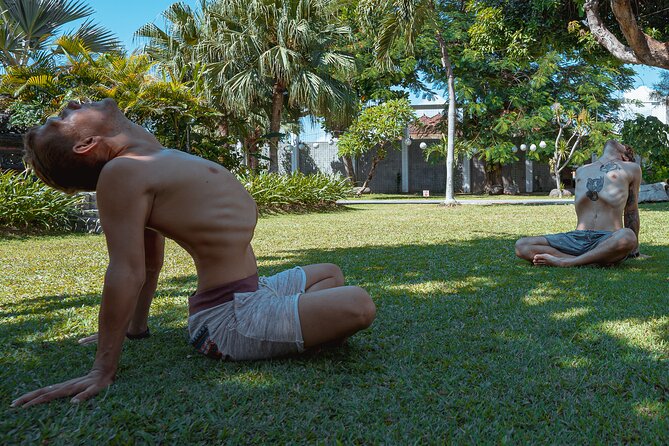
This is designed as a first experience-friendly course. You don’t need previous experience, and you only need to be able to swim.
It’s a great fit if:
- you want a step-by-step safety-first introduction
- you prefer small-group instruction with close coaching
- you’re motivated by measurable progress (depth and breath-hold goals)
- you want photos as proof you actually learned something, not just “survived being underwater”
You might want to rethink the timing or training approach if:
- long training days are tough for you (it’s roughly 8:30 to 16:30)
- you’re not comfortable swimming yet (swimming ability is required)
- you’re expecting a laid-back, part-time activity rather than structured practice
Practical Tips to Get More Out of Your Three Days
You’ll improve faster if you treat this like training, not like a sightseeing stop.
- Arrive well-rested. Breath-hold work is more about calm focus than raw effort.
- Follow technique over ego. The course is built for safe progression, and instructors are there to guide timing.
- Take notes on what works. Land theory and in-water feedback are meant to build a repeatable method.
- Use the photos to adjust. Seeing your own form helps you remember cues between sessions.
- Stay patient with your fear responses. The course gradually builds comfort, and that pacing is part of why people report big progress quickly.
Should You Book This Level 1 Breath-Hold Course on Nusa Penida?
I think you should book it if you want a true beginner pathway with structured instruction, small-group attention, and a finish line that’s more than “we went in the water.” The inclusion of equipment, certification, digital learning materials, and underwater photos makes it feel like a complete start, not a half-package.
I’d skip it (or at least delay) if you’re looking for a short, casual activity, or if long days and consistent practice don’t fit your travel style. But for anyone who can swim and wants to learn safely with hands-on coaching, this is the kind of course that sets you up to keep improving after you leave the island.
FAQ
FAQ
Do I need previous freediving experience to join Level 1?
No previous experience is required. The course is described as a smooth and measured introduction, even for first-time water activity participants.
Do I need to be able to swim?
Yes. You only need to be able to swim to participate.
How long is the Level 1 course?
The course runs for 3 days (about three days based on the description).
What time of day does the course run?
Sessions start around 8:30 AM and end around 4:30 PM, with a break for lunch included in the schedule.
Is lunch included in the course price?
No. Lunch is not included.
How many students are there per instructor?
The program caps groups at a maximum of four students per instructor.
Does the course include both pool and open ocean training?
Yes. It includes two confined water sessions and three open water sessions, plus land theory.
What is included in the price?
Included items are use of freediving equipment, all fees and taxes, freediving certification, and digital learning materials.
What should I bring besides myself?
The course says you don’t need to buy special equipment since essentials are included. The only explicitly stated requirement is that you can swim.
What depth and breath-hold results can I expect by the end?
Most students can descend to about 15–20 meters and hold their breath for more than 2 minutes by the end of the course.
How does cancellation work?
You can cancel for a full refund up to 24 hours in advance of the experience start time.
More Bali Reviews & Picks
- ️Nusa Penida by Private Boat – Snorkeling 4 spots, Swim with Mantas + Land Tour
★ 5.0 · 6,424 reviews
Still deciding? More Bali days reviewed, from volcano sunrises to island crossings




Multi-Day Bali Itineraries, compared.
 ★ 5.02 Days Discover Scuba Diving in Nusa Lembongan – Scuba InitiationFrom $151506 reviews
 ★ 5.0Best of Bali 3-Day Packaged TourFrom $179503 reviews
 ★ 5.0Bali 5 Days and 4 Nights Private Tour – Best and Famous SiteFrom $300188 reviews
 ★ 5.0More Complete: Discover Bali In 3 Days Private Tour PackageFrom $223167 reviews
 ★ 5.0From Bali : Bromo & Kawah Ijen – 3-Day AdventureFrom $348147 reviews
 ★ 5.0Overnight Mount Ijen Blue Fire Trek Tour From Bali (Private-All Inclusive)From $155133 reviews
 ★ 5.0Mount Ijen Bromo Tour from Ubud Bali (3 days 2 nights)From $420104 reviews
 ★ 5.0Exploring Bali in 5 Days: Completed Journey of Discovering BaliFrom $31583 reviews
Browse the lists this tour appears in