
Reviewed · HOLY SPRINGS & TEMPLE TRAILS
Besakih Temple Tour – Mother Temple in Bali
A Bali temple day with waterfall payoff. I love the private door-to-door transfers, and I love that the route pairs Besakih’s big spiritual complex with the rainbow-spray drama of Tukad Cepung Waterfall. The only possible drawback is the long drive from Ubud, where traffic can slow things down, so plan for a later lunch and a more relaxed pace.
Starting around 8:00 am, you move through Kertha Gosa, a short stop at Bukit Jambul for sea-and-rice views, then the mother temple, and finish at Tukad Cepung. The whole thing takes about 10 hours, which is just enough time to see the highlights without feeling like you’re rushing every twenty minutes.
In This Review
- Key points to know before you go
- Why this Besakih Temple tour feels like a real Bali day
- Price and logistics: what you’re really paying for ($65)
- The 8:00 am start: great for timing, tough for naps
- Stop 1: Taman Wisata Kertha Gosa (Kertha Gosa) and the story in the stone
- Stop 2: Bukit Jambul (Jambul Hill) for quick sea-and-rice views
- Stop 3: Besakih Temple, the mother temple facing Mt. Agung
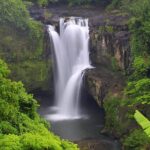
- Stop 4: Tukad Cepung Waterfall and the rainbow-effect spray
- Lunch in between: Indonesian food that doesn’t derail the day
- The driver/guide factor: why “organized” matters on this route
- Photo and timing strategy: how to get the shots without feeling stressed
- Who this tour suits (and who should consider another option)
- Should you book the Besakih Temple tour?
- FAQ
- What does the tour cost?
- How long is the Besakih Temple tour?
- What time does the tour start?
- Do I get pickup and drop-off?
- Which stops are included in the day?
- Is lunch included?
- Is there free cancellation?
Key points to know before you go
- Private door-to-door pickup from Ubud or much of south Bali, plus 2-way transfers back
- Four major stops: Kertha Gosa, Bukit Jambul, Besakih Temple, and Tukad Cepung Waterfall
- Lunch and admission tickets included, so you’re not budgeting in the moment
- 10-hour day starting at 8:00 am, with the tradeoff being a longer drive out and back
- Mobile ticket plus smooth communication from the operator (fast replies show up in the feedback)
Why this Besakih Temple tour feels like a real Bali day
This is the kind of Bali day trip that gives you more than one “photo moment.” You’re not only heading to Besakih Temple, often called Bali’s mother temple, but you’re also stacking a palace/temple-court stop (Kertha Gosa), a quick high-view break (Bukit Jambul), and then a waterfall that’s famous for the rainbow-effect spray.
I like that the pacing has natural breathing room. Even when the drive takes time, each stop has a clear purpose: history and symbolism at Kertha Gosa, scenery at Bukit Jambul, sacred architecture at Besakih, then the physical payoff of Tukad Cepung. It’s a balanced route that feels like a curated day without locking you in every second.
And since it’s private—only your group—your driver/guide can adjust the flow to how your group moves, whether you prefer slower walking or more steady sightseeing.
More of East Bali, from Lempuyang to Amed and Sidemen
Price and logistics: what you’re really paying for ($65)
At $65 per person for about 10 hours, the value comes from bundling the hard-to-manage parts. You’re getting:
- private 2-way transfers (pickup and drop-off) from Ubud or much of south Bali
- admission tickets included for the stops
- a restaurant lunch included
That matters because Bali traffic and distances can turn a “simple day trip” into a bunch of separate purchases, extra coordination, and wasted time. Here, most of the big costs and logistics are handled, so you can focus on the sights.
If you’re traveling as a couple or small group, private transfers can be especially good value compared with cobbling together separate transport and paying entry fees one by one.
The 8:00 am start: great for timing, tough for naps
This tour starts at 8:00 am, and the reality of Bali is that mornings can make a difference. You’ll spend a lot of the day moving between Ubud and the east/southeast side where these sights sit. That’s why the long drive and heavy traffic are the main practical complaint.
Here’s the key: start time is early enough to help you beat some of the worst congestion, but you should still expect that the road can slow down. If you’re sensitive to car time, bring something to make the ride easier—water, a light snack, and something to pass the time.
One small strategy that can help on temple walking: if you’re offered an approach that starts higher and lets you work your way down toward the carpark area, that can feel easier than backtracking through crowds and uphill sections.
Stop 1: Taman Wisata Kertha Gosa (Kertha Gosa) and the story in the stone
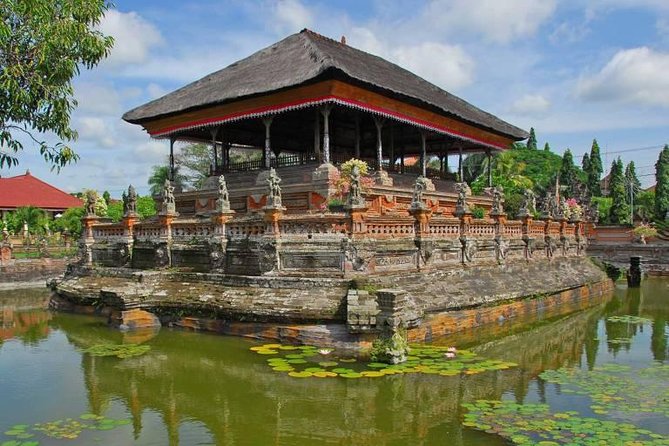
Kertha Gosa is the first big cultural stop, and it works well as your “warm-up” before the larger sacred complex at Besakih. This site is known as a royal court of justice, and it carries that strong palace-court vibe—built for judgment, display, and symbolism.
What I find interesting is the way the site’s age gets tied to carved clues. The information connected to the palace main door (the pemedal Agung) references a Candra Sengkala carved at that entrance, pointing to an existence year written in the Caka/Cakra Yuyu system. You don’t need to memorize the dates to appreciate the point: the place is designed so history and meaning are literally part of the architecture.
You’ll have about an hour here with admission included. That’s usually enough time to see the key structures and read the atmosphere, without turning it into a “rush photo-only stop.”
Practical tip for the visit: give yourself a little time to look slowly at details rather than only aiming your camera. Kertha Gosa rewards patient looking—especially if your guide explains what you’re seeing.
Stop 2: Bukit Jambul (Jambul Hill) for quick sea-and-rice views
After Kertha Gosa, you get a shorter scenic break at Bukit Jambul. This stop is famous for the harmonious combination of hilly terrain, rice fields, valleys, and a distant sea panorama. In other words, it’s the kind of viewpoint where you can step back from the temples and get your eyes onto the bigger picture.
The time here is about 15 minutes, and admission is included. Fifteen minutes sounds short, but it’s designed as a “reset” stop. You’ll want to be ready when you arrive: move promptly to the best sightline, grab photos if you care about that, and then get back in the car without letting this become the part of the day that drags.
If you’re the type who likes to linger, treat this as a quick look, then save your longer lingering for Besakih and Tukad Cepung.
More Bali temples and holy-spring blessings


Stop 3: Besakih Temple, the mother temple facing Mt. Agung
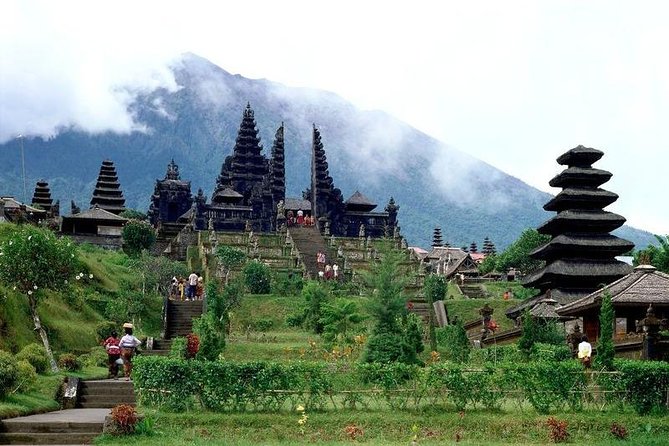
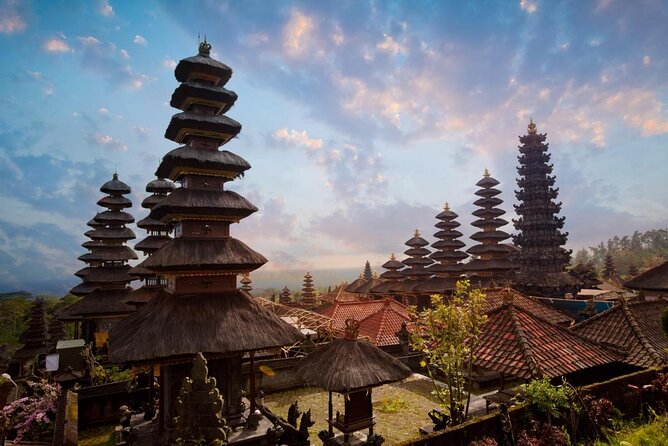
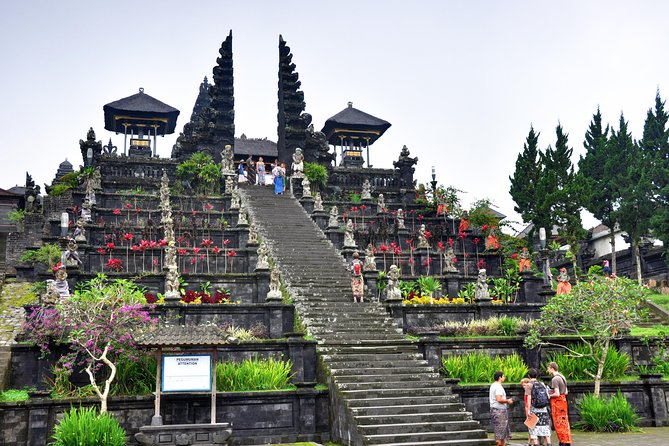
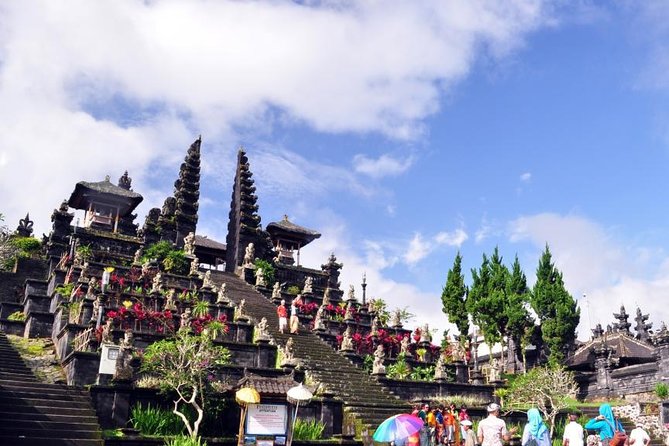
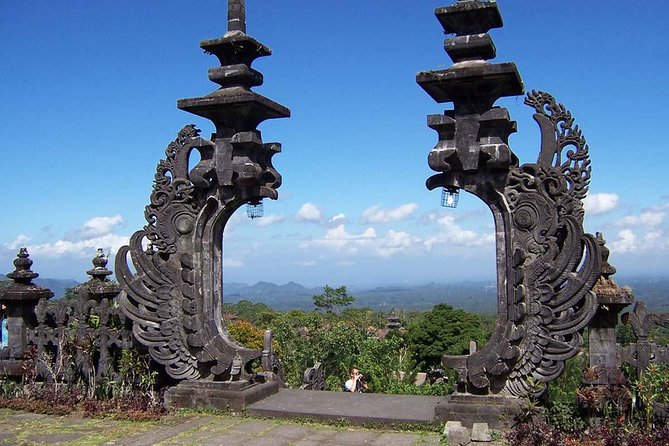
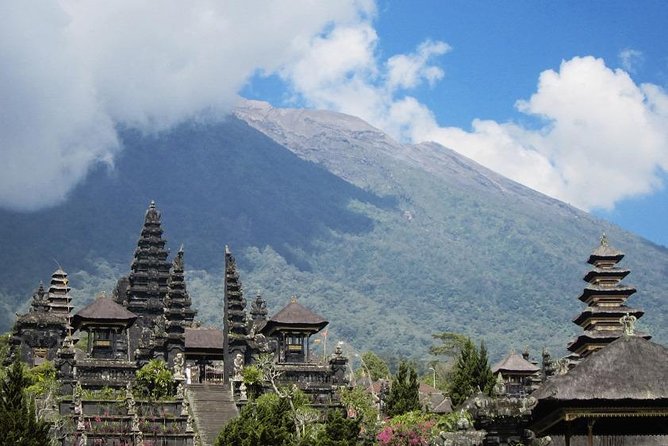
This is the headline. Besakih Temple covers a wide area and sits with dramatic mountain scenery all around it. What makes it feel special is its relationship to Mt. Agung, including the belief that the mountain’s highest peak is the abode of the gods.
You get about an hour here, with admission included. The best way to use that time is to set your mental goal before you arrive. If you want photos, pick your camera spots early and then switch to slower walking. If you want atmosphere and meaning, spend your first minutes just observing how the complex unfolds as you move through it.
One reason this stop gets such strong attention is that the scale is hard to capture from a single angle. Photos can show the beauty, but they don’t show the full sense of place—how the temple complex spreads against the mountain backdrop and how your perspective changes as you walk.
And yes, there can be heavy traffic on the way in. One piece of practical feedback that’s worth remembering: when your timing means a more congested day, moving through the temple in a direction that lets you walk down toward the carpark can feel easier and less stressful.
Stop 4: Tukad Cepung Waterfall and the rainbow-effect spray
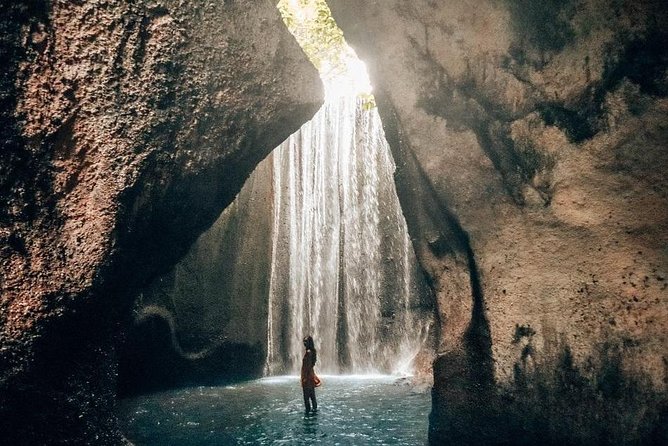
Then you close the day with the stop many people remember: Tukad Cepung Waterfall.
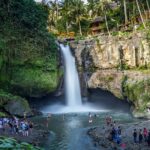
This waterfall is known for the rainbow-effect spray. But here’s the practical part: it’s also difficult to locate for the first time visitor, and it’s well-guarded by cliffs. You’ll likely feel that transition from “Where is it?” to “Ah, there it is” once you reach the right area.
The visit includes time to walk down. A few hundred stairs down from the cliff is part of the payoff, and the tour gives you about an hour. That hour is enough to find your footing, get the shot if you’re chasing the rainbow look, and enjoy the sound and mist without feeling rushed.
What I like about Tukad Cepung in particular is that it’s not just a waterfall you see from one platform. The setting encourages movement and perspective. You experience it, not just observe it.
Lunch in between: Indonesian food that doesn’t derail the day
Lunch is included at a restaurant, and that’s not a small detail on a long day. When you’re traveling in Bali, timing matters. A scheduled lunch stop keeps you from spending your best energy asking around for food or trying to time meals around temple queues.
You’ll likely eat sometime during the middle portion of the route, after the early cultural stop and before the later sightseeing. Since the day is about 10 hours, a proper lunch helps you keep energy for the last two stops, especially Tukad Cepung where you’ll be doing stairs.
I’d plan to drink water before you get too far into the day. Hot weather plus walking is a real combination, even if the tour itself doesn’t emphasize it.
The driver/guide factor: why “organized” matters on this route
This is a private door-to-door tour, so the driver/guide role is more than transportation. A well-run route helps you spend your time in the sights instead of lost time on the road.
The standout feedback includes smooth communication, with replies coming back within minutes when questions came up. That kind of responsiveness can matter if you’re trying to coordinate pickup timing—especially on a day with a long drive and multiple stops.
One driver name shows up in the feedback: Darma. If you end up with him, that’s a good sign for clear guidance and steady pacing.
Photo and timing strategy: how to get the shots without feeling stressed
If you care about photos, this route gives you two different styles:
- Kertha Gosa and Besakih offer architectural and atmospheric shots, where walking and angles matter.
- Tukad Cepung gives you the rainbow-spray effect, where the setting and timing are the whole point.
So the best approach is to treat the day like this: don’t try to photograph everything equally. Pick your “must-get” photo moments (Besakih’s big complex feeling and Tukad Cepung’s spray effect), then let the other stops be about mood and context.
Also, keep expectations realistic. Tukad Cepung’s look depends on conditions, and you can’t control that. But you can control your willingness to go down the stairs, keep moving carefully, and take enough time to adjust your framing.
Who this tour suits (and who should consider another option)
This fits you if you want:
- a private, door-to-door day trip from Ubud or south Bali
- major Bali highlights in one organized schedule
- included lunch and admission tickets
- meaningful temple/cultural stops plus an unforgettable waterfall
It might not fit you as well if:
- you hate long drives or are very sensitive to traffic
- you want a very low-walking, minimal-stairs experience (Tukad Cepung includes stairs down)
- you prefer super free-form travel with no set sequence (this route has a set order)
The private format helps. Even within that structure, you’re not stuck with a large group rhythm.
Should you book the Besakih Temple tour?
I think this is a solid choice if you want “the classic Bali day” done in a way that saves you decision fatigue. You’re paying for access, admission inclusion, and the fact that someone handles the routing—plus you get a mix of sacred temple time and a waterfall with real photographic drama.
Book it if:
- you’re staying around Ubud and want a one-day plan that’s more than just temples
- you’d rather spend effort on seeing than on logistics
- you care about Tukad Cepung’s rainbow-spray reputation
Consider alternatives if:
- you’re trying to minimize driving time as much as possible
- you’re not comfortable with stairs late in the day
Also, plan ahead. This tour is commonly booked about 19 days in advance on average, so if you’re traveling in a busy period, grabbing your dates sooner helps.
FAQ
What does the tour cost?
The tour price is $65.00 per person.
How long is the Besakih Temple tour?
The experience is about 10 hours.
What time does the tour start?
The start time is 8:00 am.
Do I get pickup and drop-off?
Yes. Pickup and 2-way transfers are offered from Ubud or much of south Bali.
Which stops are included in the day?
You’ll visit Taman Wisata Kertha Gosa, Jambul Hill (Bukit Jambul), Besakih Temple, and Tukad Cepung Waterfall.
Is lunch included?
Yes. Lunch at an Indonesian restaurant is included.
Is there free cancellation?
Yes, you can cancel for a full refund up to 24 hours in advance of the experience’s start time.
More Bali Reviews & Picks


More Temples & Holy Springs

More of East Bali
Still deciding? More Bali days reviewed, from volcano sunrises to island crossings




Holy Springs & Temple Trails, compared.
 ★ 5.0Ubud: Monkey Forest, Jungle Swing, Rice Terrace, and Water TempleFrom $317,160 reviews
 ★ 5.0Full-Day Tour to Water Temples and UNESCO Rice Terraces in BaliFrom $392,539 reviews
 ★ 5.0Bali Instagram: Gate of Heaven Temple TourFrom $85737 reviews
 ★ 5.0Ubud Tour with Monkey Forest Waterfalls Temples and MoreFrom $30495 reviews
 ★ 5.0Uluwatu Temple Entry and Kecak Fire Dance TicketFrom $29479 reviews
 ★ 5.0Ubud Top Attractions: Waterfalls, Temples and Rice TerracesFrom $39460 reviews
 ★ 5.0Private Tour: Uluwatu Temple & Southern Bali HighlightsFrom $45387 reviews
 ★ 5.0Private Tour Bali Beaches and Uluwatu Temple with DinnerFrom $48363 reviews
Browse the lists this tour appears in