
Reviewed · EAST BALI: LEMPUYANG, AMED & SIDEMEN
Sidemen Trekking: A Walk from a Different Perspective
Sidemen feels like Bali before the hype. This 2-hour walk through rice terraces and working irrigation paths brings you from Pasar Sidemen to small village lanes, with Mount Agung often in view and guides such as Adidas and Adi explaining what you’re seeing.
I love that it starts at the real morning hub—Pasar Sidemen—not a lobby, and I love the route follows how farmers move water and people, so the scenery feels lived-in, not staged. You’ll also get frequent photo pull-offs that still make sense for the walk.
One thing to plan for: parts of the rice paths can be narrow, uneven, and sometimes slippery, so you’ll want solid shoes and decent balance.
In This Review
- Key highlights at a glance
- Sidemen’s rice terraces: why this walk feels different
- How the 2-hour route flows, from market lanes to rice terraces
- What “no clear steps” really means
- Irrigation paths and the hanging wooden bridge (the trek’s most memorable mechanics)
- Villages and a temple stop: why it’s more than scenery
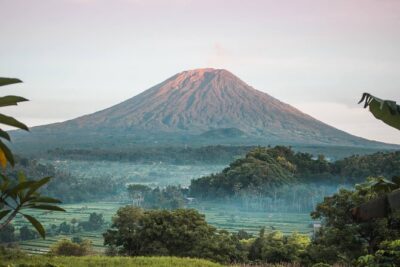
- Mount Agung views you’ll actually earn
- The guide makes it: what you’ll learn (and how it sounds)
- Footing, heat, and what to bring for Sidemen’s rice paths
- Price and value: $13.75 for a true rural walk
- After the trek: finishing at Warung Ume Anyar
- Who should book this (and who might not love it)
- Should you book Sidemen Trekking?
- FAQ
- How long is the Sidemen trekking tour?
- Where do we meet, and where does the trek end?
- Is hotel pick-up and drop-off included?
- What should I bring with me?
- Is this trek hard?
- How big is the group?
- What happens if the weather is bad or I need to cancel?
Key highlights at a glance
- Market-to-fields timing: You start at Pasar Sidemen and head uphill while the village is still waking up.
- Working paths, not just viewpoints: You’ll follow irrigation lines and small farmer-used shortcuts that many tourists never see.
- The hanging wooden bridge moment: It’s built for both motorbikes and people, so it feels sturdy, practical, and very local.
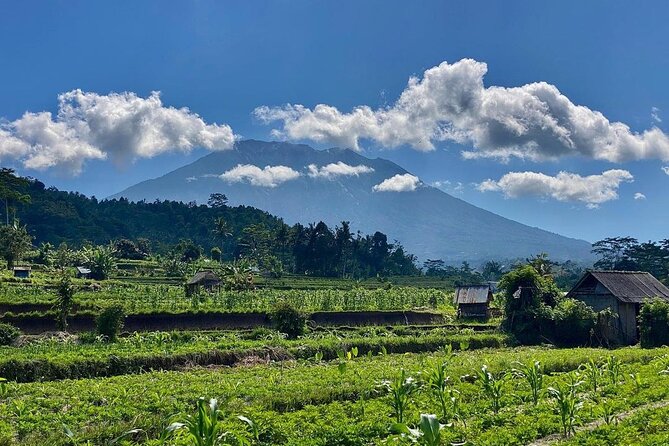
- Mount Agung backdrop: Multiple angles frame the volcano as you move between terraces and village streets.
- Local guide storytelling: Adidas, Adi, Darya, and Wayan-style guides make the rice farming story click with humor and real details.
- Easy length, real footing: It’s not a hard hike, but you should take your footing seriously on terrace paths.
Sidemen’s rice terraces: why this walk feels different
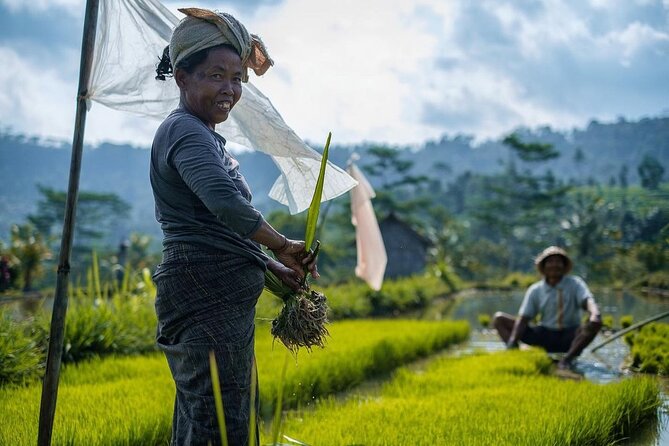
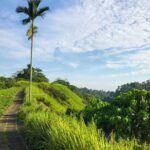
Sidemen sits in the Bali countryside where farming isn’t a backdrop—it’s the schedule. On this trek, you don’t just look at rice fields. You walk the same kinds of paths that connect people, temples, and water channels.
For me, the big win is the mix of “village first” and “terrace second.” You begin in the traditional market area, then you gradually shift into rice paddy terrain with views opening up toward Mount Agung. It’s the kind of route that makes the landscape make sense, because you see where daily life happens and then you see what daily life depends on.
The other strong point is the guide experience. Multiple guides on this route (Adidas, Adi, Darya, Wayan) are known for being friendly and for explaining farming and village life in a way that stays practical—how water gets managed, how farming changes by season, and why temples and offerings show up where they do.
More of East Bali, from Lempuyang to Amed and Sidemen
How the 2-hour route flows, from market lanes to rice terraces
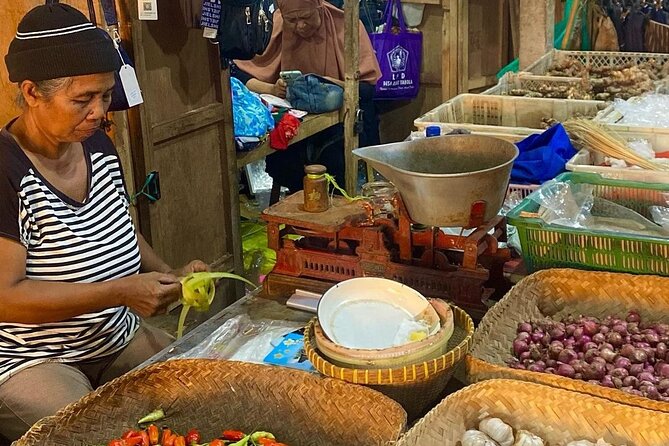
You meet at Pasar Sidemen (Sidemen Traditional Market), specifically at the shop marked Upa Boga. The trek is roughly 2 hours, sometimes closer to 2–2.5 hours depending on pace, questions, and photo stops.
From the start, the walking rhythm is a mix:
- a bit of village street walking (up and down),
- then more time on paths that sit alongside or above irrigation channels,
- and periodic viewpoint pauses where the terraces stretch out.
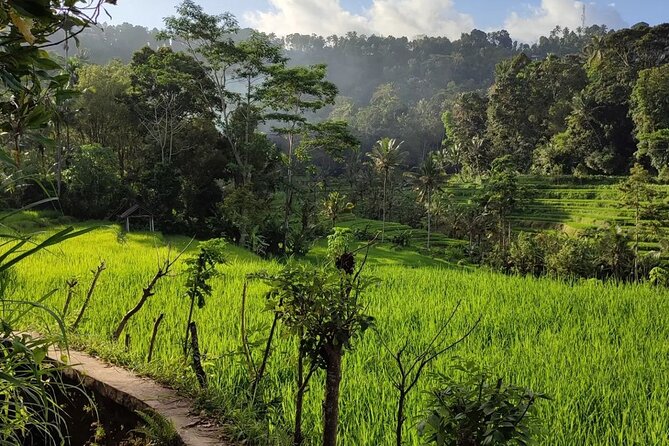
A key detail: the paths through rice fields aren’t always obvious. That’s exactly why the guide matters. Several people note that the trails aren’t easy to spot on your own, and that you’ll be sent where farmers actually go—small routes that can be muddy or uneven, especially after recent rain.
What “no clear steps” really means
The route includes uneven sections and narrow edges near the terraces and water. That doesn’t mean it’s a dangerous climb—think of it as “watch your step” walking, not technical hiking. If you’re wearing flimsy sandals, you’ll feel it.
Irrigation paths and the hanging wooden bridge (the trek’s most memorable mechanics)
One of the most distinctive parts is the movement from village lanes toward the rice paddies through irrigation routes. You follow the water system—channels and paths that farmers use—so you’re seeing agriculture as infrastructure.
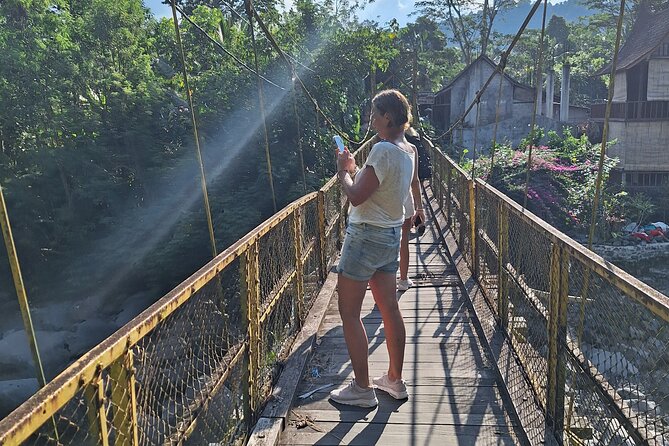
Then you cross a hanging wooden bridge. This bridge is described as suitable for motorbikes and humans, which is reassuring: it’s not just a tourist photo prop. It functions as part of the local movement network, and it gives you a quick, memorable shift in perspective—terraces dropping away on one side, village life peeking through on the other.
If you like small “how does this work?” moments, this part will land. It’s also where the trek becomes visually layered: you’re not looking straight at a field—you’re watching the way the field connects to people.
Villages and a temple stop: why it’s more than scenery
As you move through Sidemen, you pass through areas tied to local religious practice. The route includes a temple used for villagers’ prayers, and the walk continues through lanes where community life shows up naturally.
This matters because rice farming in Bali isn’t isolated. Water timing, planting cycles, and community routines overlap with religious rhythm. Even if you don’t know the meaning of everything ahead of time, the guide’s explanations help you connect the dots—why you see offerings, why specific spaces feel important, and how agriculture fits into everyday spirituality.
You’ll also spend time walking through village sections where you’re not just surrounded by fields. People and homes are close, and that proximity makes the “real Bali” feeling stronger than it is in more view-only hikes.
More Bali strolls and walking tours

Mount Agung views you’ll actually earn
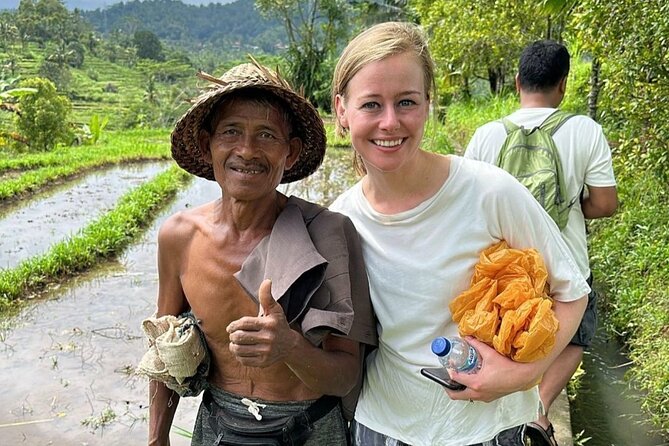
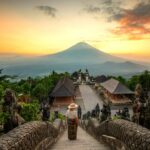
Yes, you get the big volcanic backdrop. But you earn it by moving between elevations—village lanes to terrace edges to irrigation paths—so the views change as you walk.
Guides often point out angles where Mount Agung lines up with terrace tiers. That’s why the experience feels more like a guided walk through layers than a single lookout stop where everyone piles into the same spot.
In some seasons, the farming scenes add another layer of interest. For example, one guest shared that when trekking in December, the guide explained how harvest timing and crop choices affect what you see, and how crops are used in local cuisine. Even if your month is different, the guide can usually tie what’s growing to the local rhythm.
The guide makes it: what you’ll learn (and how it sounds)
This trek is priced for a guided experience, not a solo route. And the guides mentioned in participants’ feedback tend to bring it in a very human way—friendly, funny, and focused on explaining what you’re walking through.
You’ll commonly get:
- A clear explanation of the rice farming process and what happens when,
- Storytelling about local life and community routines,
- Notes on the rice field work people do right where you’re standing,
- Practical context about offerings and why temple spaces show up near farming areas.
If you’re the type who enjoys listening while walking, this will feel like the best part of the trek. If you’re more photo-only, you can still enjoy it, but you’ll probably want to ask a few questions so the time feels worth it.
Footing, heat, and what to bring for Sidemen’s rice paths
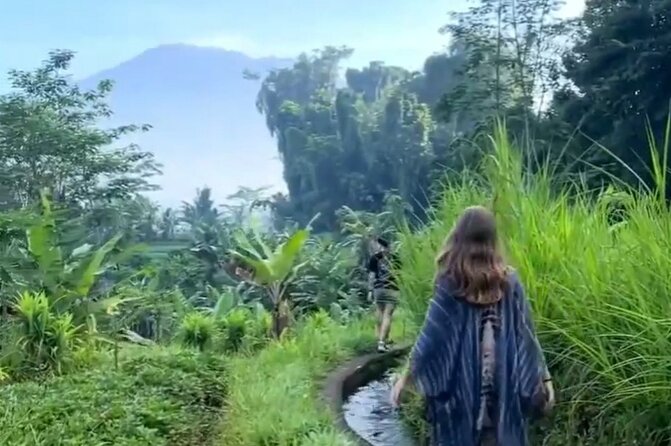
This is a casual trek in length, but it’s not a “wear anything” walk. The tour listing is clear about what to bring, and reviews back up why:
Bring:
- Hiking boots/shoes
- Sun hat
- Sunscreen
- Sunglasses
Why shoes matter: several people call out that parts of the rice terrace paths can be slippery, narrow, and elevated in sections. You don’t need mountain-climbing gear. You do need footwear that grips and supports your ankle when the path edges feel close.
Also plan for sun. Even with shade between terraces and village stops, you’ll be exposed while walking irrigation-adjacent stretches. A hat and sunscreen are not optional.
Price and value: $13.75 for a true rural walk
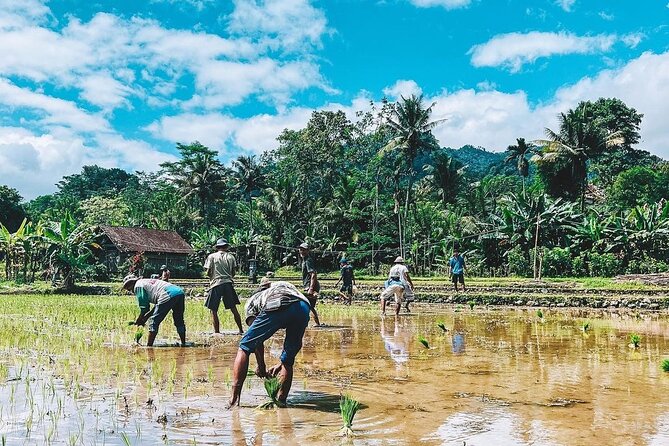
At $13.75 per person, this trek is good value if you care about local context. You’re paying for a trained guide to take you through working paths that are hard to find, plus bottled water.
Here’s how I judge the value:
- The duration is short enough to fit into a busy Bali schedule.
- The guide’s role isn’t just announcements—it’s route-finding, context, and pacing on narrow paths.
- The scenery is not just “pretty views.” It’s rice farming in action, village lanes, a temple stop, and irrigation infrastructure.
It’s also run with a small group mindset—a maximum of 10 travelers. That matters because narrow paths feel calmer when your group isn’t huge.
If you’re trying to replace a photo tour with something more grounded, this is one of the better swaps.
After the trek: finishing at Warung Ume Anyar
The trek ends at Warung Ume Anyar Restaurant in Ogang Village. It’s a practical finish point because you can sit down fast after walking in the heat and uneven terrain.
This is also where you’ll want to plan your next step. The tour info recommends arranging transport in advance so you’re not waiting around after the trek starts—Grab can be available, but there can be limited driver supply and some drivers may ask for offline payment or extra charges.
If you already have a driver, aim to have them ready around 2–2.5 hours after the trek begins.
And if you find yourself without a ride, there’s an option to walk back to the start point: it’s about 3 km along the main road, around 30–40 minutes, assuming you’re comfortable walking that distance.
Who should book this (and who might not love it)
You’ll likely enjoy this trek if you want:
- a countryside experience around Sidemen rather than a beach-and-temple checklist,
- views plus explanation about how rice farming works,
- an easy-to-moderate walk that still keeps you alert on narrow terrace paths,
- a guide who can answer questions along the way.
It may be less ideal if you:
- dislike uneven ground and narrow paths,
- need fully flat, wide trails,
- are looking for a strenuous workout (this is more “walk smart and look closely” than “hike hard”).
A lot of people describe it as not taxing, but they still stress balance and careful footing.
Should you book Sidemen Trekking?
If you want a small-group walk that feels like rural Bali rather than a staged viewpoint circuit, I’d book it. The combination of starting at Pasar Sidemen, following irrigation routes, crossing the hanging wooden bridge, and finishing at Warung Ume Anyar makes the whole experience feel complete.
Choose it if you value local storytelling as much as photos. I’d also lean toward booking if you’re traveling when rice farming looks active—at that point, the guide’s seasonal explanations can add extra punch.
Don’t book it if you know narrow, slippery terrace edges will stress you out. In that case, you may want a different style of hike in Bali.
FAQ
How long is the Sidemen trekking tour?
It’s approximately 2 hours, and you may be closer to about 2–2.5 hours depending on the pace and photo stops.
Where do we meet, and where does the trek end?
You start at Pasar Sidemen (Sidemen Traditional Market), at the shop with the sign Upa Boga. You finish at Warung Ume Anyar Restaurant in Ogang Village.
Is hotel pick-up and drop-off included?
No. Hotel pick-up and drop-off are not included, so you’ll need to arrange your own transport.
What should I bring with me?
The mandatory items are a sun hat, hiking boots/shoes, sunscreen, and sunglasses.
Is this trek hard?
It’s aimed at travelers with moderate physical fitness. It’s generally described as an easy walk in effort, but you do need balance and careful footing on narrow paths in the rice fields.
How big is the group?
This activity has a maximum of 10 travelers.
What happens if the weather is bad or I need to cancel?
The experience requires good weather. If it’s canceled due to poor weather, you’ll be offered a different date or a full refund. You can cancel up to 24 hours in advance for a full refund.
If you want, tell me your travel month and where you’re staying (Ubud vs. closer to Sidemen), and I’ll suggest the simplest transport plan so the start and finish are painless.
More Bali Walking Tours
More Bali Reviews & Picks




More of East Bali

Still deciding? More Bali days reviewed, from volcano sunrises to island crossings







East Bali: Lempuyang, Amed & Sidemen, compared.
 ★ 5.0Best of Bali Waterfalls: Tibumana, Tukad Cepung and TegenunganFrom $533,047 reviews
 ★ 5.0East Bali Tour: Gate of Heaven, Water Palace, Sleeping GajahFrom $1001,726 reviews
 ★ 5.0Bali Instagram: Gate of Heaven Temple TourFrom $85737 reviews
 ★ 5.0Bali Instagram Tour – Lempuyang Bali Gate of HeavenFrom $69149 reviews
 ★ 5.0Bali Waterfalls in One Day: Tukad Cepung, 2 Hidden Waterfall, Kanto LampoFrom $4481 reviews
 ★ 5.0East Bali Tour: Lempuyang Temple – Gate of Heaven, Tirta Gangga, Virgin BeachFrom $4367 reviews
 ★ 5.0Private Full-Day Lempuyang Gate of Heaven TourFrom $4967 reviews
 ★ 5.0Tukad Cepung Besakih Lempuyang Temple Best of East Bali TourFrom $4363 reviews
Browse the lists this tour appears in