
Reviewed · WALKING TOURS
Myth of Pejeng Walking Tour
Pejeng myths start at an old bronze drum. I like this small-group temple walk because you get special access to standout sacred objects, not just a quick photo stop. I also like how the route links stories, symbols, and older-than-Hindu artifacts, ending with giant sarcophagi that make Bali’s timeline feel real.
One thing to keep in mind: you’ll deal with uneven temple stairs and steep bits, plus patchy sidewalk sections. There’s no pickup, so you’ll want to plan your own way to the meeting spot near Indomaret Pejeng and start ready to walk for about 2 hours.
In This Review
- Key points to know before you go
- Why the Myth of Pejeng feels different than a Ubud stroll
- Price and value: what $21.40 buys you (and what it doesn’t)
- Timing, meeting point, and how to plan your morning
- What to wear: sarong rules and temple etiquette that actually matter
- The route: four stops built around Pejeng’s legend
- Stop 1: Pura Penataran Sasih and the bronze kettle drum
- Stop 2: Pura Pusering Jagat and directional temple symbolism
- Stop 3: Kebo Edan Temple, the crazy buffalo, and the Bhairawa statue
- Stop 4: Arca Building Archaeological Museum and giant sarcophagi
- Guides, group size, and the question-friendly pace
- Walking effort: what you should realistically expect
- Water, snacks, and the plastic-reduction idea
- Temple donations and included tickets: why they’re part of the experience
- Should you book this Myth of Pejeng walking tour?
- FAQ
- FAQ
- How long is the Myth of Pejeng walking tour?
- What time does the tour start?
- Where do I meet for the tour?
- Is there pickup or drop-off from my accommodation?
- Does the tour run in bad weather?
- What’s included in the price?
- What should I wear to the temples?
- Is there a limit to group size?
- Do I need to bring anything?
Key points to know before you go
- Special access at a very old temple, including a bronze kettle drum
- Four stops in 2 hours, with short guided time at each landmark
- Pre-Hindu stop included: open-air sarcophagi in an archaeological courtyard
- Small group size capped at 8 people, so questions actually get answered
- Sarong + sash provided, with clear rules for temple respect
- Rain or shine, and severe weather may delay the start
Why the Myth of Pejeng feels different than a Ubud stroll
Ubud can feel busy, even when you escape into side streets. Pejeng, on the walk route, feels calmer and more local, the kind of area where you notice daily life between sacred spots. That matters because this tour is built around context, not just landmarks.
The big win is how the story flows. You move from one temple space to the next and you’re taught what the myths, statues, and layouts are supposed to mean. By the end, you’re not only seeing places, you’re understanding why people treat them as sacred.
And yes, the tour leans into legend. You’ll hear themes tied to the moon of Pejeng and older religious traditions, including references to tantra in the way guides explain meanings. If you like your Bali with both spirituality and history in the same morning, this fits.
More Bali strolls and walking tours


Price and value: what $21.40 buys you (and what it doesn’t)
At $21.40 per person for about 2 hours, you’re paying for a guided route plus admission into the covered sites, not just a walk with directions. The tour also includes Balinese coffee, tea, and a snack, plus a donation amount for temple upkeep (Rp 60,000).
Where it feels like good value is in the included access and guided interpretation. Special access to a Balinese compound and attention from an English-speaking guide turns it from a checklist into a guided lesson.
What it does not include is pickup or drop-off from your hotel, and it does not cover meals you buy on your own. If you’re staying outside the Pejeng area, you’ll need to handle transport yourself.
Timing, meeting point, and how to plan your morning
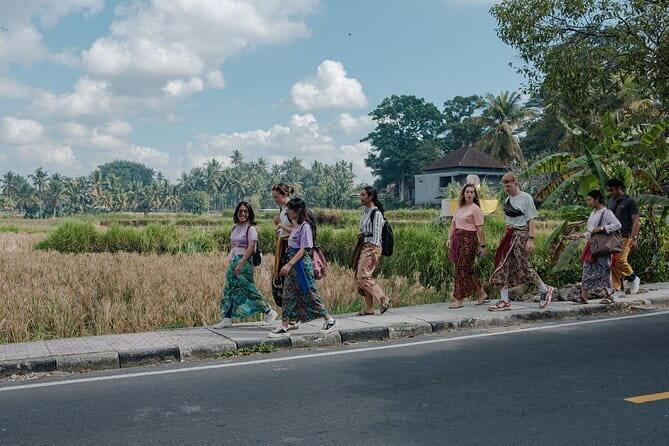
This tour starts at 8:30 am. The early timing is smart in Bali: you get cooler air, and temple areas often feel less crowded before the day really warms up.
Your meeting point is Indomaret Pejeng, Jalan Raya Dr. Ir. Sukarno No.552, Bedulu (Blahbatuh, Gianyar). From there, you walk between the four stops and end at Museum Arkeologi (an end point at F7JV+563 in Bedulu).
Because there’s no pickup, the practical move is to plan how you’ll reach Indomaret Pejeng before 8:30. If you’re using public transport, the tour is described as being near it, but you’ll still want to arrive early enough to find the group.
What to wear: sarong rules and temple etiquette that actually matter

Balinese temples are religious spaces, so dressing correctly is part of the experience. For this walk, both men and women must wear modest temple attire, with a sarong covering the legs below the knee.
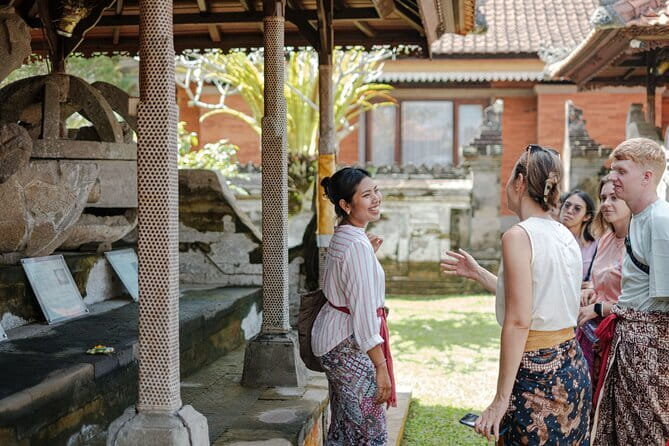
The tour includes sarong and sash, so you won’t be stuck if you forgot. Still, it helps to wear breathable clothing that you can move in, because you’ll be climbing temple steps and walking uneven ground.
If you’re the type who likes to be prepared, bring a light layer you’re comfortable hiking in. Also pack what you need for sun and bugs. One guide style that comes through in real-world experiences is extra care like bringing supplies such as sunblock and bug repellent, but you shouldn’t count on that every time.
The route: four stops built around Pejeng’s legend

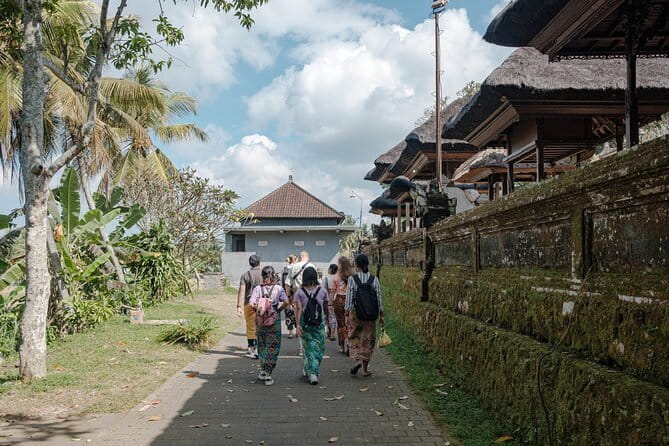
The tour keeps things focused: four stops with a guide-led narrative, plus a short break rhythm built into each location. The stops run about 20 minutes each for the first three, then about 30 minutes for the archaeological courtyard.
Also, you’re in a small group, with a maximum of 8 travelers, which makes it easier to ask questions and keep pace. The route is a mix of temple stairways and city-walk sections, so you’ll want sturdy footwear.






Stop 1: Pura Penataran Sasih and the bronze kettle drum
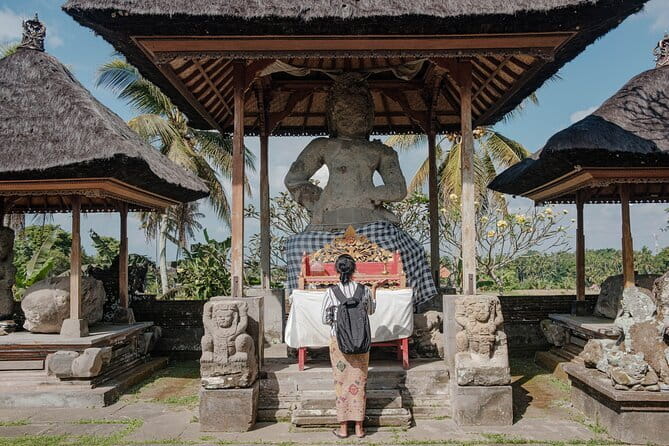
Your first stop is Pura Penataran Sasih, one of Bali’s older temples. You’ll step in with sarongs and sashes and get access to one of the standout sacred objects on the route: the largest bronze kettle drum in Southeast Asia.
This is where guides set the tone. You’ll learn how local myths connect to what people see, hear, and believe in this area. The story thread often ties into the moon of Pejeng, and it’s a strong start because it gives meaning before you move on.
A practical note: even if the tour feels leisurely, temples are not built for flat sidewalks. Expect uneven steps and plan your footing like you would in any older religious site.
Stop 2: Pura Pusering Jagat and directional temple symbolism
Next you’ll walk to Pura Pusering Jagat, described as one of Bali’s six main Kahyangan (directional temples). Guides explain that it’s believed to be at the island’s center, which gives the place a special role in how people think about balance and orientation.
Here, you’re not just looking at carvings. You’re learning how the temple complex fits into a broader religious map. Even in a short visit, the guide focus helps you notice details you might otherwise miss, like how the space is arranged for meaning.
If you like “why is it laid out this way” answers, this stop is a good use of time. It’s short, but it’s structured.
Stop 3: Kebo Edan Temple, the crazy buffalo, and the Bhairawa statue
Your third stop is Kebo Edan Temple, often framed as the Temple of the Crazy Buffalo. This is a smaller site, but it packs a story punch.
You’ll see an imposing Bhairawa statue associated with the 13th century. The statue was recovered from nearby rice fields, and guides discuss theories about its unusual origins and purpose.
This is a place where history turns into mystery in a respectful, human way. You’re not asked to treat it like a solved puzzle. Instead, you learn how belief systems grow around objects, places, and local memory.
Stop 4: Arca Building Archaeological Museum and giant sarcophagi
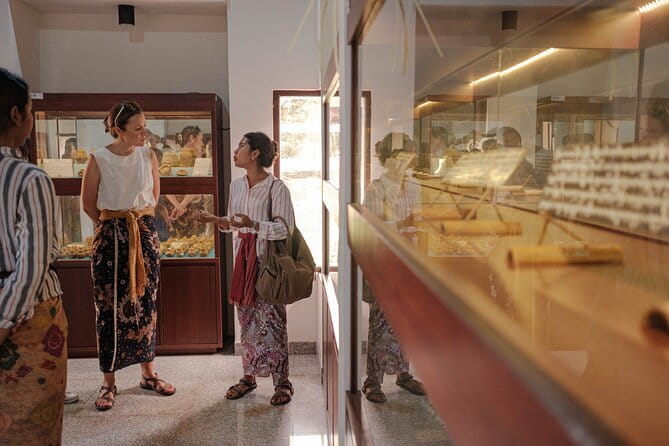
Final stop: Arca Building Archaeological Museum. This part shifts you back before Hindu influences dominated the region, giving you a pre-Hindu layer to the story.
In an open courtyard, you’ll explore giant sarcophagi and learn what they can suggest about ancient Balinese life and customs. This is often where the morning clicks for people who like context: you start the walk with sacred artifacts and myths, then end with older burial forms that show the deep timeline of belief.
You’ll also feel the pacing change. This is the longest stop at around 30 minutes, so it’s your best moment to slow down, absorb, and ask questions.
Guides, group size, and the question-friendly pace

This tour works best when you ask things. The format, with a small group size of up to 8, makes that possible.
Different guides show different styles, but the names that come up include Joe, Bagus, and Win. From what’s shared, guides can be welcoming and willing to answer extra questions if you have them.
One thing I appreciate in this kind of walking tour is care around comfort and respect. Some guides are attentive about bringing proper attire and practical help like sunblock and bug repellent. You should still plan your own basics, but it’s a nice sign of how seriously they treat your day.
Walking effort: what you should realistically expect
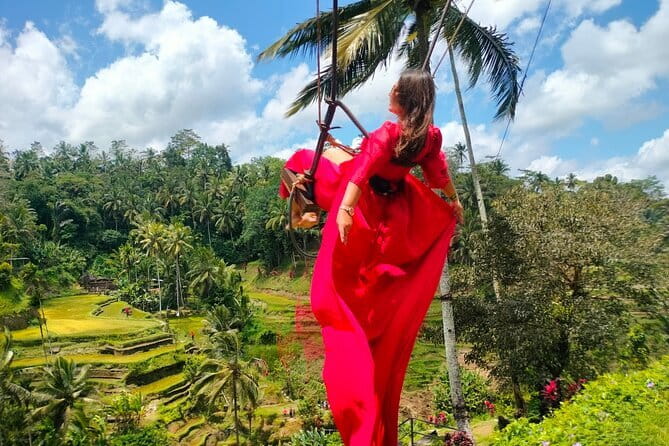
The tour is described as manageable for most travelers, but it’s not for people who can’t handle stairs and uneven ground. You’ll be climbing temple steps, dealing with steep gradients, and crossing patchy sidewalks.
A real-world expectation is that you may rack up 4,000+ steps. Even if it doesn’t feel like an all-day hike, temple stairways change the effort quickly. If you have knee issues or balance problems, consider whether you’ll be comfortable.
Comfort tips that help:
- Wear shoes you trust on stone steps.
- Bring a small water plan even though the tour pushes reusable bottles.
- Use the breaks at each stop to regroup.
Also remember: weather can affect the start time. The tour runs in rain or shine, but if there’s a severe downpour, the operator calls you before the start time.
Water, snacks, and the plastic-reduction idea
There’s a sustainability angle here: bring a reusable bottle for water refills to help reduce plastic waste in Bali’s rivers. It’s a small request, and it’s easy to follow if you travel with a bottle anyway.
You also get Balinese coffee, tea, and a snack during the tour. This is more than a perk. For a morning walk with temple stairs, it keeps energy steady and makes the whole experience feel less rushed.
Temple donations and included tickets: why they’re part of the experience
You’ll see temples because you’re paying into their upkeep through a structured donation. The tour includes temple donations (Rp 60,000), and it includes admission tickets for the stops.
That matters because temples aren’t theme parks. Supporting the maintenance and religious care is part of visiting properly, and having it handled for you keeps the day simple.
Should you book this Myth of Pejeng walking tour?
Book it if you want a story-first Bali morning, with special access to meaningful sacred objects and a route that moves beyond just one highlight. You’ll likely enjoy it most if you like explanations that connect myths, symbols, and physical places.
Skip or rethink it if you know you struggle with stairs or uneven surfaces. There’s no pickup, and the day is designed as a walk around historic landmarks, so you need to be comfortable handling that physical reality on your own.
If you’re staying near central Ubud and you want a calmer, more local feel for a couple of hours, this is a good fit. The early 8:30 am start also helps you avoid the day turning hot and crowded.
FAQ
FAQ
How long is the Myth of Pejeng walking tour?
It lasts about 2 hours.
What time does the tour start?
The start time is 8:30 am.
Where do I meet for the tour?
Meet at Indomaret Pejeng, Jl. Raya Dr. Ir. Sukarno No.552, Bedulu, Kec. Blahbatuh, Kabupaten Gianyar, Bali 80552.
Is there pickup or drop-off from my accommodation?
No. The tour does not provide pickup or drop-offs.
Does the tour run in bad weather?
It operates rain or shine. If conditions are severe, like an intense downpour, the operator will call you before the start time.
What’s included in the price?
Included are an English-speaking guide, expert guided walking tour, temple donations (Rp 60,000), Balinese coffee/tea and a snack, special access to a Balinese compound, sarong and sash, and admission tickets for the stops.
What should I wear to the temples?
You need to dress modestly. Both men and women must wear a sarong that covers the legs below the knee. You can bring your own sarong or use one provided.
Is there a limit to group size?
Yes, the tour has a maximum of 8 travelers.
Do I need to bring anything?
The tour asks you to bring a reusable bottle for water refills. You may also want to bring essentials for sun and bugs, since you’ll be outdoors during the walk.
More Bali Walking Tours

More Bali Tour Picks



More Bali Reviews & Picks
Still deciding? More Bali days reviewed, from volcano sunrises to island crossings











Walking Tours, compared.
 ★ 5.0Bali Private Food Walking Tour With Locals: The 10 TastingsFrom $56243 reviews
 ★ 5.0Sidemen Trekking: A Walk from a Different PerspectiveFrom $1394 reviews
 ★ 5.0Ubud yoga, rice terrace walk and floating Breakfast tourFrom $2585 reviews
 ★ 5.0Ubud Guided Walking TourFrom $2879 reviews
 ★ 5.0Ubud Countryside Tour: Campuhan Ridge Walk and Rice TerraceFrom $4072 reviews
 ★ 5.0Hikaria: Bali’s First Immersive Night WalkFrom $1316 reviews
 ★ 5.0Private Tour: Campuhan Ridge Walk, Ubud Rice Terrace & Ubud PalaceFrom $2515 reviews
 ★ 3.0Bali Activity: Bali Sea Walking in Nusa Dua OceanFrom $856 reviews
Browse the lists this tour appears in