
Reviewed · UBUD, MONKEY FOREST & CAMPUHAN
Traditional Balinese Meal in Ubud in Dewa’s Family Village Home
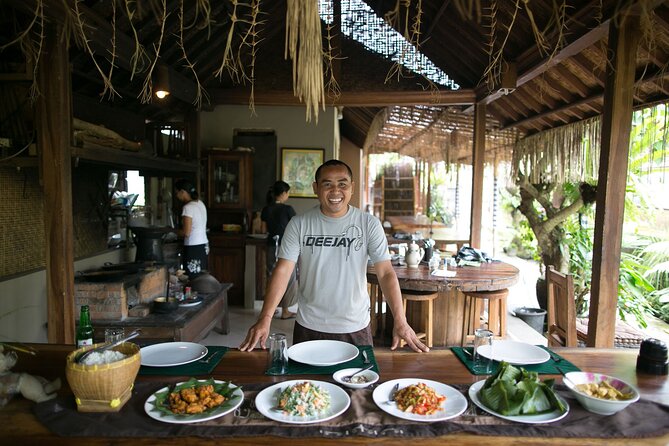
Food tastes better with living hands. This private Ubud meal with Dewa and Jero feels like you stepped into daily Balinese life, starting with a walk through their home grounds where you’ll meet spices like galangal and nutmeg. I also love the hands-on, homecooked menu that may include pepes ikan (grilled tuna in banana leaves) and bumbu kuning chicken in turmeric-coconut sauce.
One key thing to know up front: the family’s tradition is to not share the meal at the dining table with you, and the approach is more personal meditation than big group chitchat. That may be perfect for some people and a little odd for others.
In This Review
- Key highlights at a glance
- A Balinese home dinner in Ubud, not a showy restaurant meal
- Eating separately with Dewa and Jero: a tradition worth understanding
- How pickup and the meeting point work in real life
- Entering the compound: where herbs, fruits, and family life meet
- The menu: what you may eat during the Balinese feast
- Why the herb walk matters more than you think
- Value for $56: what you’re really paying for
- Who this works for, and who should look elsewhere
- Should you book Dewa and Jero’s traditional meal in Ubud?
- FAQ
- FAQ
- How long is the traditional Balinese meal experience?
- Is hotel pickup included?
- Where do I meet if I am not staying in Ubud?
- What dishes might I get during the meal?
- Is there a vegetarian option?
- Is this a private tour?
- Do the hosts eat with you at the table?
- Can I bring a service animal?
Key highlights at a glance
- Private home setting in a Balinese family compound with open pavilions around a central courtyard
- Spice and fruit education right before dinner, with plants like galangal, cloves, cacao, and nutmeg
- Classic Balinese dishes that can include pepes ikan, bumbu kuning chicken, bregedel, and jukut urab
- Pickup included for Ubud hotels plus drop-off back afterward
- Vegetarian option available if you tell them when booking
- You eat in the family’s preferred way for a quieter, reflective tone
A Balinese home dinner in Ubud, not a showy restaurant meal
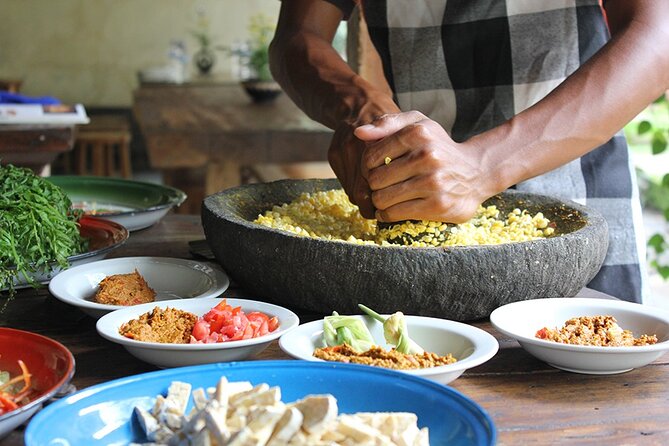
This experience is built around real home cooking, in a traditional Balinese walled family compound in Ubud’s area. You’re not just ordering from a menu and calling it culture. You’re meeting your hosts in the place where the food is part of the rhythm of family life—pavilions, gardens, and the everyday routines that keep a household running.
I like that it’s straightforward. You get a personal host (Dewa or another family member) and a meal that can feel deeply specific to Balinese flavors: aromatic spice, coconut richness, and vegetables dressed with grated coconut and fried shallots. Even the dishes that sound simple are layered—banana leaves, turmeric sauce, and fried textures show up in the way Balinese cooking is comfortable with contrast.
And because you’re in a family space, you tend to notice what a restaurant glosses over: the smell of herbs and spices, the way ingredients look fresh and close to where they’re used, and how the timing of the evening feels tied to the home rather than a dining schedule.
More around Ubud, from the Monkey Forest to the Campuhan ridge



Eating separately with Dewa and Jero: a tradition worth understanding
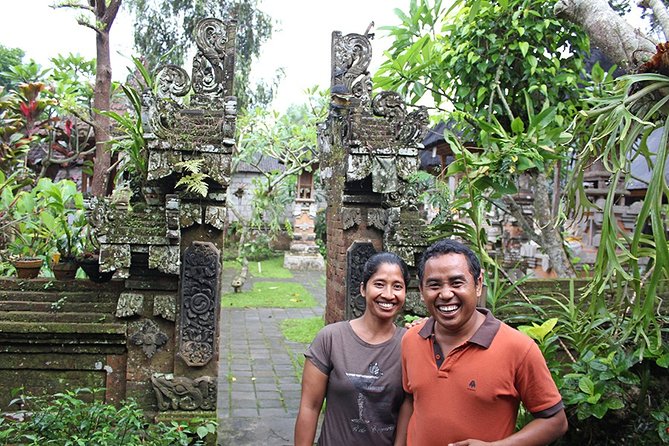
Here’s the big cultural detail: the hosts won’t share the meal with you at the dining table. Their preferred approach is for you to eat on your own and focus on personal meditation to help create a positive state of mind.
This changes the whole vibe. If you’re the type who wants a long, back-and-forth conversation while you pass dishes across a table, you might feel a little out of place at first. But if you’re curious about how daily life intersects with spirituality in Bali, it’s meaningful. It turns dinner into a slower moment rather than a performance.
Practical tip: come ready to treat dinner like part of the experience, not just a “food stop.” Give yourself time to notice flavors and textures, and don’t expect the host to keep you company at the plate. In a way, it’s the opposite of a loud tour meal.
How pickup and the meeting point work in real life
This tour is designed around convenience in Ubud. Hotel pickup and drop-off are included for Ubud hotels only, and your experience runs about 2 hours total. It’s a mobile ticket format, and you should receive confirmation within 48 hours of booking (based on availability).
If you’re staying outside the Ubud pickup area, the plan shifts. You’ll meet Dewa at Alam Sari Resort on Jl. Raya Keliki, Keliki. The listed starting meeting point is also at Rumah Makan Jero Nini, G7X7+Q9M, Jl. Arjuna, Keliki, Kec. Tegallalang, Kabupaten Gianyar, Bali 80561. Since these details can overlap depending on where your pickup route ends, it’s smart to confirm your exact meeting location with the provider before your day.
One more logistics note that matters: this is private. That means you won’t be squeezed into a larger group schedule, and the timing should feel smoother for your group only.
Entering the compound: where herbs, fruits, and family life meet
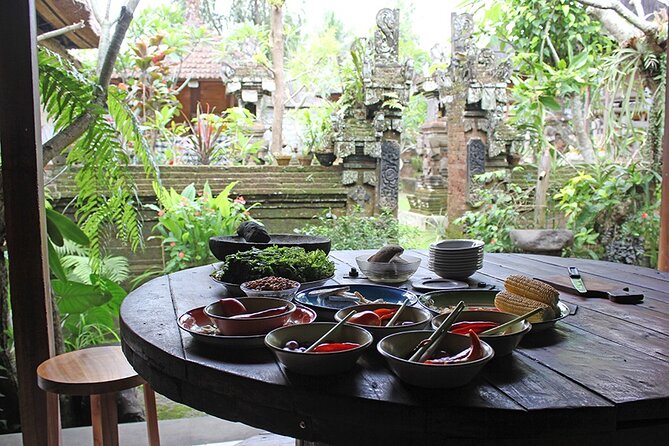
Before the meal, you’ll go to Dewa and Jero’s traditional home in a village setting just north of Ubud. The compound is set up with several open pavilions around a central courtyard, and it’s a walled family compound where the household and extended family live.
What you can look forward to:
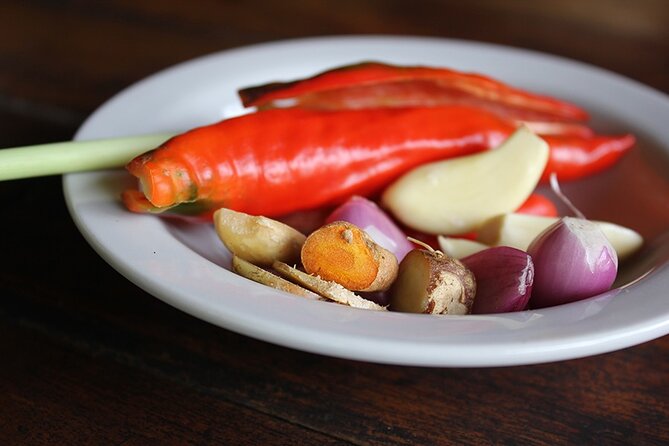
- A chance to see the garden side of cooking: fruits, herbs, and spices.
- A short educational element focused on medicinal properties—plants like galangal, cloves, cacao, and nutmeg are part of what you’ll learn about.
- A walk through the family compound so you understand how a Balinese home is organized and used.
Even if you’re not a plant nerd, this part is useful because it gives you a “why” for the flavors later. When you learn what an ingredient is used for—medicinally or culturally—you start tasting with more attention. And when food is connected to plants growing nearby, you’re more likely to notice the freshness in aroma and texture.
Also, the setting is part of the value. Terraced foothills and lush green surroundings aren’t a backdrop here; they’re connected to the kind of village farming and growing that supports home cooking.
The menu: what you may eat during the Balinese feast
Dinner here is the centerpiece, and it can include several classic Balinese dishes. The exact spread may vary, but this is the kind of meal you should expect to be served at the home:
Pepes ikan (grilled tuna in banana leaves)
This is one of those dishes where the packaging does work. Banana leaf steams and perfumes the fish, giving it a fragrant, gentle intensity. It’s delicate, but it’s also deeply satisfying.
Bumbu kuning (chicken in turmeric and coconut milk sauce)
The name clues you in: turmeric gives color and warmth, while coconut milk brings smooth richness. It’s not just about heat; it’s about aroma and balance.
Bregedel (corn fritters)
Crisp outside, soft inside. Think of it as a comforting contrast to saucier dishes—corn flavor with fried texture.
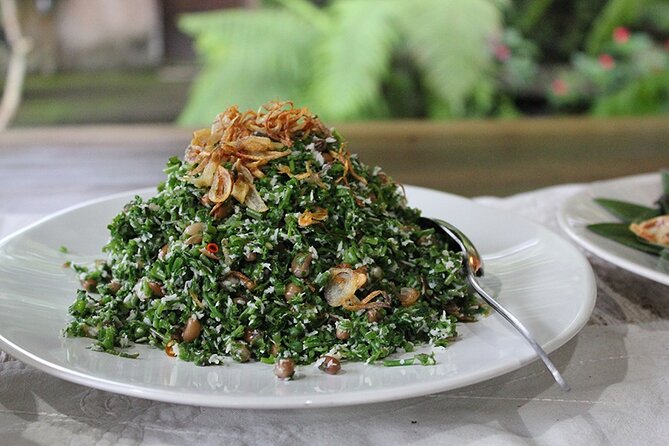
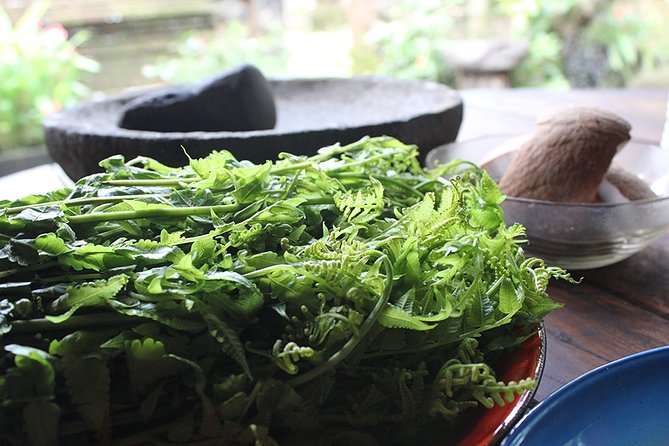
Jukut urab (seasonal vegetables with grated coconut and fried shallots)
This one leans into the Balinese love of layered toppings. Grated coconut plus fried shallots adds sweetness, crunch, and savory depth over seasonal vegetables.
Beverages are included, and a vegetarian option is available if you tell them at booking time. If you’re vegetarian, flag it clearly when you reserve—don’t assume it’s automatic.
If you’re sensitive to spice, it’s also worth knowing that Balinese meals often rely more on aromatics than only on heat. Still, your best bet is to ask about how spicy things might be, since ingredients and family styles can vary.





Why the herb walk matters more than you think
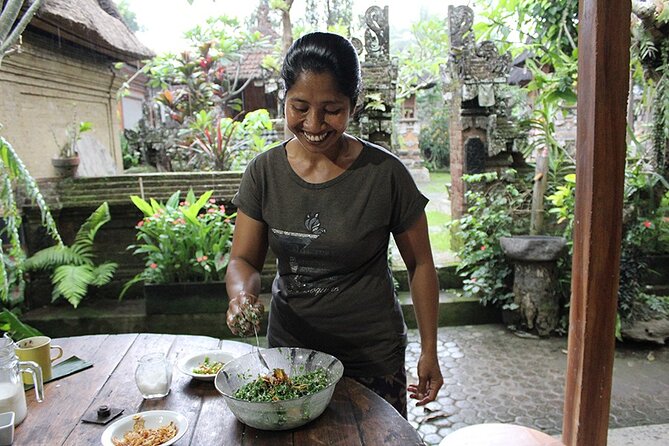
The time before dinner is brief, but it’s the difference between eating and understanding what’s on your plate. You’re introduced to spices and herbs like galangal, cloves, cacao, and nutmeg, and you learn how they connect to medicinal uses.
That sounds academic, but it lands practically. Later, when you eat bumbu kuning or banana-leaf wrapped pepes, you get to link the scent you smelled earlier to the flavor you taste now. It also helps you remember the meal. Instead of thinking, Chicken in sauce and fish in leaves, you start thinking: turmeric-coconut balance, aromatic steam, sweet-savory vegetable toppings.
And because this is in a home compound—not a cooking school storefront—you’re getting the kind of cultural education that sticks. It’s not a lecture; it’s a living pantry lesson.
Value for $56: what you’re really paying for
$56 per person for a 2-hour private experience is not a “cheap bite.” But when I weigh the full package, it starts to make sense.
Included:
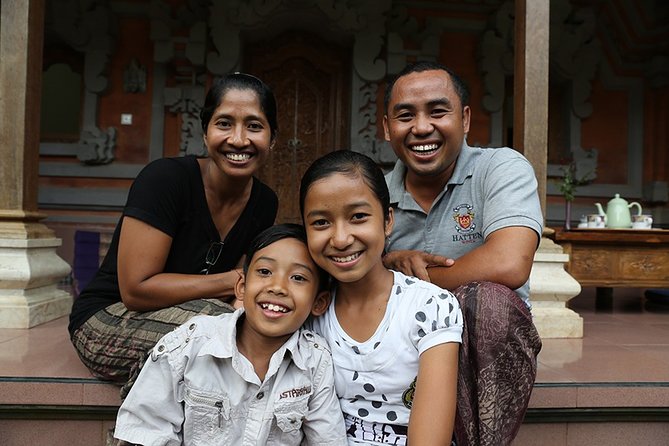
- A hosted in-home meal with Dewa (or another family member) and Jero
- Hotel pickup and drop-off from Ubud hotels only
- Beverages
- Gratuities
- Private group experience
- Vegetarian option available by request
You’re paying for access. A restaurant meal won’t normally include a tour of a traditional walled compound, an introduction to homegrown spices, and the family-specific way of presenting dinner. Even in Bali, where food tours are common, this kind of inside access is the cost-driver.
Two value notes to keep in mind:
- Pickup is limited to Ubud hotels. If you’re outside the region, factor in that you’ll meet elsewhere rather than enjoying door-to-door convenience.
- The emotional tone of the meal is part of the offering. Eating on your own with a meditation focus is not everyone’s preference, but it’s the point. If you want lively table conversation as the main event, you may feel the price is buying quiet rather than social energy.
Also, it’s booked about 18 days in advance on average. That suggests demand. If you want a specific day, don’t wait until the last minute.
Who this works for, and who should look elsewhere
This experience is best for you if:
- You want a genuine Ubud food experience inside a real family home.
- You care about how Balinese dishes are built from spices, herbs, and coconut-based sauces.
- You’re open to a calmer dinner rhythm with personal reflection rather than a host-led dining performance.
It may be less ideal if:
- You’re expecting the hosts to sit and eat with you at the same table and keep conversation going throughout.
- You want a conventional cooking class format or a hands-on cooking session. This is primarily about the home meal and the pre-dinner food/spice context.
If you love food but also love cultural details—plant-based flavor, compound home life, and the blend of everyday and spiritual tradition—you’re in the right place.
Should you book Dewa and Jero’s traditional meal in Ubud?
If you’re aiming for something more personal than a typical dinner reservation, I think this is an easy yes. For the money, you’re not just buying food—you’re buying access to a traditional home setting, ingredient education tied to plants growing in the compound, and a menu that can include pepes ikan and bumbu kuning.
Book it if you’re comfortable with the dinner format where you eat separately and focus inward. Skip it if your ideal Bali evening is loud, chatty, and centered on shared dining with the hosts.
FAQ
FAQ
How long is the traditional Balinese meal experience?
The experience lasts about 2 hours.
Is hotel pickup included?
Yes, hotel pickup and drop-off are included for Ubud hotels only.
Where do I meet if I am not staying in Ubud?
If your hotel is not in Ubud, you meet Dewa at Alam Sari Resort, Jl. Raya Keliki, Keliki.
What dishes might I get during the meal?
The menu may include pepes ikan (grilled tuna in banana leaves), bumbu kuning (chicken in turmeric and coconut milk sauce), bregedel (corn fritters), and jukut urab (seasonal vegetables with grated coconut and fried shallots).
Is there a vegetarian option?
Yes. A vegetarian option is available if you advise at booking.
Is this a private tour?
Yes, it’s private. Only your group participates.
Do the hosts eat with you at the table?
No. The hosts will not share the meal with you at the dining table. They prefer that you eat on your own with a focus on meditation.
Can I bring a service animal?
Service animals are allowed.
More Bali Reviews & Picks
More Around Ubud & the Monkey Forest
Still deciding? More Bali days reviewed, from volcano sunrises to island crossings












Ubud, Monkey Forest & Campuhan, compared.
 ★ 5.0All-Inclusive Ubud Private TourFrom $10014,344 reviews
 ★ 5.0Best of Ubud Full-Day Tour with Jungle SwingFrom $568,571 reviews
 ★ 5.0Ubud: Monkey Forest, Jungle Swing, Rice Terrace, and Water TempleFrom $317,160 reviews
 ★ 5.0Best of Ubud 1-Day Private TourFrom $544,451 reviews
 ★ 4.4Ubud Palace Legong Dance Show TicketFrom $63,979 reviews
 ★ 5.0Body Massage Experience in Ubud Traditional SpaFrom $213,506 reviews
 ★ 4.4Ubud Kecak and Fire Dance Show TicketsFrom $62,631 reviews
 ★ 5.0Ubud Cooking Class Bali with Balinese ChefFrom $351,609 reviews