
Reviewed · WORKSHOPS
Threads of Tradition Miniature Keliki Painting Workshops
Small brush, big Balinese stories. This 3-hour Keliki class turns Ubud quiet time into hands-on art, using traditional materials and a step-by-step style taught by two local artists. I especially love learning the layered Keliki technique with Chinese ink and acrylic, and I also love that the instruction comes directly from Gusti and Kedek, who make the session feel personal. One possible drawback: with a 3-hour schedule, you’ll be creating a miniature work rather than something huge and time-consuming.
The setup is relaxed and friendly, not rigid or formal. You’ll also get snacks, coffee or tea, and mineral water, plus afternoon tea during the class—small comforts that make the creative pace easy to handle. Small-group size (up to 20) helps you ask questions and actually get guidance when you need it.
In This Review
- Threads of Tradition Miniature Keliki Painting Workshop at Five Arts Studio: The Quick Pitch
- Key Things That Make This Class Worth Your Time
- Keliki Painting in Plain Terms: What You’re Actually Learning
- Five Arts Studio Location Feel: Ubud’s North Side, Not the Tourist Strip
- Step-By-Step Schedule: How a 3-Hour Session Typically Flows
- A possible drawback to plan for
- Traditional Materials and the Keliki Look: Chinese Ink Meets Acrylic
- Working With Gusti and Kedek: Why the Teaching Style Matters
- Afternoon Tea in a Studio Setting: A Cultural Pause That Actually Helps
- What You’ll Take Home: A Miniature Keliki Work With Real Meaning
- Price and Value: Is $29 Fair for 3 Hours?
- Timing: When to Book and How to Plan Your Day
- Practical Tips for Your Best Workshop Experience
- Who This Workshop Is Best For (and Who Might Prefer Another Style)
- Should You Book Threads of Tradition Miniature Keliki Painting Workshop?
- FAQ
- Where is the workshop meeting point?
- How long is the Keliki painting workshop?
- How much does it cost?
- What’s included in the price?
- Is lunch included?
- Do I need any prior painting or drawing experience?
- What materials will I use?
- Is afternoon tea included?
- What should I wear?
- Is cancellation free?
Threads of Tradition Miniature Keliki Painting Workshop at Five Arts Studio: The Quick Pitch
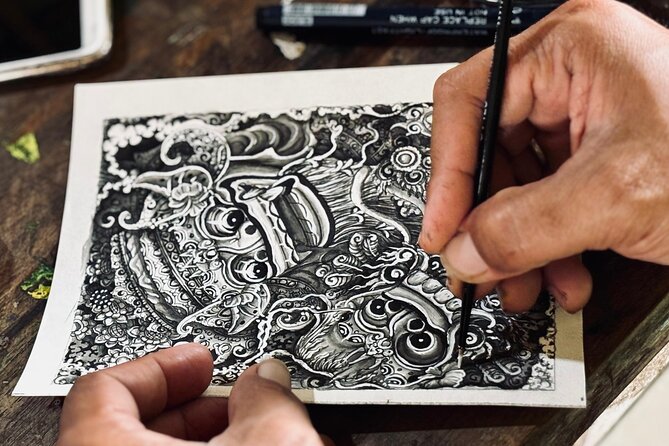
If you want a break from scooters, temples, and traffic planning, this is a very practical way to experience Balinese culture. Keliki painting is known for rural village life scenes and myth-style stories, and the workshop is built around the process—drawing and painting in layers with traditional tools. It’s also refreshingly beginner-friendly, so you don’t need to be the type who always had art class supplies at home.
What makes it worth your time is that you’re not just copying a picture. You’re learning how Keliki is made: the multi-step approach, the layering logic, and how the medium affects the look. You’ll leave with your own finished piece to bring home, which turns this from a moment into a souvenir you can actually enjoy later.
Key Things That Make This Class Worth Your Time
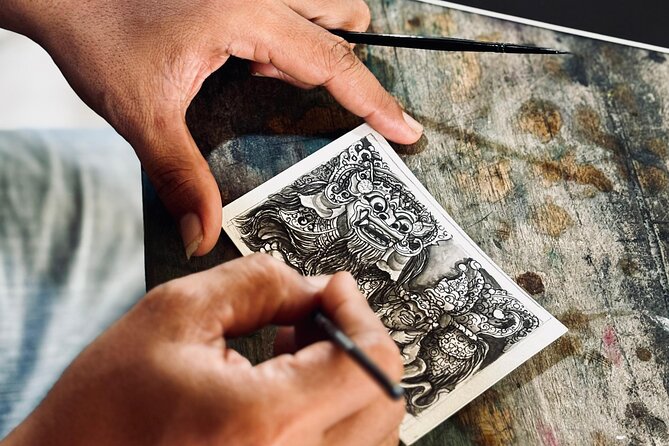
- Layered Keliki method using Chinese ink plus acrylic paint, taught as a multi-step process
- Two-instructor setup with Gusti and Kedek guiding at your pace
- Afternoon tea included, plus snacks, coffee or tea, and mineral water during the session
- Traditional house compound setting in Keliki, near Tegallalang—more local-feeling than a storefront studio
- All skill levels welcome, so you can focus on learning rather than performing
A few more Bali tours and experiences worth a look


Keliki Painting in Plain Terms: What You’re Actually Learning
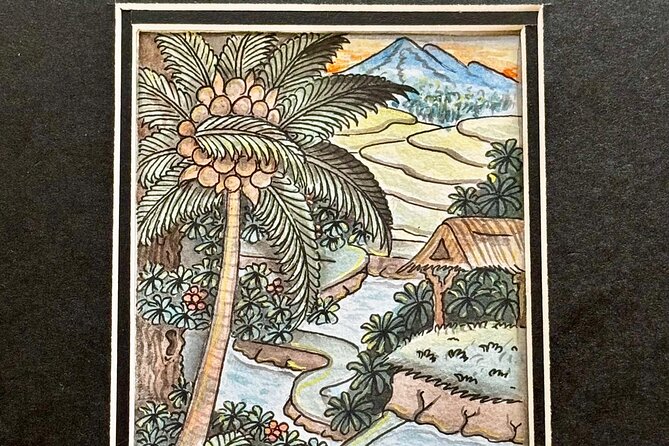
Keliki is a distinctive Balinese style, and the workshop gives you a real sense of what makes it work. The big idea is layers: you build the image step by step, using Chinese ink and acrylic paint rather than relying on one flat approach. That means the end result is the product of decisions you make as you go, not just a final-color moment.
You’ll also get some cultural framing—how Keliki paintings often depict village life, plus handy myth-style stories people recognize. Even if you’ve never heard the word Keliki before, you’ll have enough context to understand what you’re drawing beyond “pretty pictures.”
This matters because it changes your experience from craft project to storytelling. You’re not only making an object; you’re learning a cultural way of seeing.
Five Arts Studio Location Feel: Ubud’s North Side, Not the Tourist Strip
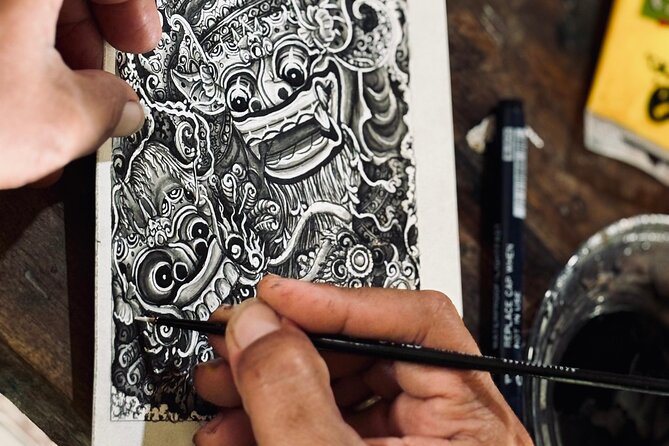
Your class starts at Five Arts Studio, on Jl. Raya Keliki, Keliki, Kec. Tegallalang, Kabupaten Gianyar, Bali 80561. This area is known for villages around Tegallalang, so the studio setting feels more grounded than a central Ubud art market stop.
Meeting at one clear location also helps. You’re not bouncing between multiple places or trying to coordinate a complicated pickup. The workshop ends back at the meeting point, which keeps the day simpler and easier to plan around.
If you’re using public transport, the activity is listed as near public transportation, which is useful. Still, Bali days can be unpredictable, so I’d plan a buffer. If you’re sensitive to travel stress, build in time to arrive calmly.
Step-By-Step Schedule: How a 3-Hour Session Typically Flows
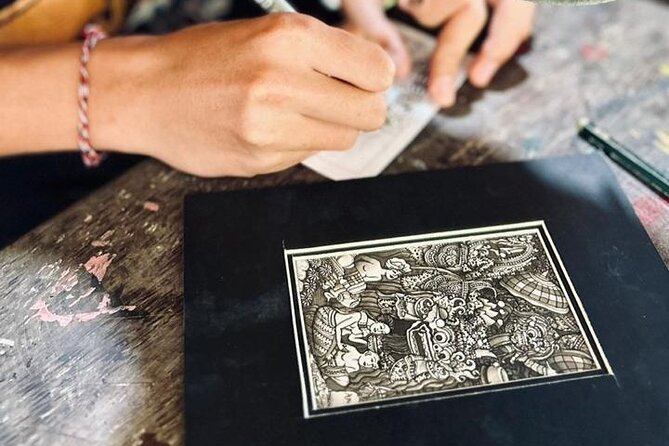
The whole workshop runs about 3 hours. Since the class is designed for all skill levels, the structure usually balances demonstration and hands-on practice. You’ll start with welcome and setup, then follow instructions for drawing and painting in layers with traditional materials.
Midway through, you’ll stop for snacks and tea, including afternoon tea as part of the experience. That break isn’t just food. It’s also when conversation typically happens—time to learn about the artists, ask questions, and get your bearings before you continue.
By the end, you’ll have a finished miniature piece you can take home as a souvenir. The key point: the pacing is meant to feel comfortable, not rushed. One of the strongest themes in feedback is that there’s no harsh time pressure, and you can work at your own pace.
A possible drawback to plan for
Because it’s only about three hours, you should expect the artwork you take home to be miniature by design. If you’re dreaming of a long, detailed painting you’ll keep refining for days, you may find this format too short. But if you want an achievable, rewarding piece without art-school exhaustion, it’s a great length.





Traditional Materials and the Keliki Look: Chinese Ink Meets Acrylic
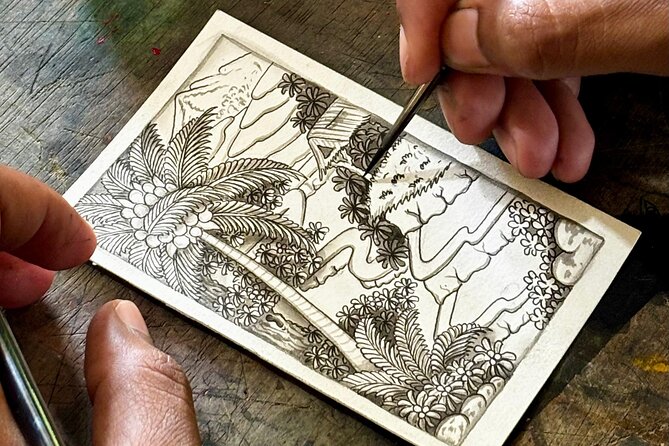
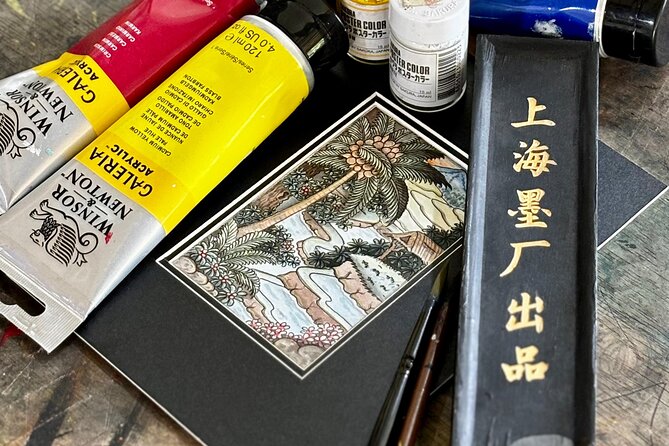
Here’s where Keliki gets interesting. This workshop uses traditional materials and focuses on a multi-step technique. You’ll work with Chinese ink and acrylic paint, which changes how the lines and color behave compared with standard school paints.
In practice, working with ink tends to highlight precision, while acrylic adds bold color blocks and coverage. When you combine them in layers, you get that Keliki-style rhythm—details emerge gradually rather than all at once.
Don’t worry if you think you can’t draw. The class is designed for beginners and people with no prior painting knowledge. That usually means the instructors guide you through what to do first, what to do next, and how to keep your hand steady even if it’s your first time.
Working With Gusti and Kedek: Why the Teaching Style Matters
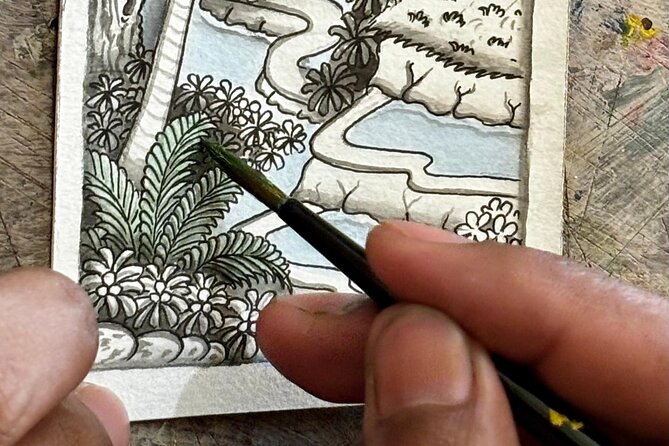
The instructors—Gusti and Kedek—are part of why this workshop feels good. The vibe is friendly and approachable, with a teaching approach that helps you keep moving without feeling judged.
You’ll likely spend a lot of that 3-hour window at your own workstation, but still guided. The main value here is feedback: when you’re working in layers, small adjustments matter. Having someone nearby to help you interpret the technique beats a hands-off, watch-and-hope approach.
A practical bonus: when you’re learning a style like Keliki, it helps to talk through symbolism and what the figures and village scenes represent. That context makes your decisions feel meaningful, not random.
Afternoon Tea in a Studio Setting: A Cultural Pause That Actually Helps
Afternoon tea might sound like a nice extra. In reality, it improves the class experience. You’ll get tea or coffee plus snacks and mineral water, with afternoon tea served during the session.
This matters because it keeps the workshop from feeling like a nonstop production line. You can reset your hands, re-focus, and chat with the artists while you’re still in that learning mood.
Also, tea time is an easy social bridge. If you’re traveling solo, you get conversation without needing to hunt it down. If you’re traveling with someone, it creates a natural moment to compare your progress and laugh at the inevitable ink mistakes.
What You’ll Take Home: A Miniature Keliki Work With Real Meaning

Your finished artwork is meant to be a souvenir. The workshop is built around helping you complete a miniature piece within the class length, so you’re not leaving with a half-started project.
That’s a big deal for value. In many art classes, you buy time and materials but leave with an incomplete outcome. Here, the structure is designed so you can finish and feel proud of what you made.
If you want a meaningful keepsake, this beats buying another object from a shop with no story attached. You’ll know the technique you used and why the style looks the way it does.
Price and Value: Is $29 Fair for 3 Hours?
At $29 per person for about 3 hours, this is priced like an accessible activity, not a luxury craft workshop. The value comes from what’s included: snacks, coffee and/or tea, and mineral water, plus the workshop instruction using traditional materials.
What’s not included is lunch (you can order local food) and alcohol (available to purchase). If you’re hungry afterward, you’ll need to plan for food on your own, which is normal for this kind of class.
The other value factor is group size. With a max of 20 travelers, the class isn’t likely to feel like a crowded demo where you never get attention. For many people, that’s the difference between enjoying learning and just trying to copy something fast.
If you like structured cultural activities that don’t cost a fortune, this fits well.
Timing: When to Book and How to Plan Your Day
On average, this workshop is booked about 10 days in advance, which is a sign it’s popular but not impossible to get into last-minute. If you’re traveling in a busy season or you’ve got a tight itinerary in Ubud, I’d book earlier rather than gambling.
As for your day plan, keep your schedule flexible around the class time. You’re in a studio environment at Keliki near Tegallalang, and the whole point is to slow down a bit, not sprint from one stop to another.
If you add transport, that can simplify getting there and back—at least one booking experience included convenient driver assistance and a lunch stop on the way back. Since transport options weren’t listed as guaranteed here, treat that as a possible add-on to check when you book.
Practical Tips for Your Best Workshop Experience
- Wear smart casual: think comfortable clothes you don’t mind getting a little art-stained.
- Bring nothing precious: ink and paint are part of the process, so keep small valuables minimal.
- Choose the mindset of learning: Keliki is layered and method-based, so follow steps and don’t try to skip ahead.
- Plan for tea time: you’ll be eating snacks and having tea during class, but lunch isn’t included.
- If you want vegetarian options, tell them when you book.
- If you’re sensitive to bustle, pick this as a break day rather than stacking it between major hikes or temple tours.
If you care about flexibility, cancellation is described as free up to 24 hours before the experience. That’s useful if your Ubud schedule changes.
Who This Workshop Is Best For (and Who Might Prefer Another Style)
This workshop is a strong match if you:
- want a beginner-friendly creative experience with real cultural context
- like small-group, instruction-led activities
- want a take-home souvenir you made yourself
- are traveling with a partner and want a shared activity that’s not just a selfie stop
It’s less ideal if you:
- need a long, deep art session to fully explore technique
- are looking for a large-scale painting project rather than a miniature
- want alcohol included as part of the price (it’s available to purchase, not included)
Should You Book Threads of Tradition Miniature Keliki Painting Workshop?
I’d book this if you want an authentic Balinese creative session that doesn’t require talent or prior experience. For $29, you get structured instruction in Keliki’s layered style, plus snacks and tea, in a traditional house-studio environment with two local artists.
Skip it only if you’re craving a longer, bigger, more intensive art project or you strongly prefer activities where lunch and beverages are fully included. Otherwise, this is one of those practical Ubud experiences that leaves you with a story and a real object, not just photos.
FAQ
Where is the workshop meeting point?
It starts at Five Arts Studio, located at Jl. Raya Keliki, Keliki, Kec. Tegallalang, Kabupaten Gianyar, Bali 80561, Indonesia.
How long is the Keliki painting workshop?
The duration is about 3 hours.
How much does it cost?
The price is $29.00 per person.
What’s included in the price?
Snacks, coffee and/or tea, and mineral water are included.
Is lunch included?
Lunch is not included, but local food can be ordered.
Do I need any prior painting or drawing experience?
No. The workshop welcomes all levels, and no prior painting knowledge is needed.
What materials will I use?
You’ll use traditional materials, including Chinese ink and acrylic paint.
Is afternoon tea included?
Yes, afternoon tea is included during the class.
What should I wear?
The dress code is smart casual.
Is cancellation free?
Cancellation is free up to 24 hours before the experience start time for a full refund.
More Bali Workshops & Classes


More Bali Reviews & Picks



Still deciding? More Bali days reviewed, from volcano sunrises to island crossings











Workshops, compared.
 ★ 5.0Ubud Cooking Class Bali with Balinese ChefFrom $351,609 reviews
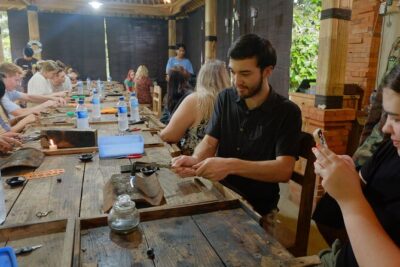 ★ 5.0Ubud Silver Class Jewelry making in baliFrom $36978 reviews
 ★ 5.0PRIVATE Authentic Balinese Cooking Class in Ubud at Putu’s HomeFrom $75644 reviews
 ★ 5.0Balinese Farm Cooking Class by Pemulan BaliFrom $39410 reviews
 ★ 5.0Balinese Cooking Class in SeminyakFrom $66281 reviews
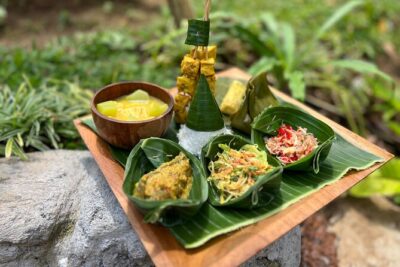 ★ 5.0Balinese Authentic Cooking Class in UbudFrom $39239 reviews
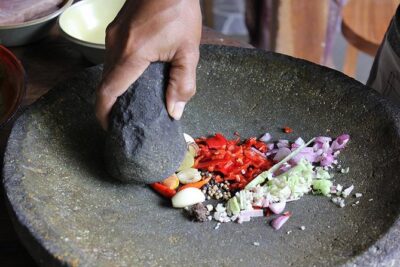 ★ 5.0PRIVATE Balinese Cooking Class in Ubud with Dewa with TransfersFrom $69213 reviews
 ★ 5.0Canggu Scooter LessonsFrom $31195 reviews
Browse the lists this tour appears in