
Reviewed · UBUD, MONKEY FOREST & CAMPUHAN
Ubud: Monkey Forest, Rice Terraces & Sacred Temples
Monkey Forest feels like a backstage pass. I like that this full day pairs close-up macaques with a hands-on canang sari offering workshop, so you get both spectacle and meaning, not just photos. The one catch is it’s a long day (about 12 hours), with several moving parts between sites.
I also appreciate the practical setup: hotel pickup and drop-off, an air-conditioned vehicle, entrance fees handled, and a small group capped at 20. If you’re someone who likes temples with context, the guide quality can make a big difference, and names like Dan, Lara, Ariana, Gunawan, and Haris come up often for being patient and detail-focused. If you’re expecting a slow, chill stroll-and-sun afternoon only, you might find the pacing a lot.
In This Review
- Key highlights worth planning around
- The full-day rhythm: 9:30 start, ~12 hours, and a tight-but-smart route
- Monkey Forest sanctuary: sacred temples and free-roaming macaques
- Goa Gajah (Elephant Cave): carved entrance, bathing pools, and a different kind of awe
- Ubud Palace: traditional Balinese design in a recognizable landmark
- Tegalalang rice terraces: emerald views and the best kind of crowded energy
- Mengening Temple: a quieter purification setting in the jungle
- The canang sari offering workshop: learning through doing
- Price and logistics: where the $69 value actually comes from
- Pacing and comfort: what to expect between stops
- Which kind of traveler should book this?
- My take: should you book Ubud’s Monkey Forest, Goa Gajah, rice terraces, and Mengening?
- FAQ
- What time does the tour start?
- How long is the tour?
- Is hotel pickup and drop-off included?
- Does the price include entrance fees?
- Is the canang sari offering workshop included?
- Do I need a ticket on my phone?
- What group size should I expect?
- What is the cancellation window for a full refund?
Key highlights worth planning around

- Monkey Forest Sanctuary time gives you a realistic sense of how the macaques share the space
- Goa Gajah’s carved entrance and bathing pools add variety beyond the usual temple circuit
- Tegalalang at the early afternoon slot means you’ll hit one of Ubud’s most photographed views during daytime
- Mengening Temple feels quieter, with a purification setting away from the most crowded rhythms
- Canang sari offering workshop turns culture into a hands-on moment you can actually repeat later
The full-day rhythm: 9:30 start, ~12 hours, and a tight-but-smart route
This tour is built for first-timers in Ubud who want the “greatest hits” without the hassle of coordinating tickets, transport, and multiple guides. You start at 9:30 am, and the whole experience runs about 12 hours, so think of it as a full working day, not a half-day excursion.
The route packs several iconic stops: Goa Gajah, Ubud Monkey Forest, Ubud Palace, Tegalalang Rice Terraces, and Mengening Temple. Between sites, you’ll be driving, which is exactly why hotel pickup matters. With an English-speaking guide and an air-conditioned vehicle, you spend more time looking up at carvings and views, and less time figuring out logistics.
Group size is capped at 20, which keeps it social but not chaotic. In practice, that means you can ask questions without shouting over a crowd, especially at the temples where the guide’s explanation helps you see what you’re standing in front of.
More around Ubud, from the Monkey Forest to the Campuhan ridge

Monkey Forest sanctuary: sacred temples and free-roaming macaques
The Sacred Monkey Forest Sanctuary is the star for people who want Bali’s “wait, are these animals really just here?” factor. You’ll walk through leafy paths lined with moss-covered temples and ancient stone carvings, then share the space with hundreds of free-roaming macaques.
What I like about this stop is that it’s not just a monkey photo-op. The sanctuary setting puts the macaques into a sacred landscape, so the visit feels more like a lived place of worship and tradition than a theme park. It also means your camera isn’t the only reason to be there; the stonework and the atmosphere do real work.
Time on-site is about 1.5 hours, which is enough to wander, pause for photos, and still make it to the next temple without feeling rushed. One thing to consider: because the macaques are free-roaming, expect an active environment. If you prefer quiet, controlled animal encounters, you might find this less relaxing than other nature spots.
Goa Gajah (Elephant Cave): carved entrance, bathing pools, and a different kind of awe
Right after the start, you head to Goa Gajah, also known as the Elephant Cave. This is one of those sites that can be easy to skim if you’re only looking for the headline name, but it’s more satisfying when you slow down and read the details.
You’ll spend about 1.5 hours exploring the dramatic carved entrance and the ancient bathing pools around it. The carvings bring you close to the feel of what early religious life looked like here, and the bathing pools give you something tangible to imagine beyond the exterior stone.
This stop also breaks up the day nicely. Monkey Forest can feel energetic and playful; Goa Gajah is quieter and more archaeological in tone. If you’re the type who likes variety—temple, sanctuary, cave/archaeology, viewpoints—this pairing works.
Ubud Palace: traditional Balinese design in a recognizable landmark
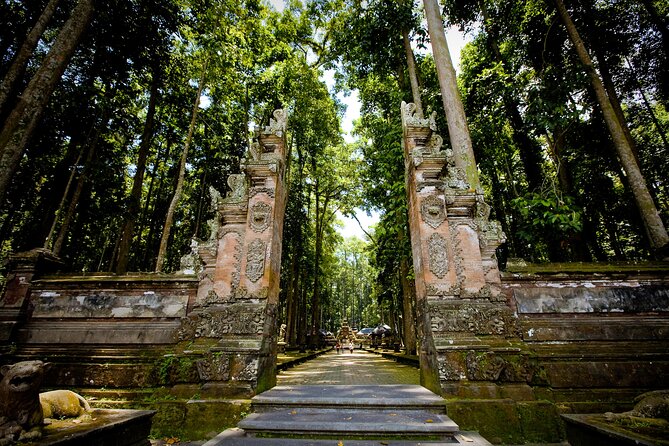
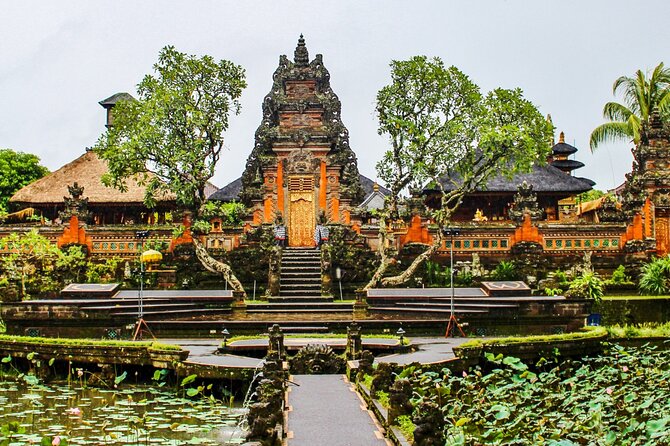
After Goa Gajah, you continue to the Ubud Royal Palace, a landmark most people recognize once they see it. The tour gives you about 1.5 hours, which is a fair window for courtyard-style wandering without it turning into “you’re standing there for an hour while nothing changes” fatigue.
The palace is described around traditional Balinese design, including the courtyard and intricate gateway features. For me, this stop is about learning how Ubud presents itself as a cultural center. It’s a reminder that Ubud isn’t only about rice terraces and scenic photos; it’s also about ceremonial and architectural traditions you can see up close.
You’ll get the most from this stop if you let the guide connect details to everyday Balinese life and belief. Many guides attached to this route—like Gunawan and Haris—are praised for turning the visual into something you understand, not just something you pass by.
Tegalalang rice terraces: emerald views and the best kind of crowded energy
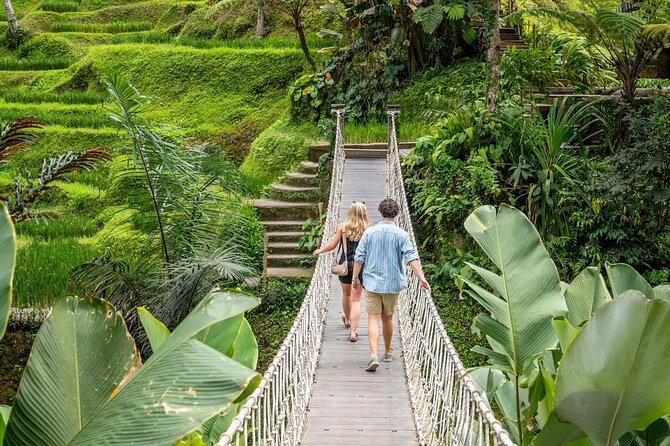
In the early afternoon, you reach Tegalalang Rice Terraces, one of Bali’s most photographed landscapes. You’ll have about 1.5 hours here, timed so you can enjoy the terraced hillside while the day is still bright.
Expect sweeping layers of bright-green paddies carved into the slope. This is the kind of view that makes you stop talking for a second. Even if you’ve seen images before, the scale hits differently when you’re standing on the viewpoint edge and looking down a layered hillside.
One practical note: it’s famous, so it’s not going to feel private. But the tour is still worth it because you’re not trying to navigate the area alone, and you’re getting the context that makes the terraces more than a backdrop.
If you want your photos to look less like everyone else’s, go slow at your first viewpoint and then choose one or two angles rather than trying to cover the whole area in a frantic 30 minutes.
More rice-terrace mornings at Tegalalang and Jatiluwih


Mengening Temple: a quieter purification setting in the jungle
The day shifts into something calmer at Mengening Temple, described as a serene and lesser-known purification temple tucked into a lush jungle setting. You’ll spend about 2 hours here, which is important. That extra time is what makes the stop feel like a reset rather than another checklist item.
The key difference is tone: the temple is positioned as quieter than Bali’s more famous sites, so you’re more likely to experience it at a human pace. Purification temples aren’t just “pretty places to look at”; they’re where ritual meaning matters. That focus fits perfectly with why this tour includes an offering workshop later in the day.
If you’re craving a moment away from constant motion—after Monkey Forest energy and rice-terrace viewpoint crowds—this is the stop that gives you breathing room.
The canang sari offering workshop: learning through doing
This tour includes an offering workshop, and it’s one of the most memorable parts because it turns culture into action. You’ll learn how to make a canang sari offering and understand its meaning in daily Balinese life.
Why this matters for your trip: you’re not just learning facts you’ll forget by dinner. When you build the offering yourself, you start recognizing the idea behind it when you see offerings placed around towns and temples. It’s also one of those experiences you can bring home as a story that feels personal, not generic.
Even if you don’t consider yourself “spiritual,” the workshop gives you a window into how ordinary religious practice can be woven into everyday routines. And because it’s included, you don’t have to figure out where to pay extra or hunt down a separate class.
This is also where the guide’s teaching style really shows. Based on what I’ve heard about guides on this route—people like Lara and Ariana being praised for clear, patient explanations—you should expect the meaning behind what you’re doing, not just the steps.
Price and logistics: where the $69 value actually comes from
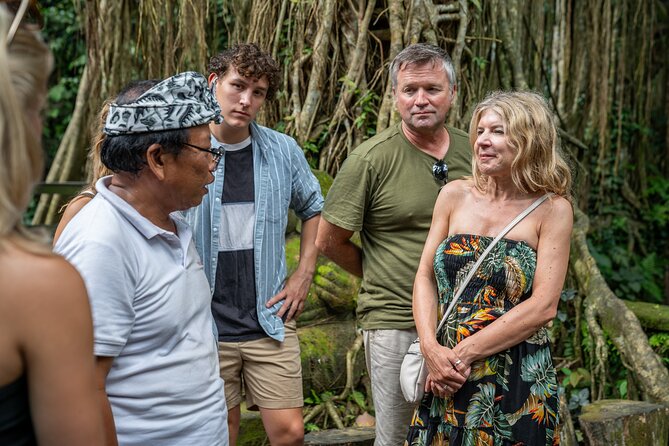
At $69 per person, this tour is priced like a good deal only if you understand what’s bundled. Here’s what you’re getting in the package: hotel pickup and drop-off, an air-conditioned vehicle, an English-speaking guide, entrance fees, bottled water, and the offering workshop.
Entrance fees and guide time are often where day tours quietly inflate. By including those, the tour gives you a “price you can trust” feeling. Add in the practical factor—someone plans the route, handles timings between sites, and keeps you moving without you asking for directions every 20 minutes—and $69 starts to make sense for a full-day circuit.
A final value point: the booking lead time is listed as around 38 days on average, which usually signals this is popular with people who plan ahead. In other words, this isn’t a “last-minute hope it works out” kind of experience if your schedule is fixed.
Pacing and comfort: what to expect between stops
This is a full-day route with multiple temple visits and a nature/viewpoint stop. You’ll spend several hours on your feet and moving through different kinds of environments: sanctuary paths, cave/archaeology areas, palace courtyards, and rice-terrace viewpoints.
The upside is momentum. The day stays interesting because you’re not doing the same thing for hours. The downside is that you need to tolerate change: switching settings from carved stone to macaque paths to carved gateways to terraced views.
You’ll also want to keep expectations realistic about crowds. Monkey Forest and Tegalalang are both major draws, while Mengening is positioned as quieter. That mix is part of the tour’s design: energy in the morning, big views mid-day, then a calmer purification stop to bring the emotional temperature down before you head back.
Which kind of traveler should book this?
This tour is a strong match if you want:
- A one-day hit list of Ubud’s major highlights without planning each stop
- A mix of sanctuary, temples, terraces, and a workshop
- A guide-led day where explanations help you understand what you’re seeing
It’s less ideal if you’re looking for:
- A completely laid-back, minimal walking experience
- A quiet nature day with no animal interaction (Monkey Forest is part of the deal)
If you’re traveling as a couple, solo, or small group, the max 20 format helps keep it friendly and manageable. Families can likely do it too since it’s described as suitable for most travelers, but you’ll still be on a schedule across several stops.
My take: should you book Ubud’s Monkey Forest, Goa Gajah, rice terraces, and Mengening?
Yes, I’d book it if you want Ubud in one well-organized day and you care about more than just photos. The standout value is the pairing of famous sites (Monkey Forest, Tegalalang, Goa Gajah, Ubud Palace) with a meaning-based experience (the canang sari offering workshop) and a quieter purification temple stop (Mengening).
Before you commit, decide whether a long day works for you. If you can handle about 12 hours of temple hopping with breaks for driving and visiting, you’ll likely feel like you got your money’s worth in both sights and learning. If you prefer slower pacing, you might want to pair Ubud highlights with rest time instead of stacking them all in one push.
FAQ
What time does the tour start?
The start time is 9:30 am.
How long is the tour?
It runs for about 12 hours (approx.).
Is hotel pickup and drop-off included?
Yes, hotel pickup and drop-off are included.
Does the price include entrance fees?
Yes, entrance fees are included in the tour price.
Is the canang sari offering workshop included?
Yes, the tour includes an offering workshop, and you make a canang sari offering as part of it.
Do I need a ticket on my phone?
The tour includes mobile ticket access.
What group size should I expect?
This experience has a maximum of 20 travelers.
What is the cancellation window for a full refund?
You can cancel up to 24 hours in advance for a full refund. If you cancel less than 24 hours before the start time, the amount paid is not refunded.
More Temples & Holy Springs



More Rice-Terrace Mornings
More Around Ubud & the Monkey Forest

Still deciding? More Bali days reviewed, from volcano sunrises to island crossings







Ubud, Monkey Forest & Campuhan, compared.
 ★ 5.0All-Inclusive Ubud Private TourFrom $10014,344 reviews
 ★ 5.0Best of Ubud Full-Day Tour with Jungle SwingFrom $568,571 reviews
 ★ 5.0Ubud: Monkey Forest, Jungle Swing, Rice Terrace, and Water TempleFrom $317,160 reviews
 ★ 5.0Best of Ubud 1-Day Private TourFrom $544,451 reviews
 ★ 4.4Ubud Palace Legong Dance Show TicketFrom $63,979 reviews
 ★ 5.0Body Massage Experience in Ubud Traditional SpaFrom $213,506 reviews
 ★ 4.4Ubud Kecak and Fire Dance Show TicketsFrom $62,631 reviews
 ★ 5.0Ubud Cooking Class Bali with Balinese ChefFrom $351,609 reviews
Browse the lists this tour appears in