
Reviewed · UBUD, MONKEY FOREST & CAMPUHAN
Ubud Tour – Monkey Forest, Temple, Waterfall, and Rice Terrace
Ubud can feel like a grab-bag of stops, but this private day keeps it efficient and very manageable, with entrances handled and your route shaped around you. I like the private transportation (no shared van hopping) and I like that your entrance fees are included for every main site. One watch-out: places like the Monkey Forest and Tegenungan Waterfall can get busy, so you’ll want to be ready for crowds and keep an eye on timing.
You’ll start in the morning and ride through classic Ubud highlights without turning the day into a logistics project. Along the way, you’ll see Hindu temples up close, get a proper look at the rice terraces, and also get two arts-and-crafts stops that feel more local than tourist-only. And yes, you’ll have freedom to move at your own pace at each stop—just within the overall 8-hour plan.
In This Review
- Key points to know before you go
- Price and value: what $37 buys you in Ubud
- How the 8-hour schedule really plays: timing and pacing
- Stop 1: Tegenungan Waterfall—15–20 meters, swim conditions, and crowd reality
- Stop 2: Sacred Monkey Forest Sanctuary—gray macaques and temple etiquette
- Stop 3: Puseh Batuan Temple—black palm roof and architecture details
- Stop 4: Tegalalang Rice Terrace—cool shade, irrigation lessons, and the paddy moment
- Stop 5: Mas Carving Center—wood art in an artistic countryside
- Stop 6: Tohpati Village—handweaving batik and a real shopping window
- Guides matter: Jim Beam and Gusti’s value beyond directions
- What to bring (and what to plan for) on this Ubud circuit
- Who this tour suits best (and who might want a different plan)
- Should you book this Ubud Monkey Forest, temple, waterfall, and rice terrace tour?
- FAQ
- What stops are included on this Ubud tour?
- How long is the tour?
- Is hotel or port pickup and drop-off included?
- Are the entrance fees included?
- What is the meeting time?
- Is food included?
- Is this a private tour?
- Can I cancel for a full refund?
Key points to know before you go
- Included admission everywhere means you can budget smarter for this $37 private day.
- Private, English-speaking driver helps you move efficiently and keeps the experience low-stress.
- Tegenungan Waterfall (15–20 m) is a real highlight, and swimming is possible when conditions are clear.
- Sacred Monkey Forest Sanctuary mixes gray macaques with Hindu temples—follow the rules and you’ll be fine.
- Village stops at Mas and Tohpati add craft culture beyond the big sightseeing hits.
- Flexible itinerary lets you adjust based on what you care about most, even within the day’s route.
Price and value: what $37 buys you in Ubud
For $37 per person, this feels like a solid deal for a full 8-hour private outing—mainly because the price is doing heavy lifting in three areas: transport, entrances, and convenience.
First, you’re getting hotel/port pickup and drop-off plus travel by private vehicle. In Bali, that matters. A lot of headaches on day tours come from waiting, regrouping, and squeezing people into shared rides. Here, you keep things simpler.
Second, the tour includes entrance fees to each stop listed in the route. That’s big value when your itinerary has multiple ticketed attractions. Instead of paying one admission after another, you just show up and go.
Third, you get the practical extras that make a difference over a long day: parking fees, mineral water, petrol, and an English-speaking driver. Those costs add up fast if you plan everything on your own.
So the price isn’t just cheap. It’s cheap for what you’re actually getting: a tight circuit of Ubud classics plus craft stops, all in private comfort.
More around Ubud, from the Monkey Forest to the Campuhan ridge

How the 8-hour schedule really plays: timing and pacing
The day starts at 8:30 am and runs about 8 hours total. The planned site time across the stops is roughly half a day, with the rest eaten by driving and moving between areas. That’s normal in Ubud.
The best way to handle this kind of schedule is to keep your pace light at each stop:
- Spend enough time to see the main sights.
- Don’t plan to linger forever, because crowds and travel time can quietly eat your schedule.
- If you want a lot of photos or shopping, choose one longer stop and keep others brisk.
This tour works especially well if you like the idea of hitting major highlights in one go, but you still want breathing room—your group can move independently at each location.
Stop 1: Tegenungan Waterfall—15–20 meters, swim conditions, and crowd reality
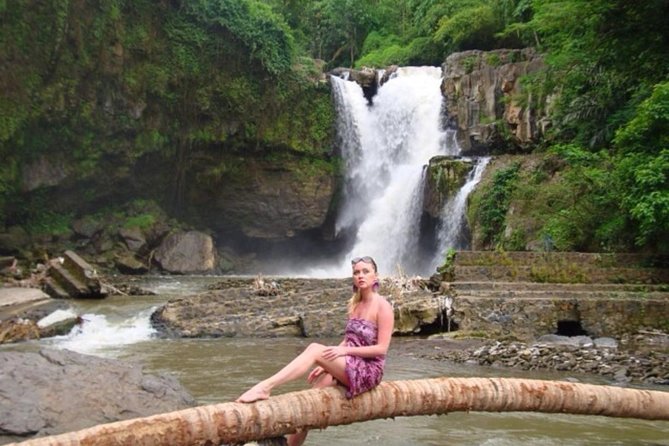
Tegenungan Waterfall is a straightforward start: a waterfall about 15–20 meters tall, with heavy water flow often seen in busy tourist times. The big draw is the view and the energy. The other key detail is that you can swim when the water conditions are clear.
What I like about this opening stop is the mood it sets. You jump right into the island’s natural side before you move into temples and art towns. It’s a great reset after travel days.
A practical consideration: because it’s popular, expect people. If your goal is photos without constant shoulder checks, aim to be ready to move quickly once you arrive. Also, wear or bring something you can handle getting wet—waterfalls are fun, but you don’t want to ruin your day with slippery shoes.
Stop 2: Sacred Monkey Forest Sanctuary—gray macaques and temple etiquette
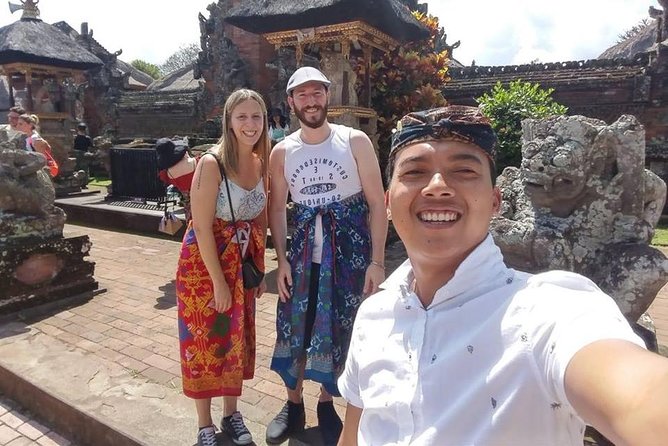
Next up is the Sacred Monkey Forest Sanctuary, where you’ll see gray macaques roaming around Hindu temples in a forest setting. This stop is visually memorable, but it also has a clear rule: monkeys are not zoo props. They’re wild animals living their daily life near people.
That means you’ll enjoy it more if you keep your behavior calm and predictable. Keep small items secure and don’t treat monkeys like entertainment. If you follow basic temple/forest etiquette, you’ll likely get the best experience: watching macaques move through temple spaces without turning it into chaos.
The time here is about 1 hour. That’s usually enough to see the main temple areas and still feel un-rushed. If you’re the type who loves wildlife photos, you’ll want good patience—monkeys move fast and you can’t force a moment to happen.
Stop 3: Puseh Batuan Temple—black palm roof and architecture details
Then you head to Puseh Batuan Temple, a Hindu temple stop with an emphasis on spiritual significance and architecture. One of the standout described features is the black palm roof, which gives the temple a distinctive look compared to places that feel more uniformly painted or modern.
This stop is shorter—about 45 minutes—and that can be a good thing. Temples reward slower observation, but a short visit keeps the day from dragging. You’ll have time to look at the structure, notice details, and still keep the schedule moving.
If you want to make the most of it, focus on one or two things you care about: the roofline, the carvings, or how the temple space is arranged. A focused approach makes a short temple stop feel complete instead of rushed.
More Bali waterfalls, from Tegenungan to the hidden jungle drops


Stop 4: Tegalalang Rice Terrace—cool shade, irrigation lessons, and the paddy moment
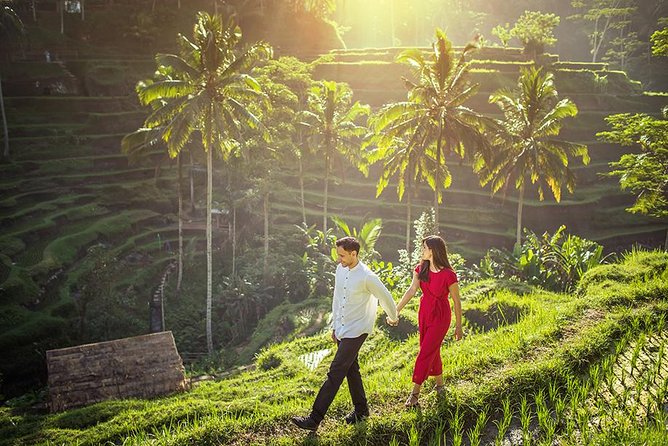
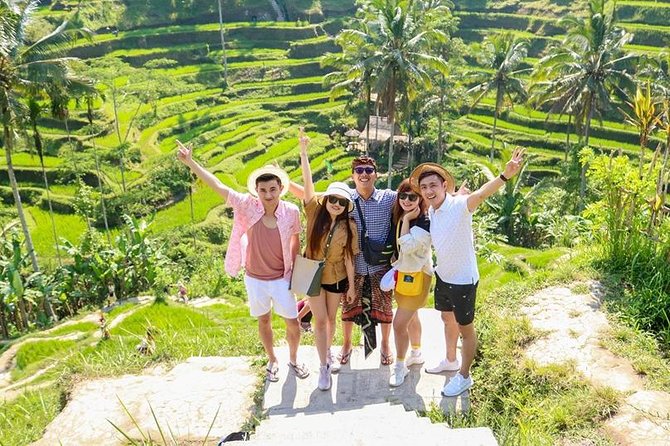
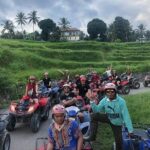
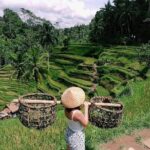
Tegalalang Rice Terrace is one of those Ubud stops where the views do most of the talking. The idea here is to see the rice terrace fields and learn about the traditional irrigation system. You’ll also get a nice cool-down effect from the surrounding greenery and the open air of the terraces.
The best part? When timing is right, you can catch farmers planting traditional paddy. The tour notes that you’ll only see it sometimes—so think of it as a lucky bonus, not a guarantee.
This stop runs about 45 minutes. That’s enough time to walk the viewpoint areas, take photos, and understand the terrace layout without burning your legs. The irrigation angle is also a good reminder: this is not just a scenery stop. It’s an agricultural system built to work with water and slope—very different from what you might expect from a generic viewpoint.
Stop 5: Mas Carving Center—wood art in an artistic countryside
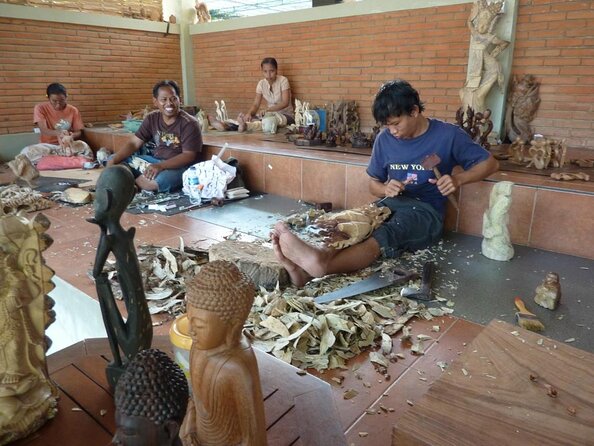
Mas village and its carving center bring the day into arts and craftsmanship. Mas is known as a traditional Balinese village, often described as an artistic countryside, and it’s especially tied to wooden arts.
This stop is about 30 minutes, so it’s not a deep museum-style visit. Instead, it’s a chance to see the craft culture in motion—how the village is recognized for its carvings and how the art shows up in everyday life.
If you like souvenirs that actually feel connected to the place (not just mass-made), this is one of the best times to look. Just keep expectations realistic: with a short stop, you’ll likely do a quick browse and pick something you truly like rather than comparing every vendor.
Stop 6: Tohpati Village—handweaving batik and a real shopping window
Tohpati Village is where you get into handicrafts and handweaving batik. The tour notes that the village is known for batik and that you’ll also have a chance to enjoy the scenery around the area.
This is another 30-minute stop. In practice, that means you’ll want to decide what you’re shopping for quickly. If batik is on your list, treat this as your main window to compare patterns and quality.
One thing I’d do: bring your curiosity, not just your wallet. Even if you’re not buying, you’ll likely enjoy watching the handwork vibe behind the products. And if bargaining matters to you, ask your driver for practical tips—because these village stops can be where your questions pay off.
Guides matter: Jim Beam and Gusti’s value beyond directions
A good driver can turn a standard sightseeing day into a smoother, more helpful experience. Two guide details stuck out from real-world feedback: Jim Beam was praised for being accommodating and offering tips for souvenir purchases and bargaining, plus driving safely. Another guide, Gusti, was described as young and fun, especially great with two small kids, and helpful when families wanted to shape the day around their own pace.
Here’s why that matters to you: the itinerary is set, but the experience isn’t fully fixed. A driver who understands local pacing and shopping dynamics can save you time—both at attractions and in the craft stops.
If you have specific interests, say them early: more time at rice terraces, less time shopping, or where you want to take it easy. This tour is built around the idea that you can customize based on interests.
What to bring (and what to plan for) on this Ubud circuit
This tour includes mineral water and the big-ticket admissions, but you’ll still want to plan for the basics.
- Bring a change plan for wet weather if you’re aiming to swim at Tegenungan.
- Dress respectfully for temple stops, since you’ll be near Hindu sacred spaces.
- If you care about photos, be ready for crowds at Monkey Forest and the waterfall area.
- Food and drinks are not included, so you’ll either grab snacks independently or plan a simple meal break during the day.
Also note: souvenir photos are available to purchase, and donations aren’t included. That means you’re in control of what you spend beyond admissions.
Who this tour suits best (and who might want a different plan)
This is a great fit if you want the classic Ubud highlights—waterfall, monkey sanctuary, temples, rice terraces—without the hassle of arranging multiple separate visits. It’s also ideal if you like private transport and you’d rather spend your energy enjoying than coordinating.
It’s especially good for:
- Families who want a structured day but still need flexibility.
- People who want included admissions to reduce decision fatigue.
- Anyone who wants a balanced mix of nature + culture + craft.
It might be less ideal if you want a slow, unhurried day with long stays at fewer locations. The schedule is efficient, not leisurely. You’ll get a lot of variety, but you won’t have hours and hours at any single stop.
Should you book this Ubud Monkey Forest, temple, waterfall, and rice terrace tour?
If you want one private day that hits the must-see Ubud icons—plus adds craft villages—this is a strong choice for the money. The value comes from included admissions and private transport, and the pacing is built around an 8-hour rhythm that feels doable even with crowds.
Book it if:
- You care about seeing Monkey Forest, Tegenungan Waterfall, a Batuan temple stop, and Tegalalang rice terraces.
- You’d rather pay one package price than juggle multiple tickets.
- You want a driver who can help with practical questions like shopping and pacing.
Skip it or consider a different style if:
- You want a super quiet experience with minimal crowds.
- You prefer fewer stops and longer time at each.
If you’re aiming for a smooth, classic Ubud day, this route is the kind that leaves you feeling like you actually got somewhere, not like you only survived traffic.
FAQ
What stops are included on this Ubud tour?
The tour includes Tegenungan Waterfall, Sacred Monkey Forest Sanctuary, Puseh Batuan Temple, Tegalalang Rice Terrace, Mas Carving Center, and Tohpati Village.
How long is the tour?
The duration is about 8 hours.
Is hotel or port pickup and drop-off included?
Yes. Hotel/port pickup and drop-off are included.
Are the entrance fees included?
Yes. Entrance fees for each attraction on the route are included.
What is the meeting time?
The start time is listed as 8:30 am.
Is food included?
No. Food and drinks are not included.
Is this a private tour?
Yes. It’s a private tour, and only your group participates.
Can I cancel for a full refund?
Yes. Free cancellation is available up to 24 hours in advance for a full refund.
More Rice-Terrace Mornings


More Bali Waterfall Trails
More Around Ubud & the Monkey Forest
Still deciding? More Bali days reviewed, from volcano sunrises to island crossings


Ubud, Monkey Forest & Campuhan, compared.
 ★ 5.0All-Inclusive Ubud Private TourFrom $10014,344 reviews
 ★ 5.0Best of Ubud Full-Day Tour with Jungle SwingFrom $568,571 reviews
 ★ 5.0Ubud: Monkey Forest, Jungle Swing, Rice Terrace, and Water TempleFrom $317,160 reviews
 ★ 5.0Best of Ubud 1-Day Private TourFrom $544,451 reviews
 ★ 4.4Ubud Palace Legong Dance Show TicketFrom $63,979 reviews
 ★ 5.0Body Massage Experience in Ubud Traditional SpaFrom $213,506 reviews
 ★ 4.4Ubud Kecak and Fire Dance Show TicketsFrom $62,631 reviews
 ★ 5.0Ubud Cooking Class Bali with Balinese ChefFrom $351,609 reviews
Browse the lists this tour appears in