
Reviewed · UBUD, MONKEY FOREST & CAMPUHAN
authentic Balinese organic cooking class in Ubud
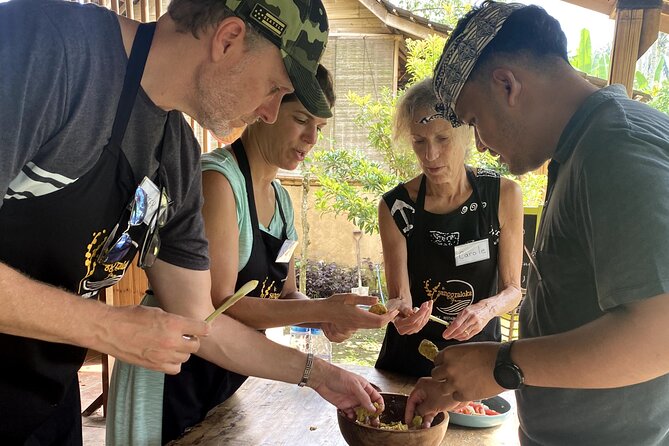
A Balinese cooking class on an organic farm. It’s a hands-on, ingredient-first experience in Ubud that focuses on where your food comes from, then how it turns into classic Balinese dishes. You’ll learn the organic ingredients before you cook, then pick staples directly from the garden/farm during harvesting time.
One thing to consider: since the experience requires good weather, you may need to adapt if conditions are poor.
I also like the small group feel: the class caps at 10 travelers, so the chef can slow down and explain. Plus, it’s not just chopping and tasting; you’ll spend time learning how ingredients work, including what plants are used for and how they’re prepared in Balinese cooking. The likely drawback is that this is a true farm-and-kitchen session, so it’s more active than a standard cooking class with modern conveniences.
In This Review
- Key highlights worth your time
- Organic Balinese cooking in Ubud, focused on real ingredients
- Pickup to the farm: how the day stays easy
- Inside the garden: learning plants as spices and staples
- Cooking with manual tools: slower, hands-on, and easier to remember
- Building six dishes, not one: the payoff of a guided class
- Lunch with a rice terrace view: eating feels like finishing the lesson
- Optional swing and natural waterfall: when to plan a little extra time
- Price and value: why $47 works for what you get
- Who this class suits best (and who should adjust expectations)
- Practical tips so you enjoy every step
- Should you book this organic cooking class in Ubud?
- FAQ
- How long is the organic cooking class?
- Where does the experience take place?
- How much does it cost?
- Is pickup from my accommodation included?
- Is there a mobile ticket?
- What happens at the start of the class?
- Do you pick ingredients yourself?
- Are you cooking Balinese dishes?
- Are lunch and the dishes included?
- What if the weather is poor?
Key highlights worth your time
- Farm pickup plus a welcome drink so you start relaxed, not scrambling
- Organic picking of ingredients during harvesting time
- A garden that functions like a classroom, with plants grown for spices and staples
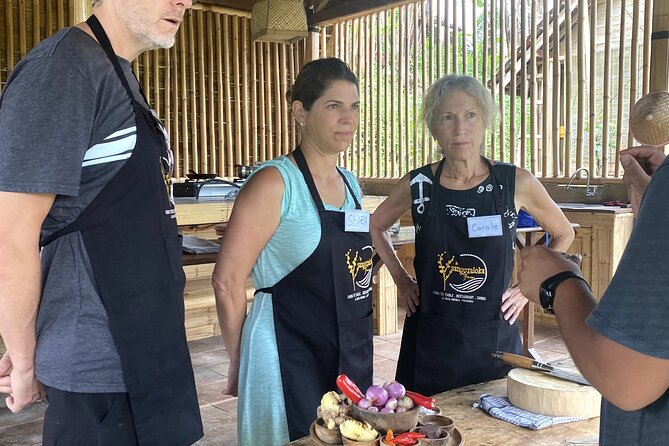
- Manual cooking tools that keep the rhythm old-school and hands-on
- Lunch you made yourself, served during the class
- Optional add-ons like a swing and a natural waterfall, if available that day
Organic Balinese cooking in Ubud, focused on real ingredients
This class is built around a simple idea: the tastiest Balinese dishes start with understanding the ingredients. Instead of jumping straight to recipes, you’ll spend the early part learning about organic produce and how those plants are used in local cooking. That changes the whole experience. You’re not just following steps; you’re building a mental map of flavors and functions.
Ubud is a great place to do this because the food culture there is closely linked to agriculture. Even if you’ve taken cooking classes elsewhere, the organic emphasis makes this one feel more grounded and practical. You’ll see and handle ingredients as living plants, then watch how they get processed and cooked.
More around Ubud, from the Monkey Forest to the Campuhan ridge



Pickup to the farm: how the day stays easy
The experience starts with pickup from your accommodation in Ubud. That matters more than it sounds. Ubud traffic can be unpredictable, and a class like this is time-driven. Being collected means you can show up on schedule and focus on the food part, not the logistics.
Once you’re picked up, you head to the farm area. You’ll get a welcome drink, then the chef explains what the class will cover before you begin cooking. It’s a smart flow: you get context early, so later when you’re picking plants and preparing dishes, everything connects.
Inside the garden: learning plants as spices and staples
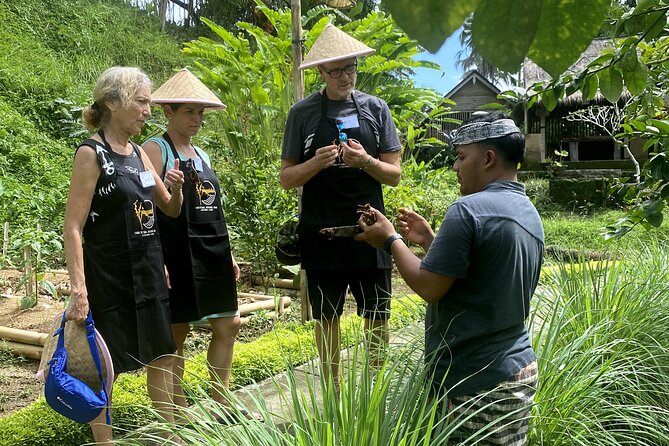
After the intro, you’ll move to the garden space, which is used as part of the learning experience. The garden isn’t just scenic. It’s planted with types of ingredients that can become spices or staple components in Balinese cooking. You’ll learn what those plants are, why they matter, and how they’re used.
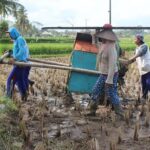
A key moment is the harvesting/picking. You’ll directly pick staples from the farm during harvesting time, and then those ingredients get processed in the kitchen. That farm-to-kitchen timing is where the class feels different. You’re not buying ingredients that already sat around in a box for days. You’re seeing them at the moment they’re ready.
From the class content you’ll learn more than the final dish. In at least one version of the experience, the teaching includes how ingredients can be used for medicinal purposes as well as cooking. Even if you don’t plan to recreate those uses at home, the explanation helps you understand why locals treat these plants as more than just flavor.
Cooking with manual tools: slower, hands-on, and easier to remember
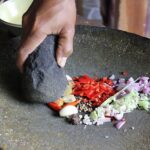
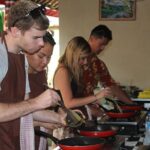
Once the picking and ingredient prep are done, you’ll start cooking. Tools are almost all manual, which changes the pace. It’s not about speed or gadgets. It’s about doing things the way they’re traditionally done and noticing textures, smells, and how ingredients change when processed and heated.
This style is great for your long-term memory. If you learn how something is prepared by hand, you’ll be more likely to replicate it later. It’s also just more fun. There’s a satisfaction to working through steps that feel tactile, especially with a chef guiding you through what you’re doing and why.
And the teaching is structured. You’re guided from the beginning with explanations of Balinese food ingredients and their functions, so you understand what each ingredient contributes. That matters because it turns recipes into skills.
Building six dishes, not one: the payoff of a guided class
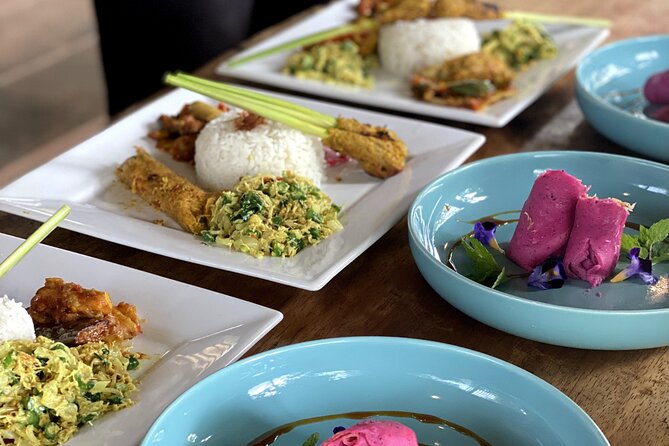
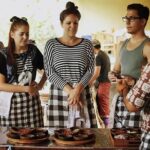
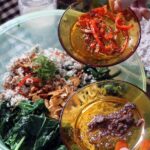
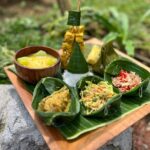
You’ll cook an actual lunch experience made up of multiple dishes. In one of the class descriptions, you’ll be guided through the creation of six different dishes, led by the cooking teacher (named Ninek in one account) and her crew.
That’s a big deal for value. Many cooking classes teach one dish well and call it a day. Here, the structure supports broader learning: you get repeated practice with ingredients, cooking methods, and Balinese flavor logic across several plates. Even if your group makes slightly different choices depending on what’s in season that day, the emphasis remains consistent: hands-on cooking plus ingredient education.
More farm and village cooking classes

Lunch with a rice terrace view: eating feels like finishing the lesson
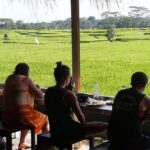
At the end of the cooking session, you’ll eat what you cooked. The meal comes as part of the experience, not as an afterthought, and it’s served with a view of a rice terrace in at least one version of the day.
That view gives the meal context. You picked ingredients in a farm garden, you processed them in the kitchen, and now you’re eating them while looking at the agricultural landscape that surrounds Ubud. Even if you’ve eaten great Balinese food before, this is still more satisfying because you made the dishes yourself.
Expect a genuinely social vibe too. With a group capped at 10, you’ll have room to talk with your chef and fellow participants without feeling lost in a crowd.
Optional swing and natural waterfall: when to plan a little extra time
Some class days include optional activities such as a swing and a natural waterfall. If these are available during your session, they can add a fun, photo-friendly break between the food parts and the final wrap-up.
Just keep expectations grounded: because this is a cooking class first, any add-ons should be treated as extras. If you’re booking mainly for the food and ingredient learning, you’ll still get plenty even if optional activities aren’t offered that day.
Price and value: why $47 works for what you get
At $47 per person for about four hours, this sits in the mid-range for Ubud experiences. The value comes from how much is included and how the session is structured.
What you’re getting for the price:
- pickup and transport in Ubud
- organic ingredient focus and direct picking during harvesting time
- a chef-led cooking session with manual tools
- lunch made by you
- a small group size (up to 10)
For many cooking classes, the cost mostly buys instruction and a meal. Here, a bigger chunk of the value is tied to the farm-garden component and ingredient education. You’re paying for access to the source of the food, plus the time spent teaching you how those ingredients behave in Balinese cooking.
Who this class suits best (and who should adjust expectations)
This is a great fit if you want:
- a hands-on farm-to-table style cooking class
- ingredient education, not just recipes
- small-group attention from the chef and crew
- a real meal you help make, not just tastings
It may be less ideal if you prefer:
- a fast, big-city cooking workshop format
- lots of modern kitchen equipment and quick demos
- a strictly seated experience with minimal physical activity
Also, since good weather is required, plan to be flexible. If conditions are poor, you’ll be offered a different date or a refund. That’s a normal reality for farm-based activities in Ubud.
Practical tips so you enjoy every step
A few practical ideas to make the four hours feel smooth:
- Wear clothes you’re happy to get a little dirty. You’re picking and processing ingredients in a garden setting.
- Plan for early-to-mid morning timing. A pickup included experience usually means you’ll be ready when your driver arrives.
- Bring simple comfort items: closed-toe shoes and sun protection help a lot around farm areas.
- If you care about the optional swing or waterfall, ask about timing on arrival so it doesn’t crowd your cooking and lunch window.
If you like learning by doing, this class style will feel natural. If you’re the type who always wants the how-and-why behind cooking, the ingredient-focused teaching is exactly your speed.
Should you book this organic cooking class in Ubud?
Book it if you want a Balinese cooking class that treats ingredients as the main character. The combination of organic picking, chef-led instruction, manual cooking tools, and lunch you make yourself makes the experience feel complete, not just entertaining.
I’d skip it only if weather worries you too much, or if you want a more scripted, urban-style cooking workshop with minimal outdoor time. Otherwise, for $47 and a small group cap, it’s a strong, practical way to learn Balinese flavors at the source.
FAQ
How long is the organic cooking class?
The class runs for about 4 hours.
Where does the experience take place?
It takes place in Ubud, Indonesia.
How much does it cost?
The price is $47.00 per person.
Is pickup from my accommodation included?
Yes, pickup is offered from your accommodation.
Is there a mobile ticket?
Yes, a mobile ticket is provided.
What happens at the start of the class?
You’re picked up, then you travel to the farm area where you receive a welcome drink and the chef explains the class before you start cooking.
Do you pick ingredients yourself?
Yes. You can directly pick staples from the farm during harvesting time, and those ingredients are processed in the kitchen.
Are you cooking Balinese dishes?
Yes. The chef teaches Balinese food ingredients and their functions as you prepare dishes.
Are lunch and the dishes included?
Yes. You’ll enjoy a lunch made from what you cook during the class.
What if the weather is poor?
The experience requires good weather. If it’s canceled due to poor weather, you’ll be offered a different date or a full refund.
More Bali Reviews & Picks


More Farm & Village Cooking
More Around Ubud & the Monkey Forest
Still deciding? More Bali days reviewed, from volcano sunrises to island crossings





Ubud, Monkey Forest & Campuhan, compared.
 ★ 5.0All-Inclusive Ubud Private TourFrom $10014,344 reviews
 ★ 5.0Best of Ubud Full-Day Tour with Jungle SwingFrom $568,571 reviews
 ★ 5.0Ubud: Monkey Forest, Jungle Swing, Rice Terrace, and Water TempleFrom $317,160 reviews
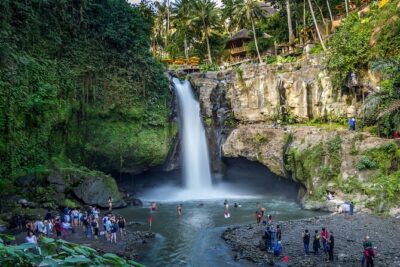 ★ 5.0Best of Ubud 1-Day Private TourFrom $544,451 reviews
 ★ 4.4Ubud Palace Legong Dance Show TicketFrom $63,979 reviews
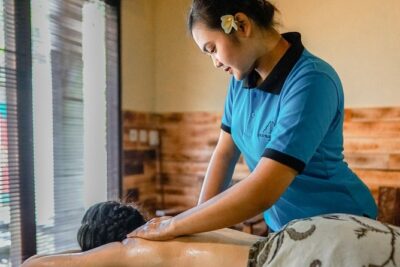 ★ 5.0Body Massage Experience in Ubud Traditional SpaFrom $213,506 reviews
 ★ 4.4Ubud Kecak and Fire Dance Show TicketsFrom $62,631 reviews
 ★ 5.0Ubud Cooking Class Bali with Balinese ChefFrom $351,609 reviews
Browse the lists this tour appears in