
Reviewed · UBUD, MONKEY FOREST & CAMPUHAN
From Ubud: Authentic Bali Farm Cooking School & Organic Farm
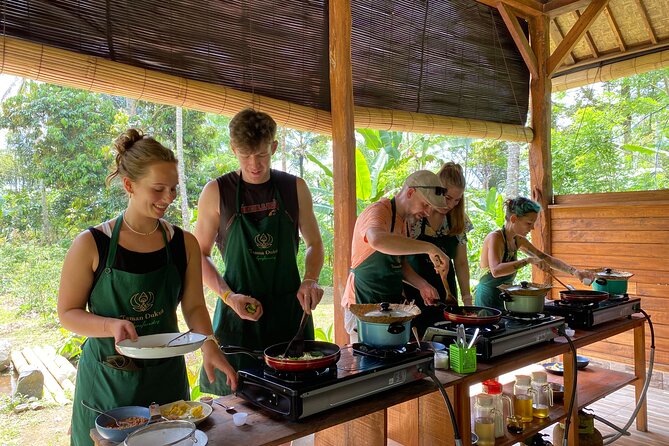
Balinese cooking doesn’t get much more hands-on than this. You start in the area’s food world, then end up cooking under the trees at a community-run organic farm. It’s a small-group Ubud experience built around real ingredients, practical lessons, and eating what you make.
I really like two things here. First, the market + ingredient education makes the flavors click faster. Second, you cook a full 6+ dish meal (including dessert), not just a “demo” where you watch.
The main drawback to watch for is timing: the market tour is for morning sessions, so if you’re on an afternoon schedule you may not get that stop. Also, you’ll do real chopping, so come ready for some kitchen work.
In This Review
- Key highlights you’ll actually feel
- A Farm Cooking Class North of Ubud
- Pickup, Transfers, and How the 5.5 Hours Work
- The Market Stop: Spices, Produce, and a Morning-Session Advantage
- Harvesting at the Organic Farm in Taro Village
- Cooking Six Dishes (Plus Dessert) With Hands-On Instruction
- Lunch Under the Trees and the Take-Home Recipe Book
- Price and Value: Is $38 Worth It?
- Who This Suits Best (and Who Might Want to Adjust Expectations)
- Tips to Make Your Cooking Day Go Smoothly
- Should You Book This Ubud Bali Farm Cooking School?
- FAQ
- How long is the cooking class?
- Is the market tour included?
- How many dishes will I cook?
- What’s included in the price?
- Where do I meet the tour?
- Is there a small group size?
- Do they provide recipes for cooking at home?
Key highlights you’ll actually feel
- Morning market tour that teaches you what to buy, not just where to take photos
- Harvest from the organic farm in Taro Village north of Ubud, with farming tied to the meal
- Cook 6+ Balinese dishes, including dessert, with step-by-step instruction
- Small group size (max 20), which helps you get answers to cooking questions
- Lunch is included plus coffee/tea, bottled water, utensils, and an apron
- Take-home recipe book (print + PDF) with substitutions and technique links
A Farm Cooking Class North of Ubud
This isn’t a fancy cooking show. It’s a community-run cooking school set on an organic farm in Taro Village, about north of Ubud. The farm itself covers about 8,000 square meters, so you get that real “we grow the food we cook” feeling instead of a token garden patch.
What makes it interesting is the way the day connects three parts: food basics, farming reality, and actual cooking. In practice, that means you’re learning why certain ingredients matter, not just how to follow a recipe. And because it ends with you eating a multi-course lunch you made, it’s not just educational—it’s satisfying.
More around Ubud, from the Monkey Forest to the Campuhan ridge



Pickup, Transfers, and How the 5.5 Hours Work
Plan on about 5 hours 30 minutes total. You start at Ubud Central Parking (Jl. Suweta No.18, Ubud), and the experience includes an air-conditioned vehicle for the shuttle/transfer.
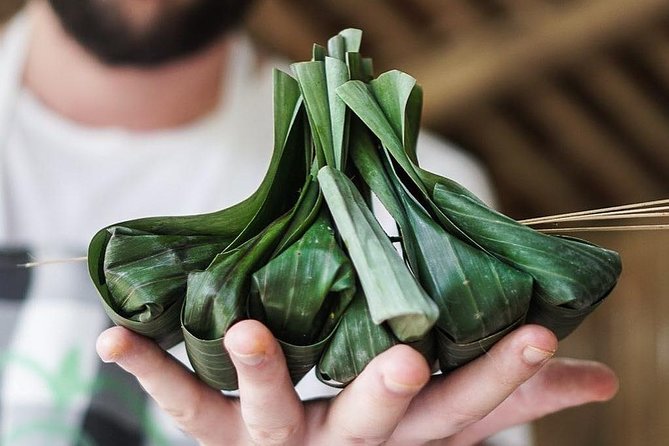
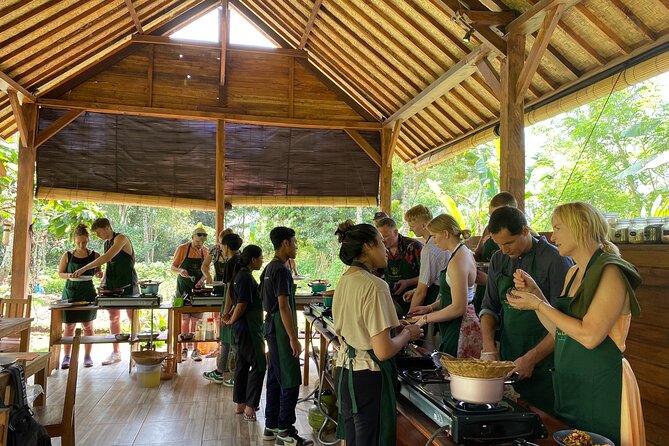
The group is limited to up to 20 people, which matters more than you’d think. Smaller groups move faster, instructors can correct your technique, and you’re less likely to feel like an extra seat at a buffet.
You’ll also get a mobile ticket, so you don’t need to stress about printing anything.
The Market Stop: Spices, Produce, and a Morning-Session Advantage
If you book a morning session, you’ll start with a traditional market tour. This is one of the best parts of the experience because it gives you the flavor map for Balinese cooking: spices, fruits, vegetables, and local items you may not recognize.
Here’s how I’d use this stop. Don’t just look for ingredients you can name. Ask questions about what goes where—sweet versus savory, fresh versus cooked, and how different aromatics behave during frying or grinding. The point isn’t to become a merchant; it’s to understand why the same cuisine tastes so different when you cook it at home.
One note: the market tour isn’t guaranteed for every session type because it’s described as a morning experience. If you want that market education, pick a morning slot.
Harvesting at the Organic Farm in Taro Village
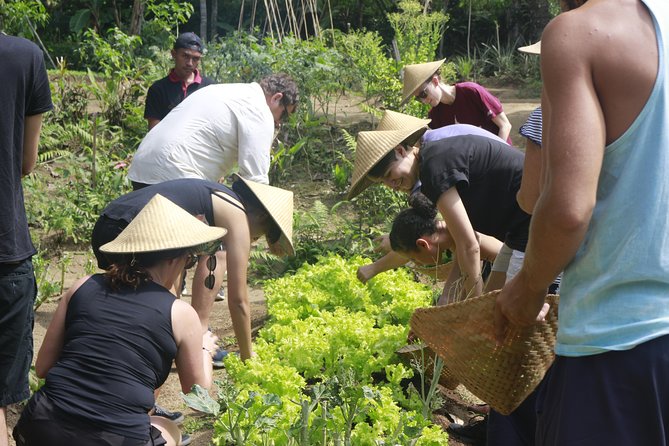
After the market (in the morning schedule), you head to the organic farm setting in Taro Village. This is where you’ll learn sustainable farming practices in a way that connects directly to your lunch.
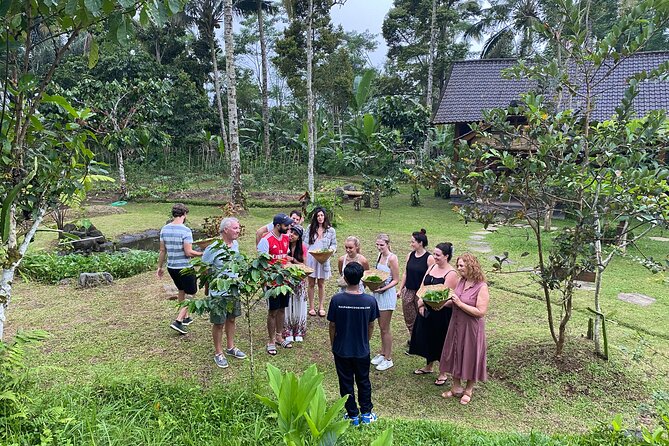
You’ll pick fresh produce from the green garden—so you’re not just hearing “farm-to-table.” You’re literally turning what you harvested into what you eat. People often remember this part because it’s simple and physical: you spot an ingredient, you pick it, and then later it shows up in your plate.
The farm setting also sets the mood. Expect shade, greenery, and that calmer pace you only get when the day isn’t rushed. It’s also where the community element feels real; the farm is part of the teaching, not an add-on photo stop.
Cooking Six Dishes (Plus Dessert) With Hands-On Instruction
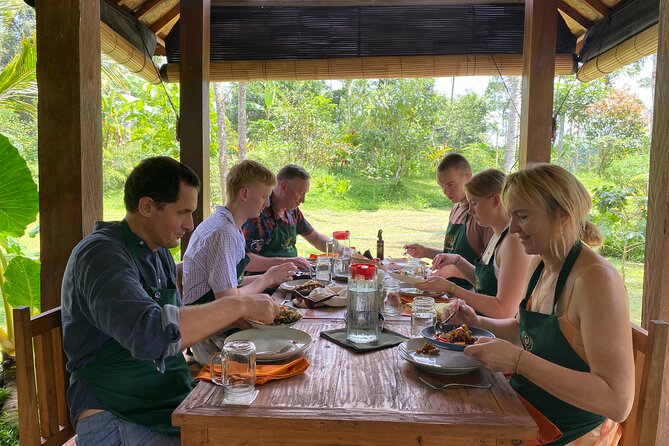
This class is built around preparing six different dishes, including dessert (the description also notes 6+ dishes, so you can expect more than a minimal number of recipes).
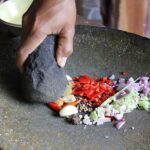
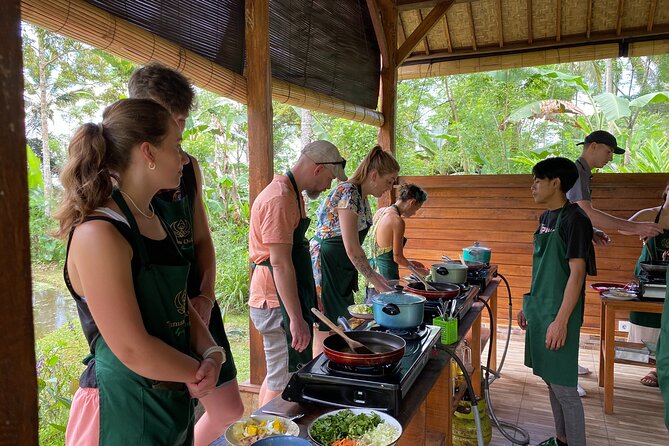
In real terms, that means you’ll get experience with multiple cooking techniques: working with aromatics, combining fresh produce, and seasoning in the Balinese style. And because it’s step-by-step, it’s not only for experienced cooks.
A few practical realities:
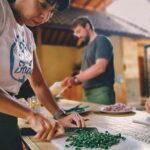
- You’ll be doing real prep work. One review-based drawback mentioned that main-course prep felt a bit chopping-heavy. So don’t arrive thinking you’ll only stir and taste.
- You can get answers. Instructors are consistently described as attentive, and the class is designed so everyone can participate.
- Dietary needs can be handled. The experience states it caters to various diets, and at least one specific case of a nut allergy being accommodated is mentioned in the feedback.
If you’re a nervous beginner, this is still a good bet because the goal is participation. If you’re an advanced cook, you’ll likely enjoy learning how Balinese seasoning combinations behave in dishes you haven’t cooked before.
More farm and village cooking classes
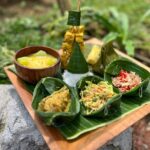
Lunch Under the Trees and the Take-Home Recipe Book
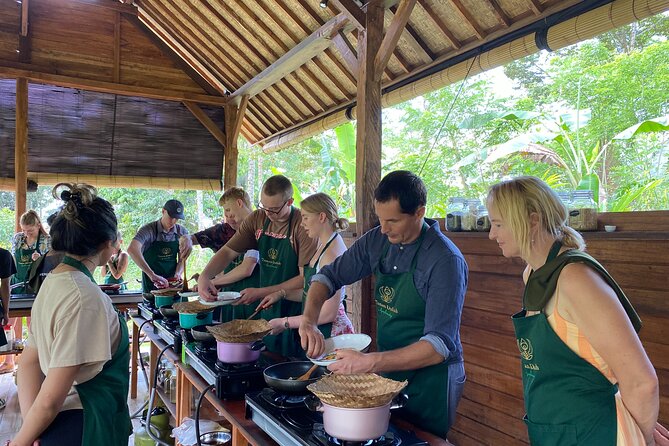
After cooking, you’ll sit down to eat everything you made. Lunch is included, and the meal is described as a multi-course feast. This matters for value: you’re not paying only for class time—you’re getting a full meal made from your own work.
You’ll also have coffee and/or tea, plus bottled water. Alcohol is not included, but it’s listed as available for purchase, which is handy if you want to turn the meal into a longer sit-down.
Then comes the part that helps you remember this experience after Bali. You get a take-home recipe book, provided in print and PDF form. It includes:
- ingredient substitutions
- cooking tips
- links to technique videos
That last bit is useful. When you’re back home and your kitchen looks nothing like the farm classroom, videos and substitution guidance help you recreate the flavors without guessing.
Price and Value: Is $38 Worth It?
At $38 per person, this is priced like a “serious activity,” not a budget half-hour. But for what you get—transport, ingredients, guided cooking, and a full lunch—the value is strong.
Here’s the comparison that matters: you’re paying for a full 5.5-hour experience plus food you eat plus a recipe resource you keep. Many cooking classes charge for instruction only, and you end up spending extra on lunch elsewhere. Here, lunch is part of the deal.
Also, small group size and hands-on participation help justify the cost. If you’re the type who actually wants to learn something you can repeat, it’s money well spent.
Who This Suits Best (and Who Might Want to Adjust Expectations)
This works best if you want:
- a real Ubud cooking class experience tied to ingredients and farming
- hands-on cooking you can repeat later
- a relaxed, nature-based setting with a meal at the end
It’s also a good match for couples or solo travelers who enjoy meeting people while still getting personal attention. One reason is the max 20 group size, which keeps the class from feeling too crowded.
Who might adjust expectations:
- If you’re very short on time, 5.5 hours can feel like a commitment.
- If you hate chopping, be prepared. You may do more prep than you’d expect, especially for some main dishes.
- If you specifically want the market tour, choose a morning session so you don’t miss that starting highlight.
Tips to Make Your Cooking Day Go Smoothly
If you want the smoothest day, keep these in mind:
- Wear clothes that can handle kitchen work. You’ll be picking produce and cooking; you don’t want to worry about minor mess.
- Come hungry—but not empty. The day includes a full lunch, yet you’ll also be tasting as you cook.
- If you have allergies or dietary needs, say it clearly at booking. The class states it can cater to various diets, and there’s evidence they take allergies seriously.
- Check your schedule details so you’re aligned on whether you’re doing the market tour. Morning sessions have it, and it’s a big part of why this class feels educational.
And yes, bring a little patience. This is a real cooking class in a working environment, not a production line.
Should You Book This Ubud Bali Farm Cooking School?
I’d book it if you want an authentic Ubud activity that turns into a skill, not just a memory. The combination of a market stop (morning), harvesting at an organic farm in Taro Village, and cooking a full menu is a rare mix: educational, practical, and genuinely fun.
Skip it only if you strongly prefer low-effort experiences, or if your schedule can’t support the full time. Also, if the market tour is a must, make sure you’re selecting a morning session.
If you’re looking for a cooking class where you actually leave with something useful—flavors, techniques, and a recipe book that helps you recreate the meal—this is a solid pick.
FAQ
How long is the cooking class?
It runs about 5 hours 30 minutes.
Is the market tour included?
Yes, the traditional market tour is included for morning sessions.
How many dishes will I cook?
You’ll prepare six different dishes, including dessert. The description also notes 6+ dishes.
What’s included in the price?
Coffee and/or tea, lunch (all the food you cook), air-conditioned vehicle, cooking utensils, bottled water, and an apron.
Where do I meet the tour?
Meet at Ubud Central Parking on Jl. Suweta No.18, Ubud.
Is there a small group size?
Yes. The experience has a maximum of 20 travelers.
Do they provide recipes for cooking at home?
Yes. You receive a take-home recipe book in print and PDF, with substitutions, cooking tips, and links to technique videos.
More Bali Reviews & Picks


More Farm & Village Cooking
More Around Ubud & the Monkey Forest
Still deciding? More Bali days reviewed, from volcano sunrises to island crossings









Ubud, Monkey Forest & Campuhan, compared.
 ★ 5.0All-Inclusive Ubud Private TourFrom $10014,344 reviews
 ★ 5.0Best of Ubud Full-Day Tour with Jungle SwingFrom $568,571 reviews
 ★ 5.0Ubud: Monkey Forest, Jungle Swing, Rice Terrace, and Water TempleFrom $317,160 reviews
 ★ 5.0Best of Ubud 1-Day Private TourFrom $544,451 reviews
 ★ 4.4Ubud Palace Legong Dance Show TicketFrom $63,979 reviews
 ★ 5.0Body Massage Experience in Ubud Traditional SpaFrom $213,506 reviews
 ★ 4.4Ubud Kecak and Fire Dance Show TicketsFrom $62,631 reviews
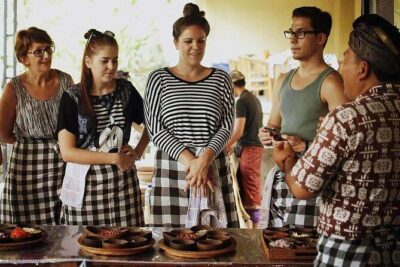 ★ 5.0Ubud Cooking Class Bali with Balinese ChefFrom $351,609 reviews
Browse the lists this tour appears in