
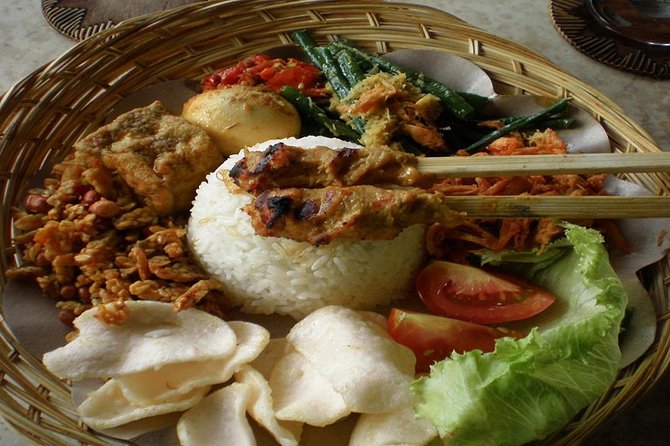
Reviewed · UBUD, MONKEY FOREST & CAMPUHAN
From Ubud : Ubud Balinese cooking class with Market tour
Ubud smells like dinner before you cook. This Ubud class pairs a market stop and scenic rice paddies (morning) with hands-on cooking led by Wayan Aris in a small group capped at 12. You’ll also get a stress-free round-trip ride within Ubud center, plus a welcome iced drink to start things off easy.
I love that the skill focus is real: you build a Balinese spice paste base, then turn it into a set of 9 recipes you can actually recreate later. You’ll eat what you make too, not just nibble for show.
One thing to plan for: the food can be quite spicy, so if you’re sensitive to heat, tell the instructor ahead of time (and bring it up for any vegetarian needs at least a day before).
In This Review
- Key things to know before you go
- Morning Market and Rice Paddies: More than a warm-up
- The Spice Paste Base: Why this class feels easier than it looks
- Cooking nine recipes without feeling lost
- Afternoon add-on: making a canang offering
- Lunch at a Balinese house: the real payoff
- Pickup, timing, and what to bring (so the day stays smooth)
- Price and value: where the $58 is really going
- Who should book this Ubud class (and who might reconsider)
- Should you book this Ubud Balinese cooking class?
- FAQ
- How long is the cooking class in Ubud?
- Do I get hotel pickup and drop-off?
- Is the market tour included every day?
- Do you also visit rice paddies?
- What do you make during the cooking session?
- Do I get recipes to take home?
- Is the canang offering only in the afternoon?
- What if I’m vegetarian?
- Is the experience cancellable for a refund?
Key things to know before you go
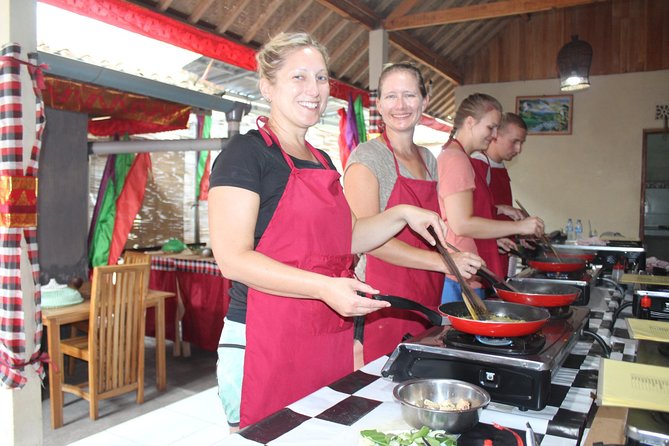
- Small group, up to 12 people: you’ll get room to ask questions and work at your own pace.
- Morning version adds a local market and rice paddies: it’s not only cooking, you also see where ingredients come from.
- Spice paste first, then multiple dishes: this teaches the logic behind Balinese flavor, not just the final plate.
- 9 recipes plus a PDF copy: you leave with a practical recipe set to follow at home.
- Afternoon version includes making a canang offering: a hands-on cultural touch beyond the stove.
- Pickup only guaranteed for Ubud center: outside that area can mean extra charges.
Morning Market and Rice Paddies: More than a warm-up
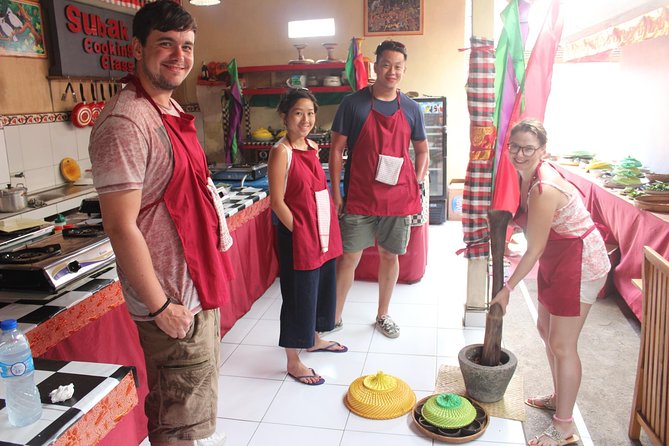
If you’re choosing the morning session, you start with a pickup from your hotel in Ubud, then head out with the group in an air-conditioned vehicle. The day kicks off with a cold ice tea, which is a small thing, but it matters in Ubud humidity. From there, you’ll visit a local market in the Tampaksiring village area. It’s a classic way to understand Balinese cooking because you’re not just watching someone cook—you’re seeing the ingredients and everyday food world first.
After the market, you go to the rice paddies stop. This is one of those moments that helps you connect the dishes to the island’s food system. Even if you only have a few hours, the change of scenery gives you a mental reset before you head into chopping, mixing, and frying.
The trade-off: you’re packing in a lot of stops into the same half-day. If you get overwhelmed by moving around, keep your expectations simple: this is a fast, well-structured cultural-food loop, not a slow wander.
More around Ubud, from the Monkey Forest to the Campuhan ridge



The Spice Paste Base: Why this class feels easier than it looks
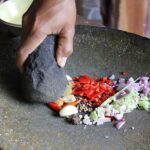
Once you’re back in the cooking area, the lesson structure becomes your roadmap. You start by making a Balinese spice paste that serves as a base for many dishes. That part is key. Instead of learning nine unrelated recipes, you’re learning the repeating flavor engine underneath them.
You also get practical instruction on how to balance flavors. Balinese food is built on layers, and this class teaches the logic behind those layers—how the paste supports the rest of the meal. For me, that makes the biggest difference when you think about doing it again at home. You’re not memorizing steps blindly. You’re learning a method.
Then comes the hands-on part: you’ll cook a total of 9 Balinese dishes. The class includes items such as fried tempe, Balinese chicken, and vegetable soup, along with other local favorites you’ll make from your paste base. You’ll taste during the process, so you can adjust as you go rather than only waiting for the final buffet.
One realistic caution: spice levels. One participant noted the dishes were extremely spicy even for people who like heat. I’d treat that as a signal to communicate your tolerance early. If you want it mild, ask for guidance while you’re cooking, not after the food is already on your plate.
Cooking nine recipes without feeling lost
Here’s what you should expect from the cooking flow. You’ll work through multiple dishes in an organized sequence, usually starting with your paste base and then moving into each dish’s own technique. That structure helps you stay oriented, especially if you’re not an experienced cook.
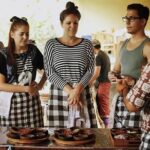
The class is also designed to be small. With a maximum group size of 12, you’re less likely to spend the whole time watching and more likely to get a turn at the tasks—mixing, shaping, frying, and assembling. You should also expect a welcome drink, bottled water, and food tasting throughout, so you’re not running on just nerves and hope.
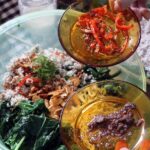
After cooking, you’ll get to eat the results through a buffet-style meal at a Balinese house. This is where the day comes together: you’ll see how your dishes complement each other, and you’ll get a fuller sense of the Balinese flavor balance rather than judging each dish on its own.
And yes, you leave with more than memories. You get a PDF copy of the recipes—9 copies—so you can recreate the lineup later without trying to remember measurements from scratch.
Afternoon add-on: making a canang offering
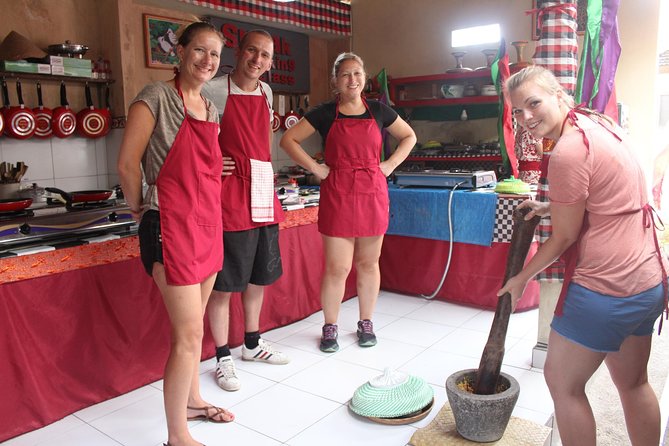
If you book the afternoon class, you’ll swap the morning market and rice paddy stops for a different cultural activity. In the afternoon schedule, you’ll make a canang offering. The important thing here is not to think of it as a “craft project.” It’s part of the food experience, done hands-on, so you’re actively learning and not just observing.
While you’re making it, you’ll be learning the specific steps involved in assembling the offering. Even if you don’t have a background in Balinese customs, the class format should make it approachable. You’re working with guidance, and the activity fits naturally between the earlier and later cooking parts of the day.
A practical consideration: because the afternoon option skips the market and rice paddies, it can feel more cooking-centric and less “ingredient-to-cuisine context.” If you care a lot about seeing local food life up close, the morning schedule is usually the better fit.
Lunch at a Balinese house: the real payoff
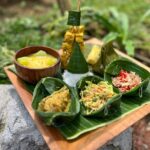
A cooking class is only half the story if you don’t eat well at the end. This one includes a buffet meal at a Balinese house, so you’re not limited to a few tasting bites. It’s a chance to sample the full set of what you made, and it gives you perspective on portion sizes and how dishes work together.
You’ll already have tasted during cooking, so the buffet isn’t a cold surprise. It’s more like a final course where you can slow down, compare flavors, and decide what you’d want to remake first at home.
If you’re traveling with family, this meal matters. Kids and picky eaters often struggle with cooking-only formats. A buffet gives people options and makes it easier to find something that works. Just remember the heat factor: the “spicy” note is something you should plan for if you or your family members have a low spice tolerance.
More farm and village cooking classes

Pickup, timing, and what to bring (so the day stays smooth)
This experience runs about 5 hours. Pickup is offered in Ubud, and pickup/drop-off is included for Ubud center. If you’re outside that area, you can still go, but it comes with additional transport charges. To avoid surprises, confirm your exact pickup point when you book.
You’ll travel in an air-conditioned vehicle. That’s a real comfort upgrade in Ubud, especially if your day overlaps the hottest parts of the afternoon.
What to bring:
- Your own camera or phone if you want photos (the class notes you should bring a camera for pictures).
- Cash for any extra purchases. There’s also a reminder that cash may be needed for a purchase or to handle out-of-area transport charges.
- If you’re vegetarian, request it at least a day before the class. If you don’t, the default dishes may not match your needs.
Also, alcoholic drinks are not included, but you can purchase them if you want.
Price and value: where the $58 is really going
At $58 for about 5 hours, the value isn’t just the cooking. You’re paying for a full “food day” structure: pickup in Ubud center, a welcome drink, bottled water, guided visits (morning market and rice paddies for morning sessions), hands-on cooking for 9 recipes, tastings, a buffet meal, and a PDF recipe set.
That mix is what makes the price feel reasonable. Many cooking classes teach you a single technique or one menu. This one builds around a spice paste base and then uses it across a set of dishes, which is a more transferable skill. The market (morning) and rice paddies stop help you understand the ingredients and island context, even though the time is short.
If you’re in Ubud for a limited window and want something both practical and memorable, this is one of the better ways to spend half a day without it feeling like a tour-bus checklist.
Who should book this Ubud class (and who might reconsider)
This experience is ideal if you:
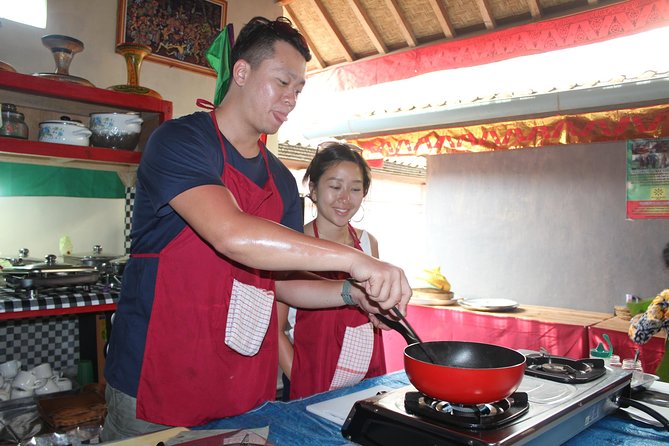
- Want a hands-on cooking class, not a lecture.
- Like the idea of learning the logic behind Balinese flavor through a spice paste base.
- Prefer small groups (maximum 12) so you can ask questions and actually cook.
- Want a take-home recipe set via PDF so the class continues after your vacation.
It’s also a strong family pick. One family experience highlighted a multi-generational setup with a guide sharing local information on the road, plus a cooking class that held everyone’s attention. If you’ve got kids who get bored on long walking tours, the cooking part keeps things moving.
Consider skipping (or at least picking the right session and speaking up) if:
- You’re very sensitive to spice and don’t want heat. Tell the instructor up front so you can adjust during cooking.
- You’re staying outside Ubud center and don’t want any extra transport costs. Pickup outside Ubud center can add fees.
- You want a slow, unstructured cultural day. This runs on schedule and packs in several elements.
Should you book this Ubud Balinese cooking class?
I’d book it if you want a practical, food-first Ubud experience: market context in the morning, rice paddies for scenery, then a real cooking lesson where you make nine dishes and leave with recipes. The small group size and included pickup in Ubud center make it low-stress, and the buffet meal turns learning into something you can enjoy right away.
I’d also bring one clear expectation: you may need to manage spice levels. If you’re cautious, speak up before cooking starts and ask for help adjusting heat while you’re cooking—not after.
FAQ
How long is the cooking class in Ubud?
It runs for about 5 hours.
Do I get hotel pickup and drop-off?
Yes, pickup and drop-off are included for Ubud center. Drop and pick up outside Ubud center may require additional charges.
Is the market tour included every day?
The traditional market visit is only included for the morning class.
Do you also visit rice paddies?
Yes, the rice paddies visit is included for the morning class.
What do you make during the cooking session?
You will make 9 Balinese recipes, using a Balinese spice paste base. Dishes mentioned include fried tempe, Balinese chicken, and vegetable soup.
Do I get recipes to take home?
Yes. You receive a PDF copy of the 9 Balinese recipes.
Is the canang offering only in the afternoon?
Making an offering called canang is included only for the afternoon class.
What if I’m vegetarian?
You should request a vegetarian option at least 1 day before the class.
Is the experience cancellable for a refund?
Yes. You can cancel up to 24 hours in advance for a full refund.
More Bali Reviews & Picks


More Farm & Village Cooking
More Around Ubud & the Monkey Forest
Still deciding? More Bali days reviewed, from volcano sunrises to island crossings










Ubud, Monkey Forest & Campuhan, compared.
 ★ 5.0All-Inclusive Ubud Private TourFrom $10014,344 reviews
 ★ 5.0Best of Ubud Full-Day Tour with Jungle SwingFrom $568,571 reviews
 ★ 5.0Ubud: Monkey Forest, Jungle Swing, Rice Terrace, and Water TempleFrom $317,160 reviews
 ★ 5.0Best of Ubud 1-Day Private TourFrom $544,451 reviews
 ★ 4.4Ubud Palace Legong Dance Show TicketFrom $63,979 reviews
 ★ 5.0Body Massage Experience in Ubud Traditional SpaFrom $213,506 reviews
 ★ 4.4Ubud Kecak and Fire Dance Show TicketsFrom $62,631 reviews
 ★ 5.0Ubud Cooking Class Bali with Balinese ChefFrom $351,609 reviews
Browse the lists this tour appears in