
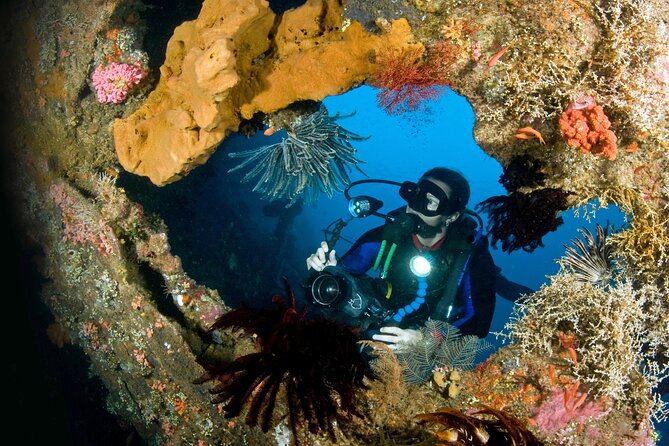
Reviewed · SCUBA DIVING & THE TULAMBEN WRECK
PADI Open water Course in Tulamben – Get certified & dive anywhere in the world
Learning scuba in Tulamben feels surprisingly calm.
I like how the course keeps groups small (max 6) and how instruction stays patient and step-by-step, including the coaching style you’ll hear about with instructor I Made Sutama. For a first timer, that attention matters when you’re learning control, breathing, and confidence at the same time.
One possible drawback: it’s a full 3-day run starting at 8:00 am, and lunch isn’t included, so you’ll want to plan for food between sessions.
In This Review
- Key highlights to know before you go
- Tulamben is built for first-timers: calm water, real reef skills
- The 3-day rhythm: online theory that supports your real skills
- Day 1 in confined water: build control before the open ocean
- Ocean sessions 1–4: using skills in Tulamben’s real conditions
- Who you’re learning with: certified instruction and a small-group feel
- Price and value: what $325 covers and where you’ll spend extra
- Equipment and support: the unsexy part that affects everything
- Meeting time and daily logistics: plan for an early start
- Where Tulamben fits into your Bali trip
- Should you book this PADI Open Water course in Tulamben?
- FAQ
- How long is the PADI Open Water course in Tulamben?
- What certification do I earn?
- What depth will my certification allow?
- Is the theory part online?
- Can I do the theory before the course starts?
- What happens on the first day?
- How many ocean sessions are there during the course?
- Is pickup and drop-off included?
- Is scuba equipment included?
- What costs are not included, and what if weather cancels the activity?
Key highlights to know before you go
- Worldwide PADI Open Water certification recognized for scuba travel
- 18 meters max depth by the end of the course
- PADI e-learning theory you can do before or during the 3 days
- Confined water (pool) first, then ocean training sessions 1–4
- Tulamben-based local guides who know the reef and typical conditions
- Small group size (max 6) for more hands-on attention
Tulamben is built for first-timers: calm water, real reef skills
Tulamben is a practical choice if you want your training to feel steady instead of chaotic. The area is known for gentle current around the local sites, which makes it easier to learn buoyancy and control without fighting the ocean the whole time. That translates into faster confidence, and fewer moments where you feel rushed.
What I’d also bet you’ll appreciate is the setup: the program runs from a fixed base in Tulamben, so your underwater guides are local and familiar with what’s down there. That familiarity matters for first-timers because it affects everything from where you’ll practice skills to how you’ll handle real-world conditions.
The goal here is not just “seeing fish.” It’s learning the basics of scuba so you can use them anywhere later. By the end, you’re working with a globally recognized certification path to 18 meters, which is the first real milestone in scuba.
More scuba trips, from the Tulamben wreck to Menjangan
The 3-day rhythm: online theory that supports your real skills
This course is about timing. The theory is done through PADI e-learning, then reviewed with a certified instructor. You can do that study before the start or while you’re on the 3-day schedule, so you’re not forced into one rigid option.
That structure is valuable because it prevents the classic mistake: learning facts but not connecting them to what you’ll do in the water. When you study the material ahead of time, you’ll recognize terms during training right away. When you study it during the course, your instructor can still connect each concept to the next skill you practice.
Expect the schedule to feel like a course, not a casual excursion. Starting at 8:00 am means you’ll want a decent breakfast and a calm morning mindset—because you’ll be putting gear on, moving carefully, and learning new routines.
Day 1 in confined water: build control before the open ocean
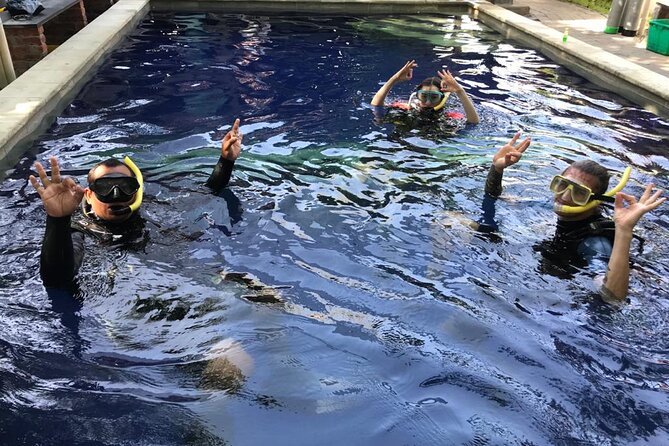
The first day is confined water (pool) training. This is where you learn the “plumbing” of scuba: how breathing works with the regulator, how to manage your buoyancy, and how to handle key procedures in a safe, controlled environment. For many students, this is the least glamorous part—but it’s the part that makes the ocean days actually fun.
Confined water is also where you’ll practice technique with your instructor close by. That matters because first-timers often feel overwhelmed by gear, timing, and body position all at once. A calm, attentive teaching style makes those early moments feel manageable instead of stressful.
If you’re new to underwater learning, the best mindset is simple: focus on one thing at a time. Your instructor will guide you step-by-step, and once your body starts to feel less “clunky” in the equipment, the learning sticks.
Ocean sessions 1–4: using skills in Tulamben’s real conditions
Days 2 and 3 shift into ocean training sessions 1 to 4. This is where your pool skills get translated into the water you actually care about—real visibility, real entry/exit, and real navigation of your own comfort.
Tulamben is beginner-friendly not because it’s boring, but because conditions are often gentle around the sites used for training. That usually means you can concentrate on the fundamentals: steady breathing, staying at the right depth, and using your body to stay neutral rather than grabbing your way through problems.
Also, don’t underestimate the value of having local guides. When your instructor and team know the reef and local conditions, they can plan where skills make the most sense, and they can respond quickly if anything feels off. In student feedback, you’ll often see themes like relaxed teaching and careful support during tricky moments—exactly what you want during your first open-water experience.
And while your course isn’t a photo-expedition by default, Tulamben’s underwater world can still be exciting. It’s the type of place where students often remember the underwater scenery because it’s used to teach practical skills, not because it’s being “shown off.”
Who you’re learning with: certified instruction and a small-group feel
This course is led by a certified PADI instructor, and the program is capped at six students. That small group size is one of the biggest practical advantages for beginners. It means your instructor can actually watch what your hands and body are doing, not just check that you’re present.
One standout mentioned in feedback is the teaching style of I Made Sutama—patient, attentive, and relaxed. That combination is gold for first-timers, because a tense instructor can turn basic skills into a mental fight. A teacher who stays calm helps you keep your head in the moment and follow instructions without overthinking.
The team also emphasizes responsive communication. If you’re the type who likes to ask questions (you should be), you’ll likely find it easy to get clear answers before you arrive and during the learning period.
Finally, equipment is included—so you’re not stuck figuring out rentals or last-minute costs once you’re in Bali.
Price and value: what $325 covers and where you’ll spend extra
At $325 per person, this program sits in a reasonable range for a PADI Open Water pathway when you compare what’s typically included: a certified instructor, scuba equipment, and pickup/drop-off around the Tulamben area. It also includes community contributions plus porter and park fees, which matters because local diving operations often depend on those kinds of support costs to run responsibly.
Where you should budget extra:
- Lunch (not included)
- Camera rental and digital souvenir photos/videos (available to purchase)
So the true cost isn’t just the headline price. If you like having a full day plan with fewer stops, you’ll want to add a lunch budget and maybe a snack strategy. Also consider that you’ll likely be wearing gear for multiple hours, so basic comfort items—water, sun protection, and a light layer—can make your day smoother even if they’re not part of the listed inclusions.
In short: you’re paying for structured certification training with real instructor time, not just access to an underwater location.
Equipment and support: the unsexy part that affects everything
You’ll use included scuba equipment, which removes a big hassle for visitors. Clean, well-prepared gear is more than comfort—it helps you learn faster. If equipment is adjusted correctly, your buoyancy and breathing feel more predictable, and you can spend your attention on skills rather than fighting fit problems.
Also, you get pickup and drop-off around the Tulamben area. That may sound basic, but for early starts at 8:00 am, it makes the day easier. You don’t want your first scuba day to be a logistics puzzle. You want to show up, gear up, and start learning.
If you’re worried about communication, prioritize instructors and staff responsiveness. Feedback highlights that the team tends to answer quickly and keep contact smooth. That’s useful when you have questions about what to bring, where to meet, or how to handle the theory portion.
Meeting time and daily logistics: plan for an early start
The course starts at 8:00 am. That means you’ll want to be ready early—not only for transportation, but also for the calm focus needed once gear and procedures start. If you run on Bali vacation time, treat this as an exception. Early mornings keep the training on track and usually improve how the day feels.
The program also depends on decent weather. If conditions aren’t suitable, the experience can be canceled and you’ll be offered another date or a full refund (per the policy). That’s worth planning around, especially if you have fixed flight schedules.
Moderate physical fitness is required. That doesn’t mean you need to be an athlete, but you should be comfortable with being active while wearing equipment and following instructions consistently. If you have health concerns, ask before committing.
Where Tulamben fits into your Bali trip
Tulamben isn’t just “another Bali activity.” It’s a setup designed for scuba training: you’re based where the ocean learning happens, with guides who know the area. That reduces travel friction compared to trying to learn far from the training center.
If your Bali plan includes multiple stops, you’ll find this course works best when you keep a little breathing room in your schedule. A 3-day certification run is not a quick sightseeing add-on. It’s structured training, and your body needs time to reset between sessions.
For many people, the payoff is real: once you’re certified, you can book scuba experiences anywhere in the world with the confidence that your fundamentals were taught properly.
Should you book this PADI Open Water course in Tulamben?
If you want a worldwide PADI Open Water credential and you like the idea of small groups, this course is a strong choice. The combination of pool skills first, ocean sessions 1–4, local Tulamben setup, and attentive instruction (including the patient style associated with I Made Sutama) makes it especially practical for true beginners.
I’d skip it only if you’re uncomfortable with the pace of a 3-day program starting at 8:00 am, or if you know you’ll struggle with the moderate fitness expectations. And if lunch planning stresses you out, treat that as a heads-up to budget for food.
If you’re excited about learning scuba basics and you want them taught calmly in a place that supports beginner-friendly conditions, I think this is a smart booking.
FAQ
How long is the PADI Open Water course in Tulamben?
The course is 3 days (approx.).
What certification do I earn?
You earn a PADI Open Water certification, the first level of scuba training recognized worldwide.
What depth will my certification allow?
By the end of the course, you will be certified to dive to 18 meters.
Is the theory part online?
Yes. The theory is done online via the PADI e-learning platform and reviewed with the certified instructor.
Can I do the theory before the course starts?
Yes. You can complete the e-learning before the start, or do it during the 3 days.
What happens on the first day?
On the first day, you do confined water dives (pool) to learn basic scuba skills in a safe environment.
How many ocean sessions are there during the course?
The second and third days include ocean dives (open water dives 1 to 4).
Is pickup and drop-off included?
Yes, pickup and drop-off around the Tulamben area is included.
Is scuba equipment included?
Yes. Use of scuba equipment is included.
What costs are not included, and what if weather cancels the activity?
Lunch is not included, and camera rental or digital souvenir photos/videos are available for purchase but not included. If the activity is canceled due to poor weather, you’ll be offered a different date or a full refund, but cancellations by you are non-refundable and cannot be changed.
More Bali Reviews & Picks
More Scuba & Wreck Dives
Still deciding? More Bali days reviewed, from volcano sunrises to island crossings
Scuba Diving & the Tulamben Wreck, compared.
 ★ 5.0Open Water Course in Nusa Lembongan – Get Certified on remote island (next Bali)From $461864 reviews
 ★ 5.02 Days Discover Scuba Diving in Nusa Lembongan – Scuba InitiationFrom $151506 reviews
 ★ 5.0Open Water Course in Tulamben – Get Certified in BaliFrom $376495 reviews
 ★ 5.0Bali Diving for Beginners: Tulamben Liberty WreckFrom $89367 reviews
 ★ 5.0Discover Scuba Diving in Tulamben – Diving Initiation in Bali best diving sitesFrom $89353 reviews
 ★ 5.0Advanced Open Water Course – Advanced Certification in Lembongan (next to Bali)From $431222 reviews
 ★ 5.05 Fun Dives in Nusa Lembongan (for certified divers) – Swim with a Mola MolaFrom $256205 reviews
 ★ 5.0Scuba Diving in Nusa Penida – Manta PointFrom $175198 reviews
Browse the lists this tour appears in