
Reviewed · UBUD, MONKEY FOREST & CAMPUHAN
Private Balinese Cooking Class in Ubud at Santika’s Home
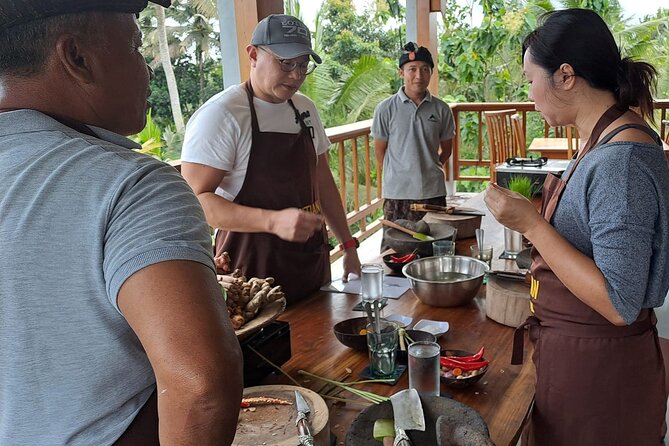
Cooking in a rice-field home beats restaurant food. You’ll get a private Balinese cooking class with chef Santika in Pesalakan, about a 20-minute drive from central Ubud, with an optional market stop to pick ingredients like cassava, ferns, lemongrass, and bananas. I especially love the hands-on setup, where you cook alongside the chef at your own station, and I love that the flavors come straight from local ingredients you use in the meal. The main thing to weigh is transport: pickup is included only for hotels within roughly 10km of Santika’s home, and staying farther out may cost extra.
After pickup, the flow is simple and satisfying. You may visit the local market first, then head to Santika’s open kitchen in a home surrounded by rice fields, where you’ll cook with local spices and taste what you make. I also appreciate the flexibility for different diets, since vegetarian, vegan, lactose-free, and gluten-free options are available if you request them ahead of time. Just know the menu can vary by season, so you’re signing up for Balinese home cooking, not a fixed script.
In This Review
- Key highlights you’ll actually care about
- Cooking in Pesalakan: a calmer Ubud base than the center
- Optional market tour: seeing cassava, ferns, lemongrass, and bananas up close
- Santika’s open kitchen: what hands-on really means here
- What you’ll cook: Balinese daily dishes built on local spices
- Meal time: eating what you made (and why that matters)
- Price and value: $68 per person with transport and a full meal
- Pickup, timing, and how to plan your day around it
- Who this is best for (and who might skip it)
- Should you book Santika’s Balinese cooking class?
- FAQ
- How long is the private Balinese cooking class in Ubud?
- Is the cooking class private?
- Does the experience include hotel pickup and drop-off?
- Is there a market visit?
- What ingredients do you see or use on the market tour?
- What dietary options are available?
- Do you cook, or is it mostly watching?
- Are there any rules about cancellation?
- Are service animals allowed?
Key highlights you’ll actually care about
- Chef-hosted, private class: It’s only your group, even though Santika’s property functions as a homestay.
- Market-to-stove option: If you choose it, you’ll tour a local market before cooking with what you find.
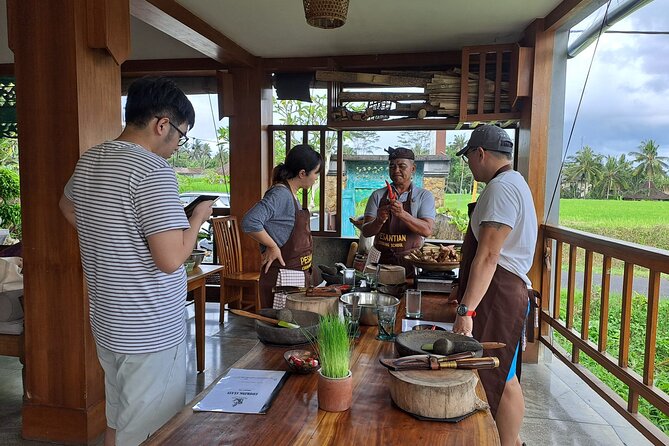
- Your own cooking station: Chopping board, motor and pestle, and a stove are part of the hands-on experience.
- Open-air kitchen feel: You cook in an open setup at Santika’s home kitchen rather than a closed studio.
- Dietary-friendly by request: Vegetarian, vegan, lactose and gluten-free options are available when you book.
Cooking in Pesalakan: a calmer Ubud base than the center
Ubud is busy by Bali standards. Pesalakan village is quieter, rural, and framed by rice fields. That change in setting matters because it makes the class feel less like a ticketed activity and more like being invited into a real neighborhood kitchen.
Chef Santika and his wife run their homestay for travelers, and Santika is the one doing the cooking instruction. You’ll be learning from someone who cooks for daily life, not a kitchen staged only for visitors. That comes through in the pace of the experience: it’s friendly, practical, and focused on getting you from ingredients to finished dishes.
You should also plan for the drive. Santika’s home is about 20 minutes from Ubud city center, so you’re trading convenience for atmosphere. If you’re staying right in central Ubud, you’ll likely appreciate the short commute. If you’re outside the 10km pickup area, expect transportation logistics to matter more.
More around Ubud, from the Monkey Forest to the Campuhan ridge



Optional market tour: seeing cassava, ferns, lemongrass, and bananas up close
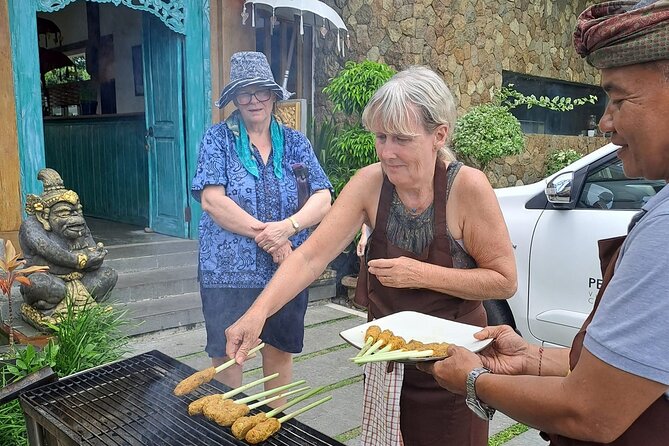
The big decision here is whether you want the market + cooking version. If you choose it, you’ll go to a local market first and get a guided look at Balinese ingredients. This is the part that helps the class make sense, especially if you don’t already know your way around regional produce.
The market tour can include vegetables and aromatics like cassava, ferns, lemongrass, and bananas. You may also have time to buy spices or a few vegetables that are in season, which you’ll later use in your meal. For me, that’s the practical magic: it turns the cooking lesson into a story you can taste.
A market stop isn’t automatically better. It adds time and involves walking around a real local setting. But if you like understanding where flavors come from, it’s a smart upgrade. Bring that curious-food-lifestyle mindset, and you’ll get more out of the cooking section afterward.
Santika’s open kitchen: what hands-on really means here
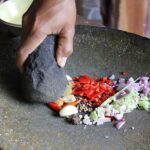
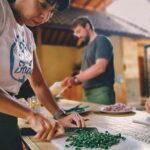
The cooking part is about 1.5 hours of direct work at Santika’s home kitchen. You’ll join the chef and work alongside him rather than watching from the sidelines. The class is set up with your own area, including a chopping board, motor and pestle, and a stove, so you can actually practice the techniques.
That motor and pestle detail is a big deal. In Balinese cooking, grinding spices is often where the aroma builds. Having the tool in front of you means you’re not just learning recipes; you’re learning how textures and fragrances change when spices are ground fresh.
The kitchen setting is open, which keeps things airy and also makes it feel less like a classroom. You’ll be able to ask questions as you go and adjust if something doesn’t behave the way you expected. And because it’s private for your group, you’re not competing with strangers for attention.
One extra note to set expectations: Santika runs a homestay too, so you may be on a shared property. The experience is still private—your group is the only one participating in the class—but it helps to remember you’re visiting a home base that lives year-round.
What you’ll cook: Balinese daily dishes built on local spices
You won’t just make one dish and call it a day. The class is designed around a range of traditional Balinese daily foods. The exact menu can vary depending on the season, which is both a limitation and a plus.
It’s a limitation because you can’t guarantee the same lineup every time. If you’re chasing a specific Balinese dish by name, you’ll want to check with the provider after booking if that’s important to you. But it’s also a plus because seasonal menus usually taste more alive. If an ingredient is at its best right now, you’ll probably feel it in the finished flavors.
The lesson approach is also worth valuing. The class includes an introduction to Balinese ingredients, culture, and cuisine, then you learn how to cook a traditional Balinese meal using local ingredients and spices. In other words, you’re not just memorizing steps. You’re learning how Balinese cooking thinks about flavor: herbs and aromatics first, then spices, then building the final dish.
And yes, kids can often handle this kind of cooking class when it’s hands-on. The experience is fun and interactive, and you can see why families like it—children get to participate rather than sit and wait. Even so, keep an eye on attention spans. There’s chopping and stove time, so it helps if everyone in your group is comfortable with the practical side of cooking.
Meal time: eating what you made (and why that matters)
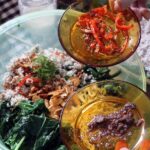
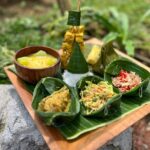
After the hands-on cooking, you’ll enjoy the homecooked Balinese meal you prepared. This is included, and it’s more than just a perk. Eating your own food right after you cook it helps your brain lock in what worked.
You can also compare what you expected with what actually happened when spices met heat. That feedback loop is how you start cooking outside the class later on. You’ll taste the result while it’s still fresh in your mind, which makes the “lesson” part stick.
Also, because dietary options are available on request—vegetarian, vegan, lactose-free, and gluten-free—you can often plan a meal that matches your needs. The menu can vary, but the provider lets you request your dietary restrictions ahead of time, which is the key part.
More farm and village cooking classes
Price and value: $68 per person with transport and a full meal
At $68 per person, this class is priced in a way that makes sense for a private, chef-led experience. The key is what’s included.
You get:
- a private cooking class with your host Santika
- the homecooked Balinese meal
- hotel pick and drop within the central Ubud pickup zone
- gratuities
- and, if you choose it, a market tour
That’s the value story. Many cooking classes leave you paying extra for transport, food, or the “nice-to-have” parts. Here, the structure is built around feeding you and teaching you in one go, with transportation worked in if you’re staying within the right radius.
Two practical value notes:
- If you’re outside central Ubud, the “price” may effectively rise because pickup and drop-off may include an additional transportation charge.
- If you’re booking for a group, there are group discounts, which can bring the cost down per person when you travel with others.
One more timing note: this is popular enough that it’s commonly booked about 54 days in advance on average. If your dates are fixed, I’d rather you book sooner than gamble.
Pickup, timing, and how to plan your day around it
The total duration is about 3 hours. That’s a good length for Bali—long enough to learn and cook, short enough to still have energy for an afternoon stroll or a temple visit.
Pickup is offered from central Ubud hotels within the 10km radius. Once you’re picked up, you’ll travel to the market first if you selected that option, then head to Santika’s home in Pesalakan. Expect the day to feel like one smooth loop: transport, market (optional), cooking, then meal.
Because the class runs in a real homestead kitchen, you’ll want to dress for practical work—comfortable clothes you don’t mind getting splashed or smelling a little like spices after. Wear shoes you can handle on uneven ground around a rural home setting.
You’ll also likely want to arrive a touch early. Not because the experience is rushed, but because you’ll be in a pickup-and-drive rhythm that works best when you’re ready on time.
Who this is best for (and who might skip it)
This class is a strong fit for you if you want more than a quick taste of Bali. It’s especially ideal if you:
- want to learn Balinese cooking fundamentals and not just eat food
- like the idea of a chef-led private lesson
- are interested in ingredients and spices, including what you can find at a local market
- need dietary accommodations like vegetarian, vegan, lactose-free, or gluten-free
It’s less ideal if you prefer a very low-effort, no-thinking restaurant meal. This is hands-on work. You’ll be chopping, grinding, and cooking as part of the lesson, not just sampling.
It can also be a harder decision if you’re staying far outside the central Ubud pickup area, since transportation may cost extra. If you’re already set on a cooking class but your lodging is remote, it’s worth comparing the added transport expense to the class value.
Should you book Santika’s Balinese cooking class?
If you want a private cooking lesson that feels tied to real daily Balinese ingredients and spice practices, I think booking is a smart move. The format is efficient: you learn, you cook, you eat what you made, and you can add a market tour if you want the ingredient backstory.
The biggest reasons to go are the hands-on station setup and the chance to cook with seasonal local ingredients—plus dietary options when you plan ahead. If you’re traveling with kids, the interactive style also makes it easier to justify as more than an adult-focused activity.
The only real “don’t book yet” situation is if your hotel is outside the central pickup radius and you’re trying to keep costs tight. If you can take care of transport math and you’re excited to cook, this is one of those experiences where the value comes from learning something you can reuse at home.
FAQ
How long is the private Balinese cooking class in Ubud?
It runs for about 3 hours total, including the cooking time and the meal.
Is the cooking class private?
Yes. It’s a private, personalized experience, and only your group participates.
Does the experience include hotel pickup and drop-off?
Hotel pick and drop is included if your hotel is located within about a 10km radius from Santika’s home in Pesalakan. If you stay outside that area, there may be an additional transportation charge.
Is there a market visit?
You can choose a market tour grade option. If you select that, the experience includes a local market tour before you cook.
What ingredients do you see or use on the market tour?
The market tour may include vegetables and produce such as cassava, ferns, lemongrass, and bananas, and you may have the chance to buy spices or seasonal vegetables for later use.
What dietary options are available?
Vegetarian, vegan, lactose-free, and gluten-free options are available on request. You should advise your dietary restrictions or allergies at booking.
Do you cook, or is it mostly watching?
It’s hands-on. You’ll have your own work area with a chopping board, motor and pestle, and a stove so you can cook along with Santika.
Are there any rules about cancellation?
Free cancellation is available up to 24 hours before the experience start time for a full refund.
Are service animals allowed?
Yes, service animals are allowed.
More Bali Reviews & Picks



More Farm & Village Cooking
More Around Ubud & the Monkey Forest
Still deciding? More Bali days reviewed, from volcano sunrises to island crossings











Ubud, Monkey Forest & Campuhan, compared.
 ★ 5.0All-Inclusive Ubud Private TourFrom $10014,344 reviews
 ★ 5.0Best of Ubud Full-Day Tour with Jungle SwingFrom $568,571 reviews
 ★ 5.0Ubud: Monkey Forest, Jungle Swing, Rice Terrace, and Water TempleFrom $317,160 reviews
 ★ 5.0Best of Ubud 1-Day Private TourFrom $544,451 reviews
 ★ 4.4Ubud Palace Legong Dance Show TicketFrom $63,979 reviews
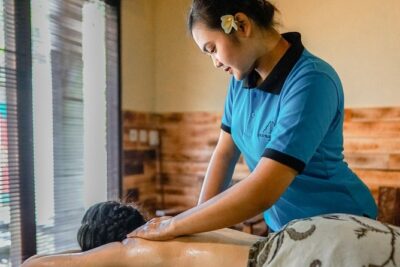 ★ 5.0Body Massage Experience in Ubud Traditional SpaFrom $213,506 reviews
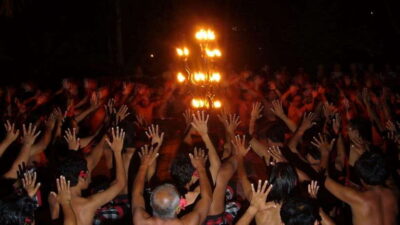 ★ 4.4Ubud Kecak and Fire Dance Show TicketsFrom $62,631 reviews
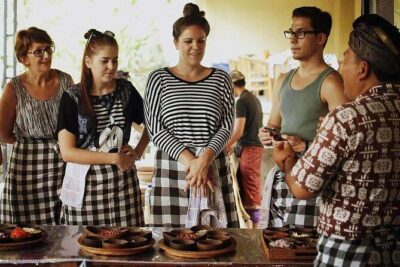 ★ 5.0Ubud Cooking Class Bali with Balinese ChefFrom $351,609 reviews
Browse the lists this tour appears in