
Reviewed · FARM & VILLAGE COOKING CLASSES
Bali Amazing Cooking Class
A kitchen lesson that starts before the stove. This Bali Amazing Cooking Class in Ubud mixes a traditional market, ricefields, and a cooking session in a Balinese home, then ends with you eating what you make. It’s a simple format that feels more real than a cookbook-only demo.
What I like most is the included hotel pickup for Ubud-area stays and that you’re not rushed through the “just cook” part. You learn ingredients first, then cook using the tools and techniques that make Balinese food its own thing. I also really like that you leave with recipes you can use at home, not just a full stomach.
One possible drawback: the market stop can feel modest if you’re expecting a huge, noisy bazaar. It’s still a useful look at daily life, but it’s not a sprawling spectacle.
In This Review
- Key things that make this cooking class worth your time
- Ubud market and ricefields: why this starts before the stove
- The pacing is friendly for a vacation day
- Price and logistics: what $34 really buys in Ubud
- Average booking time: plan ahead a bit
- Mobile ticket plus a real pickup workflow
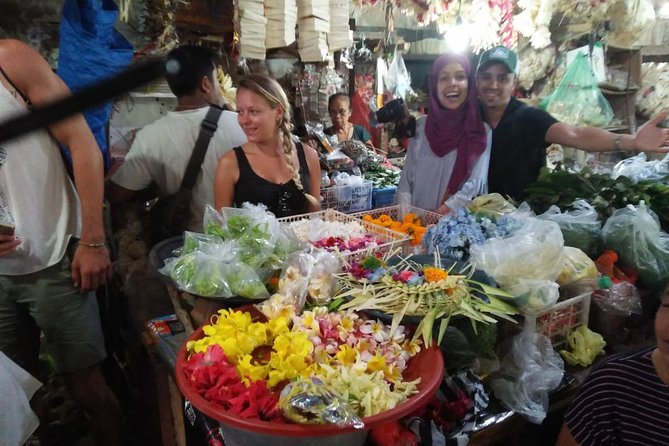
- Traditional market stop: learning Balinese daily activity the practical way
- A small heads-up if you hate quiet markets
- Ricefields explanation: how rice growing turns into flavor later
- What to do with the camera
- Inside the Balinese home kitchen: tools, welcome drinks, and hands-on cooking
- You’ll likely cook multiple dishes, not one
- Traditional cooking tools matter
- From cooking to eating: recipes, dessert, and how to avoid leaving hungry
- Recipes you can actually use
- Plenty of food and no awkward hunger gap
- Group size, comfort, and what to bring so the day runs smooth
- Comfort perks that add up
- Bring the basics (they’re not optional)
- Who should book this Bali Amazing Cooking Class in Ubud
- Who might want to adjust expectations
- Should you book Bali Amazing Cooking Class? My decision guide
- FAQ
- Where does the cooking class take place?
- How long is the Bali Amazing Cooking Class?
- What are the pickup times?
- Is hotel pickup included?
- What meals are included?
- What’s included in the price?
- What’s not included?
- Do I get recipes?
- How big is the group?
- Can I cancel for a refund, and what if weather is bad?
Key things that make this cooking class worth your time
- Real Balinese home cooking: you cook in a local house, not a staged studio.
- Market plus ricefields: you get context for ingredients and culture, not just recipes.
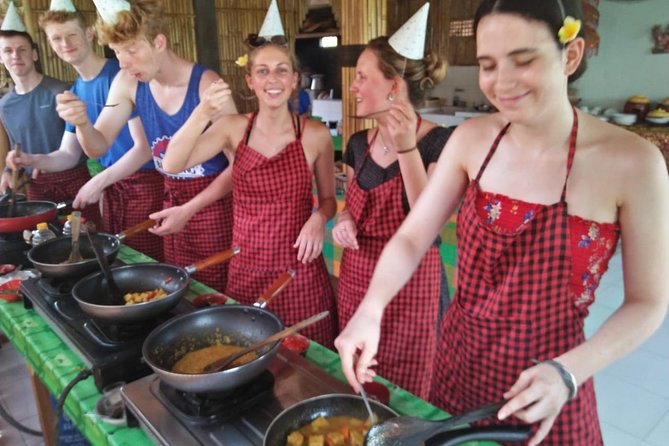
- Hands-on prep: you do the work, not only watch.
- You eat together afterward: the meal is part of the experience, not an add-on.
- Good group size limit: the class caps at 25 people, so it doesn’t feel like a cattle call.
Ubud market and ricefields: why this starts before the stove
The best cooking classes don’t begin with a cutting board. They begin with ingredients and place. Here, your day starts with hotel pickup in the Ubud area, then you head to a traditional market where you’ll hear how Balinese daily routines connect to what people buy and eat.
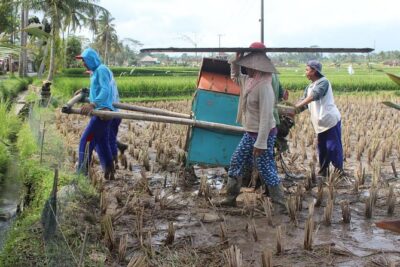
After that, you go on to the ricefields. Even if you only know rice as a side dish, this is where it starts making sense: rice isn’t just food in Bali, it’s part of how the island works, season to season, and community to community. You also get a chance to slow down and look around, with plenty of photo moments along the way.
More farm and village cooking classes


The pacing is friendly for a vacation day
This is about a 5-hour experience. That length is long enough to learn real technique and cook multiple dishes, but short enough that you’re not planning your whole day around it. With pickup in the morning (8:00–8:30) and an afternoon option (pickup around 3:00–3:30), it also fits different travel rhythms.
Price and logistics: what $34 really buys in Ubud
At $34 per person, the value comes from what’s included beyond the cooking itself. You’re not just paying for a demonstration. You get:
- all cooking equipment and facilities
- bottled water
- an air-conditioned vehicle
- all fees and taxes
- hotel transfers within the Ubud area
- lunch or dinner
Alcohol is not included, and personal expenses are on you. But most people find that the included meal means there’s no scramble for food afterward.
Average booking time: plan ahead a bit
The tour is typically booked about 9 days in advance. That’s not panic-booking, but it is long enough that you should lock in your spot once you know your Ubud dates.
Mobile ticket plus a real pickup workflow
You’ll receive a confirmation at booking, and the experience uses a mobile ticket. For pickup, you’ll want to give the correct hotel/room number and your contact number so they can find you fast. It’s also smart to have your pickup point easy to describe, because the driver needs you to be where you expect.
A few more Bali tours and experiences worth a look


Traditional market stop: learning Balinese daily activity the practical way
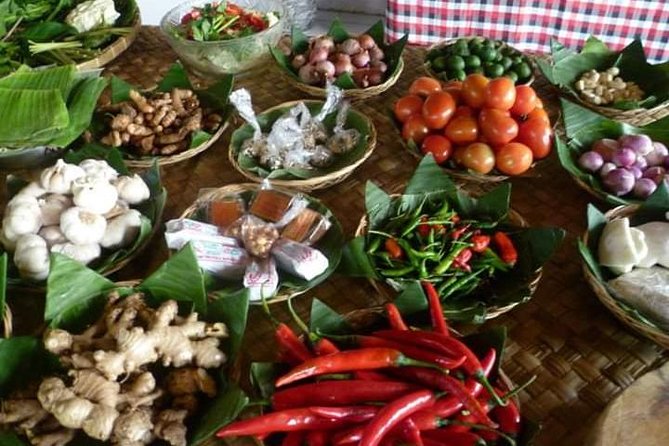
The market visit is where the class earns its cultural credibility. You’ll get explanations tied to Balinese daily activity while you look around. This helps you connect what you’re seeing to what you’ll later cook, instead of treating ingredients like mystery powders.
Markets also make a useful contrast. You see how ordinary people shop, and you get context for why some flavors show up again and again in Balinese dishes. It also gives you a chance to ask questions while you’re still in “ingredient mode,” which makes the cooking portion easier.
A small heads-up if you hate quiet markets
One caution: if you’re used to big, loud tourist markets, this stop may feel smaller. You might see fewer stalls than you hoped for. If that would bother you, keep your expectations grounded: this visit is more about everyday life than about a big shopping show.
Ricefields explanation: how rice growing turns into flavor later
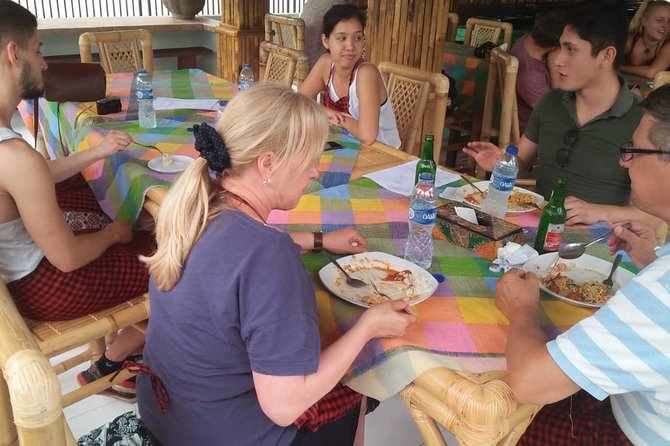
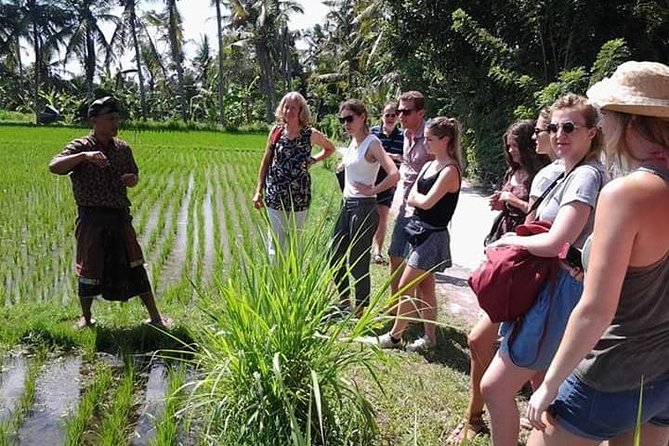
The ricefields stop isn’t just scenery. You’ll get explanations about how rice is grown, and that matters because many Balinese dishes are built around local ingredients and rhythms. Even if you don’t remember every detail, the idea sticks: cooking here isn’t separated from agriculture.
This is also a good moment to take notes for your shopping later. When you understand what grows nearby and why it matters, you’re better able to choose substitutions at home. That’s where a class becomes more useful than a one-day memory.
What to do with the camera
Bring your camera, and use the morning light if you’re doing the early trip. You’ll likely have several chances to photograph ricefields and market activity. Also, keep your sun cream handy. You’re outside between stops, and the timing puts you in daylight.
Inside the Balinese home kitchen: tools, welcome drinks, and hands-on cooking
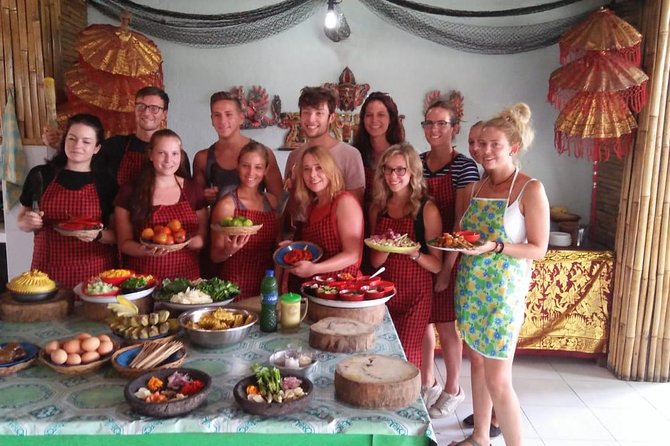
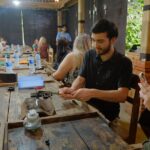
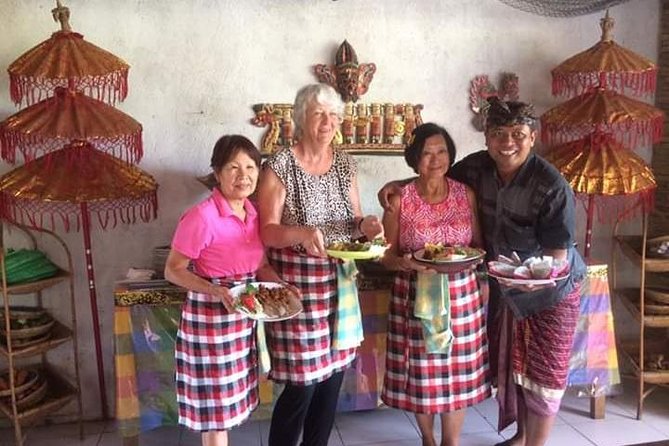
The cooking class happens at a Balinese home. That choice changes the whole tone. You’re not in a commercial kitchen with flashing equipment. You’re in a family setting where the food process feels normal, not theatrical.
Many classes include a welcome moment first, like a drink and homemade cake. Then the session moves into learning and food-making. In at least some runs, the group even makes a traditional basket as an offering to the gods before cooking begins. That kind of activity is more than decoration. It signals that meals connect to beliefs and daily rhythm, not only hunger.
You’ll likely cook multiple dishes, not one
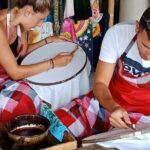
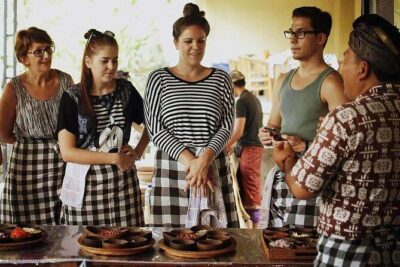
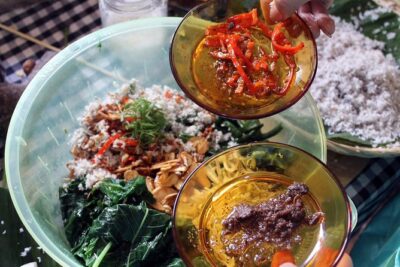
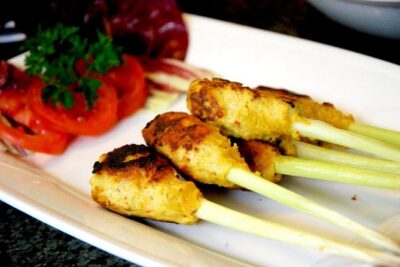
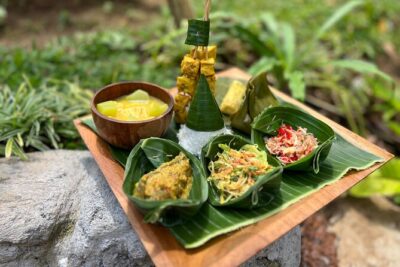
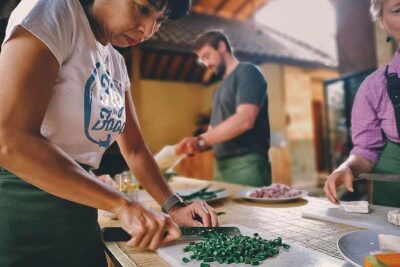
The cooking portion is hands-on. Some sessions involve around 10 different dishes, and in other cases up to 11 dishes including dessert. The point is variety: you’ll learn techniques that repeat across dishes, rather than doing the same step ten times.
Hosts can vary by date, but names like Ibu Dewi (often mentioned as the host/instructor) and family members such as Nyoman show up in the class experience. That matters because family-run instruction tends to be more personal, more flexible, and more willing to explain why something works.
Traditional cooking tools matter
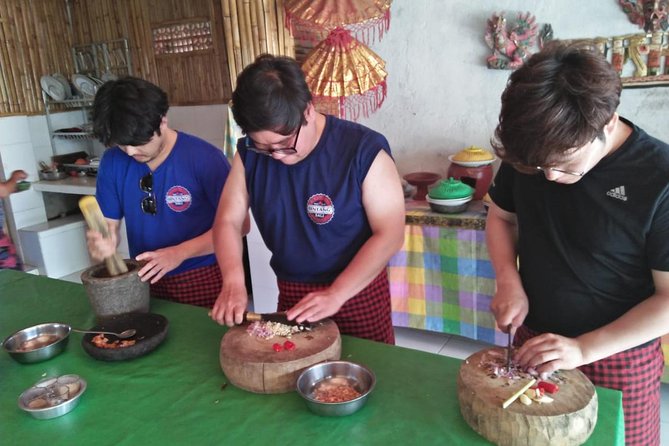
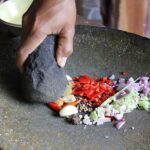
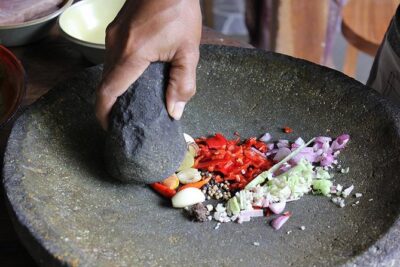
The class uses traditional cooking tools and equipment. You’ll feel the difference quickly if you’re used to modern stoves and gadgets. Kneading, grinding, chopping, and stirring all teach muscle memory. Even if the exact tools aren’t in your kitchen at home, the technique is what you’re really taking with you.
From cooking to eating: recipes, dessert, and how to avoid leaving hungry
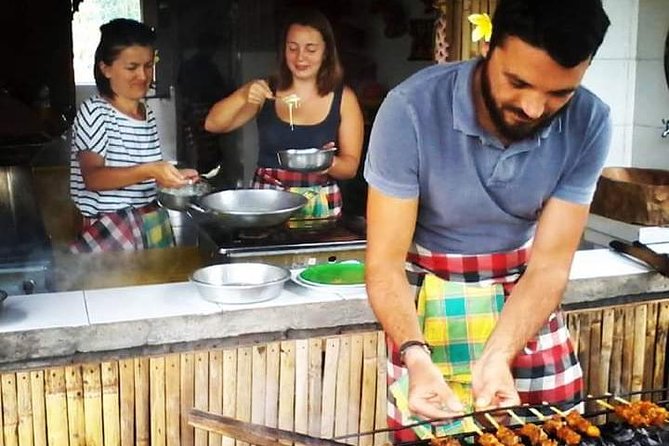
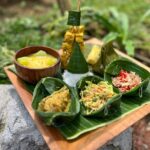
The flow usually goes like this: you visit the market, you visit the ricefields, then you cook in the home, and finally you finish by eating together in a Balinese style. The meal part is included, and it’s one of the main reasons this class feels complete.
Recipes you can actually use
You should expect recipes at the end of the class, and people also mention all recipes being provided. That’s huge for value. Without recipes, cooking classes often turn into a nice day out and nothing else. With recipes, it becomes a skill you can repeat later.
Also, keep an eye out for dessert. At least some sessions include banana dumplings as a favorite. Even if your specific menu differs, having dessert as part of the teaching makes the experience feel longer and more satisfying.
Plenty of food and no awkward hunger gap
The included lunch or dinner means you don’t need to chase food afterward. Some people have described the result as plentiful, which lines up with the idea that you cook enough to eat your own work. It’s the kind of day where you can skip dinner later or at least plan less.
Group size, comfort, and what to bring so the day runs smooth
This experience caps at 25 travelers. That matters because smaller groups usually mean more help during chopping, mixing, and cooking steps. You still won’t get private instruction, but the limit helps keep attention on the food, not on logistics.
Comfort perks that add up
You ride in an air-conditioned vehicle. You also get bottled water. Those aren’t flashy, but they make a hot day in Ubud easier.
Bring the basics (they’re not optional)
You’ll be asked to bring a camera, sun cream, some cash, and a small backpack. Shoes are also part of what to bring. That’s practical advice because you’re outside for market and ricefields segments, then in a home environment where you’ll want footwear that works.
Who should book this Bali Amazing Cooking Class in Ubud
Book this if you want a day in Ubud that feels hands-on and local. It’s a good fit if you like cooking and you want to understand why Balinese dishes taste the way they do, starting with market ingredients and rice-growing context.
It also works well for couples and small groups. The class is large enough to meet people, but the cap at 25 keeps it from turning into a chaotic show. If you’re the type who loves learning practical technique and then cooking at home later, the recipe component is your friend.
Who might want to adjust expectations
If you already cook regularly and you’re hunting for advanced, chef-level tricks, some dishes may feel straightforward. One comment notes cooking felt more hobby-style in parts. For many people, that’s exactly what they want. For others, it might feel less special if you were hoping for intense culinary training.
Should you book Bali Amazing Cooking Class? My decision guide
For $34, I’d book this if your priority is a full, structured experience: market + ricefields + hands-on cooking + the meal + recipes. The included transfers in the Ubud area also remove a big chunk of friction, which makes it easier to say yes even when your schedule is tight.
I’d hesitate only if you’re very picky about market variety and you want a big, busy shopping scene. Also, if you don’t eat the foods you cook, make sure you actually like Balinese flavors enough to enjoy the final meal.
If you’re planning an Ubud stay and you want one day that teaches you something you can repeat, this is a solid choice.
FAQ
Where does the cooking class take place?
The experience is in Ubud, Indonesia.
How long is the Bali Amazing Cooking Class?
It lasts about 5 hours (approx.).
What are the pickup times?
The morning trip pickup is between 8:00–8:30am. There’s also an afternoon trip pickup between 3:00–3:30 pm.
Is hotel pickup included?
Hotel transfers are included, and free hotel pickup is offered for hotels within the Ubud area. If your hotel is outside that area, you should contact them about other pickup options.
What meals are included?
Lunch or dinner is included.
What’s included in the price?
The price includes all cooking equipment and facility, lunch or dinner, all fees and taxes, bottled water, and an air-conditioned vehicle, plus free hotel pickup in the Ubud area.
What’s not included?
Alcoholic beverages and personal expenses are not included.
Do I get recipes?
Yes. Recipes are provided at the end of the class.
How big is the group?
The tour has a maximum of 25 travelers.
Can I cancel for a refund, and what if weather is bad?
You can cancel for a full refund if you cancel at least 24 hours before the experience’s start time. If it’s canceled due to poor weather, you’ll be offered a different date or a full refund.
More Bali Workshops & Classes
More Bali Reviews & Picks






More Farm & Village Cooking
Still deciding? More Bali days reviewed, from volcano sunrises to island crossings











Farm & Village Cooking Classes, compared.
 ★ 5.0Ubud Cooking Class Bali with Balinese ChefFrom $351,609 reviews
 ★ 5.0PRIVATE Authentic Balinese Cooking Class in Ubud at Putu’s HomeFrom $75644 reviews
 ★ 5.0Balinese Ubud cooking school (9 Dish Cooking and Market Tour)From $58540 reviews
 ★ 5.0Balinese Farm Cooking Class by Pemulan BaliFrom $39410 reviews
 ★ 5.0Balinese Cooking Class in SeminyakFrom $66281 reviews
 ★ 5.0Balinese Authentic Cooking Class in UbudFrom $39239 reviews
 ★ 5.0PRIVATE Balinese Cooking Class in Ubud with Dewa with TransfersFrom $69213 reviews
 ★ 5.0Balinese Cooking class with traditional morning market visitFrom $35161 reviews
Browse the lists this tour appears in